Evan Lee Salim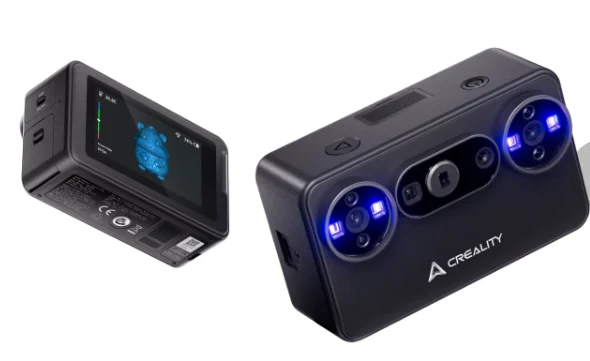
The landscape of personal manufacturing is undergoing a profound transformation. While 3D printing has matured from a niche hobbyist pursuit into a legitimate tool for rapid prototyping and creative expression, a persistent bottleneck remains: the translation of real-world objects into digital, printable files. For years, professional-grade 3D scanning was a prohibitively expensive endeavor, requiring complex hardware setups and specialized expertise. Creality, a household name in the desktop 3D printing space, is now attempting to democratize this process with the launch of the Creality Pika.
Positioned as a pocket-sized, high-fidelity solution for makers, engineers, and digital artists, the Pika seeks to remove the friction between physical objects and digital models. With a limited-time introductory offer, the device is currently entering the market with a focus on accessibility and performance.
The Core Offering: Specifications and Capabilities
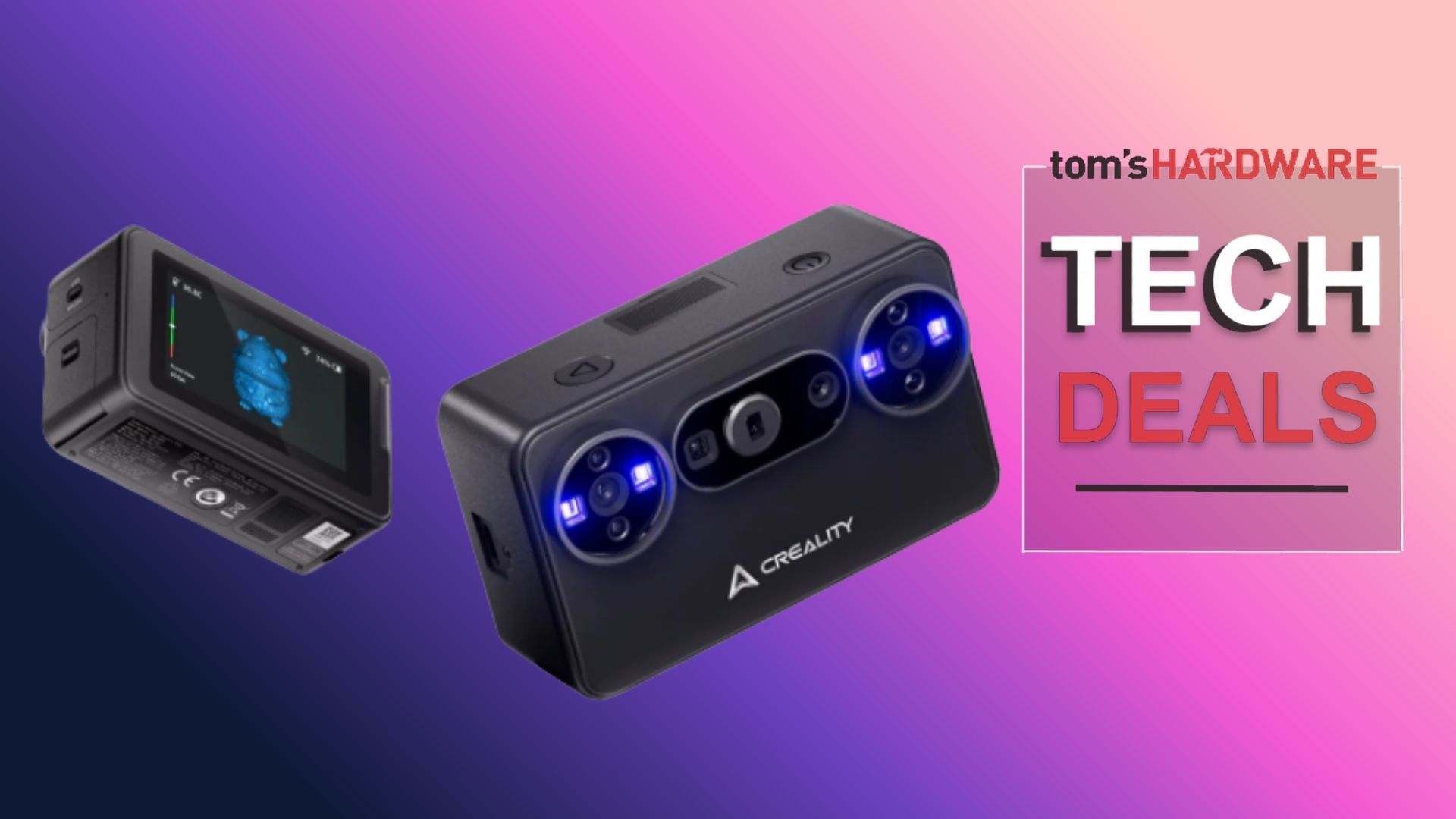
The Creality Pika is designed with mobility at its heart. Measuring a mere 100 x 60 x 35 mm and weighing only 260 grams, the device is engineered to fit into a pocket, making it a viable companion for "field" work. Despite its diminutive stature, the hardware inside represents a significant leap forward in portable scanning technology.
Precision and Optical Performance
At the heart of the Pika is a dual-optical, 7-line blue laser array. Unlike traditional structured light scanners that can struggle with ambient lighting, the blue laser technology allows for a high degree of precision, boasting an accuracy of 0.03 mm. This level of detail is sufficient for capturing complex geometries, small mechanical parts, or intricate artistic sculptures. The scanner is capable of capturing a minimum scan volume of 10 x 10 x 10 mm, proving its utility for small-scale modeling.
Perhaps most impressive to the veteran maker is the Pika’s ability to handle "difficult" surfaces. Historically, 3D scanners have struggled with black or metallic objects, often requiring the user to apply a white spray coating to help the sensors read the surface. The Pika utilizes advanced algorithms to bypass these limitations, allowing for direct scanning of challenging materials without the need for messy pre-processing.
Advanced Data Processing: Gaussian Splatting
One of the most notable technical shifts in the Pika is the adoption of "Gaussian Splatting" for model reconstruction. Older 3D scanning methods often relied on basic texture mapping, which could result in "mushy" textures or disjointed geometry. Gaussian Splatting represents a more modern approach to 3D representation, allowing the scanner to track textures, color, and spatial detail with a level of realism that closely mimics the source material. This ensures that when the final file is exported—whether as an STL, OBJ, PLY, or ASC file—the digital twin is both visually accurate and structurally sound for immediate 3D printing.
Chronology of Development and Market Entry
The development of the Pika follows Creality’s broader strategic shift toward an integrated ecosystem.
- Initial Concept Phase: Creality identified a gap in the market for a "prosumer" grade scanner that could bridge the gap between the low-cost, low-accuracy scanners often found on crowdfunding sites and the $10,000+ industrial units used in aerospace and automotive design.
- Engineering and Prototyping: Over the last 18 months, the company focused on miniaturization, moving away from desktop-mounted sensors to a handheld form factor. The decision to include a 3-inch integrated touchscreen was a direct response to user feedback, allowing operators to monitor scan quality in real-time without needing to tether the device to a laptop during the scanning process.
- The Launch Window: The Pika was officially introduced to the global market with an aggressive pre-purchase pricing strategy. By offering the unit at $629—a $70 discount from its standard MSRP—Creality is clearly aiming to capture the attention of its existing user base who are already invested in their Ender or K1 series printers.
Supporting Data and User Workflow
For a 3D scanner to be useful, the workflow must be seamless. The Pika attempts to solve the "tethering problem" through two specific features: power independence and connectivity.
Battery and Mobility
The Pika operates on a hot-swappable dual-battery system, each rated at 3,350 mAh. This is a critical design choice; in a field environment, such as a museum, a remote architectural site, or an automotive workshop, access to wall power is rarely guaranteed. The ability to swap batteries on the fly ensures that scanning sessions can last for as long as the user requires, without the risk of losing progress due to a depleted power cell.
Data Transfer Protocols
Once the scan is complete, the Pika offers two primary paths for data migration. For those working in a studio, the high-speed USB 3.0 connection provides the fastest transfer rates for large, dense point clouds. For those working in the field, the inclusion of Wi-Fi 6 allows for the wireless transmission of data, meaning a user can scan an object and instantly push the file to a cloud-based workstation or a local server for post-processing.
Official Stance and Market Positioning
Creality has framed the Pika not just as a hardware release, but as a "creative companion." In their official documentation, the company emphasizes the concept of "infinite imagination." By allowing users to digitize existing objects, the Pika effectively turns the world into a library of parts.
"Our goal was to eliminate the intimidation factor," a spokesperson noted during the initial product unveiling. "Most people think 3D scanning requires a PhD in computer vision. With the Pika, if you can hold the device and trace the object, you have a model. It’s that simple."
The company’s decision to support multiple file formats—STL, OBJ, PLY, and ASC—is a nod to the diversity of the 3D software landscape. By ensuring compatibility with industry standards like Blender, Fusion 360, and ZBrush, the Pika positions itself as a neutral player in the workflow, rather than a proprietary "walled garden" product.
Implications for the Industry
The release of a portable, high-accuracy scanner at a sub-$700 price point has several implications for the 3D printing and manufacturing sectors.
1. The Rise of the "Repair Economy"
One of the most exciting applications for the Pika is reverse engineering for repairs. As global supply chains face volatility, the ability to scan a broken, obsolete plastic gear or a custom automotive bracket and reproduce it using a 3D printer is becoming a vital skill. The Pika’s high accuracy makes it a legitimate tool for this kind of work, potentially saving consumers thousands of dollars by allowing them to print parts that are no longer in production.
2. Education and Accessibility
In educational settings, scanners like the Pika can bring geometry and engineering to life. Students can scan historical artifacts, biological specimens, or original designs and bring them into the classroom for analysis. The affordability and ease of use mean that schools, which previously could only afford a single, shared scanner for an entire department, may now be able to outfit laboratories with multiple units.
3. Professional Prototyping
For independent designers, the Pika bridges the gap between digital sculpting and physical reality. An artist can sculpt a clay model by hand, scan it, refine the details in a digital environment, and then 3D print a scaled version or a master copy for casting. This "hybrid" workflow—combining traditional tactile artistry with digital precision—is becoming the gold standard in high-end product design.
Conclusion
The Creality Pika is more than just a piece of hardware; it is a signal of the maturation of the consumer 3D printing ecosystem. By prioritizing portability, ease of use, and compatibility with professional standards, Creality has created a device that effectively lowers the barrier to entry for high-quality 3D scanning.
While the market for 3D scanners remains competitive, the Pika’s combination of blue laser technology, Gaussian Splatting, and a user-centric design makes it a compelling option. For makers who have felt limited by their ability to model objects from scratch, the Pika offers a new way to interact with the physical world, turning the surrounding environment into a source of inspiration and raw material. As the 19-day introductory window closes, it will be interesting to see how the community adopts this tool and what new, innovative projects emerge from the ability to digitize the physical world with such ease.

 Pevita Pearce
 Nana Muazin