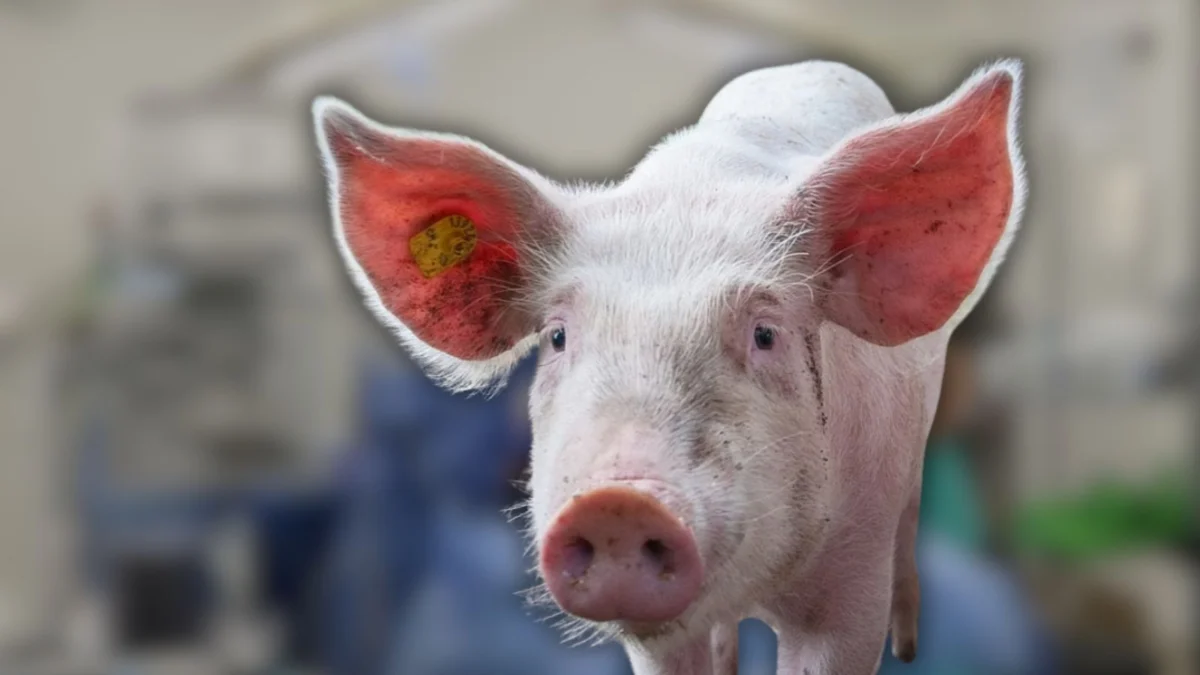
In a landmark achievement that has sent ripples through the global medical community, 66-year-old Tim Andrews has set a world record in xenotransplantation. After enduring years of debilitating end-stage kidney disease, Andrews became the recipient of a genetically modified pig kidney—a feat that functioned within his body for an unprecedented 271 days. This medical milestone, conducted at Massachusetts General Hospital (MGH), offers a beacon of hope for thousands of patients currently languishing on organ transplant waiting lists.
The procedure, which took place on January 25, 2025, represents more than just a surgical triumph; it is a validation of decades of research into interspecies organ transplantation. By serving as a bridge to a traditional human donor transplant, the pig kidney effectively saved Andrews’ life, proving that the future of organ replacement may lie in the sophisticated manipulation of animal DNA.
The Genesis of the Procedure: Science Meets Necessity
The organ transplanted into Andrews was not a standard porcine kidney. It was a product of advanced biotechnology provided by eGenesis, a company at the forefront of gene-editing. Utilizing the revolutionary CRISPR-Cas9 technology, researchers performed 69 distinct genomic edits on a Yucatan miniature pig.
These edits were surgical in their precision, aimed at overcoming the biological barriers that have historically doomed xenotransplantation:
- Eliminating Rejection Triggers: Scientists removed specific pig genes that are known to provoke an immediate, violent immune response in humans.
- Humanizing the Organ: They integrated human DNA sequences into the pig’s genome, effectively "camouflaging" the organ so that the recipient’s immune system would perceive it as a human-compatible graft rather than a foreign invader.
- Retroviral Deactivation: A significant safety measure involved the removal of endogenous retroviruses hidden within the pig’s DNA, mitigating the risk of cross-species viral transmission.
The resulting organ—which Andrews affectionately named "Wilma"—functioned almost immediately upon connection. Within days, the kidney began its primary biological task: filtering blood and maintaining fluid homeostasis. The success of the initial phase was such that Andrews was discharged from Massachusetts General Hospital within a week of the procedure, a recovery timeline that defied expectations for such a complex operation.
A Timeline of Resilience: From "Wilma" to Human Transplant
The journey of Tim Andrews is one of both scientific triumph and human endurance. The following timeline tracks the progression of this historic medical case:
- January 25, 2025: Andrews receives the genetically modified porcine kidney at MGH.
- February 2025: Rapid recovery allows Andrews to leave the hospital. During his rehabilitation, he famously threw the ceremonial first pitch at a Boston Red Sox game, symbolizing his return to a semblance of normalcy.
- February 2025 (Two weeks post-op): Doctors manage the first signs of organ rejection by fine-tuning Andrews’ immunosuppressive drug regimen.
- August 2025: Roughly six months into the process, Andrews develops an infection, necessitating a reduction in his immunosuppressant dosage.
- October 2025: The reduction in immune suppression leads to vascular damage in the porcine organ. The team makes the difficult decision to remove the pig kidney. Andrews notes, "Wilma and I had to give up the fight."
- October 2025 – January 2026: Andrews returns to dialysis for 82 days.
- January 13, 2026: Andrews receives a deceased human donor kidney.
- September 2026: As of the latest update, the human kidney shows no signs of rejection, with 231 days of stable function.
Supporting Data: Addressing the Organ Shortage
The implications of the Andrews case are best understood through the lens of the current organ donation crisis. Before the xenotransplant, Andrews faced a dismal nine percent statistical probability of receiving a human donor kidney within a five-year window. His condition, compounded by type two diabetes, had made him a high-risk candidate, yet his survival during those 271 days illustrates the potential of "bridge" transplants.
Xenotransplantation is not intended to replace human-to-human donation permanently, but rather to act as a life-saving "stop-gap." By providing a functional organ in the interim, doctors can keep patients alive and healthy until a perfectly matched human donor becomes available.
Data from the surgical team at MGH suggests that while porcine kidneys can trigger complex immune responses, they can be managed with modern pharmacotherapy. The fact that Andrews remained functional for nine months—even with the complications—provides the medical community with a blueprint for managing similar cases in the future.
Official Responses and Ethical Considerations
The medical establishment has reacted with cautious optimism. Dr. Sarah Jenkins, a leading transplant immunologist (not directly involved in the case), noted, "What we saw with Mr. Andrews was a masterclass in modern immunology. The ability to modify a porcine organ to the point where it can function in a human for nearly ten months is a watershed moment."
However, the ethics of the procedure remain a point of discussion. Questions regarding the long-term health risks of living with a gene-edited organ and the animal welfare implications of using miniature pigs as organ donors are central to the ongoing debate.
Andrews himself remains the most vocal advocate for the technology. "Hope is the biggest thing," he said in a recent interview. "The chance to be free from the machine [dialysis] and live your life—that is what this research provides. It isn’t just about the science; it’s about the time it buys you with your family."
Future Implications: The Road Ahead
The success of the Andrews case has accelerated the timelines for further clinical trials. Biotechnology firms and academic hospitals are now looking to refine the CRISPR-Cas9 editing process further, aiming to reduce the reliance on heavy immunosuppression.
Furthermore, this success coincides with a broader trend of "fringe" scientific breakthroughs. Much like the recent, separate discovery by researchers in Austria who successfully reversed the flow of time for a single particle within a quantum system, the Andrews case pushes the boundaries of what was previously considered impossible. While quantum mechanics and organ transplantation occupy different realms of physics and biology, both signify an era where human intervention is increasingly able to bypass natural constraints.
The Path to Mainstream Integration
For xenotransplantation to move from a "last-resort" procedure to a standardized medical practice, several hurdles remain:
- Regulatory Hurdles: The FDA and international bodies require consistent, longitudinal data to ensure that these porcine organs do not carry latent risks to the broader public health.
- Manufacturing Scalability: Producing thousands of genetically identical, pathogen-free pigs requires industrial-scale, sterile facilities that do not currently exist at the necessary capacity.
- Long-term Efficacy: Understanding why the graft ultimately failed—the vascular damage—will be key to preventing future rejections.
As it stands, Tim Andrews serves as the living embodiment of a new medical paradigm. Having survived the transition from a porcine kidney to a human one, he has not only regained his health but has also provided the data necessary to save thousands of others. The 271 days he spent with "Wilma" may eventually be viewed by historians as the turning point when the organ shortage began its steady decline.
In the final analysis, the story of Tim Andrews is one of collaboration—between a patient, his medical team, the biotechnology innovators at eGenesis, and the biological potential of a genetically edited animal. While the road to widespread xenotransplantation is still paved with challenges, the map has been drawn, and the first major milestone has been reached.