Reynand Wu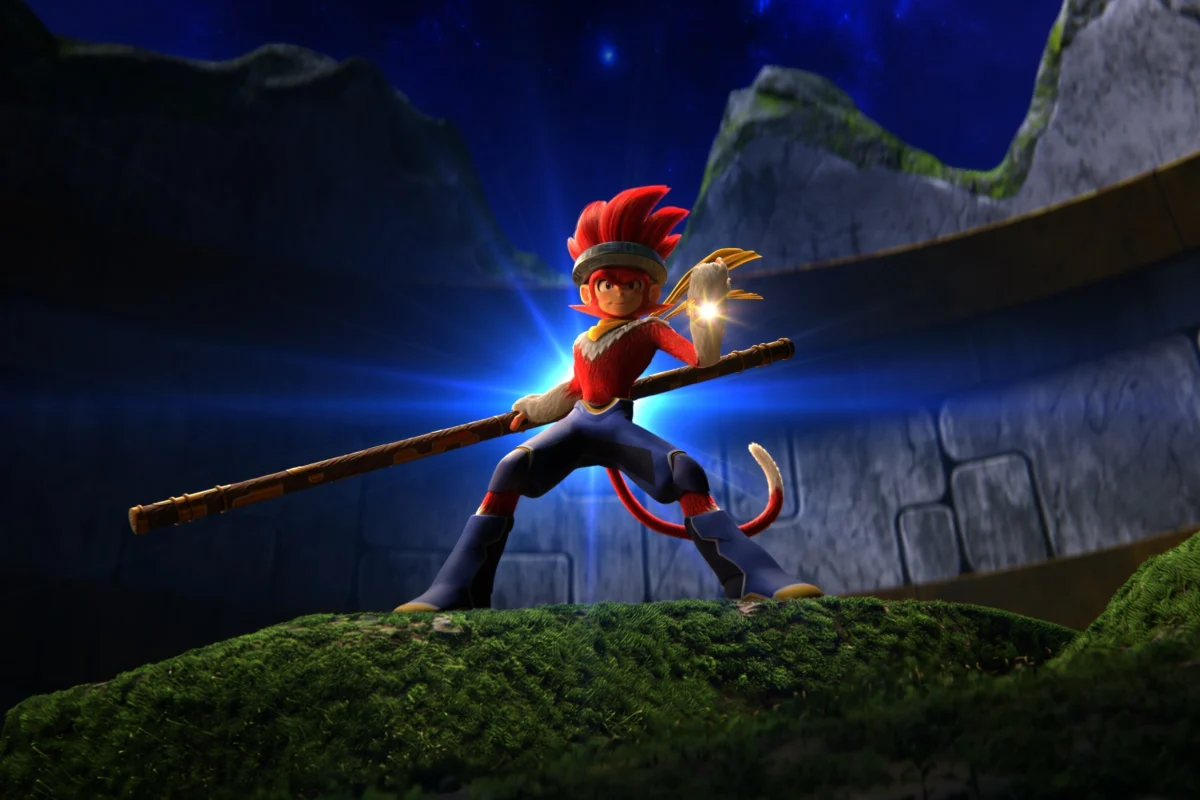
At the prestigious Annecy International Animation Film Festival, the industry’s eyes were turned toward a singular, ambitious project: Monkey Quest. A collaboration between the legendary Toei Animation and a powerhouse team of international creators, the film represents more than just another entry in the long-standing tradition of monkey-king adaptations. It is a calculated, artistic attempt to marry the disciplined, character-driven soul of Japanese anime with the narrative structure and emotional resonance of Hollywood blockbusters.
For producers Yoshi Ikezawa and Joseph Chou, Monkey Quest is the answer to a question that has haunted the industry for decades: How can Japanese animation achieve the same level of mainstream, global emotional connection that has long defined the major U.S. animated features? As the film moves through post-production, it stands as a testament to a changing landscape—one where the borders between East and West are not just blurred, but entirely rewritten.
The Genesis of an Epic: From Legend to Screen
The project’s roots can be traced back to a conversation between Ikezawa and Chou. They identified a specific gap in the global market: while anime has achieved unprecedented popularity, it often remains categorized as a niche or cult interest in Western markets, despite its profound influence. The duo posited that the key to bridging this divide lay in character design—the kind of iconic, enduring figures that audiences carry with them for decades.
To achieve this, they turned to a titan of the industry: Naoto Oshima, the original character designer behind the global phenomenon Sonic the Hedgehog. Oshima was tasked with a monumental challenge: re-imagine the ancient Chinese legend of Journey to the West in a way that felt fresh, modern, and universally accessible. Oshima’s pitch was a narrative that captured the kinetic spirit of anime while functioning as a grand, global family adventure.
The resulting story follows 12-year-old Elle and her one-year-old brother, Adam. Their lives are irrevocably changed when they encounter Okon, a powerful, legendary guardian of the Earth voiced by Adam Devine. The trio finds themselves pitted against the malevolent Vex, voiced by J.K. Simmons, in a high-stakes quest that transcends physical landscapes and ventures into mysterious, extra-dimensional realms.
Chronology of Development: A Global Collaboration
The development cycle of Monkey Quest serves as a microcosm for the modern animation industry’s evolution. Initially, the project was conceived as a U.S.-led initiative that would eventually outsource technical production to Japan. However, as the creative team began to assemble talent from around the world, they realized that the "us-versus-them" mentality of animation production was quickly becoming obsolete.
"As the project developed, we realized that many of the best animators and artists from around the world had grown up loving Japanese anime," Ikezawa explained during the Annecy Work-in-Progress unveil. "They did not see anime as something foreign to them; they saw it as part of their own creative language."
This realization prompted a strategic pivot. The project shifted from a traditional hierarchical structure to a global network of talent. The Japanese team provided the technical craft, discipline, and historical context of anime production, while the U.S. team contributed expertise in story structure and the "heart-tugging" emotional beats common in Western family films. International animators brought a diversity of artistic perspectives that, according to the producers, made the film feel "alive."
Technical Innovation: The 2D/3D Hybrid Philosophy
One of the most striking elements of Monkey Quest is its visual language. The studio Sanzigen, renowned for its innovative CG techniques, was brought on to oversee a complex, hybrid animation style. The production utilizes layers of hand-drawn 2D animation superimposed over 3D CG frameworks—a technique specifically employed when the narrative shifts into the "ethereal" dimension where Okon originates.
Character designer and co-director Takao Noguchi emphasized that the technical approach was always subservient to character clarity. "The focus was on clear, recognizable silhouettes," Noguchi noted. "On this project, we also incorporated kanji-inspired forms and symbolic design elements connected to each character’s role, which helped make the cast feel more unique and expressive."
This hybridity is not merely a stylistic choice; it is a structural necessity for the story. By utilizing different animation methodologies for different dimensions, the filmmakers are able to visually communicate the transition between the grounded human world and the fantastical, mythic realm of the Monkey King.
Official Perspectives: Directors and Producers Speak
The production environment, often notoriously stressful in the animation industry, was described by the directors as remarkably collaborative and supportive. Director and screenwriter David N. Weiss, who helped shape the Journey to the West adaptation into a "space-faring" narrative, expressed deep admiration for the creative freedom granted by Toei Animation.
"Notes always came with a gentle hand," Weiss remarked, drawing a comparison to the legendary studio culture fostered by Sherry Lansing at Paramount. "There was a constant feeling that the studio genuinely wanted us to succeed."
Co-director Stephanie Ma Stine, known for her work on Kung Fu Panda 4, noted that the film’s central figure—the trickster archetype—is a "timeless" element of human storytelling. "In every culture and time period, there has been a keen fondness for the trickster character," she explained. Stine, who grew up a fan of Toei’s Sailor Moon, expressed that being a part of this production felt like a personal milestone. "To be part of this history, even as a small drop in the ocean, means more than I can convey."
The Implications for Global Animation
The success or failure of Monkey Quest may serve as a barometer for the future of international animation. The project represents a fundamental shift in how storyboard artists and creative teams function. Historically, Western animation has relied on a compartmentalized approach, where storyboards are broken down into discrete segments. In contrast, the anime approach is more holistic, with storyboard artists holding a broader, more comprehensive view of the narrative arc.
During the Annecy session, Stine observed that the industry is trending toward the anime model. As more studios adopt this approach, the line between "Hollywood animation" and "Japanese anime" continues to fade.
The implications are significant. By integrating the discipline of Japanese production with the scale of American distribution and storytelling, Monkey Quest is positioning itself to be more than just a film; it is a case study in globalized creativity. It demonstrates that the future of the medium does not belong to one region or one methodology, but to a hybridized team capable of synthesizing the best of all worlds.
Conclusion: A New Standard?
As Monkey Quest heads into the final stages of post-production, the anticipation from both fans and industry insiders continues to grow. Whether the film manages to bridge the emotional gap between the Eastern and Western markets remains to be seen. However, the process behind its creation—a synthesis of cultures, a blending of 2D and 3D technologies, and a respect for the ancient mythologies that have shaped generations—suggests that the creators have succeeded in building something truly unique.
In an era where audiences are increasingly global and culturally fluent, Monkey Quest appears to be the right film at the right time. By treating anime not as a foreign export but as a foundational creative language, Toei Animation and its partners are not just telling a story about a monkey and a journey; they are charting a new course for the future of animated storytelling. Whether it achieves the monumental awareness Ikezawa and Chou desire will ultimately depend on the audience, but for now, the industry has a new standard to aspire to.


 Azzam Bilal Chamdy
 Evan Lee Salim