

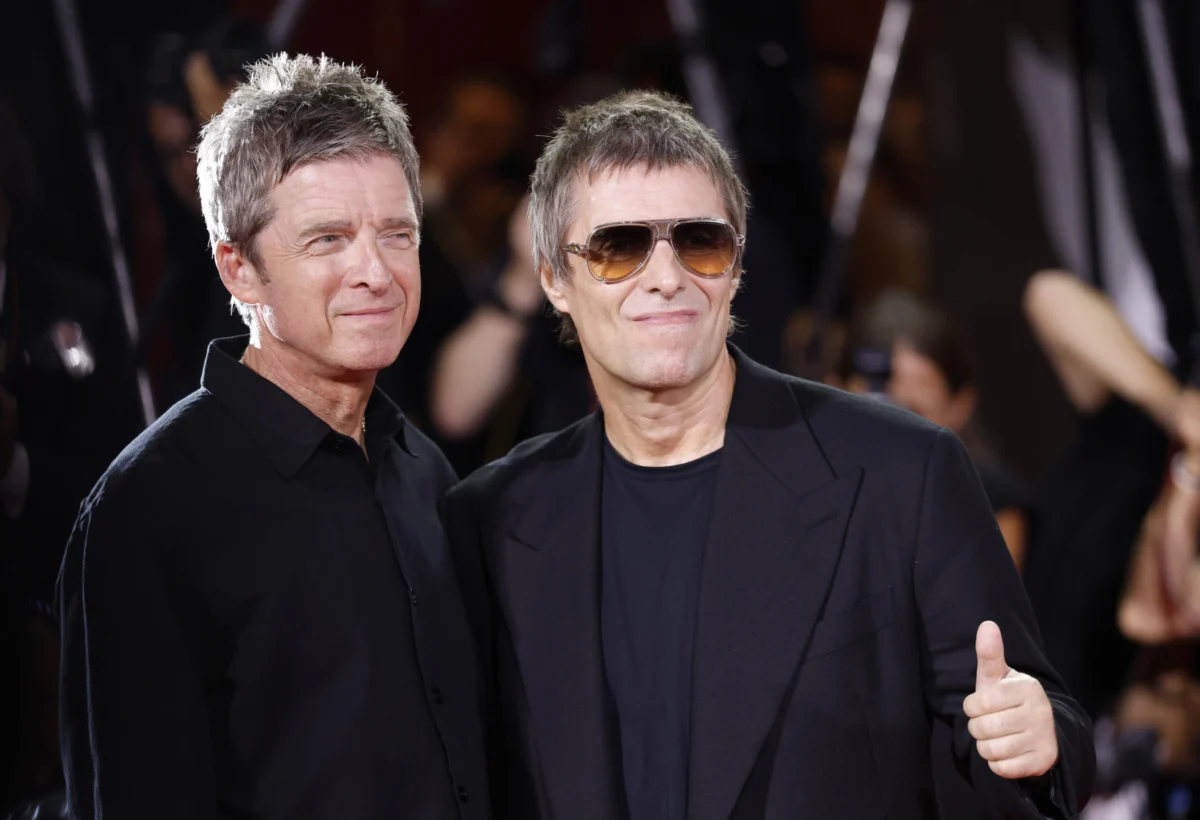
The hallowed, red-carpeted halls of the Venice Film Festival are typically reserved for the hushed reverence of arthouse cinema and the stoic elegance of A-list actors. However, on Saturday night, the Palazzo del Cinema was transformed into something far more visceral, loud, and undeniably Mancunian. The world premiere of Don’t Look Back in Anger, the highly anticipated documentary chronicling the tumultuous and triumphant reunion of Oasis, did not just screen a film; it hosted a rock ’n’ roll coronation.
For the gathered crowd, the appearance of Liam and Noel Gallagher—two brothers whose decades-long feud once defined the fractious nature of British music—was a moment of historical catharsis. As the pair stood center stage, hands joined in a rare, triumphant display of unity, the theater erupted into an eight-minute standing ovation, signaling that the Britpop era had not only returned but had reclaimed its place at the pinnacle of global culture.
A Chronology of Chaos and Celebration
The fervor began long before the house lights dimmed. From the early hours of Saturday, the Venice Lido was colonized by a sea of bucket hats, parka jackets, and vintage band tees. Italian fans, demonstrating that the appeal of Oasis transcends borders, spent the afternoon leading spirited, choir-like renditions of “Wonderwall” and “Champagne Supernova.”
When the Gallaghers finally arrived, they bypassed the traditional chauffeured car entrance, opting instead to walk directly through the main cinema entrance. The result was a deafening roar from the crowd, a sound more akin to a Wembley Stadium chorus than a film festival premiere. Despite their reputation for unfancy, working-class attire, the brothers opted for a sleek, monochromatic aesthetic—Liam in a sharp blazer over a T-shirt, and Noel in a clean, minimalist zip-up jacket.
As the film commenced, the theater transformed. The documentary, directed by Dylan Southern and Will Lovelace, proved to be an immersive experience. The audience, clearly composed of die-hard devotees, treated the screening as a live performance. After each track featured in the film, the theater erupted in applause. By the time the closing credits rolled, with the haunting, anthemic strains of “Champagne Supernova” filling the room, the atmosphere had shifted from celebratory to deeply emotional, with many fans reduced to tears.
The evening reached a peak of surreal humor during the standing ovation. Visibly unaccustomed to the rigid protocols of film festival etiquette, the brothers appeared confused by the sustained applause. At one point, Liam was spotted checking his watch and leaning over to ask, “Should we fuck off?” before director Steven Knight nudged them to remain on stage. The night concluded in a frenzy as the brothers descended into the aisles, turning the elegant screening room into a makeshift mosh pit as fans clamored for signatures and selfies.
The Anatomy of a Comeback: Oasis Live ’25
Don’t Look Back in Anger serves as the definitive chronicle of the Oasis Live ’25 tour, an endeavor that will likely be remembered as one of the most significant cultural resets of the 21st century. The film offers an unprecedented look behind the curtain, featuring intimate footage of the band both backstage and in the spotlight. Crucially, it includes the first joint, long-form interview the brothers have participated in for over two decades.
The Oasis Live ’25 tour itself was a logistical and financial marvel. Marking the first time the brothers had performed together since their infamous 2009 split in Paris, the tour was an immediate sell-out. It generated hundreds of millions of dollars in revenue, sweeping across the U.K., North America, South Korea, Japan, Australia, and South America. The scale of the tour demonstrated that while the brothers had been apart, the appetite for their music had only grown, cementing their legacy as the definitive voice of a generation.
Supporting Data: Why the Oasis Brand Endures
The sheer economic power of the reunion is difficult to overstate. In an industry increasingly fragmented by streaming algorithms and short-lived viral trends, Oasis represents a rare "monoculture" phenomenon. Their ability to sell out stadiums across multiple continents simultaneously confirms that the "Oasis brand"—defined by working-class swagger, anthemic melodies, and the raw tension of the brothers’ relationship—retains a high premium.
Data from the tour’s run indicates that demographics were not limited to those who grew up in the 90s. The audience was a mix of original fans and Gen Z listeners, the latter of whom have discovered the band through social media and cultural osmosis. This generational bridge is precisely what allows the documentary to succeed: it is both a nostalgia trip for the veterans and a discovery vehicle for the youth.
Official Responses and the "Silent" Press Conference
Notably, the brothers’ appearance at the premiere was their only official public engagement of the day. They notably skipped the earlier, more formal press conference held on Saturday morning. While some critics suggested this was a sign of lingering friction, the brothers’ behavior on the red carpet and inside the theater painted a different picture.
By avoiding the standard Q&A circuit, the Gallaghers maintained the "rock star" mystique that has defined their careers. They did not need to explain the film or justify their reunion through a series of scripted press answers; the film, and their physical presence at the premiere, spoke for itself. This silence, however, was filled by the industry’s hunger for what comes next.
Implications: The Future of the Band
The success of Don’t Look Back in Anger and the evident, if cautious, harmony between Liam and Noel have sent the rumor mill into overdrive. Fans are currently dissecting cryptic Instagram teasers posted by the band’s official accounts, treating every post as a piece of a larger, hidden puzzle.
The most telling comment, however, came from Noel Gallagher in a recent interview with Talksport. When pressed about the possibility of further activity, he offered a signature, cheeky retort: "Let’s put it this way: there’s no football tournament on next year, so we’ve got to do something in the summer, right?"
This comment has been interpreted by many industry insiders as a heavy hint toward a 2026 tour or a series of high-profile festival slots. The implication is clear: the Oasis Live ’25 tour was not a grand finale, but rather a successful pilot program. If the brothers can continue to navigate their complex personal dynamic, the commercial prospects for another year of touring are effectively limitless.
As the Venice Film Festival moves on to its next slate of films, the "Oasis moment" remains the standout narrative of the event. It was a reminder that in an age of digital isolation, there is still nothing quite like the collective, thumping heart of a crowd united by a band that truly matters. Whether or not they return to the stage next summer, the Gallaghers have successfully managed the most difficult task in music: they have reclaimed their past without destroying their future.
Don’t Look Back in Anger will hit theaters on September 11, with a streaming release on Disney+ slated for later this year. For now, the world waits—not in anger, but in anticipation of the next chapter in the most volatile and exhilarating story in rock history.










