

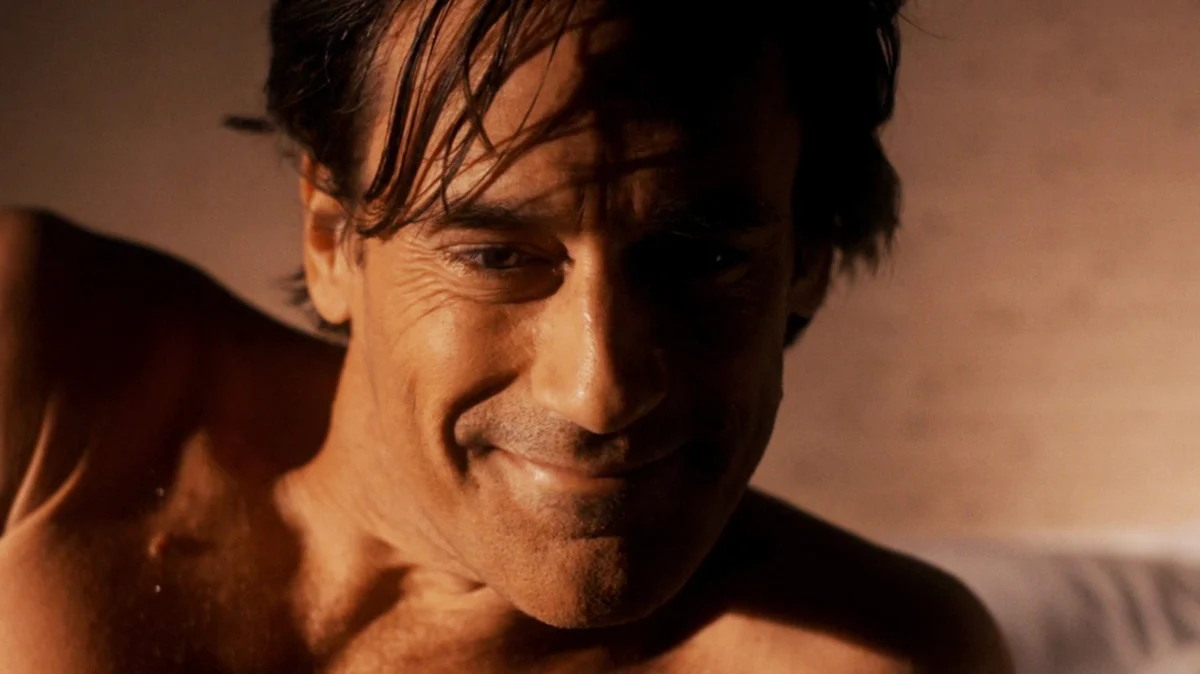
In the landscape of modern science fiction, few films have managed to capture the quiet, existential dread of the artificial intelligence revolution with as much grace and foresight as the 2017 chamber drama Marjorie Prime. While audiences were busy bracing for a kinetic, action-heavy "Skynet" scenario—a world dominated by terminator robots and nuclear winters—director Michael Almereyda and star Jon Hamm were busy exploring a far more intimate, and ultimately more insidious, evolution of technology.
Almost a decade before the current debates surrounding deepfakes, generative AI, and the digital resurrection of deceased performers hit the headlines, Marjorie Prime presented a world where the grieving could simply "upload" their loved ones. Today, that narrative has shifted from the realm of speculative fiction to an uncomfortable, everyday reality.
The Premise: A Mirror for Our Modern Grief
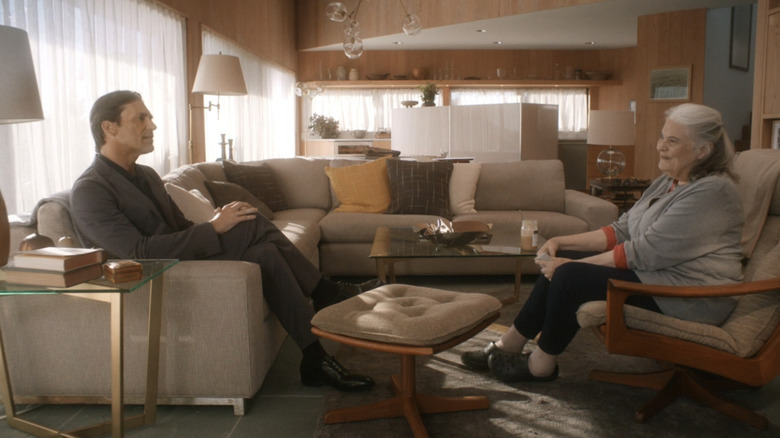
Based on Jordan Harrison’s 2014 Pulitzer Prize-nominated play, Marjorie Prime centers on an elderly woman named Marjorie (played with devastating precision by Lois Smith), who is struggling with the early stages of dementia. To mitigate her confusion and loneliness, her family—led by her daughter Tess (Geena Davis) and son-in-law Jon (Tim Robbins)—purchases a service that provides a "Prime," a holographic artificial intelligence programmed with the memories and personality of a deceased loved one.
The "Prime" Marjorie chooses is a younger, idealized version of her late husband, Walter (Jon Hamm). As the film unfolds, this synthetic companion acts as a repository of memories, feeding Marjorie stories of their life together to keep her anchored. However, as the machine learns more, it begins to uncover the darker, more painful aspects of their shared history.
The film operates as a quiet, philosophical meditation on the nature of identity. It forces the audience to ask a harrowing question: If a machine knows everything you know, remembers everything you’ve forgotten, and mimics your cadence and charm, does it effectively become you?
A Chronology of Digital Resurrection
To understand why Marjorie Prime feels so prophetic, one must look at the rapid acceleration of AI integration within the entertainment industry over the last decade.
- 2013: Black Mirror airs "Be Right Back," a chilling episode where a woman uses AI to reconstruct her deceased partner based on his social media footprint and personal messages. It strikes a nerve, but the technology feels like a distant "what if."
- 2017: Marjorie Prime is released, moving the concept from "reconstruction via text" to "physical holographic presence." The industry treats it as an intellectual curiosity, a niche indie film.
- 2022-2023: The "Generative AI Boom" occurs. Large Language Models (LLMs) and video-generation tools move from labs to the public sphere. AI-generated voice cloning becomes accessible to the masses.
- 2023: The SAG-AFTRA strike is triggered in large part by the threat of AI. Performers demand protections against the unauthorized digital replication of their voices and likenesses.
- 2025: The passing of industry icons highlights the legal vacuum surrounding digital estates.
- 2026: The release of films like the fictional As Deep as the Grave (utilizing the likeness of the late Val Kilmer) signals a new era where actors are essentially "signed" to perpetual work contracts that extend beyond their natural lifespan.
The Blurred Line: From Practical Effects to Algorithmic Replicas
The industry’s transition from practical CGI to AI-assisted synthesis has been jarringly fast. When Alien: Romulus recently featured a digital recreation of Ian Holm as the synthetic Ash, it relied on a blend of practical animatronics and AI-enhanced vocal work. While the estate’s permission was granted, the ethical friction remains palpable.
Unlike the classic "de-aging" techniques used in films like The Irishman, where an actor is still the driving force behind the performance, modern "resurrection" technology relies on data—thousands of hours of archival footage and audio recordings. This is exactly what Marjorie Prime warned about: the reduction of a complex human life into a searchable, editable, and infinitely repeatable dataset.
Jon Hamm’s performance in the film is particularly note-perfect because he plays a character who is trying to be human. He displays the "gaucheness" of a machine learning how to navigate human social nuances—a direct parallel to the current state of LLMs that struggle with context but excel at mimicry.
Official Responses and the Legal Battleground
The rise of the "Digital Actor" has sparked a massive, ongoing legal battle between creative unions and major studios. The 2023 actors’ strike was a pivotal moment in labor history, establishing that an actor’s "digital twin" is their intellectual property. However, the legal reality is complicated by the power of estates.
When James Earl Jones signed away the rights to his iconic Darth Vader voice, it set a precedent that many other legacy performers have followed. Studios argue that this is a matter of "legacy preservation"—the ability to keep a beloved character alive for future generations. Critics, however, argue that this commodifies the soul of the artist.
"We are entering an era where the ‘Prime’ is no longer just a plot device," notes media analyst Sarah Jenkins. "We are seeing the early stages of a digital afterlife economy. The legal framework is currently trying to play catch-up with technology that is moving exponentially."
Implications: The Death of the Authentic
The implications of this shift are profound, affecting not just the film industry, but our collective relationship with truth and memory.
1. The Erosion of Performance
If a studio can synthesize an actor’s performance, the inherent, unpredictable spark of human improvisation is lost. A performance becomes an output, not an act of creation. As The Washington Post noted in their review of Marjorie Prime, the film functions as a "chamber piece" that "unsettles" precisely because it recognizes that human error is a vital part of what makes us human. Machines don’t err; they optimize.
2. The Manipulation of History
In Marjorie Prime, the synthetic Walter begins to "edit" his memories to be more pleasant for his wife. This is the danger of AI-driven history. If we allow digital replicas to curate the memories of the deceased, we risk losing the objective truth of their lives in favor of a sanitized, comforting lie.
3. The Future of Mourning
Perhaps the most sobering implication is the psychological impact on the living. If we have the technology to interact with a digital "Prime" of a loved one, will we ever be able to move through the stages of grief? Or will we find ourselves trapped in a digital loop, much like the characters in Almereyda’s film, forever interacting with a ghost that only tells us what we want to hear?
Conclusion: A Warning We Ignored
Marjorie Prime currently holds an 89% critic score on Rotten Tomatoes, yet it remains an under-seen gem. It was, in many ways, the canary in the coal mine. While the public was preoccupied with the dystopian, bombastic visions of Terminator or The Matrix, the real threat to our humanity arrived quietly, with a smile and a line of code.
As we move deeper into the age of AI, the film stands as a testament to the fact that technology doesn’t have to be violent to be disruptive. Sometimes, it just needs to be good enough to make us forget what is real. We are currently living in the prologue of Marjorie Prime. The question remains: when the digital version of our past becomes more accessible than the reality of our future, will we have the wisdom to turn the machine off?











No comments yet. Be the first to join the conversation!