Main Facts: A Milestone Celebration
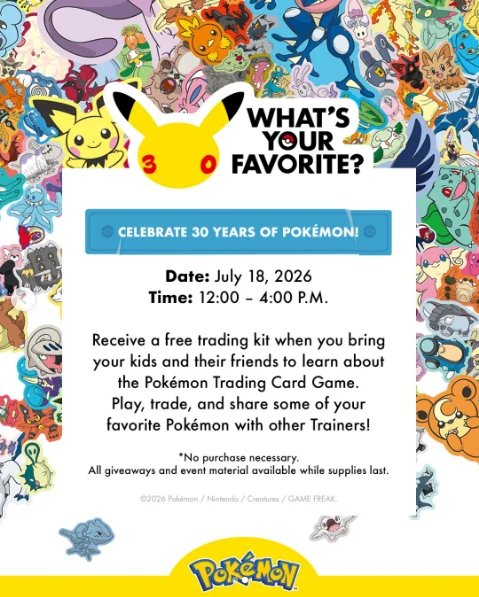
As the Pokémon franchise approaches its momentous 30th anniversary, GameStop has announced a nationwide initiative to bring fans and collectors together. On July 18, from 12:00 PM to 4:00 PM local time, every GameStop retail location across the United States will host an immersive Pokémon Trading Card Game (TCG) event.
This event is designed to be accessible to everyone, from veteran trainers who have been collecting since the mid-90s to newcomers looking to learn the ropes of the tabletop game. The event will focus on community engagement, offering fans a space to trade cards, sharpen their competitive skills, and celebrate the cultural phenomenon that has defined a generation of gaming. In a gesture of goodwill, GameStop will be distributing free "Trading Kits" to attendees, available while supplies last, with absolutely no purchase necessary.
Chronology: The Evolution of a Global Phenomenon
To understand the significance of this 30th-anniversary celebration, one must look at the timeline that propelled Pokémon from a niche Game Boy title to a global entertainment juggernaut.
The Foundation (1996–1999)
In February 1996, Satoshi Tajiri and Ken Sugimori’s vision, Pocket Monsters Red and Green, launched in Japan. The concept—a synthesis of bug-collecting and tactical RPG gameplay—struck a chord that resonated far beyond its home market. By 1998, the franchise had expanded to North America, and in 1999, the Pokémon Trading Card Game was introduced to the Western world, sparking a frenzy that turned playground lunch tables into hubs of high-stakes trading and strategic dueling.
The Expansion Era (2000–2015)
Throughout the early 2000s, Pokémon diversified into films, anime, and an ever-evolving video game series. The franchise weathered the transition from 2D sprites to 3D environments, maintaining its core identity while introducing new mechanics that kept the TCG fresh. During this period, the secondary market for rare cards began to explode, transforming the hobby from simple play into a legitimate investment class for many enthusiasts.
The Modern Renaissance (2016–Present)
The 2016 release of Pokémon GO served as a catalyst for a massive resurgence in the brand’s popularity. This was followed by the COVID-19 pandemic, which saw an unprecedented surge in demand for Pokémon TCG cards, with vintage sets reaching record-breaking prices at auction. Now, in 2026, as the brand hits the three-decade mark, the focus has shifted back to community building and the tangible joy of physical cards, which remains the bedrock of the franchise’s longevity.

Supporting Data: The Power of the Pokémon Ecosystem
The decision to host a nationwide event at thousands of retail points is rooted in the sheer scale of the Pokémon economy. Market analysts note that Pokémon consistently ranks as the highest-grossing media franchise in history, with total lifetime revenue estimated in the hundreds of billions of dollars.
- TCG Dominance: The Pokémon Trading Card Game remains a dominant force in the hobby gaming sector. Recent industry reports indicate that Pokémon accounts for a significant plurality of total TCG sales in North America, consistently outperforming rivals like Magic: The Gathering and Yu-Gi-Oh! in volume.
- Retail Synergy: For GameStop, this event represents a tactical move to bridge the gap between digital and physical commerce. By driving foot traffic to stores, the company leverages the "experience economy," where customers visit locations not just to buy a product, but to participate in a communal event.
- Demographic Reach: Data suggests that the Pokémon fanbase is uniquely multi-generational. Many adults who grew up with the franchise in the late 90s are now introducing their own children to the cards, creating a "cradle-to-grave" consumer cycle that is the envy of the retail industry.
Official Perspectives and Industry Context
Daniel Pickett, founder of ActionFigureInsider.com and a lifelong expert in the collectible industry, notes that events of this nature are vital to the health of the hobby. "When you look at the trajectory of successful franchises, it always comes down to the community," says Pickett. "It isn’t just about the cardboard; it’s about the social fabric built around the game. GameStop’s decision to provide a physical space for this interaction reinforces the value of the ‘third place’—a location outside of work and home where people can connect over shared interests."
From an organizational standpoint, the Pokémon Company has always prioritized accessibility. By partnering with a major retailer like GameStop, they ensure that the 30th-anniversary celebrations are not limited to large-scale conventions or high-cost tournament circuits. Instead, the initiative democratizes the celebration, allowing fans in rural areas and small towns to participate with the same ease as those in major metropolitan hubs.
Implications: The Future of In-Store Retail
The upcoming event serves as a bellwether for the future of brick-and-mortar retail in an increasingly digital world. As online marketplaces and digital card games like Pokémon TCG Live continue to grow, physical retailers must pivot to become "community hubs."
The Rise of Experiential Retail
Retailers are finding that they cannot compete with the convenience of Amazon or the speed of digital downloads. Instead, they must offer what the internet cannot: face-to-face interaction. The Pokémon TCG event on July 18 is a prime example of this strategy. By facilitating learning sessions and trading circles, GameStop is transforming its stores from warehouses into social venues.
Impact on the Collectible Market
The distribution of free "Trading Kits" is expected to have a ripple effect on the secondary market. By providing newcomers with the tools to start their journey, GameStop is effectively expanding the player base. This influx of new players creates a healthy turnover in the ecosystem, driving the demand for new expansions and reinforcing the value of the game’s mechanics.

Long-Term Brand Loyalty
The 30-year milestone is a testament to the resilience of Pokémon. Many brands that were popular in the 90s have faded into obscurity or been relegated to "nostalgia bait." Pokémon, however, has managed to remain relevant by constantly iterating its gameplay and aesthetic while maintaining the core elements that fans love. This event is a signal that the brand is not merely looking back at its history, but is actively cultivating the next generation of trainers.
Conclusion: A Call to Action for Trainers
As July 18 approaches, excitement among the fan community is palpable. For those planning to attend, the event serves as an opportunity to disconnect from digital screens and engage in the tactile, strategic gameplay that made Pokémon a global sensation.
Whether you are looking to complete a set, learn the complex nuances of deck-building, or simply share stories with fellow enthusiasts, the GameStop event offers a rare opportunity to celebrate 30 years of history in a personal, local setting. As supplies of the Trading Kits are limited, early arrival is recommended.
This anniversary is not just a celebration of a brand; it is a celebration of a community that has survived and thrived through three decades of change. As the Pokémon world continues to expand, it remains clear that the heart of the franchise will always be found at the table, across from an opponent, with a deck of cards in hand.
About the Contributor:
Daniel Pickett is the founder and Editor-In-Chief of ActionFigureInsider.com. With over 25 years of experience in the toy and collectible industry, Pickett has served as an expert consultant for various media outlets, including CNN, The Wall Street Journal, and G4. His passion for the history of play and his deep connections within the manufacturing world provide a unique perspective on the intersection of commerce and pop culture.