
 Suro Senen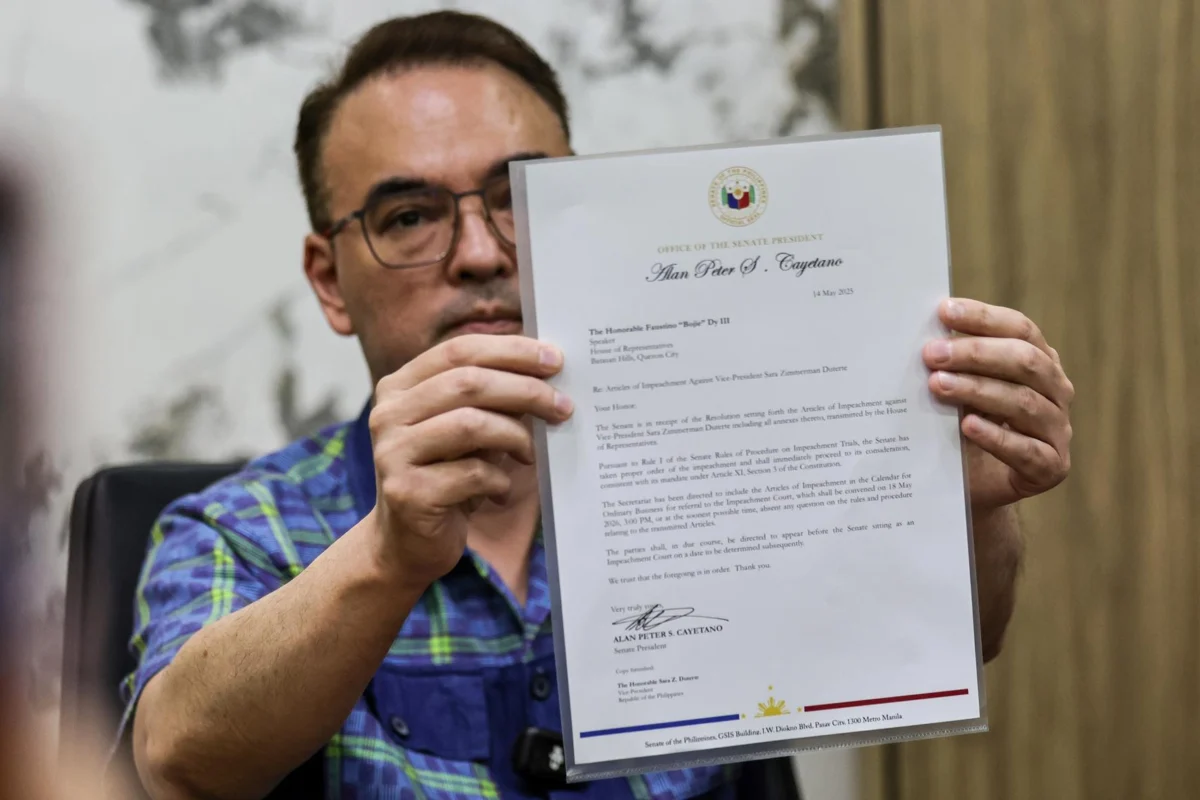
MANILA — The delicate balance of power in the Philippines plunged into further disarray this week as Senator Ronald "Bato" dela Rosa, a key figure in the Duterte administration’s controversial "War on Drugs," vanished from the Senate building under the cover of a violent security breach. The escape has sparked a high-stakes standoff between the executive branch, the legislature, and international judicial authorities, further deepening the rift between the families of President Ferdinand Marcos Jr. and his predecessor, Rodrigo Duterte.
Dela Rosa, 64, who had been seeking sanctuary within the Senate’s hallowed halls to evade an International Criminal Court (ICC) warrant, exited the heavily fortified premises late Wednesday night. His departure followed a series of gunshots fired by Senate security personnel during an altercation with a government agent—a chaotic sequence of events that officials are now investigating as a potential orchestrated diversion.
The Chronology of a Disappearing Act
The events leading to the escape were as rapid as they were volatile. The tension began on Monday, when Dela Rosa, who had been largely absent from public view for months, made a dramatic reappearance. Arriving at the Senate in the vehicle of newly installed Senate President Alan Cayetano, Dela Rosa’s return served as a political catalyst. His presence provided the critical vote needed to secure a new Senate leadership, shifting the chamber’s dynamics in favor of the Duterte-aligned bloc.
Immediately upon his arrival, agents from the National Bureau of Investigation (NBI) attempted to serve an ICC arrest warrant. In a scene that played out like a political thriller, the senator sprinted toward a restricted stairwell, seeking refuge in the plenary hall. His colleagues quickly rallied around him, placing him under "protective custody" to shield him from the reach of the ICC-backed enforcement team.
By Wednesday night, the atmosphere reached a breaking point. Witnesses reported an intense argument between Senate security and government agents, which escalated into a volley of gunfire. In the ensuing pandemonium, the security perimeter around the senator was breached—or perhaps abandoned—allowing Dela Rosa to slip out of the building undetected.
The Legal Precipice: ICC Charges and Human Rights
The warrant currently issued for Dela Rosa is a direct extension of the international community’s scrutiny of the "War on Drugs" carried out during the Duterte presidency (2016–2022). The ICC charges the former police chief with crimes against humanity, specifically citing the murder of at least 32 individuals between July 2016 and April 2018.
During this period, Dela Rosa served as the national police chief, acting as the primary enforcer of Rodrigo Duterte’s brutal anti-drug policies. The ICC warrant alleges that these deaths were not isolated incidents of police overreach but part of a systematic, state-sanctioned policy of extrajudicial killings.
Former President Duterte himself was arrested in March of last year on similar charges and is currently awaiting trial in The Hague. Both men have consistently denied authorizing any illegal killings, maintaining that their actions were lawful operations against criminal syndicates. However, human rights organizations and international observers have long argued that the rhetoric employed by the Duterte administration—which often encouraged the killing of drug suspects—created a culture of impunity that left thousands dead.
Official Responses and the "No Obstruction" Defense
The aftermath of the escape has been characterized by sharp denials and finger-pointing. Senate President Alan Cayetano, speaking at a news briefing Thursday morning, flatly rejected allegations that the Senate had obstructed justice.
"There is no obstruction of justice," Cayetano stated, asserting that because he had not personally seen a valid, enforceable ICC warrant recognized by his office, the senator was under no legal obligation to remain. He characterized Dela Rosa’s departure as the act of a free citizen leaving a public building.
However, critics remain unconvinced, pointing to the obvious conflict of interest inherent in the Senate’s protection of one of its own. Legal experts and civil society groups have called for a full investigation into the security chief and the circumstances of the gunfire, suggesting that the "chaos" was a calculated move to facilitate the senator’s flight.
President Ferdinand Marcos Jr., clearly aware of the potential for public unrest, issued a late-night televised address calling for calm. He promised a thorough police investigation, noting that authorities are looking into whether the gunfire was intentionally instigated to provide cover for Dela Rosa’s exit. The president’s plea for stability underscores the fragility of the current administration as it navigates a multifaceted constitutional crisis.
Political Implications: The Duterte-Marcos Feud
The escape of Dela Rosa is not an isolated event; it is the latest, most explosive development in the escalating feud between the Marcos and Duterte families. The alliance that brought the two clans to power in the 2022 elections has effectively collapsed, replaced by a bitter rivalry that threatens the stability of the Philippine government.
Vice President Sara Duterte, the former president’s daughter, has been the most vocal critic of the current administration. She has publicly accused President Marcos of "kidnapping" her father and handing him over to the ICC, a foreign entity she views as a tool of colonial interference.
The pressure on the Duterte camp intensified significantly on Monday, when the House of Representatives—firmly under the control of Marcos allies—impeached the Vice President. The impeachment articles cite "unexplained wealth," the "misuse of state funds," and a disturbing public threat allegedly made by Sara Duterte, in which she reportedly stated she would have the President, his wife, and the House Speaker assassinated if she were to be killed.
The Vice President has dismissed the impeachment charges as politically motivated harassment. She has notably refused to address the specific allegations regarding her wealth or the death threats, choosing instead to focus on the perceived "persecution" of her family.
A Nation at a Crossroads: The Future of the Senate
The Senate now faces a daunting transition. President of the Senate Cayetano announced that the chamber would convene as an impeachment court as early as next Monday to begin the trial of Vice President Duterte.
This development poses a significant challenge for the Senate. As the body prepares to act as a judge in the impeachment of the Vice President, it is simultaneously embroiled in the controversy surrounding its own failure to hand over a senator wanted for crimes against humanity. The optics of the institution—seen by many as a bastion of political immunity—have been severely damaged.
For the Filipino public, the events of the past week represent a stark reminder of the deep, historic divisions that continue to characterize the country’s democracy. The "rambunctious" nature of Philippine politics, once seen as a sign of vibrant debate, is now increasingly viewed as a volatile force that prioritizes family loyalties and political survival over the rule of law and international obligations.
As the police investigation into the "staged" shootout continues and the impeachment trial looms, the Philippines stands at a critical juncture. The question of whether the state can maintain its authority in the face of such blatant defiance of judicial processes will likely define the remainder of the Marcos presidency. Whether Dela Rosa is eventually apprehended or whether he has successfully navigated the path to permanent exile remains the subject of intense speculation, but the damage to the nation’s institutional integrity is already profound.
The international community watches closely, wary that a failure to hold such high-level figures accountable for alleged crimes against humanity will only further erode the democratic standards that the Philippines has struggled to uphold for decades.


 Neng Nana
 Asro
Asro





