In the digital age, our experience of the environment is often mediated through flat, utilitarian interfaces—rows of numbers, sterile icons of clouds, and stark temperature readings. However, New York-based creative director Joonas Virtanen has challenged this clinical approach to data with his latest project, Current Rothko. By marrying the meteorological data of the present moment with the emotionally charged, transcendent canvases of Mark Rothko, Virtanen has transformed the act of checking the weather into a meditative, art-historical encounter.
Main Facts: The Algorithmic Bridge Between Data and Emotion
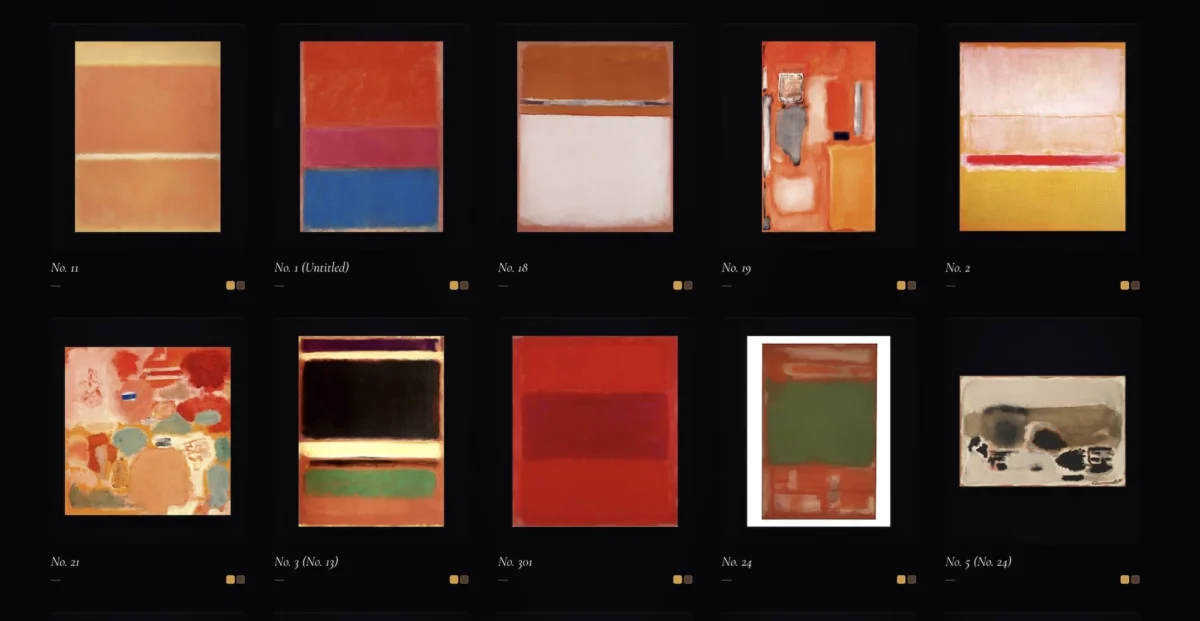
Current Rothko is a web-based platform that functions as a real-time weather service with a profound aesthetic twist. When a user inputs a global location into the search bar, the site does not return a generic sun-or-cloud icon. Instead, it queries live weather data and cross-references it with a meticulously curated database of 89 Mark Rothko paintings.
The algorithm powering the site is surprisingly nuanced. Each painting in the collection has been manually tagged by Virtanen with specific attributes: color registers, brightness levels, perceived temperature, and emotional “mood.” When a user requests the weather for a city—say, a clear, 77-degree day in Chicago—the software calculates the atmospheric conditions and selects the specific Rothko canvas that best reflects the visual "vibe" of that climate.
The result is a dynamic, evolving gallery that responds to the world in real-time. As the sun sets or a storm rolls in, the website shifts its selection, mirroring the transition from vibrant ochres and oranges to the brooding, dark maroons and blacks characteristic of the artist’s later works. It is an exercise in "data-driven impressionism," where the digital interface becomes a frame for a living dialogue between the viewer, the weather, and the legacy of mid-century American abstraction.

A Chronology of Color: The Evolution of Color Field Painting
To understand the resonance of Current Rothko, one must look back at the development of the movement that defined the artist’s career. The mid-20th century saw a seismic shift in the art world, as painters began moving away from the figurative and the representational toward a mode of expression that was purely visceral.
The 1950s: The Rise of the "Field"
In the 1950s, the term "color field painting" emerged to describe the work of artists like Mark Rothko, Barnett Newman, and Clyfford Still. Unlike the chaotic, gestural energy of Action Painting (often associated with Jackson Pollock), Color Field painting focused on large, flat areas of color that suggested a sense of infinite space. For these artists, the canvas was not a window into a scene, but an object of contemplation in itself.
The Architectonic Period
As the 1960s approached, Rothko’s work grew more monumental. His paintings, often reaching heights of ten feet or more, were designed to be experienced in person, often in low-light environments like the eponymous Rothko Chapel in Houston. These works were "architectonic," meaning they were meant to reshape the space they inhabited, commanding the viewer to stop, breathe, and exist within the "field."
The Digital Renaissance
Today, we are witnessing a resurgence of interest in these works among Gen Z and younger demographics. In an era defined by information overload and constant digital stimuli, Rothko’s paintings offer a rare "antidote"—a space of stillness. Current Rothko taps into this contemporary hunger for meditative digital experiences, proving that even in the high-speed world of the internet, there is a profound desire to slow down.

Supporting Data: The Anatomy of the Platform
The technical scaffolding of Current Rothko is a study in creative curation. Virtanen has sourced his imagery from a wide array of prestigious institutions, including the National Gallery of Art, the Museum of Modern Art (MoMA), and the Tate.
The Curation Process
The database currently features 89 distinct works, a collection that reflects both the breadth of Rothko’s palette and the limitations of contemporary copyright law. Because Rothko’s work remains under copyright—artworks generally enter the public domain 95 years after creation—the project utilizes fair-use guidelines to provide what the designer terms "capped previews." These are not high-resolution reproductions but rather atmospheric glimpses of the work, preserved in a scale that respects the integrity of the artist’s estate.
Technical Metrics
- Source Material: WikiArt, WikiMedia, and major museum databases.
- Algorithm Logic: Weighted matching based on color temperature (e.g., warm vs. cool tones), luminosity, and emotional resonance.
- User Interface: A minimalist, distraction-free environment that centers the artwork above all other data points.
Official Responses and the Copyright Conundrum
The intersection of fine art and digital tools is often a fraught territory, particularly regarding intellectual property. Virtanen’s approach has been one of transparency and extreme caution. By acknowledging that his platform is a "work in progress," he invites the community to participate in the refinement of the metadata—adding details about dimensions, media, and provenance.
However, the "capped" nature of the images serves a dual purpose: it acts as a legal safeguard while simultaneously preserving the mystery of the works. By presenting the images as small, high-quality thumbnails rather than massive, exploitable files, Virtanen reinforces the idea that these paintings cannot be truly understood through a screen. The website acts as a signpost, encouraging users to seek out the physical reality of the paintings in museums and galleries, rather than settling for the digital approximation.

Implications: The Future of Data Visualization
The success of Current Rothko—and its predecessor projects like Plein Air and Tangled Lines—suggests a shift in how we might design the future of web interfaces. We are moving away from the era of "utility-first" design, where every pixel must serve a functional purpose, toward an era of "experience-first" design.
Aestheticizing the Mundane
By wrapping mundane data—such as the probability of rain in Portland or the humidity index in Kyoto—in the cloak of high art, Virtanen is changing our psychological relationship with that information. A gray, rainy day is no longer just a reason to carry an umbrella; it becomes an opportunity to engage with the dark, layered complexity of a 1958 Rothko canvas.
The "Slow Web" Movement
This project is a flagship for the "Slow Web" movement, which advocates for digital experiences that reward patience and reflection. In an internet landscape dominated by infinite scrolls and dopamine-triggering feeds, Current Rothko forces the user to pause. It invites us to consider the weather not as an obstacle to our daily commute, but as a shifting, atmospheric condition that mirrors the human emotional spectrum.
Expanding the Toolkit
Virtanen’s work also highlights the potential for AI and algorithmic curation in the arts. By tagging thousands of images with emotional and color-based data, developers can create tools that allow us to navigate human history through the lens of our current physical state. Whether it is a transit status tool like Tangled Lines or a weather visualizer, the goal remains the same: to humanize the digital interface.

Conclusion: A Living Canvas
As we look toward the future, projects like Current Rothko remind us that technology does not have to be cold or detached. It can be a vehicle for wonder. While the algorithm may match a stormy afternoon in New York with a specific Rothko work, the true value of the project lies in the connection it fosters between the user and the art.
The next time you reach for your phone to check the forecast, consider the hue of the sky outside your window. Then, visit Current Rothko. You may find that the weather report you receive is not just a prediction of temperature or precipitation, but a reflection of a color field, a mood, and a moment in time, captured by one of the 20th century’s most profound visionaries.
The digital world is vast and often overwhelming, but in the quiet, colored squares of a Rothko painting, we find a way to make sense of the world—one forecast at a time.