

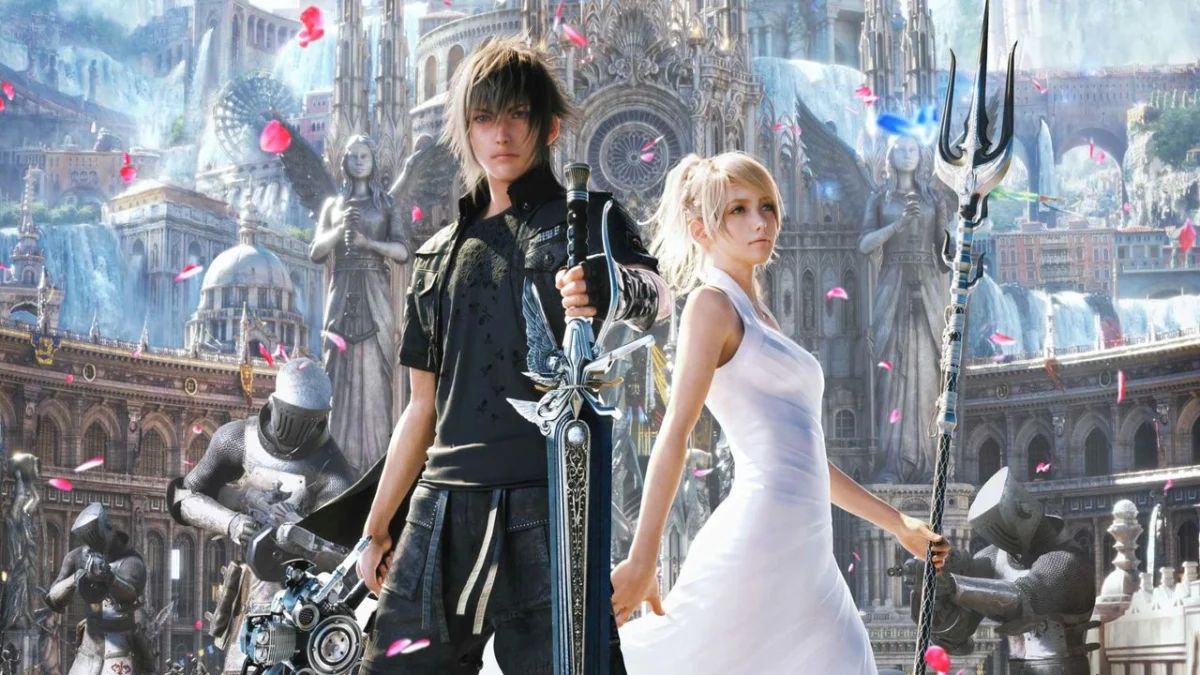
The landscape of handheld gaming has shifted dramatically since the launch of the Nintendo Switch 2. With the console’s enhanced internal architecture bridging the gap between portable play and home-console fidelity, publishers are increasingly revisiting their back catalogs to see which ambitious titles can finally be squeezed into a handheld form factor. Among these, Square Enix—a company that has consistently championed the Switch 2 platform—is now addressing the elephant in the room: the possibility of bringing the open-world epic Final Fantasy 15 to the system.
While the publisher has remained cautious, official statements suggest that a port of the 2016 juggernaut is "not entirely impossible." This revelation has sparked intense speculation among the franchise’s dedicated fanbase, raising questions about technical viability, the legacy of the title, and Square Enix’s broader strategy for its "Final Fantasy" brand in a post-Rebirth era.
The Technical Hurdle: Why FF15 Remains a Beast
When Final Fantasy 15 debuted in 2016, it was a technical showcase. Built on the proprietary Luminous Engine, the game featured vast, seamless landscapes, complex lighting models, and a degree of interactive foliage and physics that pushed the PlayStation 4 and Xbox One to their limits.
Squeezing that same experience onto a handheld device—even one as capable as the Switch 2—is a formidable challenge. The "boys-on-the-road" journey requires constant streaming of high-fidelity assets to maintain the illusion of an unbroken world. Critics and industry analysts have long noted that the engine’s reliance on specific architectural optimizations makes it notoriously difficult to port to platforms that don’t share the same environmental overhead.
However, the industry has seen miracles before. Titles like The Witcher 3: Wild Hunt and No Man’s Sky were considered "impossible" ports for the original Nintendo Switch, yet they found their way onto the console through aggressive optimization, resolution scaling, and asset management. If the Switch 2 offers the performance boost that current market trends suggest, the barrier to entry for Final Fantasy 15 is no longer a wall, but perhaps a manageable hurdle.
A Chronology of the Journey: From 2016 to the Switch 2 Era
To understand the significance of a potential Switch 2 port, one must look at the trajectory of Final Fantasy 15 over the last two decades.
- 2016 (The Launch): Final Fantasy 15 releases to massive commercial success. While praised for its chemistry between characters and its ambitious open world, it faced criticism for a disjointed narrative and clear evidence of a rushed development cycle.
- 2017–2018 (The Expansion): Recognizing the potential, Square Enix committed to a "live-service" style expansion of the game. Through a series of DLC episodes (Prompto, Ignis, Gladiolus, and Ardyn) and the Royal Edition, the game was retroactively "fixed" and fleshed out, becoming the definitive version of the experience.
- 2020–2024 (The Remake Era): As Square Enix shifted its focus toward the Final Fantasy 7 Remake project and the Final Fantasy 16 release, the conversation regarding Final Fantasy 15 quieted down. The title began to feel like a relic of a previous era of design.
- 2025 (The Switch 2 Launch): The release of the Switch 2 revitalized the conversation. Square Enix aggressively ported their library, including Dragon Quest remakes and Final Fantasy 7 Rebirth.
- 2026 (The Current Day): During a recent shareholder meeting, the pressure from fans to bring the remainder of the Final Fantasy lineage to Nintendo’s new flagship hardware reached a boiling point, leading to the company’s first official, albeit coy, acknowledgement of the FF15 inquiry.
Supporting Data: The Square Enix-Switch 2 Synergy
Square Enix has arguably been the most vital third-party supporter of the Nintendo Switch 2 since its inception. The publisher has treated the platform as a primary home for its legacy content, clearly signaling that they view the Switch 2 demographic as a core market for their RPG catalog.
Data from the company’s recent financial reports shows that remasters and ports of older Final Fantasy titles have consistently outperformed expectations on portable platforms. With Final Fantasy 7 Remake and the Final Fantasy 10/10-2 native ports already thriving on the Switch 2, the company has proven that the audience for classic and modern-classic Final Fantasy is not only present but hungry for more.
Furthermore, the successful integration of Final Fantasy 7 Rebirth—a game of immense scale—onto the Switch 2 suggests that the hardware is capable of handling high-end "Square Enix-style" visual fidelity. If Rebirth can function, the argument that Final Fantasy 15 is "too big" becomes significantly weaker, shifting the focus from hardware limitations to developer bandwidth and return on investment.
Official Responses: Keeping the Doors Open
During the recent shareholder’s meeting, the response from Square Enix regarding Final Fantasy 15 was a masterclass in corporate non-commitment, yet it was notably devoid of a "no."
When pressed by investors on whether the game would ever see a portable release, the company representative stated: "While there are certain hardware constraints when it comes to faithfully replicating the exact experience of Final Fantasy 15, we can say that it is not entirely impossible."
This statement is intentionally calibrated. By acknowledging the "hardware constraints," they protect themselves from over-promising, but by labeling it "not entirely impossible," they keep the possibility alive for future marketing cycles. When pressed further on whether development had actually begun, the company replied: "We will pass along your input to the development team as a valuable perspective on marketing and future platform options."
In the world of corporate PR, this is the standard "wait and see" approach. It suggests that while there isn’t a team currently assigned to the port, the desire from the consumer base is being tracked as a potential business case for the future.
Implications: What Does This Mean for the Brand?
If Square Enix were to greenlight a Final Fantasy 15 port, the implications for the brand would be significant.
1. The "Complete Collection" Strategy
For many fans, the idea of having every major modern Final Fantasy game in a single library on the Switch 2 is the ultimate goal. A Final Fantasy 15 port would bridge the gap between the older, turn-based legacy titles and the modern, high-octane action titles, effectively rounding out the library.
2. The Legacy of the Engine
Porting the Luminous Engine to the Switch 2 would be a monumental engineering feat. If successful, it would prove that the engine—often criticized for its heavy overhead—is more versatile than previously thought. This could potentially influence how Square Enix develops future titles, encouraging them to design with portability in mind from the start.
3. Re-evaluating the "Flawed Gem"
Final Fantasy 15 has always been a divisive title, often described as a "flawed gem." A fresh release on the Switch 2—perhaps bundled with all existing DLC and performance enhancements—would provide a second life for the game. It would allow a new generation of players, many of whom started with Final Fantasy 7 Rebirth or Final Fantasy 16, to experience the journey of Noctis and his companions in a format that suits their lifestyle.
4. Setting a Precedent
If Final Fantasy 15 can come to the Switch 2, it opens the floodgates for other titles that were previously considered "impossible." The question becomes less about if a game can run on the hardware, and more about whether Square Enix chooses to allocate the resources.
Conclusion: The Road Ahead
While the prospect of Final Fantasy 15 on the Switch 2 remains a "maybe" rather than a "when," the shift in tone from Square Enix is palpable. They are no longer dismissing the possibility out of hand, acknowledging that the platform’s success makes it a viable candidate for their back catalog.
For now, fans of the series must play the waiting game. Whether the "boys on the road" ever make their way to the Switch 2 remains to be seen, but one thing is clear: the demand exists, the hardware is getting better, and Square Enix is listening. In the gaming industry, sometimes that is all it takes to turn an "impossible" dream into a concrete development project. Until then, we are left to wait, speculate, and hope that one day, we can take the Regalia for a spin on the go.










