

DOHA – In a high-stakes effort to pull the Middle East back from the brink of a full-scale regional war, the United States and Iran have agreed to a temporary cessation of hostilities, according to reports surfacing Sunday. The move comes as the world watches the Strait of Hormuz—the planet’s most critical energy artery—remain largely paralyzed by a cycle of tit-for-tat strikes that have effectively dismantled the interim peace agreement brokered just weeks ago.
According to senior U.S. officials, representatives from Washington and Tehran are scheduled to meet in Qatar this Tuesday. The summit is intended to resuscitate the 14-point interim peace accord originally signed on June 17, which sought to de-escalate the conflict that erupted on February 28, reopen the vital shipping lanes, and provide a framework for negotiating Iran’s nuclear program.
A Cycle of Escalation: The Recent Chronology
The latest round of violence marks the most significant deterioration of the interim ceasefire since its inception. The instability reached a fever pitch following an Iranian projectile strike on a cargo vessel in the Strait of Hormuz last Thursday. Both Washington and Tehran were quick to point fingers, with each side accusing the other of violating the terms of the June 17 accord.
The situation spiraled rapidly over the weekend. In a defiant response to threats issued by President Donald Trump, the Islamic Revolutionary Guard Corps (IRGC) launched a coordinated series of missile and drone attacks against U.S. military installations in Kuwait and Bahrain early Sunday morning.
The volatility was compounded by events in the Levant, where Israel reported sustained operations against Iran-backed Hezbollah militants in southern Lebanon. Despite a ceasefire deal inked between Israel and Lebanese factions on Friday, strikes continued through the weekend, with Israel claiming it had destroyed critical underground infrastructure utilized by the group. Iranian officials have maintained that any broader regional peace is contingent upon the total cessation of these Israeli operations.
The Brinkmanship of Leadership
The diplomatic shift followed a period of aggressive rhetoric that pushed the region to its absolute limit. In a series of posts on social media, President Trump issued a stark ultimatum to the Iranian leadership.
"There may come a point when we are no longer able to be reasonable, and will be forced to militarily complete the job that we very successfully started," Trump wrote. He underscored the gravity of the threat by adding: "If that happens, the Islamic Republic of Iran will no longer exist!"
The rhetoric was matched in intensity by the IRGC, which released a statement via state-run Press TV warning that American bases in the region "will experience hell in the coming days." The Guard Corps argued that recent U.S. strikes had already invalidated the diplomatic process, casting doubt on whether the scheduled talks in Qatar will yield tangible results.
The Economic and Technical Hurdle: Why the Deal is Faltering
Beyond the kinetic conflict, the diplomatic impasse is rooted in deep-seated distrust regarding the mechanics of the interim deal. The agreement, which was initially negotiated by Vice President JD Vance and Iranian parliamentary speaker Mohammad Baqer Qalibaf in Switzerland, required the U.S. to waive specific sanctions in exchange for regional stability.
However, Iran canceled technical preparatory talks scheduled for Sunday, citing the failure of the United States to fulfill the terms of the Memorandum of Understanding. Mehdi Fazaeili, representing the Office of the Supreme Leader, pointed specifically to the issue of financial access.
"One of the reasons [for the cancellation] is checking if we have access to the unfrozen funds," Fazaeili stated. "If there is no access, then this condition has not been fulfilled." For Tehran, the tangible economic relief promised in the 14-point accord is a prerequisite for continued participation in the peace process. Washington’s failure to guarantee the transfer of these funds has provided hardliners in Tehran with the leverage needed to argue that the U.S. is operating in bad faith.
Regional Impact: Civilian and Infrastructure Toll
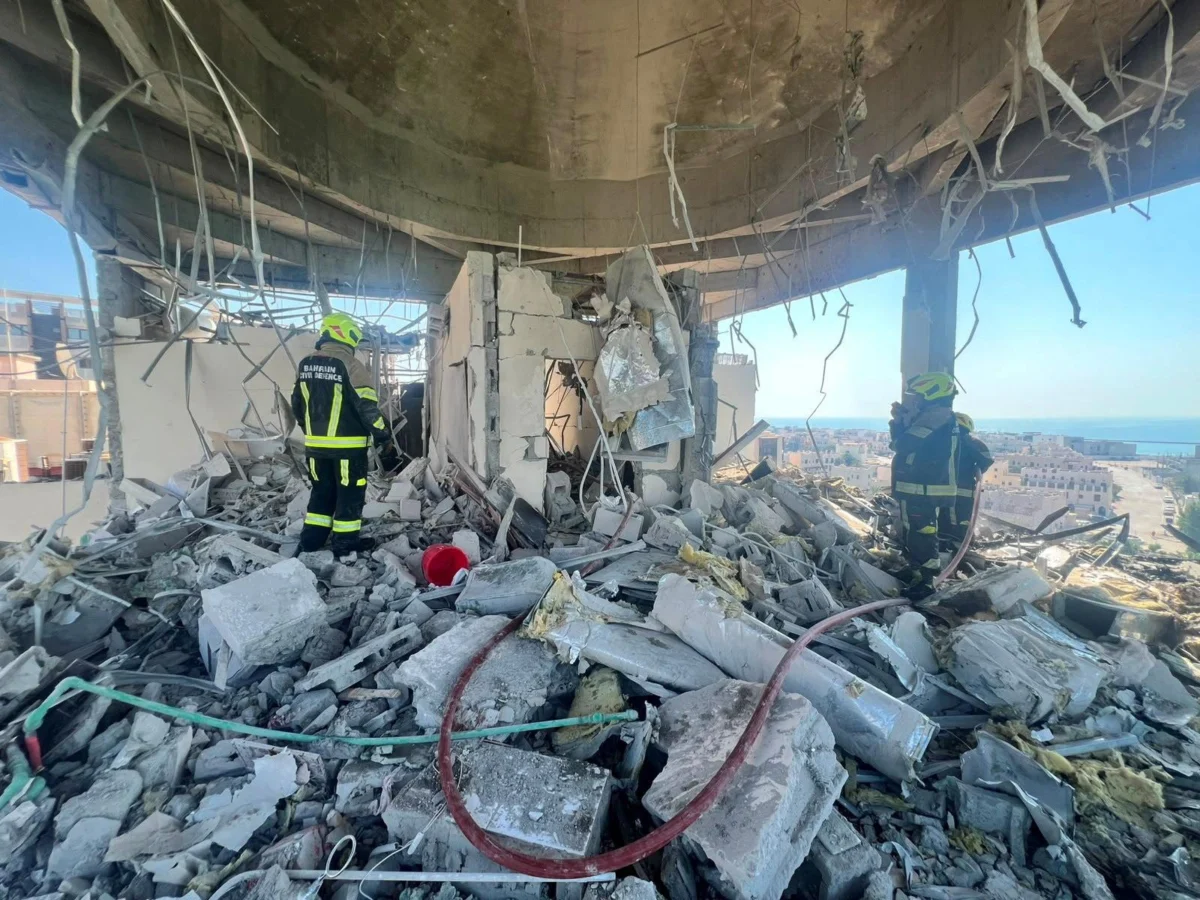
The human and economic cost of this conflict continues to mount. On Sunday, Kuwaiti defense forces reported intercepting two ballistic missiles, reporting no casualties or structural damage. In Bahrain, however, the toll was more tangible; authorities confirmed that an Iranian strike caused significant damage to a residential building in the Muharraq province.
The most somber development occurred in Qatari waters, where the interior ministry confirmed that a Qatari national was killed and another injured due to shrapnel from a vessel that had gone missing on Saturday. While the ministry did not explicitly blame a specific actor, it categorized the incident as a direct consequence of "military operations in the area."
The Strait of Hormuz, through which a significant percentage of the world’s oil transits, remains effectively closed. Shipping insurance premiums have spiked to record highs, and international energy markets are bracing for prolonged volatility. Bahrain has officially requested that the United Nations Security Council hold an emergency session to address what it termed the "reckless aggression" of the Iranian military.
Implications for Future Diplomacy
The meeting in Qatar represents a "last-ditch" effort to prevent the total collapse of the diplomatic framework. Analysts note that the current environment is significantly more toxic than it was during the Switzerland negotiations a week ago.
- The Trust Deficit: Both sides have demonstrated a willingness to engage in direct strikes, making the "ceasefire" a nominal term rather than a functional reality.
- The "Proxy" Factor: The ongoing conflict between Israel and Hezbollah serves as a wild card. Even if the U.S. and Iran reach an understanding, the regional alignment of their respective proxies makes de-escalation difficult to enforce.
- Internal Political Pressure: Both the Trump administration and the Iranian leadership face significant domestic pressure. For Trump, the goal is to demonstrate "peace through strength" without getting bogged down in a multi-front conflict. For the Iranian leadership, failing to secure the unfreezing of funds risks inciting internal discontent regarding the efficacy of their foreign policy.
As the international community looks toward Tuesday, the question remains whether the two nations can transition from a cycle of punitive strikes to a sustainable diplomatic dialogue. If the Qatar talks fail, the rhetoric from Washington suggests that the U.S. may abandon the interim accord entirely in favor of a full-scale military campaign.
The world remains in a state of high alert as the clock ticks toward Tuesday’s summit. With the Strait of Hormuz currently a theater of war rather than a conduit for global commerce, the stakes could not be higher for the stability of the global economy and the security of the Middle East.
© Thomson Reuters 2026. This report includes information from Axios and regional military bulletins. All rights reserved.











