Asro
Asro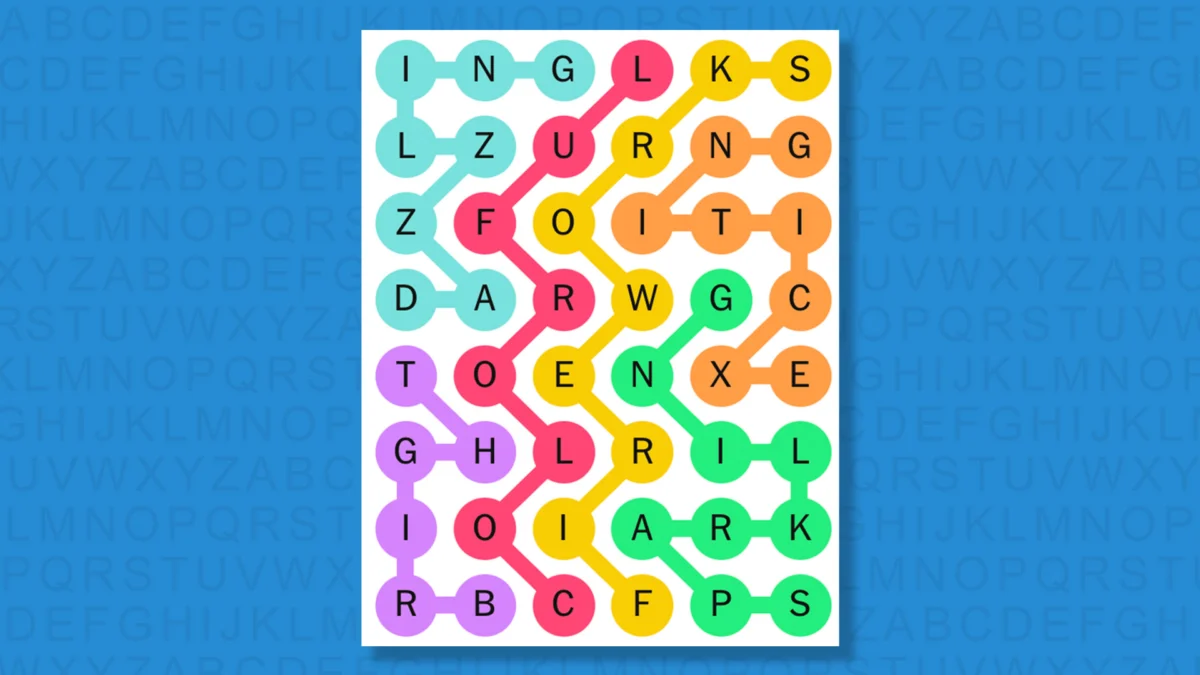
For daily puzzle enthusiasts, the ritual is as fixed as the sunrise. As the clock strikes midnight, the New York Times updates its suite of digital brain-teasers, inviting millions of players to engage in a mental workout that has become a staple of modern morning routines. Among these, Strands—the relative newcomer to the Times’ stable of intellectual amusements—has carved out a dedicated niche. While Wordle tests your vocabulary and Connections demands lateral thinking, Strands requires a unique blend of spatial awareness and linguistic pattern recognition.
Today, we dive deep into game #853. Whether you are a seasoned veteran of the grid or a curious newcomer, navigating the complexities of Strands can often feel like searching for a needle in a haystack—or, more accurately, a specific word in a sea of seemingly unrelated letters.
Understanding the Landscape: What is NYT Strands?
Before we analyze the specifics of today’s challenge, it is worth contextualizing what Strands brings to the table. Launched as a direct evolution of the NYT’s puzzle philosophy, the game tasks players with finding a series of theme-related words hidden within a grid of letters. Unlike a standard word search, however, the letters must be connected in a continuous, winding path. The ultimate goal is to uncover every theme word and the "spangram"—a long, specialized word that bridges two sides of the board and effectively summarizes the theme.
For those who find themselves perpetually stuck on yesterday’s challenge, it is important to remember that Strands resets based on your local time zone. If you have arrived here looking for the answers to the previous day’s puzzle (Friday, July 3, game #852), you can find those resources through our archived guides. For today, however, our focus is squarely on the puzzle at hand.
The Challenge of Game #853: Decoding the Theme
Every Strands game begins with a cryptic, often frustratingly vague clue. For game #853, the theme provided was simply: "Ooh!"
At first glance, the theme is intentionally obtuse. It provides enough emotional context to suggest excitement, wonder, or perhaps a sudden realization, but it offers little in the way of concrete subject matter. In the world of Strands, such themes are often designed to make the player work for their initial breakthrough.
Initial Strategy and Clue Hunting
When faced with a theme as abstract as "Ooh!", the standard approach is to scan the grid for any recognizable strings of letters that do not necessarily fit a specific category. By identifying non-theme words, players can fill their "hint" meter. Once the meter is full, the game will highlight the letters of a theme word for you, providing a necessary foothold to start mapping out the board.
For game #853, the grid was particularly dense, leading many players to struggle with the initial layout. However, as is often the case with NYT puzzles, the breakthrough usually occurs when the player stops looking for specific words and starts looking for the concept. Given the date and the evocative nature of the theme, one might quickly pivot toward the sensory experience of a fireworks display.
The Spangram: The Backbone of the Grid
The spangram is the key to any successful Strands session. It is the longest word in the puzzle and acts as a thematic anchor. In game #853, the spangram was revealed to be FIREWORKS, a nine-letter word that perfectly encapsulates the "Ooh!" reaction one has when watching a pyrotechnic display.
The spatial placement of the spangram is also critical for strategy. In this specific instance, the word stretched from the bottom of the board (4th column) to the top (6th column). Recognizing the trajectory of this word early on is often the difference between a quick victory and a long, drawn-out struggle with the remaining letters.
Chronology of the Experience
The experience of solving game #853 followed a familiar, yet testing, trajectory for many players:
- The Opening Phase (Midnight – 8:00 AM): The puzzle goes live. Early adopters face the "Ooh!" clue with little context. Many report a sense of confusion, as the grid initially seems to contain nothing but scattered, meaningless vowels and consonants.
- The Intermediate Phase (8:00 AM – 12:00 PM): Players begin to identify the spangram. Once "FIREWORKS" is located, the board begins to make sense. The realization that the theme refers to pyrotechnics acts as a "lightbulb" moment, allowing for the rapid identification of secondary words.
- The Resolution Phase (12:00 PM – End of Day): The final theme words are identified, the board is cleared, and the "Ooh!" theme is finally understood as a literal interpretation of the sounds elicited by a fireworks display.
Implications: Why We Love the "Ooh!" Factor
The success of Strands lies in its ability to force us to interact with language in a tactile way. While Wordle is purely logical and Connections is purely semantic, Strands is kinetic.
The psychological impact of identifying a spangram—the moment the board "clears" and the theme snaps into focus—is a powerful dopamine hit. In the case of game #853, the juxtaposition of the "Ooh!" clue with the reality of a fireworks display highlights the NYT‘s editorial strategy: keep the player guessing, maintain a high level of difficulty, and reward the player with a sense of "a-ha!" triumph.
Furthermore, these games serve as a collective digital experience. As players share their scores and struggles on social media, a community forms around the daily challenge. The frustration of an "underwhelming" puzzle, as noted by some, is part of the charm. It fosters conversation, debate, and, occasionally, the sharing of personal anecdotes—like the memory of watching a drone-based fireworks display that left more to be desired than the traditional explosive variety.
Looking Back and Moving Forward
As we reflect on game #853, it is useful to acknowledge the broader context of the New York Times gaming ecosystem. Having established itself as a household name in the world of mobile and desktop gaming, the NYT has proven that the "casual-but-challenging" format is a permanent fixture of our digital landscape.
Whether you play to sharpen your mind, to kill time during a commute, or simply to satisfy the daily urge to solve a problem, Strands provides a reliable, high-quality experience. As the calendar turns and new themes emerge, the challenge will undoubtedly shift, but the joy of the hunt remains constant.
For those who have conquered #853, congratulations. For those who found it tricky, remember that the beauty of these puzzles lies in the learning process. Each word found, each spangram identified, and each hint used is a step toward becoming a more proficient player.
Summary Checklist for Future Success
- Always read the theme carefully: It is rarely as literal as it seems.
- Look for common letter clusters: Even if you don’t see a word, looking for patterns like ‘ING’, ‘TION’, or ‘FIRE’ can help.
- Prioritize the Spangram: If you find yourself lost, focus your energy on finding the long word that spans the board. It will make finding the remaining words significantly easier.
- Use your hints sparingly: While the game provides them, the real satisfaction comes from finding the connections yourself.
As we look toward tomorrow’s puzzle, we do so with the knowledge that the NYT will continue to push the boundaries of what a simple word game can be. Until then, keep scanning the grid, keep connecting the letters, and don’t be afraid to say "ooh" when you finally crack the code.

 Sagoh
Sagoh
 Raul Delapena Setiawan