

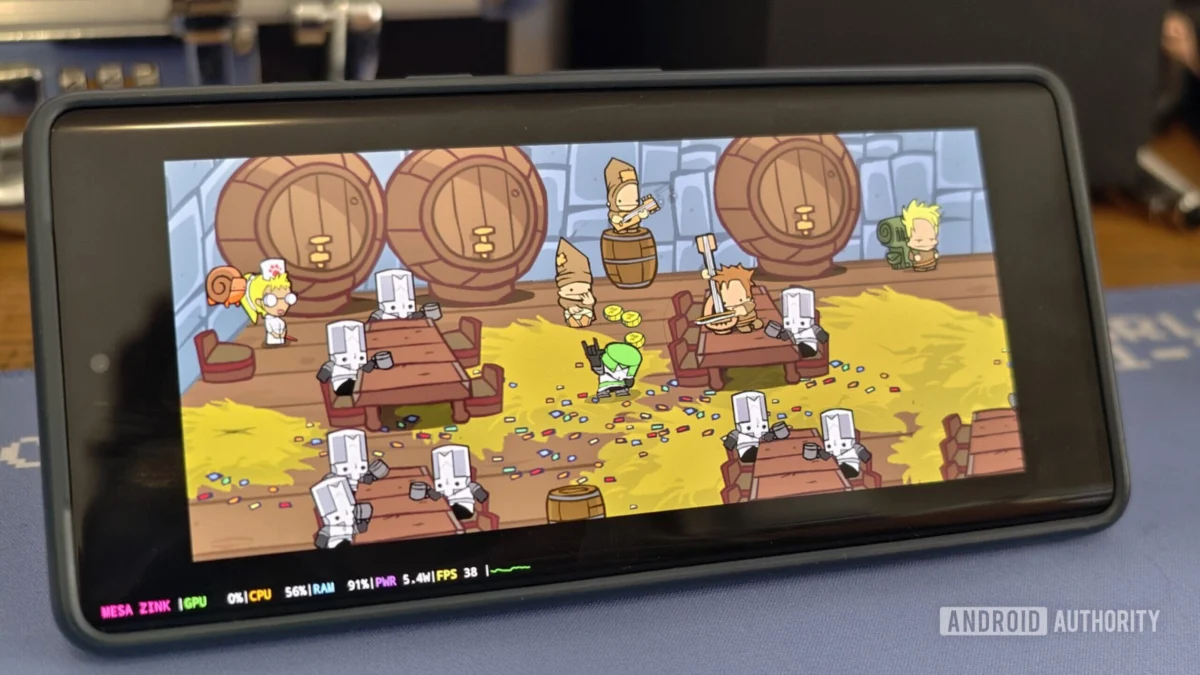
The landscape of Android gaming has been undergoing a seismic shift as mobile hardware increasingly approaches the performance levels of dedicated consoles and entry-level PCs. At the forefront of this evolution are PC game emulators—sophisticated software suites that allow users to run Windows-based titles on their handheld devices. However, the community surrounding these projects is currently reeling from a major controversy involving GameSir, a prominent peripheral and software manufacturer, and its flagship product: GameHub.
While the release of GameHub v6.0 was intended to mark a milestone in performance and compatibility, it has instead ignited a firestorm of accusations regarding intellectual property theft. Independent developers are now publicly alleging that GameSir has systematically scraped and integrated their proprietary code into the GameHub platform without proper attribution or adherence to open-source licensing agreements.
The Core Conflict: Innovation or Intellectual Theft?
The controversy centers on the proprietary nature of GameHub versus the open-source ethos that fuels most Android emulation development. Following the rollout of the v6.0 update, which promised enhanced rendering capabilities and broader device support, members of the developer community began to dissect the application’s binary.
The accusations were spearheaded by StevenMX, a well-known developer within the emulation scene, recognized for his work on the "Winlator Ludashi" fork. StevenMX alleged that GameSir had lifted his specialized work on a Vulkan-based renderer—a critical component that dictates how a device handles graphics—and presented it as their own proprietary breakthrough.
When confronted on the company’s official Discord server, GameSir categorically denied these claims. In a move that would prove to be a strategic miscalculation, the company publicly challenged the community to decompile the application, suggesting that such an analysis would reveal the "independent" nature of their development.
A Chronology of the Dispute
To understand the severity of the situation, one must look at the timeline of events that led to the current standoff:
- Early 2025: GameSir continues to refine GameHub, positioning it as a user-friendly, high-performance alternative for playing PC games on mobile.
- August 2025: The launch of GameHub v6.0 introduces significant performance gains, but immediately triggers scrutiny from power users and developers familiar with the underlying architecture of existing open-source projects.
- Late August 2025: Developer StevenMX publishes evidence on Reddit suggesting that his Vulkan renderer code has been integrated into GameHub.
- Early September 2025: GameSir issues a formal defense on Discord, claiming their code is original and inviting third-party scrutiny.
- Mid-September 2025: Multiple developers, including the maintainer of the
bionic-vulkan-wrapperproject, accept the challenge. By decompiling the application, they identify "fingerprints"—unique, idiosyncratic patterns of code—that strongly suggest the software was copied from their repositories. - Present: The community awaits a formal explanation from GameSir, as the developer community calls for either a shift to an open-source model or an immediate acknowledgement and attribution of the work utilized.
Technical Evidence: The "Smoking Gun"
The most compelling evidence against GameSir comes from the developer known as "leagoo," who maintains the bionic-vulkan-wrapper. This wrapper is essential for non-Snapdragon devices to bridge the gap between Android’s graphic drivers and Windows-based game APIs.
Leagoo has stated he is "95.7% certain" that his work was misappropriated. The "smoking gun" involves a specific 6-element push_constants table. In the original code, leagoo had included this table but ultimately decided not to utilize two of the elements. In a striking revelation, the decompiled GameHub application contains the exact same table, including the two unused, non-functional elements.
This level of duplication is mathematically improbable to occur by accident. It indicates that the code was not just inspired by or derived from the original work, but directly lifted via a "copy-paste" process. This discovery has fueled further investigation into other components of the app, with claims emerging that code from the Termux X11 project—a tool for running Linux desktop applications on Android—was also integrated into GameHub without license compliance.
The Legal and Ethical Implications
The emulation scene relies heavily on the General Public License (GPL) and other open-source frameworks. These licenses are designed to foster collaboration, but they come with strict requirements. Typically, if a developer utilizes open-source code, they are legally and ethically obligated to release their own modified code under a compatible license and provide proper credit to the original authors.
By failing to do so, GameSir is not merely facing a reputation crisis; they are potentially in violation of copyright law. The open-source community is now demanding transparency. If GameSir continues to maintain that their code is original, they face the risk of being blacklisted by the very developers who drive the innovation that the company is currently monetizing.
Furthermore, this is not an isolated incident for GameSir. The company previously faced similar allegations regarding the "EggNS" emulator, which allowed Android users to play Nintendo Switch games. At that time, it was alleged that the company had lifted code from existing Switch emulators, leading to a long-standing distrust among the emulation enthusiast community.
The Impact on the User Experience
While the developer community is focused on the ethics of the code, the average user is often caught in the crossfire of technical stability issues. Shortly after the v6.0 update, a subset of Samsung Galaxy users reported that the application became completely non-functional.
It was later revealed that this issue stemmed from a conflict with Samsung’s One UI 8.5 software. While GameSir has since confirmed a fix for this specific bug, the incident highlights the fragility of these emulators. When developers "frankenstein" code from multiple open-source projects without fully understanding the underlying dependencies, they create a fragile ecosystem where one OS update can render the entire product unusable.
Official Responses and Future Outlook
As of this writing, GameSir has yet to issue a formal press release or a detailed technical rebuttal to the specific evidence provided by leagoo and StevenMX. The company’s initial stance on Discord—asserting independence—has been significantly weakened by the subsequent technical analysis.
The emulation market is currently more competitive than ever. With alternatives such as GameNative, GameHub Lite, and the well-regarded Winlator, users are not limited to one option. If GameSir hopes to remain a player in this space, they must address the "copying" claims with radical transparency.
Implications for the Industry:
- Trust Erosion: GameSir’s brand reputation is severely damaged. In the enthusiast market, where technical expertise is highly valued, the stigma of "stolen code" is difficult to shed.
- Increased Scrutiny: Future releases of GameHub will undoubtedly be subject to immediate decompilation and review by the community, making it impossible for the company to hide any future IP infringements.
- Potential Legal Action: While individual developers often lack the resources to pursue major litigation, a collective effort or pressure from the foundations overseeing the licenses (like the Free Software Foundation) could force a change in the company’s development practices.
Conclusion
The controversy surrounding GameHub v6.0 is a microcosm of a larger tension within the tech industry: the struggle between rapid commercial development and the open-source ideals that make modern mobile gaming possible.
GameSir stands at a crossroads. They can continue to deflect, which will likely result in a permanent rift between their platform and the developers who are actually innovating in the emulation space. Or, they can choose to pivot toward transparency, credit the original contributors, and perhaps even transition to an open-source model that invites, rather than exploits, community collaboration.
For now, the message from the development community is clear: in the world of software engineering, "copy-paste" is not a substitute for creation. Until GameSir provides a satisfactory answer, users and developers alike are right to look at GameHub with a healthy dose of skepticism. The future of mobile PC gaming depends on a foundation of integrity—a foundation that, according to the evidence, GameSir has yet to lay.












No comments yet. Be the first to join the conversation!