

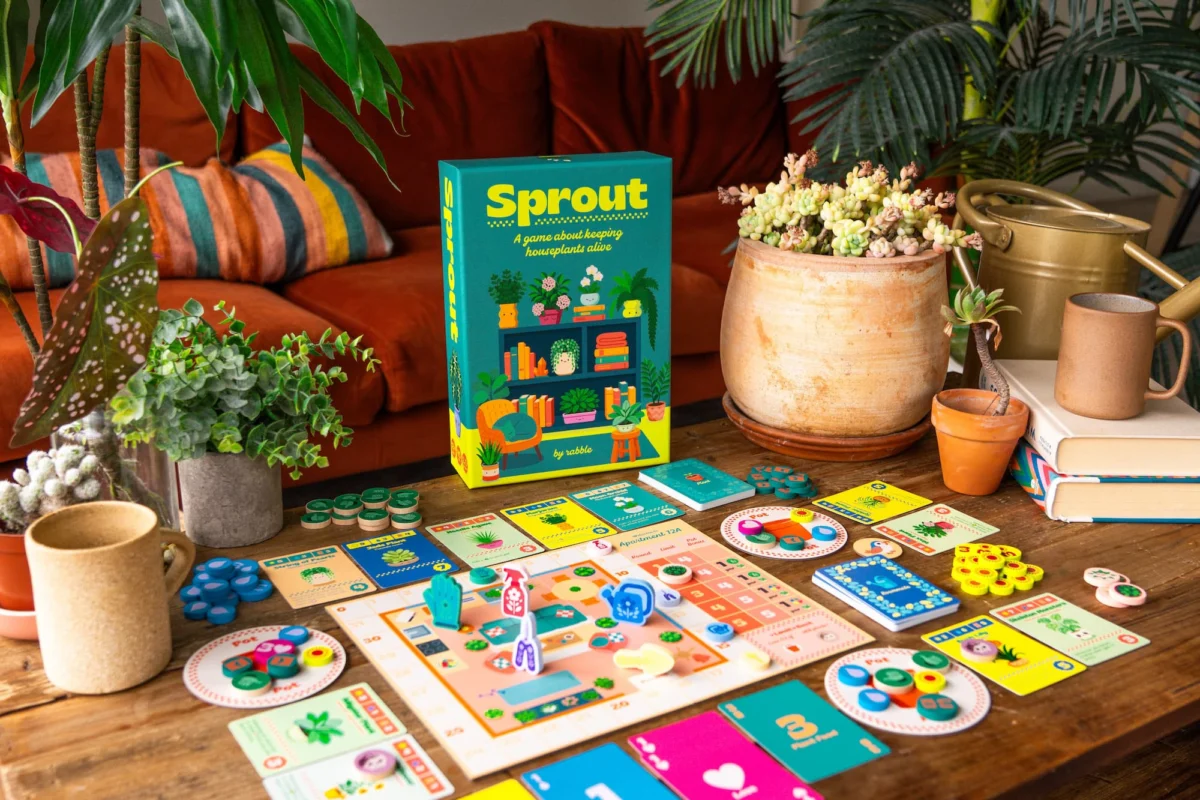
In the ever-expanding landscape of tabletop gaming, few themes have captured the collective imagination quite like the "cozy" aesthetic. From the massive success of Wingspan to the botanical charm of Photosynthesis, players are increasingly drawn to titles that marry relaxing, nature-inspired themes with crunchy, satisfying mechanics. Entering this thriving niche is Sprout, the latest project from the independent studio Rabble Games.
Scheduled to hit Kickstarter later this month, Sprout promises a high-stakes balancing act hidden behind the serene facade of a home garden. By combining push-your-luck tension with deep tableau-building strategy, the game invites two to five players to transform their tabletop into a flourishing indoor nursery.
Main Facts: The Anatomy of a Garden
Sprout is designed as a mid-weight strategy game suitable for players aged 10 and up. With a play time ranging from 45 to 75 minutes, it occupies that "sweet spot" of the gaming market—substantial enough to feel rewarding, yet accessible enough for a casual game night.
At its core, the game challenges players to act as dedicated plant owners. The objective is to assemble a collection of over 100 unique plants, each requiring careful management of limited resources. As players cultivate their personal flora, they must navigate a system of growth that rewards strategic foresight while punishing over-ambition.
The game is structured across five rounds, each divided into two distinct phases: the Nutrient Phase and the Sprout Phase. The synergy between these two moments defines the game’s flow, forcing players to toggle between the high-octane thrill of resource gathering and the contemplative, long-term planning of engine building.

Chronology: A Two-Phase Cycle of Growth
The gameplay loop of Sprout is where the tension truly manifests.
The Nutrient Phase: The Push-Your-Luck Gauntlet
During the Nutrient Phase, players engage in a risky hunt for resources. The mechanic is straightforward yet treacherous: players reveal cards to add essential nutrients to their personal pots. The desire for a bountiful harvest is tempered by the looming threat of a "bust." If a player becomes too greedy and draws an excess of a specific nutrient type, their garden suffers, forcing them to discard plants they have worked hard to establish. This phase tests the player’s nerves; the line between a thriving collection and a withered one is often a single card flip away.
The Sprout Phase: Strategic Expansion
Once the dust settles from the Nutrient Phase, players move into the Sprout Phase. Here, the accumulated resources are spent to purchase new plants and activate specialized abilities. Every plant card in the game is designed to contribute in two ways: by providing end-game victory points and by granting unique, persistent effects. These effects range from immediate, one-time bonuses to ongoing logistical advantages that can alter a player’s strategy for the remainder of the game.
Supporting Data: Diversity in Design
One of the most impressive features of Sprout is its breadth. With over 100 distinct plant cards, Rabble Games is leaning heavily into replayability. No two games will ever play the same, as the combinations of plant abilities are vast. This variety encourages players to experiment with different "builds." One session might see a player focusing on fast-growing, low-point plants that provide utility, while the next might involve nurturing a few high-value, high-maintenance specimens that demand perfect nutrient management.
The Social Element: Roommate Cards
Adding a layer of semi-cooperative interaction are the "Roommate Cards." These cards are a clever solution to the "multiplayer solitaire" problem often found in engine-building games. By using a Roommate Card, a player gains a significant benefit for themselves, but the effect also ripples out to provide advantages to other players at the table. This design choice fosters "table talk" and negotiation, ensuring that players remain engaged with one another’s progress rather than focusing solely on their own pots.

Official Responses and Creative Vision
The artistic direction of Sprout is a labor of love, spearheaded by Rabble Games co-founder Jake. Every piece of art, from the detailed illustrations of the individual plants to the inviting, vibrant box art, was crafted by Jake to ensure a cohesive visual identity. The aesthetic is intended to evoke the warmth of a sun-drenched living room, providing a stark contrast to the cutthroat, high-stakes decisions occurring during the gameplay.
While the base game is packed with content, the team is already looking toward the future. A solo mode is currently in active development, catering to the growing demographic of gamers who enjoy meditative, solitary play. While specific details on the solo AI or variant rules remain under wraps, the announcement confirms that the studio is committed to a robust, feature-complete package at launch.
Implications: The Kickstarter Landscape
The upcoming Kickstarter campaign, launching in late June, is poised to be a significant moment for Rabble Games. Beyond the core game, the team has teased a variety of premium component upgrades. Backers can expect to see high-quality, tactile elements such as wooden nutrient tokens and bespoke player markers, which are designed to elevate the game’s table presence.
The Rise of the "Cozy" Strategy Game
Sprout arrives at a time when the board game industry is shifting away from purely abstract themes toward more relatable, "lifestyle-oriented" experiences. By focusing on the rewarding, low-stress hobby of gardening, Sprout taps into a demographic that values aesthetic beauty and meaningful interaction.
The inclusion of the semi-cooperative Roommate system is perhaps the most significant implication for the game’s success. It acknowledges that board games are, above all, social events. By creating a system where helping oneself inherently involves helping one’s friends, Sprout avoids the "downtime" pitfall that plagues many heavy strategy games. It keeps players talking, laughing, and negotiating, even when it isn’t their turn.

Looking Ahead: The Future of the Sprout Ecosystem
As we approach the late-June launch, the board gaming community is watching closely. The success of indie titles on Kickstarter often hinges on a clear vision, a compelling theme, and transparent communication—three things that Rabble Games appears to have in abundance.
Should Sprout meet its funding goals, it will likely secure a place on the shelves of hobbyists who appreciate the balance between tactical depth and thematic immersion. The game’s 45-to-75-minute runtime makes it an ideal candidate for "gateway" status, capable of drawing new players into the world of strategy gaming while still offering enough complexity to keep veteran players engaged.
For those interested in the hobby, Sprout represents the next evolution of the "plant-themed" genre. It isn’t just about growing a collection of cards; it’s about managing the precarious, beautiful, and sometimes chaotic reality of trying to keep a living thing alive—even if that living thing is made of cardboard.
As the Kickstarter countdown begins, the question remains: will your garden flourish, or will you bust under the pressure? One thing is certain: come this summer, the tabletop world is about to get a lot greener.
For more information on the project and to receive updates on the upcoming Kickstarter campaign, enthusiasts are encouraged to follow Rabble Games through their official channels as they prepare to bring this vibrant, tactical experience to life.












No comments yet. Be the first to join the conversation!