Iffa Jayyana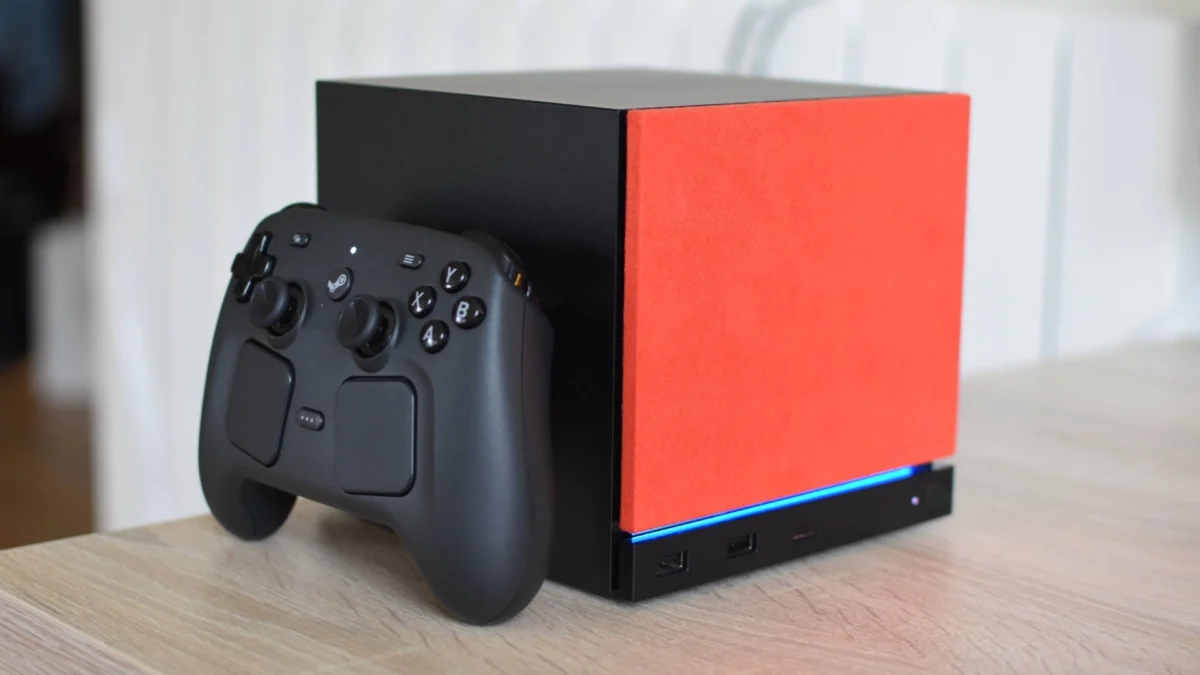
Valve Corporation has officially pulled back the curtain on the pricing and distribution strategy for the Steam Machine, the long-awaited desktop-to-living-room sibling of the revolutionary Steam Deck. As the hardware begins its rollout, the industry is closely watching whether Valve can bridge the gap between the convenience of a traditional console and the open-ended power of a gaming PC. However, with a premium price point and a lottery-based distribution model, the launch arrives under a cloud of global hardware supply constraints that have forced Valve to abandon its original ambitions for a budget-friendly price tag.
The Core Facts: Pricing and Hardware Tiers
The Steam Machine is launching with two primary storage configurations: a 512GB model and a high-capacity 2TB version. Valve has confirmed that the units can be purchased as standalone consoles or as part of a bundle that includes the signature Steam Controller.
The pricing structure, while reflective of current market realities, sits significantly higher than many industry analysts had initially projected. The base 512GB model starts at $1,049 USD (£879 GBP), while the flagship 2TB version commands a price of $1,349 USD (£1,149 GBP). When bundled with the Steam Controller, these prices climb to $1,128 USD and $1,428 USD, respectively.
These figures underscore a difficult shift in Valve’s strategy. Having previously teased that the Steam Machine would be "pretty competitive" with equivalent PC builds, the company now admits that its original target pricing is "no longer viable."
Chronology: From Concept to Lottery
The journey to this launch has been marked by high expectations and logistical hurdles.
- Early Development: Following the massive success of the Steam Deck, rumors swirled regarding a stationary, living-room-centric device. Valve envisioned a platform that could leverage its 20-year-old digital library while utilizing the lightweight, efficient Linux-based SteamOS.
- The Supply Chain Crisis: Over the past six months, Valve encountered unforeseen difficulties. The rapid expansion of AI-driven computing has led to a massive influx of demand for components, specifically RAM and high-speed storage. These "AI hyperscalers" have effectively drained the market, leaving Valve unable to source essential components at scale.
- Today: Registration for the purchase lottery officially opens.
- June 25, 10am PT: The deadline for prospective buyers to register their interest via the official Valve website.
- June 29: Valve will initiate the first wave of emails to those selected via a randomized lottery, granting them the opportunity to purchase their unit. The company intends to clear the entire reservation queue by the end of the calendar year.
Supporting Data: Why the Price Hiked
Valve’s decision to move to a lottery system is a direct response to the "scalper economy" that has plagued hardware launches for the last five years. By randomizing the queue, Valve hopes to prioritize genuine users over automated bots.
However, the primary driver for the high cost remains the volatile state of the global hardware market. Industry reports indicate that the cost of NAND flash memory and high-performance RAM has skyrocketed due to the insatiable appetite of AI research firms. In a recent FAQ, Valve noted that they "couldn’t source some of our components at all, at any price" during the initial procurement phase. Consequently, the Recommended Retail Price (RRP) is a direct reflection of the component costs secured over the previous two quarters.
Price Breakdown Table
| Bundle | USD | GBP | EUR | CAD | AUD | PLN |
|---|---|---|---|---|---|---|
| Steam Machine 512GB | $1,049 | £879 | €1,039 | C$1,509 | A$1,609 | zł4,389 |
| Steam Machine 512GB + Controller | $1,128 | £938 | €1,108 | C$1,628 | A$1,728 | zł4,698 |
| Steam Machine 2TB | $1,349 | £1,149 | €1,359 | C$1,919 | A$2,109 | zł5,739 |
| Steam Machine 2TB + Controller | $1,428 | £1,208 | €1,428 | C$2,038 | A$2,228 | zł6,048 |
Official Responses and Expert Sentiment
Critical reception has been mixed, characterized by a tension between admiration for the hardware’s form factor and disappointment regarding its market positioning.
IGN’s Jackie Thomas, who scored the device an 8/10, highlighted the disparity between the Steam Machine and current console kings like the PS5 and Xbox Series X. "While it is a bit too expensive to take on the major consoles directly," Thomas noted, "it remains an incredible entry-level gaming PC and almost certainly the easiest way to get into the ecosystem right now."
James Archer of Rock Paper Shotgun focused on the physical design, describing the machine as a "discreet but quietly capable companion." He lauded its living-room-friendly aesthetic, noting that it fits in spaces where a traditional desktop tower would be an eyesore. However, he cautioned that for power users, the device’s thermal and power constraints mean it lacks the raw, upgradeable performance of a bespoke desktop PC.
Perhaps the most tempered perspective came from Eurogamer’s Chris Tapsell. He argued that the Steam Machine fails to provide the same value-to-performance ratio found in the PlayStation 5 Pro. "The wizards at Sony and Microsoft might have the edge when it comes to conjuring pure power from hardware with extraordinary efficiency," Tapsell wrote. "But with the Steam Machine, we have something different: a new perspective, and a new standard for living room sort-of-console design."
Implications: A Turning Point for PC Gaming?
The release of the Steam Machine raises fundamental questions about the future of PC gaming. For years, the industry has debated whether a "Console-fied PC" is a viable product category or a niche curiosity.
1. The Challenge to Console Hegemony
Valve’s entry is not merely a hardware release; it is a declaration that the living room is a valid space for the PC gaming ecosystem. By utilizing SteamOS, Valve is effectively attempting to decouple PC gaming from the Microsoft Windows dependency. If successful, this could reduce the friction of PC gaming, potentially luring millions of console-only players into the Steam library.
2. The Impact of the AI Boom
The Steam Machine is perhaps the first mainstream consumer product to be explicitly victimized by the AI hardware boom. If component prices remain at these elevated levels, the "entry-level" barrier for PC gaming will continue to rise. This forces consumers into a difficult choice: pay a premium for a proprietary, curated experience like the Steam Machine, or return to the DIY path of building a custom PC—a process that is becoming increasingly complex for the average consumer.
3. Long-term Viability
Valve’s goal is to turn the Steam Machine into a permanent fixture in the home. Unlike a console generation that lasts seven years, the Steam Machine represents a modular philosophy. Even if the initial hardware is expensive, the long-term benefit for users is the ability to maintain their software library across future hardware iterations.
As the first units begin to ship on June 29th, the gaming world will be watching closely. Whether the Steam Machine becomes a landmark in gaming history or a footnote in the shadow of the supply chain crisis will depend on whether the user experience can justify the premium price. For now, Valve is banking on the idea that for a growing segment of the population, the ease of access to the Steam library is worth a significant premium—even in a market that is increasingly difficult to navigate.


 Ali Ikhwan
 Nana Wu