Ammar Sabilarrohman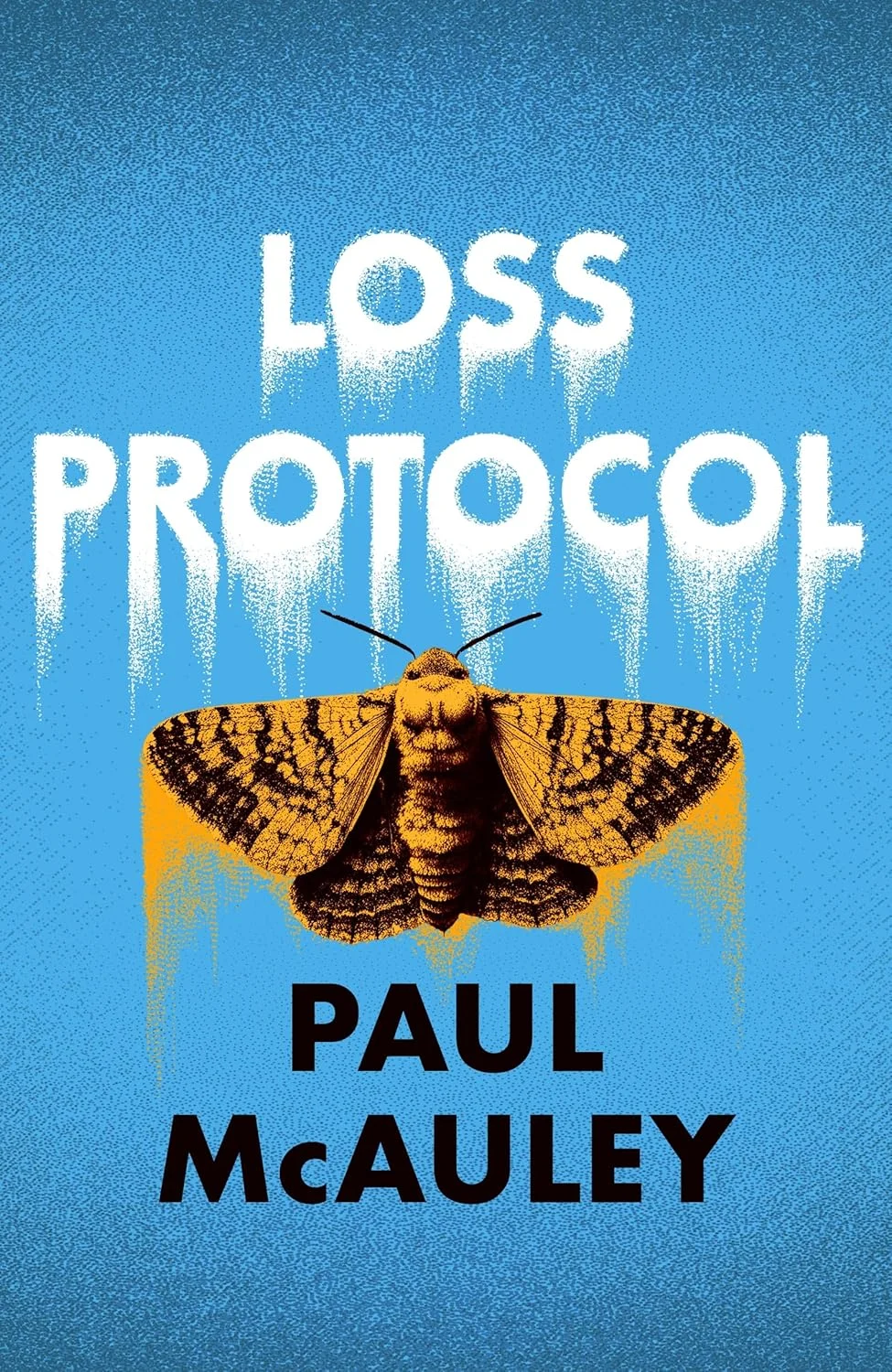
In the landscape of contemporary speculative fiction, few authors manage to marry the granular, aching beauty of the natural world with the high-octane tension of a thriller as effectively as Paul McAuley. His latest novel, Loss Protocol, is not merely a genre exercise; it is a profound meditation on the psychological weight of climate change, the fragility of memory, and the haunting concept of solastalgia—the distress caused by environmental change. Set against the sweltering, unstable backdrop of England in 2078, the novel follows Marc Winters, a man attempting to build a quiet life in the wake of a traumatic past, only to find that the past has a persistent, reality-bending way of catching up.
Main Facts: A Fragile World in 2078
Loss Protocol introduces readers to a future defined by global heating, where the environmental decay we fear today has become the baseline reality of 2078. The story is anchored by Marc Winters, a ranger stationed at Cynsea Island in the Blackwater Estuary of Essex. His work—maintaining the reserve’s infrastructure and guiding volunteers—is a modest, daily act of defiance against a thinning natural world.
The novel’s central conflict is triggered by the resurfacing of the "Wakestone Farm" incident, a tragedy from eight years prior that resulted in the apparent death of Winters’s sister, Izzy. As Winters is drawn back into the web of the survivors, he is forced to confront a disturbing possibility: that the commune he once knew was not merely a group of climate activists, but a collective that claimed the power to reshape reality through the use of hallucinogenic fungi and collective dreaming.
The novel serves as a masterful blend of two distinct narrative modes: the "hard" environmental observation of a ranger’s daily life and the high-stakes, conspiratorial chase of a thriller. McAuley’s narrative voice is cerebral and precise, utilizing a stylistic hallmark—the "phrase with a full stop"—to force the reader into a sensory engagement with the world that feels immediate and often overwhelming.
Chronology: From Wakestone to the Blackwater Estuary
The timeline of Loss Protocol is bifurcated between the "before" and the "now."
- The Wakestone Era (Approx. 2070): The commune at Wakestone Farm, led by the charismatic and manipulative Kasey Motte, centers its ideology on the belief that humanity can "dream" a better world into existence. Using specialized strains of mushrooms, the members attempt to influence the climate and the recovery of lost species.
- The Siege at Wakestone (Eight years prior to the main narrative): A violent, traumatic event that marks the end of the commune. Publicly, it is remembered as a site of mass death and self-immolation.
- The Present (Summer 2078): Marc Winters lives a quiet life of ecological stewardship on Cynsea Island. The world is gripped by record-breaking heat.
- The Reopening of the Case: Winters is contacted by law enforcement and private investigators, including the determined Bailey and the wealthy, grieving Lady Armstrong. He learns that his sister, Izzy, may not have died at Wakestone, sparking a desperate cross-country chase to find her before other, more dangerous former members of the commune can extract the "hidden knowledge" they believe she possesses.
Supporting Data: The Nature of Loss and Solastalgia
One of the most striking aspects of Loss Protocol is its integration of "nature writing" into the structure of a thriller. McAuley captures the shifting baseline of our planet with devastating accuracy. Through the voices of birders in the novel, we hear of the "song of an endling"—the last wood warbler singing for a mate that will never come—and the vanished murmurations of starlings.
These accounts are not mere world-building; they are a direct reflection of our current trajectory. McAuley explicitly invokes the term solastalgia, defining it as the knowledge that the world is changing in ways we cannot control, and that the future will likely be more precarious than the present. This creates a feedback loop of nostalgia: a longing for the present moment because it, too, will soon be lost.
The prose serves as a testament to this reality:
"It was as if he’d stumbled into a dreamworld polder, or had been cast back to a time before global heating and the great extinction, the resource wars and everything else. Dry stone walls spattered with grey and orange lichens. Lush grass along the verges. Nettles, patches of fireweed, cow parsley holding up saucers of small white flowers."
This intense focus on the physical world serves to ground the more speculative, "dream-logic" elements of the plot, ensuring that even when the narrative enters the realm of the surreal, the reader feels the heat of the sun and the texture of the lichen.
The Psychological Implications of "The Dream"
At the heart of Loss Protocol lies a terrifying existential question: What if our reality is merely a side effect of someone else’s dream?
As Winters uncovers the truth, he is confronted with the theory that his very existence—as the younger brother of a woman who, in the original, more damaged timeline, was an only child—is a direct result of the Wakestone commune’s attempts to "fix" the world. The idea that he might be a narrative byproduct, a "non-player character" in a reality engineered by others, strips away his agency.
Throughout the novel, Winters struggles to drive the plot, often finding himself manipulated by external forces: the "deep dreamers" who view him as a replacement for his sister, or power-brokers like Lady Armstrong who wield influence through wealth and cold calculation. This lack of agency is a poignant commentary on the modern individual’s struggle against the massive, often invisible forces of climate, corporate technology, and historical trauma.
Conclusion: Resilience in the Face of Decline
While Loss Protocol is undeniably grim in its assessment of the climate crisis, it stops short of nihilism. McAuley offers a subtle, persistent optimism rooted in the act of stewardship. The presence of birds, the dedication of rangers like Winters, and the sheer persistence of nature provide a counter-narrative to the "end-times" rhetoric that permeates the world of 2078.
The novel acts as a reprimand to the reader: we are challenged to do what we can for the world around us, regardless of how futile it may seem. Even as the ecosystems suffer and the heat rises, the book suggests that there is value in the work of repair.
Ultimately, Loss Protocol is a sophisticated, haunting work that elevates the thriller genre. It asks us to look at the world we are losing—and the one we are creating—with both eyes open. By blending the cerebral, often incomplete sentences of a man trying to process a fractured reality with the grand, terrifying questions of our environmental future, Paul McAuley has crafted a novel that is as intellectually stimulating as it is emotionally resonant. It reminds us that even when the world feels like it is slipping away, our actions, our memories, and our commitment to the natural world are the protocols by which we define our humanity.

 Laily UPN