Basiran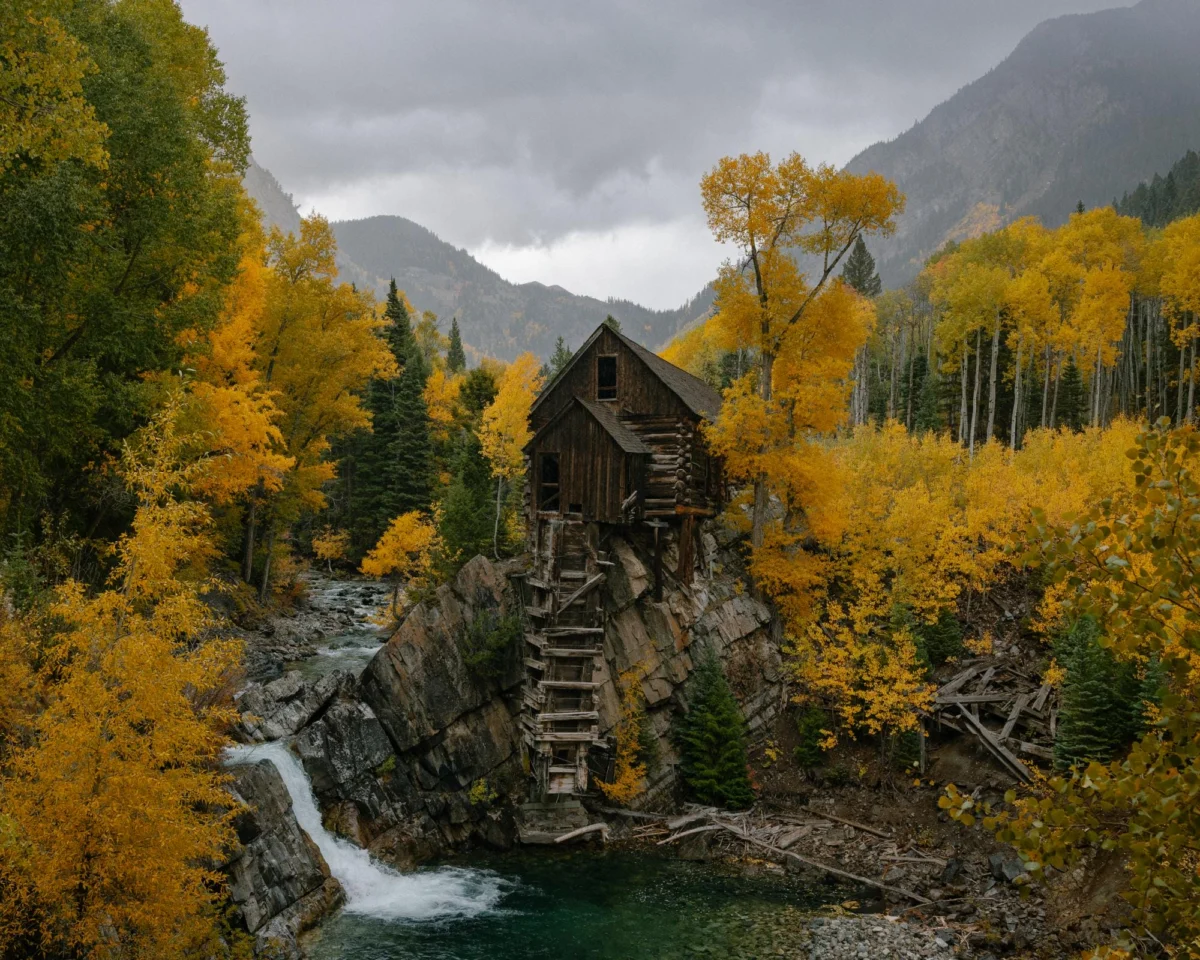
By Editorial Staff
June 10, 2026
In the sprawling, desolate reaches of rural North America, where the horizon often feels like an infinite loop of grass and sky, Portland-based photographer Brendon Burton has spent years cataloging the quiet disintegration of the American dream. Known for his evocative, haunting landscapes that capture the intersection of nature and architectural decay, Burton has recently shifted his lens. In his latest body of work, he pivots from purely topographical isolation to a more intimate exploration of human absence, seeking to uncover the lingering ghosts of those who once called these forgotten corners home.

The Architecture of Absence: A Shift in Focus
For years, Burton’s portfolio was defined by the profound silence of empty spaces. His work served as a visual diary of forgotten homesteads, derelict churches, and crumbling barns, all set against the backdrop of the rugged North American wilderness. However, his latest collection marks a poignant evolution. While the landscapes remain undeniably lonely, they are no longer entirely devoid of human presence.
By stepping inside the threshold of abandoned homes, Burton is now providing a setting for enigmatic, speculative narratives. This is not a documentary project in the traditional, clinical sense; it is an act of visual archeology. Each room, frozen in a state of suspended animation, acts as a stage where the actors have long since departed, leaving behind only the props of their daily lives. From a pair of salt-crusted, worn boots left near a doorway to an aging quilt draped over a bed—a bed that was, in all likelihood, made for the very last time by someone who never returned—Burton’s photography seeks to preserve the ephemeral nature of existence.

Chronology: From Landscapes to Lived-In Legacies
The evolution of Burton’s artistic trajectory can be traced through his persistent, restless travel across the North American continent.
- Early Years (The Study of Space): Burton’s initial focus was heavily weighted toward the aesthetic of "the ruin." His early work prioritized the dramatic composition of collapsing structures against dramatic weather patterns, focusing on how the elements slowly reclaim human architecture.
- The Mid-Career Transition: As his technical skill grew, so did his interest in the history of these sites. He began moving from exterior wide shots to detailed, macro-style interior studies. This period saw the publication of his seminal book, Epitaph, which captured the stark reality of the rural interior.
- The Current Phase (The Narrative Turn): In 2026, the artist has pivoted toward a "human-centric" approach. By introducing figures—or the heavy implication of their recent departure—Burton has begun to craft stories within the frames. This is evidenced by recent compositions featuring staged portraits, bullet-shattered windshields, and personal artifacts like foster home licenses and old trophies, which invite the viewer to speculate on the lives that once occupied these spaces.
Supporting Data: The Anatomy of Decay
Burton’s process involves extensive field research and long-term travel. He does not simply happen upon these locations; he seeks out the edges of civilization where infrastructure has failed or where the economy has shifted, leaving entire communities to fade into the brush.

The "data" of his photography—the visual evidence provided in his images—is both chilling and deeply human:
- Material Culture: By documenting artifacts such as abandoned televisions, patterned quilts, and personal photographs, Burton highlights the domesticity that once thrived in regions now defined by economic abandonment.
- Environmental Encroachment: Many of his photographs depict homes and vehicles being literally consumed by vegetation. This demonstrates the speed at which nature reclaims land once the maintenance of human habitation ceases.
- Psychological Framing: Through the strategic use of light and composition, Burton creates a sense of "the uncanny." For instance, his recent photograph of a man standing before a car, perfectly aligned with a bullet hole in the windshield, suggests a narrative of tension and violence that contradicts the stillness of the rural setting.
Official Perspectives and Artistic Intent
While Burton maintains a relatively reserved profile, his work speaks volumes regarding the state of rural America. In interviews, he has noted that his intention is not to mock or exploit the decay, but to act as a witness to the transition.

"Photography introduces an element of permanence," Burton has noted in previous discussions about his work. "When you take a photograph of an object that has been abandoned, you are essentially freezing that item in time, preserving an existence that has been effectively erased from the modern world."
Critics have observed that Burton’s work sits at the intersection of fine art and historical preservation. By focusing on the "domestic intimacy" of abandoned spaces, he challenges the viewer to confront the fragility of their own surroundings. The addition of human figures in his latest work serves to ground these abstract landscapes, reminding the audience that every ruin was once a home, a workplace, or a site of profound personal significance.

Implications: The Future of the "Epitaph"
The implications of Burton’s current work are significant for both the fine art photography community and those interested in the social history of the American frontier. By moving into the realms of film and music video production—specifically his upcoming slate of five music videos—Burton is signaling that he is no longer satisfied with static, two-dimensional storytelling.
The Expansion of the Narrative
The shift toward video suggests a desire to capture the movement of time in these spaces, rather than just the stillness. Moving images allow for the incorporation of sound, atmosphere, and duration, which may further amplify the haunting quality of his photography.

Preservation of the Marginalized
There is a moral weight to documenting these areas. As the rural landscape continues to shift due to urbanization, climate change, and economic migration, the sites that Burton documents are vanishing at an accelerating rate. His work, therefore, acts as a primary source for future generations to understand the material culture of rural North America in the early 21st century.
Concluding Thoughts: An Ongoing Journey
As Brendon Burton continues his travels, the second edition of his book, Epitaph, serves as a vital record of his progress. It is not merely a collection of images, but a curated reflection on the impermanence of human endeavor.

For those who wish to follow his journey, his active presence on Instagram provides a real-time window into his process. Whether he is capturing a derelict church standing in solitary defiance against a thunderstorm or documenting the quiet tragedy of a forgotten bedroom, Burton remains one of the most compelling chroniclers of the American landscape.
As the world continues to move rapidly toward an urbanized future, Burton’s work serves as a necessary, if somber, reminder of what we leave behind. The abandoned homes, the rusted cars, and the lonely stretches of road are not just empty spaces—they are the final chapters of lives that, through his lens, refuse to be entirely forgotten.

For more information on Brendon Burton’s work, or to purchase a copy of "Epitaph," visit his official website. You can also follow his ongoing projects and behind-the-scenes content on Instagram.


 Asro
Asro
 Sagoh
Sagoh