Asep Darmawan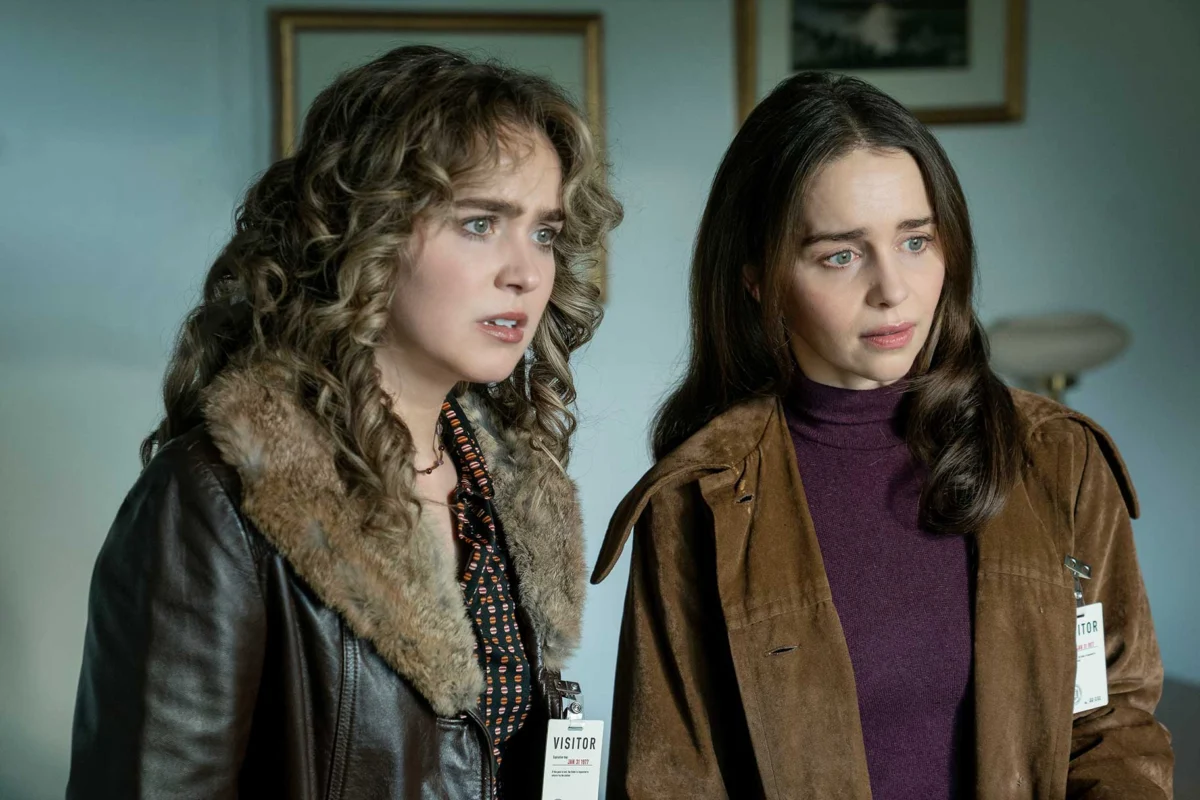
In a move that underscores the increasingly volatile landscape of streaming television, NBCUniversal’s Peacock has officially pulled the plug on its high-profile espionage drama Ponies. The series, which boasted a star-studded cast led by Game of Thrones alumna Emilia Clarke and The White Lotus breakout Haley Lu Richardson, will not be returning for a second season. The cancellation arrives just five months after the show’s ambitious January 15 premiere, signaling a swift end to what was initially billed as one of the platform’s most promising original offerings of the year.
The Premise: From Secretaries to Spies
Set against the stark, tension-filled backdrop of 1977 Moscow, Ponies offered a unique twist on the Cold War thriller genre. The narrative followed Bea (Clarke) and Twila (Richardson), two American embassy secretaries whose professional lives were defined by their invisibility. In the lexicon of the CIA, these women were "ponies"—employees deemed "persons of no importance" to the high-stakes intelligence operatives they served.
The status quo was shattered when both women suffered the near-simultaneous, mysterious deaths of their husbands on Soviet soil. Thrust into a dangerous game of cat-and-mouse, the two secretaries were forced to transition from desk work to the front lines of espionage. As they navigated the labyrinthine streets of the Soviet capital, the duo uncovered a sprawling, multi-layered conspiracy that threatened the delicate geopolitical balance of the era. The series was designed as a character-driven drama that aimed to balance period-accurate suspense with the intimate, often strained relationship between its two leads.
A Chronology of the Production
The journey of Ponies from concept to cancellation was marked by high expectations and significant creative backing.
- Development Phase: Created by David Iserson, a veteran of critically acclaimed series such as New Girl and Mad Men, and director Susanna Fogel, known for her work on Booksmart, the show was positioned as a prestige drama.
- Production: The series brought together an ensemble cast that included Adrian Lester, Artjom Gilz, Nicholas Podany, Petro Ninovskyi, and Vic Michaelis. Filming was characterized by an attempt to recreate the claustrophobic atmosphere of late-70s Moscow.
- The Premiere: On January 15, Peacock opted for a binge-release strategy, dropping all episodes simultaneously. This decision was viewed as a strategic attempt to generate immediate social media buzz and sustain momentum throughout the first quarter of the year.
- The Post-Release Silence: In the weeks following its release, the show faced a quiet reception. While critical reviews were largely positive, highlighting the chemistry between Clarke and Richardson, the show failed to ignite a massive cultural conversation.
- The Cancellation: Five months post-launch, NBCUniversal confirmed that the series would not be renewed, citing a lack of sustained audience engagement as the primary driver for the decision.
Supporting Data: The Metrics of Modern Streaming
The cancellation of Ponies highlights the cold, mathematical reality of the streaming era. Peacock, like many of its competitors, rarely provides granular viewership data to the public. However, third-party analysis provides a clearer picture of why the show struggled to secure a future.
Crucially, Ponies failed to break into the Nielsen "Top 10" streaming charts for original series during its critical early weeks. For context, during the week of the show’s premiere, the 10th-ranked original streaming series on the Nielsen charts commanded approximately 379 million viewing minutes. Ponies was unable to clear this hurdle, suggesting that while the series had a dedicated core audience, it failed to achieve the "must-watch" status required to justify the significant production costs associated with a period-piece drama.
In the current economic climate, streaming platforms are shifting their strategies. The era of "growth at all costs" has been replaced by a focus on "efficiency and engagement." For a show like Ponies, which required significant investment in costumes, location scouting, and historical set design, the inability to reach a broad, mainstream audience made a renewal financially unviable.
Creative Stewardship and Production Pedigree
Despite the cancellation, the production team behind Ponies remained a point of industry interest. Universal Television, the studio behind the project, assembled a powerhouse creative team.
David Iserson and Mike Daniels served as the co-showrunners, tasked with translating the high-concept premise into a serialized format. Susanna Fogel, who directed four of the eight episodes, was instrumental in establishing the show’s visual identity. Beyond their creative roles, the executive producer lineup was formidable, featuring both Clarke and Jessica Rhoades. The production was further bolstered by the efforts of co-executive producers Katherine Bridle, Alison Mo Massey, Jared Ian Goldman, and Rosa Handelman.
That a show with such pedigree—boasting veterans of high-end television production—was canceled so abruptly serves as a reminder that even the most talented creative teams are subject to the brutal churn of the streaming market.
Industry Implications: What This Means for Peacock
The cancellation of Ponies is not an isolated event; it is emblematic of a broader trend in the television industry. Streaming platforms are increasingly ruthless when it comes to "bubble shows"—series that are well-received by critics but fail to translate that acclaim into high volume viewership.
- The Binge-Release Dilemma: The failure of Ponies may reignite the debate regarding binge-release models versus weekly rollouts. Weekly releases often allow a show time to build a "water cooler" effect, whereas binge releases require a show to be an immediate hit to avoid being lost in the algorithmic shuffle.
- Prestige vs. Profit: There is a growing divide between shows that satisfy critics and those that satisfy shareholders. While Ponies was lauded for its acting and historical aesthetic, the cost-per-viewer ratio likely weighed heavily against it.
- The Future of Period Dramas: The high overhead of period-specific production is becoming a deterrent for streamers. Unless a show can guarantee a massive, loyal audience, the risk profile of historical dramas is becoming harder to justify compared to lower-cost, unscripted, or contemporary procedural content.
Moving Forward: The Talent Perspective
For stars like Emilia Clarke and Haley Lu Richardson, the cancellation is a minor bump in successful careers. Both actresses have demonstrated an ability to navigate the shifting sands of Hollywood. However, the cancellation of a project as personal as Ponies—where the leads were also executive producers—often leaves a creative vacuum.
For the subscribers who invested time in the story of Bea and Twila, the news is a disappointment. The abrupt end leaves several narrative threads dangling, a common frustration for fans of serialized television in the streaming age. As Peacock continues to refine its content library, it remains to be seen whether it will pivot toward more evergreen, long-running hits or continue its current strategy of aggressive experimentation and rapid cancellation.
Ultimately, Ponies serves as a case study for the modern viewer: in an age where thousands of hours of content are available at the touch of a button, even the most compelling stories are often subject to the whims of algorithms and the bottom-line requirements of corporate media conglomerates. As the industry moves forward, the "pony" status—the feeling of being an afterthought—may unfortunately become a more common experience for mid-tier dramas attempting to find their footing in a crowded, competitive, and unforgiving streaming marketplace.

 Azzam Bilal Chamdy
 Reynand Wu