Lina Hope
Despite the prevailing narrative that modern engineering has rendered the automobile more reliable than ever, the reality for many 2026 model-year vehicle owners is proving to be a headache of mechanical and digital proportions. While today’s vehicles are marvels of software integration and sensor-driven efficiency, this added complexity has introduced new avenues for failure. Beyond simple infotainment glitches or minor sensor recalls, several major global automakers are currently grappling with significant, systemic engine issues that threaten both brand reputation and owner safety.
This report examines five specific engine platforms that have become focal points for massive recalls, class-action lawsuits, and intense scrutiny from federal regulators throughout 2026.
1. The Honda 1.5-Liter Turbo: Persistent Reliability Hurdles
For decades, Honda has been the gold standard for powertrain longevity. However, the company’s 1.5-liter turbocharged four-cylinder engine has become a consistent outlier in that legacy. Found in high-volume sellers like the Honda Civic, Accord, and CR-V, the engine has been under fire for years due to well-documented cases of oil dilution and premature head gasket failure.
The Scope of the Problem
Oil dilution occurs when unburned fuel slips past piston rings and mixes with the engine oil, degrading its lubricating properties and potentially causing long-term internal wear. When coupled with recurring head gasket failures, the result is a catastrophic loss of engine performance. While Honda has managed these issues through various service bulletins, the absence of a comprehensive, company-wide recall has left many owners feeling abandoned, fueling ongoing class-action litigation.
The 2026 Strategic Pivot
In a sign that the automaker recognizes the limitations of this platform, 2026 has seen a aggressive transition toward the newer 2.0-liter hybrid four-cylinder system. By relegating the 1.5-liter turbo to a secondary role in its lineup, Honda is effectively sunsetting a problematic chapter. Buyers are now being steered toward hybrid variants, which offer superior fuel efficiency and a more robust mechanical architecture, though at a higher initial price point.
2. Nissan’s 1.5-Liter VC-Turbo: Innovation’s Hidden Cost
Nissan’s Variable Compression (VC) Turbo technology was designed to offer the best of both worlds: the power of a performance engine and the efficiency of an economy motor. Unfortunately, the real-world application has been marred by significant reliability concerns.
The Mechanical Breakdown
In 2026, the 1.5-liter three-cylinder VC-Turbo has become a liability for the brand. The issues are centered on the engine’s complex internal components, specifically bearing failures that can lead to total engine destruction. With over 600,000 units of the Nissan Rogue recalled, the scale of the failure is massive. In many cases, a simple throttle body replacement is insufficient, necessitating a full engine swap. The problem extends beyond the Rogue, impacting the Altima and select Infiniti compact SUVs, casting a shadow over the brand’s technical ambition.
3. General Motors 6.2-Liter V8 (L87): The American Icon Under Fire
The irony of the 2026 automotive market is that while small, turbocharged engines are failing, the traditional, "simple" American V8 is also suffering. The General Motors 6.2-liter V8, the heart of the Chevrolet Silverado, GMC Sierra, Tahoe, Yukon, and Cadillac Escalade, is currently the subject of an intense National Highway Traffic Safety Administration (NHTSA) investigation.
Chronology of the L87 Crisis
The L87 engine, a powerhouse in the towing and utility segment, has been linked to severe internal defects involving valve train components. The fallout has been staggering:
- Recall Scope: Over 700,000 trucks and SUVs have been pulled back for repairs.
- The "Band-Aid" Solution: GM’s initial recommendation to change oil viscosity to mitigate noise and wear has been met with skepticism by both owners and federal investigators.
- Long-Term Implications: There is growing concern that the suggested fixes may negatively impact fuel economy and long-term engine performance. As of early 2026, the NHTSA is actively questioning whether these remedial steps are sufficient to prevent catastrophic failure, leaving owners of premium-priced vehicles in a state of high-stress uncertainty.
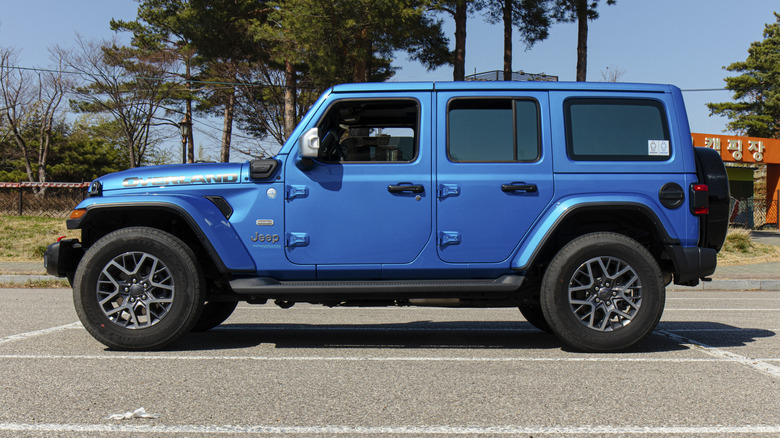
4. The Jeep 2.0-Liter Turbo Hybrid (4xe): A Premature Exit
The 4xe powertrain was once the crown jewel of Jeep’s electrification strategy. By pairing a 2.0-liter turbocharged engine with a plug-in hybrid system, Jeep hoped to dominate the off-road hybrid market. However, the 2026 model year marks the quiet discontinuation of these models—a move driven as much by mechanical failure as by shifting consumer demand.
The "Sand" in the Gears
The 4xe’s demise was accelerated by a series of high-profile recalls. One of the most alarming involved "casting sand" left inside the engine block during the manufacturing process. This particulate matter, if left unaddressed, could circulate through the oil system, leading to total engine seizure and even fire risks. With over 100,000 vehicles affected, the financial and reputational cost to Stellantis has been immense, marking the 4xe experiment as a cautionary tale in rapid electrification.
5. Toyota’s 3.4-Liter Twin-Turbo V6: A Reputation at Risk
Perhaps the most shocking entry on this list is the Toyota 3.4-liter twin-turbo V6. Toyota’s reputation is built on "bulletproof" reliability; however, the engine powering the latest Tundra and Sequoia has struggled to live up to that history.
The Bearing Failure Crisis
Since its 2022 debut, this engine has been plagued by engine-bearing debris issues. The problem is so severe that it has triggered a recall of over 250,000 vehicles. Despite Toyota’s efforts to redesign the manufacturing process and provide updated engines, consumer confidence remains shaken. The shift from the beloved, naturally aspirated 5.7-liter V8 to this twin-turbo platform has left many long-time loyalists mourning the loss of the brand’s hallmark simplicity, while simultaneously questioning the reliability of the new technology.
Implications for the Modern Consumer
The common thread linking these five engine platforms is a industry-wide push for higher power densities and lower emissions. Automakers are being squeezed by government regulations, forcing them to adopt complex technologies—such as variable compression, turbocharging, and hybrid integration—often before they have been fully field-tested for long-term durability.
Supporting Data and Methodology
This report was compiled by analyzing data from the past 12 months, specifically tracking:
- NHTSA Recall Databases: Focusing on engine-related failures leading to total power loss.
- Class-Action Filings: Identifying patterns in owner complaints regarding "normal wear" vs. "manufacturing defects."
- Service Bulletins: Evaluating the frequency and severity of dealer-mandated repairs.
Conclusion: What Should Buyers Do?
For the average consumer in 2026, the takeaway is clear: the era of the "unquestionable purchase" is over. When shopping for a new or late-model vehicle, it is vital to research the specific engine code—not just the brand reputation.
Automakers are currently in a transition phase. While the industry moves toward a future defined by electrification, the internal combustion engines remaining in production are being pushed to their absolute thermal and mechanical limits. As these companies navigate the high costs of these failures, consumers are advised to favor powertrains with longer track records of stability, or, where possible, wait for the second or third year of a new engine’s production cycle to ensure that "teething" issues have been addressed.
The engines listed above remind us that when it comes to automotive engineering, progress is not always linear. Sometimes, in the pursuit of the next breakthrough, the fundamental promise of reliability is left by the wayside.

 Rifan Muazin