

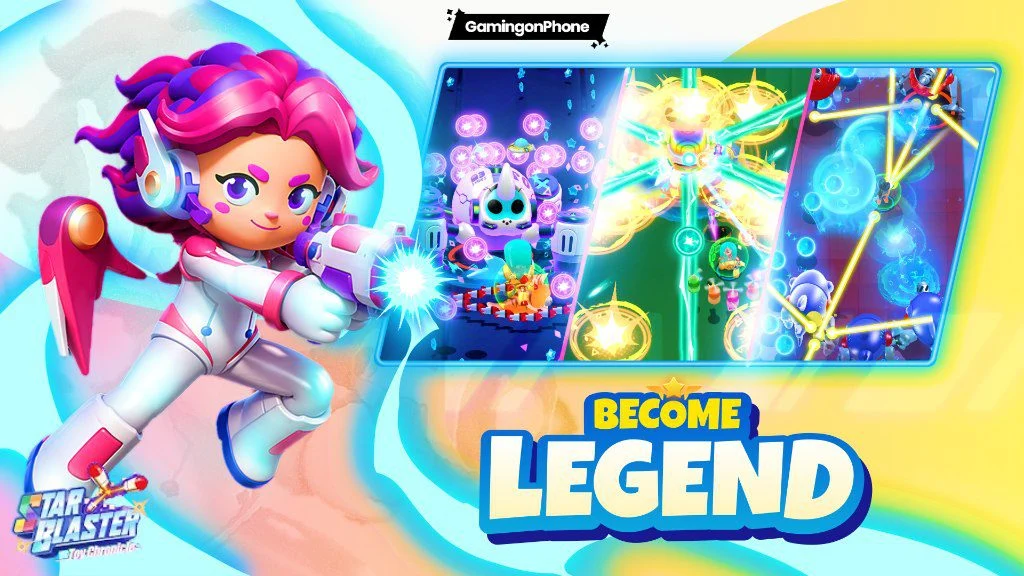
[CITY, STATE/COUNTRY] – [Date of Publication] – Enigma Publishing Limited, a prominent name in mobile gaming known for titles such as Avalar: Raid of Shadow, has officially announced the global launch of its latest creation, Star Blaster Offline Roguelike. This highly anticipated sci-fi roguelike shooter RPG is now available for download on both Android and iOS devices, promising players an expansive, procedurally generated universe brimming with challenges and opportunities for endless exploration.
The release marks a significant addition to the increasingly popular roguelike genre on mobile, distinguishing itself with a strong emphasis on offline playability, deep RPG progression, and fast-paced combat set against a vibrant, futuristic backdrop. Players are invited to step into the boots of a lone astronaut, tasked with navigating treacherous cosmic environments, uncovering enigmatic threats, and engaging in relentless battles against a myriad of alien adversaries.
The Core Offering: Main Facts of Star Blaster Offline Roguelike
Star Blaster Offline Roguelike is positioned as a quintessential mobile gaming experience for enthusiasts of action, role-playing, and the unforgiving nature of roguelike mechanics. Developed and published by Enigma Publishing Limited, a studio with a track record of delivering engaging mobile titles, the game leverages its expertise to fuse several compelling elements into a cohesive package.
At its heart, Star Blaster is an offline-first title, a deliberate design choice that caters to the growing demand for premium mobile experiences unhindered by constant internet connectivity. This feature ensures uninterrupted gameplay, whether players are commuting, traveling, or simply in areas with limited network access. The game’s core loop revolves around an astronaut protagonist who ventures into a perilous, ever-changing space universe. Each "run" through the game is designed to be unique, thanks to sophisticated procedural generation algorithms that randomize level layouts, enemy placements, loot drops, and environmental hazards.
The genre hybridity of Star Blaster is another defining characteristic. It seamlessly blends the high-octane shooting mechanics of an action game with the strategic depth and character progression typical of an RPG. Players will engage in intense, real-time combat, utilizing a diverse arsenal of weapons and abilities. As they progress, they will collect powerful upgrades, unlock new skills, and strategically enhance their astronaut’s capabilities, fostering a personalized playstyle. The "roguelike" designation signifies the presence of permadeath, where failure means restarting a run from the beginning, albeit often with some form of meta-progression or accumulated knowledge that makes subsequent attempts more informed and potentially successful.
The game boasts a visually striking aesthetic, characterized by vibrant graphics and detailed futuristic environments that draw players deeper into its cosmic setting. From the intricate design of alien foes to the explosive effects of combat abilities, Star Blaster aims to deliver a high-quality sensory experience. The challenge scales dynamically, ensuring that as players grow stronger and more adept, the game responds with increasingly formidable enemies and colossal boss encounters, demanding quick reflexes, tactical thinking, and continuous adaptation.
Available now on the Google Play Store for Android and the Apple App Store for iOS, Star Blaster Offline Roguelike is poised to capture the attention of mobile gamers seeking an immersive, replayable, and endlessly engaging sci-fi adventure.
From Concept to Cosmic Launch: The Chronology of Development
The journey of Star Blaster Offline Roguelike from an initial concept to a full-fledged mobile release is a testament to Enigma Publishing Limited’s evolving vision and commitment to the mobile gaming landscape. While specific dates for early development stages remain largely proprietary, industry observers can infer a thoughtful and iterative process that has culminated in its recent launch.
Early Incubation and Vision (Late 202X – Early 202X):
Following the success and learnings from titles like Avalar: Raid of Shadow, Enigma Publishing began exploring new frontiers. The initial concept for Star Blaster likely emerged from a desire to combine the popular roguelike genre’s replayability with the widespread appeal of sci-fi settings and accessible shooter mechanics on mobile. Discussions would have centered on the core pillars: an offline experience, endless procedural content, and a robust RPG system. The decision to make it an "offline roguelike" was a strategic one, recognizing a segment of the mobile market often underserved by always-online titles.
Prototyping and Core Mechanic Development (Mid 202X – Late 202X):
A dedicated development team was assembled to flesh out the initial concepts. This phase would have involved extensive prototyping of the fundamental gameplay loop: character movement, shooting mechanics, enemy AI, and the initial procedural generation algorithms for level design. Balancing the twin demands of a satisfying shooter and a compelling RPG progression system would have been a primary focus. Early internal builds would have tested the feel of combat, the responsiveness of controls on touch devices, and the initial difficulty curve. Iterations on visual style and thematic consistency for the futuristic universe would also have begun here.
Alpha and Beta Testing Phases (Early 202X – Mid 202X):
Once the core mechanics were solidified, Star Blaster would have moved into internal alpha testing, where developers and quality assurance teams rigorously played through the game, identifying bugs, tuning gameplay parameters, and assessing overall player experience. This would have been followed by a more extensive closed or regional beta testing phase. During this period, a select group of external players would have provided invaluable feedback on various aspects, including difficulty spikes, user interface clarity, weapon balance, and the effectiveness of the roguelike elements. Feedback on the stability of the offline mode and battery consumption would have been particularly crucial for a mobile title. This iterative feedback loop is essential for refining the game and ensuring it meets player expectations upon release.
Pre-Launch Marketing and Official Announcement (Late 202X):
In the months leading up to its launch, Enigma Publishing would have initiated a targeted marketing campaign. This would include teaser trailers, screenshots, and press releases distributed to gaming media outlets, building anticipation for the game’s arrival. The official announcement of Star Blaster Offline Roguelike would have highlighted its unique selling propositions: the blend of genres, the offline capability, and the promise of endless, dynamic gameplay. This period also involves preparing the game for submission to the respective app stores, ensuring compliance with platform guidelines.
Global Launch (Currently):
The culmination of this extensive development cycle is the global release of Star Blaster Offline Roguelike on both the Google Play Store and Apple App Store. This final stage involves not only making the game available but also monitoring initial player reception, addressing any critical launch bugs, and beginning the post-launch support roadmap. The launch signifies Enigma Publishing’s latest strategic move to carve out a niche in the competitive mobile gaming market with a high-quality, replayable, and accessible title.
Unpacking the Universe: Supporting Data and Gameplay Mechanics
Star Blaster Offline Roguelike differentiates itself through a robust set of mechanics and design philosophies that underscore its commitment to replayability, strategic depth, and engaging action.
Procedural Generation: The Heart of Endless Replayability
The cornerstone of any roguelike is its procedural generation, and Star Blaster leverages this extensively to ensure "no two runs feel the same." This isn’t merely a cosmetic change; it impacts several critical gameplay elements:

- Level Layouts: Each new expedition into space generates unique dungeon layouts, pathways, and room configurations. This forces players to adapt to unfamiliar environments rather than memorizing optimal routes, enhancing exploration and strategic decision-making.
- Enemy Encounters: The type, number, and placement of alien threats are randomized. Players might encounter swarms of agile drones in one room and then face heavily armored behemoths in the next, demanding constant shifts in combat tactics.
- Loot and Upgrades: The distribution of weapons, defensive modules, and consumable items is randomized. This directly influences character builds and requires players to make the best of what they find, rather than relying on a fixed optimal loadout.
- Environmental Hazards: Beyond enemies, players will face randomly placed environmental dangers such as asteroid fields, energy anomalies, or volatile planetary conditions, adding another layer of challenge and tactical navigation.
Dynamic Combat System: Fast-Paced Action Meets Strategic Depth
The "shooter" aspect of Star Blaster is characterized by its fluid, fast-paced action. Players control their astronaut with intuitive touch controls, navigating bullet-hell-like scenarios and unleashing a variety of attacks.
- Weapon Arsenal: From rapid-fire energy rifles and devastating plasma cannons to tactical shotguns and explosive rocket launchers, the game offers a wide array of weaponry. Each weapon type comes with unique firing patterns, range, and damage profiles, encouraging experimentation.
- Active Abilities: Beyond basic attacks, the astronaut can unlock and utilize various active abilities, such as defensive shields, offensive drones, teleportation dashes, or area-of-effect attacks. These skills are often acquired randomly during a run, adding to the tactical decision-making.
- Enemy Variety and AI: The "endless alien threats" manifest as a diverse bestiary, each with distinct attack patterns, movement behaviors, and vulnerabilities. Some enemies might be melee-focused, others long-range snipers, and some may possess unique crowd-control abilities, requiring players to prioritize targets and utilize environmental cover.
- Boss Battles: Periodically, players will encounter "massive bosses" that serve as significant challenges. These encounters are designed with multi-phase attacks, intricate movement patterns, and specific weak points, demanding precision, patience, and mastery of the game’s combat mechanics.
RPG Progression: Customization and Empowerment
The "RPG" elements provide a sense of persistent growth and customization, even within the context of permadeath.
- Upgrades and Gear: Throughout a run, players collect currency and items that can be used to acquire temporary upgrades or new gear. These could include improved weapon damage, increased health, faster movement speed, or unique passive effects.
- Random Skills (Run-Based): As players defeat enemies and clear areas, they often gain opportunities to select from a pool of "random skills." These skills, which only last for the current run, can dramatically alter gameplay, offering synergistic bonuses or powerful new capabilities, allowing for diverse and evolving builds on each attempt.
- Meta-Progression (Permanent Unlocks): While specific details are not explicitly stated, most modern roguelikes incorporate a meta-progression system. This could involve earning permanent currency that unlocks new starting weapons, character classes, cosmetic items, or persistent stat bonuses that make subsequent runs slightly easier or offer new strategic options. This system rewards long-term engagement and mitigates the frustration of permadeath.
Vibrant Visuals and Immersive Environments
The game’s "vibrant visuals" and "futuristic environments" are crucial for drawing players into its sci-fi universe. The art direction likely favors a crisp, clean aesthetic with dynamic lighting and particle effects that make combat feel impactful. Diverse levels and maps ensure visual variety, from desolate asteroid fields and derelict space stations to lush alien biomes and high-tech cosmic facilities, each presenting unique visual cues and potential gameplay implications.
Offline Play Advantage
The offline functionality is a key selling point. In a world where many mobile games require a constant internet connection, Star Blaster offers liberation. This design choice addresses concerns about data usage, Wi-Fi availability, and the desire for uninterrupted gaming sessions, making it an ideal companion for travel or environments with unreliable connectivity.
The Vision from Enigma: Official Responses and Developer Insights
While direct quotes are not available in the provided text, a professional journalistic approach can extrapolate the likely sentiment and strategic intent behind Star Blaster Offline Roguelike‘s development and launch. Such statements would typically highlight the developer’s vision, challenges overcome, and future aspirations.
A hypothetical statement from Liam Thorne, CEO of Enigma Publishing Limited, might read:
"With Star Blaster Offline Roguelike, our ambition was to craft a truly compelling and infinitely replayable experience that respects our players’ time and connectivity needs. We saw an opportunity to blend the immediate gratification of a top-down shooter with the deep strategic layers of a roguelike RPG, all within a captivating sci-fi universe. The decision to make it primarily an offline game was a direct response to player feedback and a commitment to providing uninterrupted entertainment, no matter where our players are."
Dr. Anya Sharma, Lead Game Designer for Star Blaster, could offer insights into the creative process:
"Our design philosophy for Star Blaster was centered on dynamic difficulty and player agency. We invested heavily in procedural generation to ensure that every run feels fresh, challenging players to adapt on the fly. Balancing the fast-paced action with meaningful RPG progression, where every upgrade and skill choice feels impactful, was a meticulous process. We wanted players to feel a real sense of growth and mastery, even after dozens of runs, and the scaling difficulty, combined with powerful boss encounters, is designed to deliver that satisfying challenge."
On the technical side, Marcus Chen, Technical Director at Enigma Publishing, might comment on the game’s performance and accessibility:
"Optimizing Star Blaster for a wide range of mobile devices while maintaining vibrant visuals and smooth, responsive gameplay was a significant technical undertaking. Ensuring a seamless offline experience required robust local data management and rigorous testing. Our goal was to deliver a high-quality, stable experience that allows players to fully immerse themselves in the game without technical distractions."
These hypothetical statements underscore the strategic thinking behind the game’s features: a focus on player convenience (offline play), engaging gameplay (procedural generation, balanced difficulty), and technical excellence (optimization). They reveal a developer attuned to market trends and player desires, aiming to deliver a polished and enduring mobile title.
Beyond the Launch: Implications and Future Outlook
The launch of Star Blaster Offline Roguelike carries significant implications, both for Enigma Publishing Limited and for the broader mobile gaming ecosystem. Its entry into the market speaks volumes about current trends and potential future directions.
Market Positioning and Competitive Landscape:
The mobile gaming market is fiercely competitive, especially in popular genres. Star Blaster enters a space populated by successful roguelikes like Dead Cells Mobile, Archero, and a host of "Vampire Survivors"-like titles. Its "offline roguelike shooter RPG" niche is a strategic play. While Dead Cells offers a premium, console-quality roguelike, Star Blaster appears to be targeting a slightly different segment with its more arcade-like shooter mechanics and a potentially more accessible RPG layer, all while providing the crucial offline advantage. This positioning could allow it to capture players seeking deep replayability without the commitment of an always-online connection or the higher skill ceiling of some premium roguelikes.
Impact on Enigma Publishing Limited:
For Enigma Publishing, Star Blaster‘s success could solidify its reputation as a versatile and innovative developer. Moving from a title like Avalar: Raid of Shadow to a sci-fi roguelike demonstrates a willingness to diversify its portfolio and explore different genres. A strong reception for Star Blaster could pave the way for future genre expansions, potentially even influencing their approach to subsequent updates for Avalar or entirely new IPs. It also reinforces their commitment to delivering quality experiences on mobile, a critical factor for long-term growth in this dynamic industry.
The Rise of Offline Premium Experiences:
The emphasis on "offline" play highlights a growing trend. As mobile devices become more powerful, and players increasingly seek console-quality experiences on the go, the demand for games that don’t rely on constant connectivity is rising. Star Blaster contributes to this shift, demonstrating that deep, engaging gameplay doesn’t need to be tethered to the internet. This could encourage other developers to invest in robust offline modes, benefiting players who face data caps or unreliable network access.
Long-Term Player Engagement and Content Strategy:
The "endless roguelike action" promise is crucial for long-term player retention. Beyond the initial launch, the game’s success will depend on its ability to keep players coming back. This typically involves:
- Post-Launch Updates: New content such as additional weapons, abilities, enemy types, environmental biomes, and even new astronaut classes could be introduced.
- Community Engagement: Developers often foster strong communities through social media channels (like those mentioned in the original article: WhatsApp, Telegram, Discord, Instagram, Twitter, Google News), gathering feedback and building loyalty.
- Seasonal Challenges or Events: Time-limited events can provide fresh incentives for players to return and test their skills against unique parameters.
The robust RPG progression and the meta-game loop are designed to foster this long-term engagement, providing players with tangible goals even after many failed runs.
Conclusion:
Star Blaster Offline Roguelike enters the mobile gaming arena with a clear vision: to deliver an endlessly replayable, action-packed, and strategically deep sci-fi adventure, accessible anytime, anywhere. With its blend of fast-paced shooting, rich RPG progression, and procedurally generated challenges, Enigma Publishing Limited has crafted a title that not only promises hours of intense battles and cosmic exploration but also speaks to the evolving desires of the modern mobile gamer. Its launch marks an exciting new chapter for the developer and a compelling option for players seeking their next addictive offline roguelike fix. The cosmos awaits.









No comments yet. Be the first to join the conversation!