“My love is as a fever, longing still / For that which longer nurseth the disease…” William Shakespeare’s Sonnet 147 serves as the chilling, poetic epigraph for Leviticus, the feature-length directorial debut from Adrian Chiarella. A film that wears its influences on its sleeve while attempting to carve out a distinct space within the modern indie horror landscape, Leviticus is a complex, if uneven, meditation on the intersection of queer identity and religious trauma.
Main Facts: The Intersection of Horror and Romance
At its core, Leviticus is a romantic drama operating under the guise of supernatural horror. The narrative follows two young men, Naim (played by Joe Bird) and Ryan (Stacy Clausen), who are navigating the treacherous waters of a clandestine, burgeoning relationship within an environment of suffocating conservatism.
The horror element is introduced through a premise that echoes David Robert Mitchell’s 2014 cult classic, It Follows. In Leviticus, the protagonists are hunted by a shape-shifting, murderous entity—a doppelganger that assumes the guise of loved ones to lull its victims into a false sense of security before striking. While It Follows functioned as a metaphor for the anxieties surrounding intimacy and sexually transmitted diseases, Leviticus shifts the lens to a more pointed critique. It serves as a visceral rebuke of extremist ideologies, specifically those that seek to “convert” LGBTQ+ individuals under the banner of spiritual correction. By framing the “conversion” of the protagonists as a literal, demonic catalyst, Chiarella draws a direct line between the psychological violence of conversion therapy and the physical violence of a supernatural threat.
A Chronology of Conflict: From Ritual to Reckoning
The film’s inciting incident takes place within a small, insular community under the thumb of a charismatic yet dangerous religious leader, Pastor Rod (Ewen Leslie). The conflict ignites when the community discovers the romantic bond between Ryan and the pastor’s son, Hunter (Jeremy Blewitt).

In a sequence designed to evoke both dread and repulsion, the town’s elders subject the boys to a brutal exorcism-style ritual. This act of spiritual abuse acts as the film’s "original sin," effectively tearing the veil between the mundane world and the malevolent supernatural force that begins to plague the boys.
As the narrative progresses, the entity—a spectral reflection of their own desires—appears to Naim, Ryan, and Hunter whenever they are isolated. The tension is built on the audience’s constant questioning: Is the person on screen a manifestation of genuine love, or is it the predatory spirit waiting for a moment of vulnerability? This psychological cat-and-mouse game provides the film with its most suspenseful sequences, though the execution fluctuates between high-concept terror and repetitive genre tropes.
Supporting Data: Performance and Directorial Vision
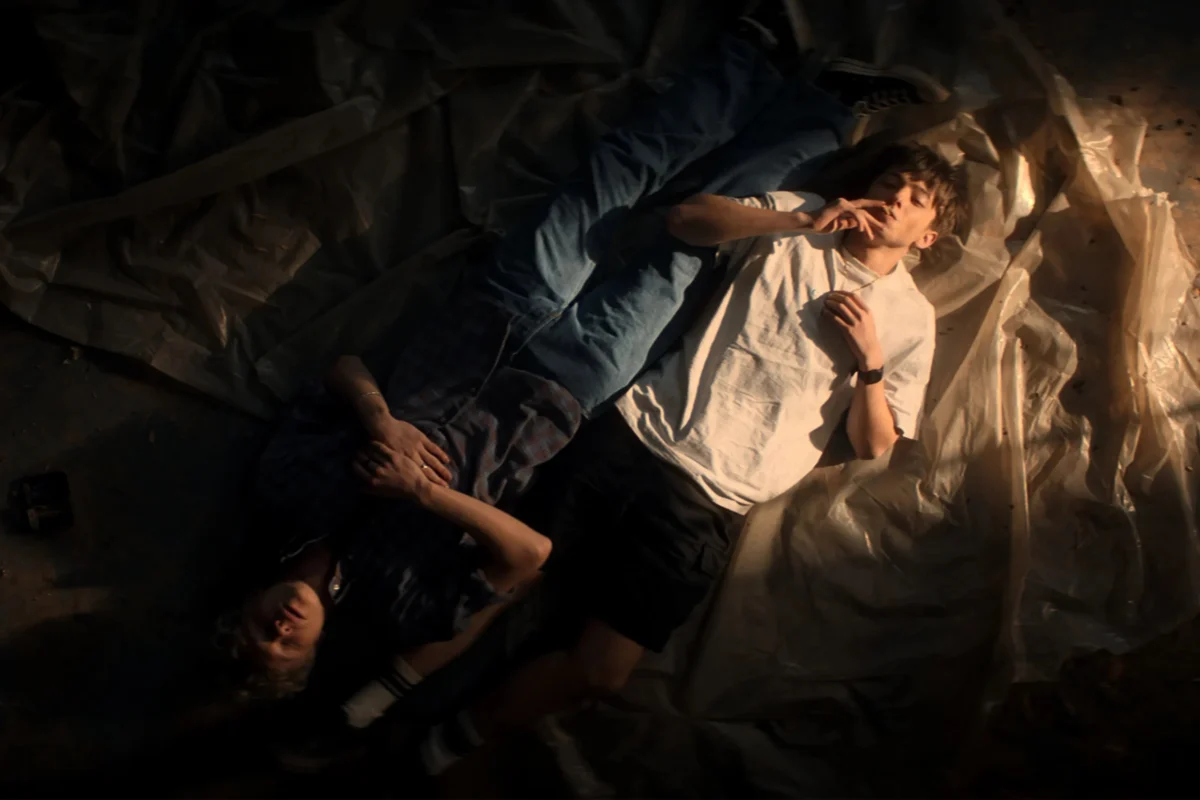
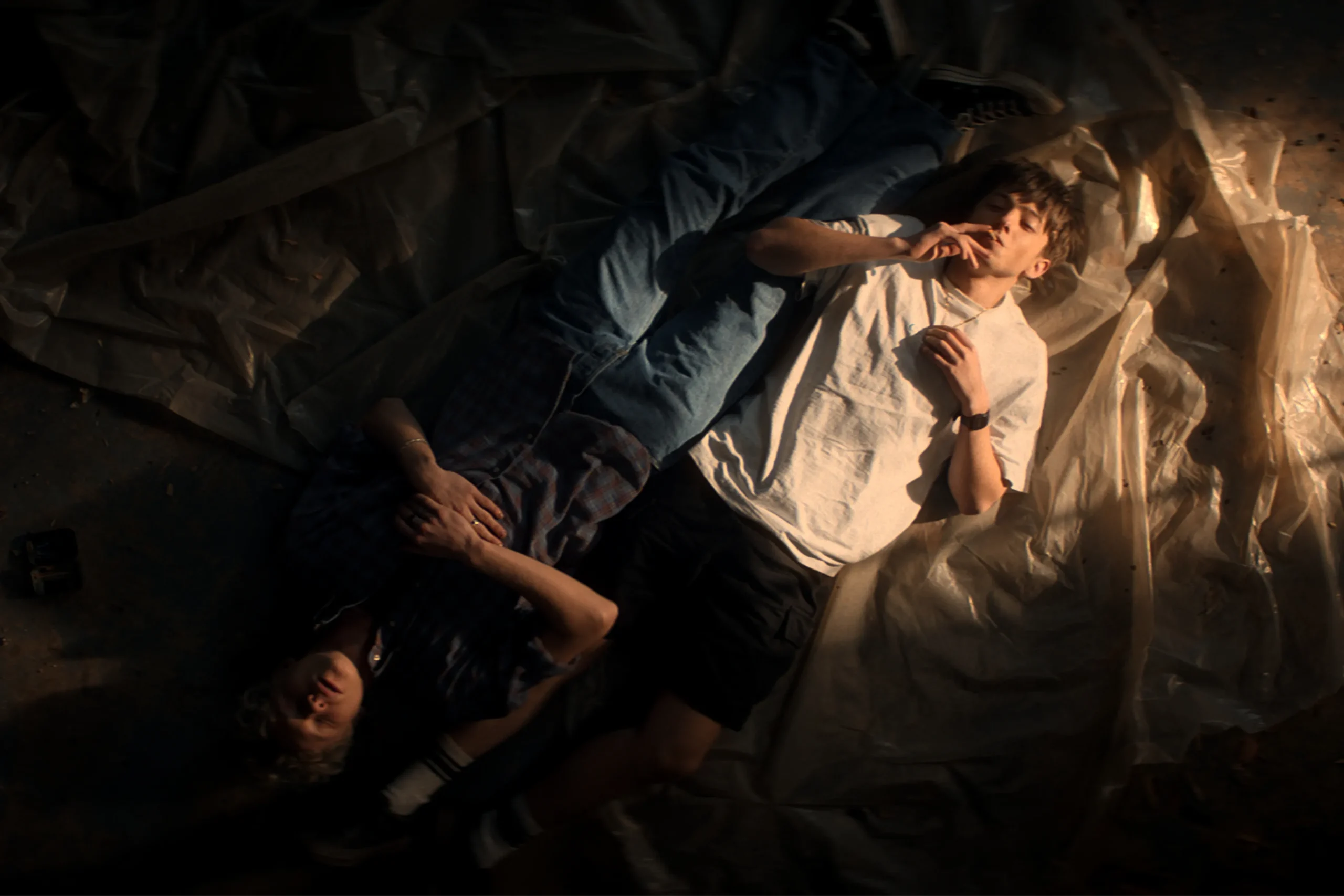
The greatest strength of Leviticus lies in its casting. Joe Bird and Stacy Clausen bring a refreshing, grounded authenticity to their roles. Their chemistry captures the specific, fragile cadence of young, queer love—the hesitation, the overwhelming rush of new passion, and the terrifying realization that their very existence is viewed as an affront by the world around them.
Ewen Leslie, as the antagonist Pastor Rod, provides a chilling portrait of zealotry. However, it is Mia Wasikowska, appearing as Naim’s mother, Arlene, who steals the screen. Wasikowska’s portrayal is a masterclass in calculated, icy restraint. Unlike the histrionic depictions of religious mothers often seen in horror cinema (most notably Piper Laurie in Carrie), Arlene is terrifying precisely because she is so composed. Even as her son undergoes a traumatic ritual involving fluids and screaming, her demeanor remains unruffled, suggesting a devotion that transcends maternal instinct. It is a haunting performance that anchors the film’s more chaotic elements.
Despite these strong performances, the film suffers from a lack of narrative momentum in the second act. The "doppelganger" mechanic, while conceptually sound, eventually feels stretched thin, falling into the trap of predictability that Chiarella seemingly tried to avoid.
Official Responses and Creative Implications
Critics have been quick to note that Leviticus is a film of two halves: a poignant, character-driven social commentary and a standard-issue supernatural thriller. The prevailing consensus is that the film would have been arguably more impactful had it abandoned the "demon" conceit entirely.
The most compelling scenes in Leviticus do not involve the supernatural entity, but rather the quiet, tense interactions between the boys and their oppressors. The tension of navigating a relationship in a town where every neighbor is a potential judge, jury, and executioner is inherently terrifying. By tethering the social commentary to a creature feature, the film occasionally dilutes the potency of its own message.
However, in terms of its social and political implications, Leviticus is an important entry in the canon of LGBTQ+ horror. It joins a growing wave of films that utilize genre tropes to explore the "horror" of real-world prejudice. The film’s refusal to shy away from the brutal, systematic nature of conversion rituals makes it an uncomfortable, yet necessary, watch. It posits that the true monster is not the supernatural entity haunting the protagonists, but the societal structures that create the conditions for such trauma to thrive.

The Verdict: A Bold, If Imperfect, Debut
Leviticus is not without its flaws. Its reliance on established horror conventions from the last decade keeps it from reaching the stratospheric heights of recent genre standouts like Obsession or the atmospheric dread found in Backrooms. Yet, for a first-time feature, it demonstrates a sophisticated understanding of tone and a profound empathy for its subjects.
Chiarella has crafted a film that is visually arresting and emotionally resonant. While the horror elements may feel like a rehash of better-executed concepts, the heart of the movie—the love between Naim and Ryan, and the icy, unsettling devotion of the community that seeks to destroy it—is undeniably powerful.
For viewers who enjoyed the allegorical nature of It Follows and are looking for a story that bridges the gap between the intimate and the infernal, Leviticus is a worthy endeavor. It serves as a reminder that horror is at its best when it reflects the genuine anxieties of the human condition. In this case, the fear isn’t just of a monster in the dark; it is the fear of being seen, of being known, and of being cast out for the simple act of loving the "wrong" person.
As a debut, Leviticus establishes Adrian Chiarella as a filmmaker to watch—one who is willing to look into the abyss of societal hatred and, even if he trips occasionally on the way, isn’t afraid to force his audience to look with him. It is a flawed, uneven, but ultimately meaningful contribution to the landscape of modern indie cinema.