As the science fiction and fantasy community navigates an increasingly complex digital landscape, this week’s news highlights a blend of historical reflection, institutional recognition, and heated debate over the role of artificial intelligence in creative arts. From the latest Hall of Fame inductees in Canada to the simmering controversy surrounding the Commonwealth Short Story Prize, the genre continues to act as a mirror for our rapidly changing world.
I. Institutional Recognition: The 2026 CSFFA Hall of Fame
The Canadian Science Fiction and Fantasy Association (CSFFA) has officially announced its 2026 Hall of Fame inductees, recognizing three luminaries who have significantly shaped the genre. The honorees—Kelley Armstrong, James Alan Gardner, and the late Mike Glicksohn—join a prestigious roster of writers, editors, and fans who have elevated the Canadian SFF landscape.
Armstrong, renowned for her expansive work in urban fantasy and young adult fiction, has long been a staple of the bestseller lists, while Gardner is celebrated for his thought-provoking space operas and unique exploration of ethical quandaries in the future. The inclusion of Glicksohn, a legendary figure in the fan community, serves as a poignant reminder of the vital role that fandom plays in the health and longevity of the genre.
II. Curating the Past: Amazing Stories Revives Classic Memorabilia
In an era of mass-produced digital content, there is a renewed interest in tangible pieces of history. Steve Davidson of Amazing Stories has launched a campaign to recreate two iconic enamel pins: the Science Fiction League pin, featuring the legendary Geryon spaceship, and the Gernsback Publication pin.

These items are more than mere accessories; they are artifacts of the "Golden Age" of science fiction. The Gernsback pin, in particular, represents the early ethos of imagination and creative discovery that Hugo Gernsback championed. Davidson, emphasizing the "personal" nature of this project, is processing orders manually, signaling a shift toward artisanal, fan-centric distribution models in the SFF space.
III. The Poetry of the Future: SFPA Awards Ceremony
The Science Fiction and Fantasy Poetry Association (SFPA) is preparing for a landmark event. President Brian U. Garrison has announced an ambitious online awards ceremony scheduled for October 17, 2026.
The event promises to be a departure from traditional, static announcements. By "brewing new ways to gather," the SFPA intends to combine the presentation of the Dwarf Stars, Rhysling, and Elgin Awards into a single, cohesive celebration. Furthermore, the organization will honor Grand Master Ruth Berman and Lifetime Service recipient David C. Kopaska-Merkel. With industry leaders—including VSFA President Kate Ristau—serving as co-hosts, the event represents a significant push toward higher production values for genre-specific literary honors.
IV. The AI Dilemma: Controversy at the Commonwealth Prize
The literary world remains in a state of agitation following the announcement that Jamir Nazir’s short story, The Serpent in the Grove, has won the overall Commonwealth Short Story Prize. The victory comes in the wake of widespread allegations on social media platforms like X and Bluesky that the text exhibits "obvious markers" of AI assistance.

Chronology of the Dispute
- Mid-May: The Serpent in the Grove is named a regional winner, triggering initial social media scrutiny regarding its prose style.
- June 20: Granta magazine, previously a publishing partner, withdraws its agreement to publish the winners, citing the controversy.
- Post-Award: The Commonwealth Foundation initiates a formal review, examining drafts and time-stamped notes from the author.
Official Response and Implications
Foundation director-general Razmi Farook has stated that the organization is "satisfied with the testimonies of our writers," asserting that the work is human-authored. Despite this, critics point to specific stylistic choices—such as the overuse of "not x, but y" constructions and repetitive list structures—as evidence of large language model (LLM) patterns. This incident highlights a growing crisis of trust in literary judging panels: as AI becomes more sophisticated, the line between "poetic" innovation and algorithmic mimicry is becoming increasingly blurred.
V. Intellectual Landscapes: Worldbuilding and Political Reality
The Los Angeles Review of Books has sparked a critical dialogue regarding the intersection of speculative fiction and modern political discourse. In a recent analysis, John Rieder reviews the collection Reactionary Worldbuilding, edited by Anindita Banerjee, Sherryl Vint, David M. Higgins, and Jordan S. Carroll.
The core thesis of the collection is unsettling: we are currently living in a society where "consensus reality no longer holds." The authors argue that the proliferation of conspiracy theories and "narrowcast" political propaganda functions as a form of distorted speculative fiction. When political actors utilize worldbuilding techniques—such as the Trump administration’s 1776 Report—to replace established history, they are not merely debating facts; they are attempting to overwrite the shared reality that sustains democratic discourse.
VI. Memory Lane: Reflecting on Terminator 2
As of July 1, we mark the 35th anniversary of the theatrical release of James Cameron’s Terminator 2: Judgment Day. In a retrospective analysis, Cat Eldridge probes the historical oversight of the original Terminator film, which notably failed to secure a Hugo nomination.

Supporting Data: Production and Legacy
- Budgetary Evolution: While the original Terminator was produced on a lean $8 million budget, T2 shattered records with a budget estimated at over $100 million.
- Financial Impact: The sequel grossed over half a billion dollars, cementing it as one of the most successful genre films of the 20th century.
- Critical Reception: Reviews were polarizing at the time. While figures like Derek Malcolm praised Cameron’s "skillful tailoring" and "wit," others, such as Ralph Novak, dismissed it as a "sadistic" rehashing of the original.
The film remains a case study in successful sequel production, largely due to the continuity provided by Cameron, Schwarzenegger, and Linda Hamilton. Its enduring legacy is a testament to the power of high-concept, high-budget science fiction when anchored by strong, character-driven performances.
VII. The Underground Web: A Fungal Perspective
Shifting from the digital to the organic, The New York Times recently reported on a groundbreaking scientific discovery: an estimated 68 quadrillion miles of mycorrhizal fungi network beneath our feet. Utilizing high-resolution robotics and machine learning, researchers have successfully mapped what is essentially Earth’s "carbon circulatory system." This discovery serves as a reminder that even as we obsess over AI and digital networks, the most complex information-sharing infrastructure on the planet is biological, ancient, and largely invisible.
VIII. Cynicism and the Future of SF
In a wide-ranging interview with James Machell for The Encyclopedia of Science Fiction, Jean-Paul L. Garnier offers a stark assessment of the current literary climate. Garnier notes a generational shift toward cynicism, observing that science—once viewed as the savior of humanity in early SF—is now being viewed with deep suspicion.
"The rise of technofascism," Garnier notes, "is now a fact of life." He highlights the paradox of the modern condition: while authors are increasingly aware of the dangers posed by the very devices and corporations they utilize to publish and share their work, there is a profound inability to disconnect. This tension between awareness and reliance is likely to be the defining theme of the next decade of speculative fiction.

IX. Cultural Crossover: The Simpsons Goes Noir
Finally, popular culture continues to experiment with form, as evidenced by the upcoming Disney+ special Simpsley. A departure from the show’s usual format, this black-and-white noir episode parodies Patricia Highsmith’s The Talented Mr. Ripley. By transposing the suburban chaos of Springfield into the atmospheric, high-stakes world of Italian noir, the series proves that even after decades, there is still room for structural innovation in long-running animation.
Conclusion: A Note of Remembrance
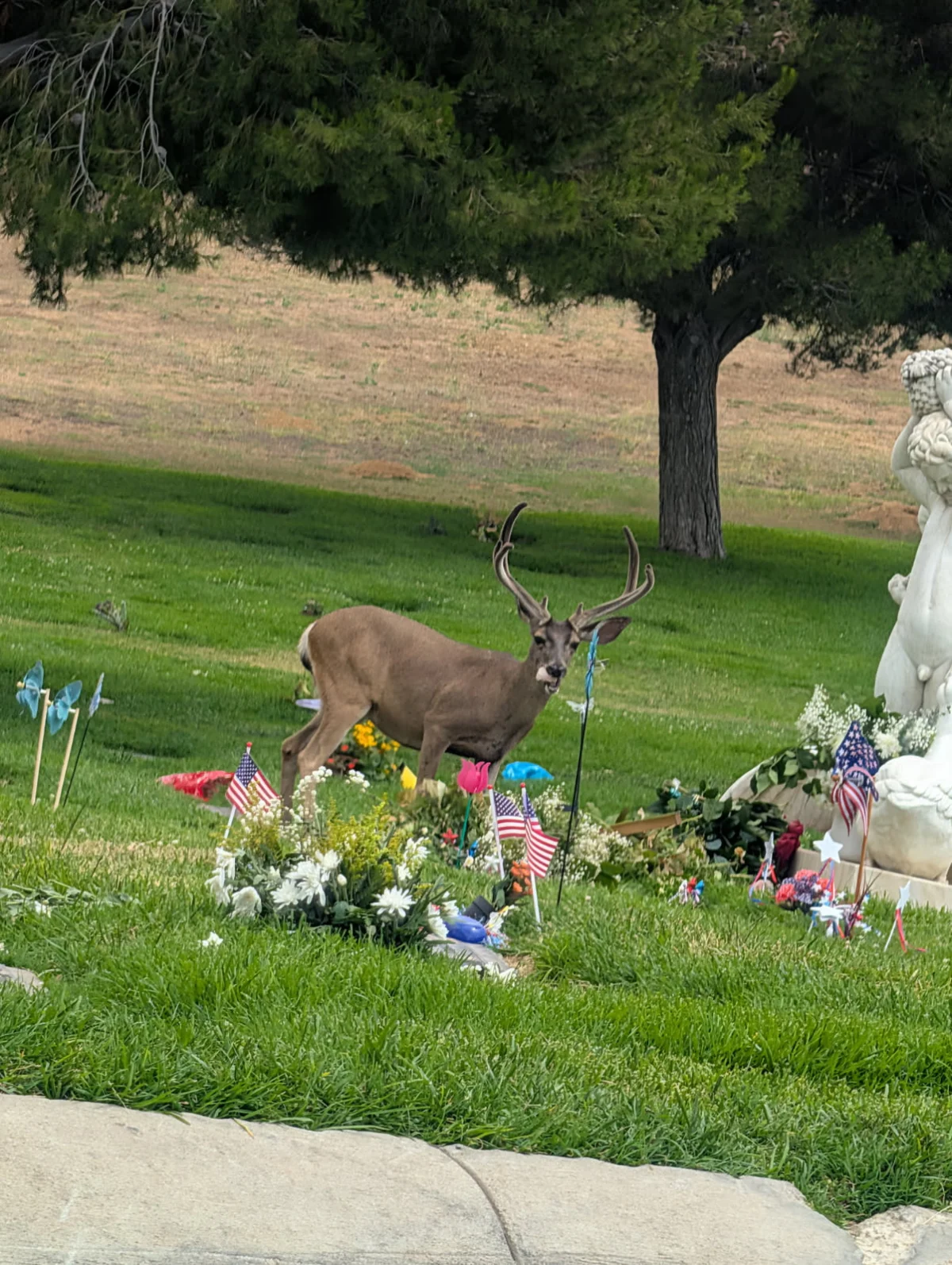
The week has been framed by both the loss of a loved one and the celebration of enduring creative legacies. As noted in the opening of this report, the service at Forest Lawn, with its view of Griffith Park, provides a fitting metaphor for the SFF community: a space where we look toward the horizon, reflecting on what has passed while keeping our eyes on the vistas of the future. Whether through the lens of a classic film, a newly inducted Hall of Fame member, or a debate over the nature of reality itself, the genre remains a vital, evolving, and deeply human endeavor.