

Published May 24, 2026, 5:01 PM EDT by Sara Century
Forty years have passed since the Freeling family faced their second harrowing encounter with the spectral realm in Poltergeist II: The Other Side. Released in 1986, the sequel to Tobe Hooper and Steven Spielberg’s seminal 1982 horror masterpiece, Poltergeist, often lived in the shadow of its predecessor. However, as the decades have unfurled, Poltergeist II has steadily ascended in critical and popular re-evaluation, revealing itself to be far more than just a cash-grab follow-up. It stands today as a compelling, deeply unsettling, and surprisingly profound exploration of familial bonds, spiritual warfare, and the enduring nature of evil, holding up with remarkable resilience.
The original Poltergeist etched itself into the annals of horror history, a masterclass in suburban terror that famously introduced Carol Anne (Heather O’Rourke) to a static-filled television screen, murmuring "They’re here." This subtly chilling opening scene, where the line between the mundane and the supernatural blurred, set a new benchmark for domestic horror and remains endlessly referenced. Its influence on subsequent genre films is undeniable, solidifying its place as a cornerstone of Tobe Hooper’s celebrated oeuvre. To follow such a phenomenon was always going to be an arduous task, yet Poltergeist II dared to venture deeper into the spiritual abyss, attempting to unpack the origins of the malevolent forces that plagued the Freelings.
While "it’s not the original," as one might reflexively concede, the sequel carved its own distinct identity. It eschewed direct replication, instead choosing to expand the narrative universe and delve into the spiritual mechanics behind the haunting. With the unforgettable cast returning and the introduction of a villain who would quickly join the pantheon of horror’s most unsettling figures, Poltergeist II offered a unique blend of psychological dread, genuine scares, and an earnest exploration of the Freeling family’s psychic inheritance.
Main Facts: A Deeper Dive into the Other Side
Poltergeist II: The Other Side premiered on May 23, 1986, continuing the terrifying ordeal of the Freeling family: Steve (Craig T. Nelson), Diane (JoBeth Williams), Robbie (Oliver Robins), and the perpetually imperiled Carol Anne (Heather O’Rourke). Having survived the devastating supernatural events that destroyed their home in Cuesta Verde, the family attempts to rebuild their lives, moving in with Diane’s mother, Jess (Geraldine Fitzgerald). However, their respite is short-lived.
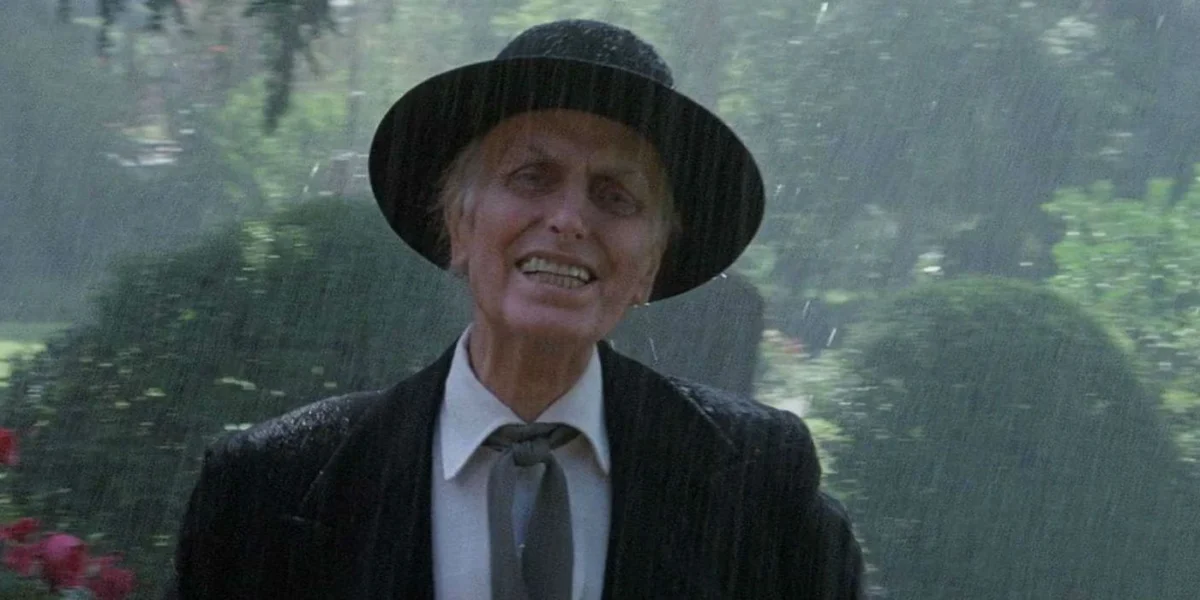
The central premise of the sequel revolves around the discovery of an ancient burial site beneath their former home’s location, inadvertently unleashing a new, more ancient evil. This malevolent entity, revealed to be the spirit of Reverend Henry Kane (Julian Beck), a charismatic yet terrifying cult leader from the 19th century, sets its sights squarely on Carol Anne. Kane, along with his followers, met a grim end in an underground cavern, and his spirit has been trapped until now. The film introduces new allies in the spiritual fight: the returning psychic Tangina Barrons (Zelda Rubinstein) and the enigmatic Native American shaman Taylor (Will Sampson), who offers a different perspective on the spiritual battle.
The movie is lauded for several key elements: Julian Beck’s chilling portrayal of Reverend Kane, a performance made all the more poignant by the actor’s real-life battle with cancer during filming; the deepening of Diane Freeling’s character, as she begins to embrace her own burgeoning psychic abilities; and the addition of Taylor, who grounds the fantastical elements with a sense of ancient wisdom and spiritual combat. Despite initial mixed reviews, primarily due to the impossible task of surpassing its iconic predecessor, Poltergeist II has, over four decades, garnered a dedicated following who recognize its unique contributions to the horror genre.
Chronology: From Suburban Terror to Spiritual Warfare
The Genesis of a Sequel
The monumental success of the original Poltergeist in 1982, both critically and commercially, made a sequel all but inevitable. However, bringing the Freeling family back to the screen presented numerous challenges. Tobe Hooper, who directed the first film, did not return, nor did Steven Spielberg, who was heavily involved in the first as producer and co-writer, though his exact directorial contribution remains a subject of debate. The responsibility fell to British director Brian Gibson, known for his work in television and feature films like Breaking Glass.
The screenplay was penned by Michael Grais and Mark Victor, who also co-wrote the original. Their approach for the sequel was not to replicate the haunted house formula but to explore the origins of the malevolence. Where did the "beast" come from? This led to the concept of the "Other Side" and the introduction of Reverend Kane, a tangible, historical evil rather than an amorphous, spectral entity. The pressure was immense to deliver a story that felt both connected to the original and fresh enough to justify its existence, all while navigating the high expectations set by its predecessor’s groundbreaking special effects and psychological terror.
Continuing the Freeling Saga
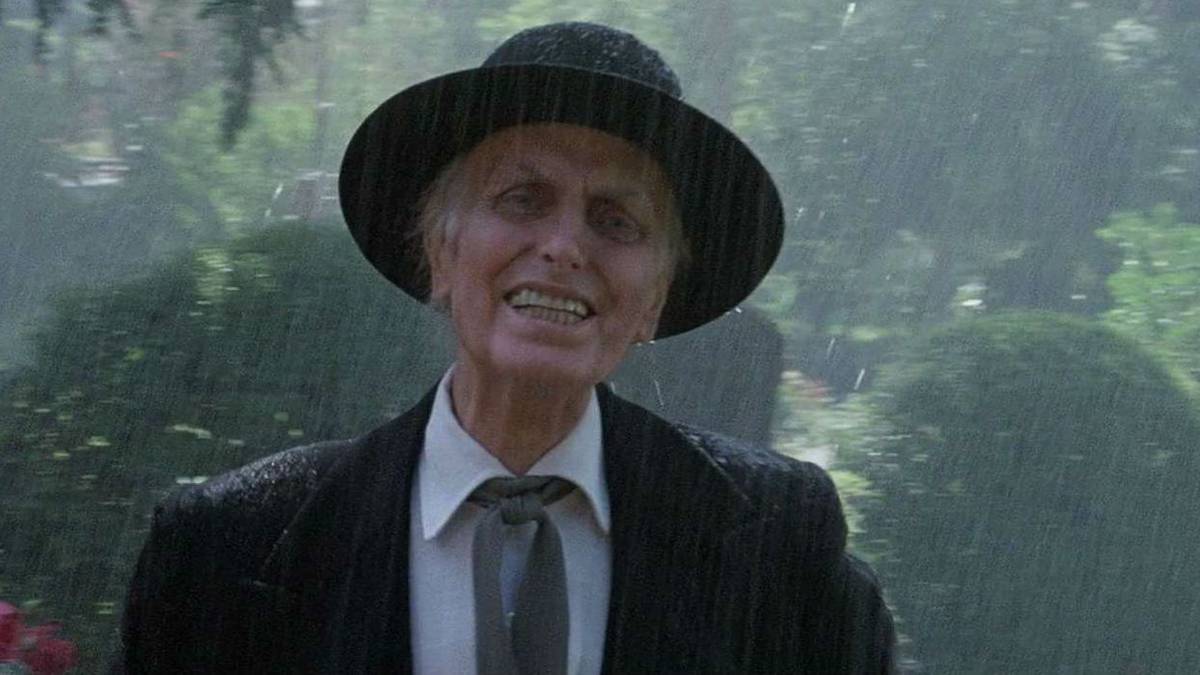
Poltergeist II opens with the Freeling family attempting to piece their lives back together after the cataclysmic events of the first film. Their house is gone, swallowed by a supernatural vortex, and they are now living with Diane’s kind but somewhat naive mother, Jess. This change of scenery provides a temporary sense of peace, but it is quickly shattered. The excavation of their former property unearths a hidden cave, which is revealed to be the final resting place of Reverend Kane and his doomsday cult. This act inadvertently re-opens the portal, allowing Kane to pursue Carol Anne, whom he refers to as his "little bird," believing she holds the key to his salvation or damnation.
Kane’s initial appearances are profoundly unsettling. He approaches the Freelings’ new home as a soft-spoken, seemingly benevolent preacher, attempting to gain entry and access to Carol Anne through manipulation and psychological intimidation. His attempts to engage Steve in conversation, all while exuding an aura of palpable menace, create an almost unbearable tension. When denied, his tactics escalate, moving from psychological torment to increasingly aggressive supernatural attacks. The film delves into the idea that the Freelings are a psychically sensitive family, particularly Diane, whose mother, Jess, imparts this belief before her passing. This revelation sets the stage for Diane’s own spiritual awakening, allowing her to become a more active participant in the battle for her daughter’s soul.
Behind the Scenes and Challenges
Brian Gibson’s direction brought a slightly different aesthetic to the Poltergeist universe. While the first film blended Hooper’s visceral horror with Spielberg’s family drama, Gibson’s take leaned more into a direct confrontation with the demonic and a darker, more spiritual tone. The special effects, handled by the legendary Richard Edlund’s Boss Film Studios, were ambitious for the time, particularly the grotesque transformations of Reverend Kane and the surreal imagery of the "Other Side." While some effects, like the infamous tequila worm scene, might appear dated by today’s standards, others, such as Kane’s spectral form and the final "Great Beast" manifestation, remain remarkably effective in their chilling impact.
Filming took place in various locations, including California and Arizona, to capture the desolate, Southwestern aesthetic that underpins Taylor’s spiritual teachings. The set for the underground cavern was a significant undertaking, designed to convey a sense of ancient dread and claustrophobia. The tragic backdrop of Julian Beck’s terminal stomach cancer during production undeniably influenced his performance, lending an authentic, gaunt fragility to Reverend Kane that amplified the character’s terrifying presence. Similarly, Will Sampson, suffering from a degenerative disease, brought a quiet gravitas to his role, often performing his own stunts despite his failing health. These real-world struggles, while heartbreaking, inadvertently contributed to the film’s eerie atmosphere.
Supporting Data: Critical Reappraisal and Enduring Themes
Critical Reappraisal vs. Initial Reception
Upon its release in 1986, Poltergeist II: The Other Side received a generally mixed critical reception. Many reviewers found it difficult to escape the shadow of its predecessor, often deeming it an inferior, less original effort. Critics like Roger Ebert noted its reliance on jump scares and special effects over the psychological depth of the first film, while others lamented the perceived loss of Spielberg’s touch. The common sentiment was that while it had its moments, it failed to recapture the magic and terror of the original.
However, over the past four decades, a significant re-evaluation has taken place. Modern horror fans and critics, freed from the immediate comparison to the 1982 classic, have begun to appreciate Poltergeist II for its distinct merits. Its unique villain, the deepening of the Freeling family’s spiritual journey, and its ambitious exploration of the afterlife have all contributed to its growing cult status. The film is now often seen not as a mere imitation, but as a courageous attempt to expand the franchise’s mythology, offering a different, yet still potent, brand of supernatural horror.
Character Deep Dive
- Reverend Henry Kane (Julian Beck): Without a doubt, Kane is the beating, black heart of Poltergeist II. Beck’s portrayal is nothing short of iconic. Gaunt, with piercing eyes and a voice that oscillates between soft-spoken menace and guttural rage, Kane embodies a primal, insidious evil. Unlike the more amorphous "Beast" of the first film, Kane is a character with a history, a purpose, and a terrifyingly human face. His slow, deliberate approach to the Freeling home, his unnerving songs, and his psychological warfare ("You’re all gonna die in there!") make him one of horror’s most memorable and disturbing villains. Beck, a renowned avant-garde theatre artist, brought a profound depth to the character, and his real-life illness only amplified the spectral, decaying quality of Kane.
- Carol Anne Freeling (Heather O’Rourke): The heart of the Poltergeist franchise, Carol Anne remains the target of the malevolent entities. O’Rourke delivers another brave and sympathetic performance, showcasing the innocent vulnerability that makes her plight so compelling. Her pure spirit is what Kane craves, making her a beacon of light in the darkness.
- Diane Freeling (JoBeth Williams): Poltergeist II is arguably Diane’s film as much as Carol Anne’s. Williams portrays a mother who is not only a protector but also an evolving spiritual warrior. Her psychic sensitivity, hinted at in the first film, is fully explored here, as she begins to embrace her abilities and actively participate in the spiritual battle. Her journey from terrified bystander to empowered medium is a crucial development.
- Steve Freeling (Craig T. Nelson): Steve continues to represent the grounded, often skeptical patriarch. His initial incredulity at Taylor’s spiritual advice, while occasionally grating, serves as a relatable entry point for the audience, mirroring the human struggle to accept the unexplainable. Nelson expertly navigates Steve’s transformation from skeptic to reluctant believer, ultimately becoming a vital component of the family’s defense.
- Tangina Barrons (Zelda Rubinstein): The diminutive psychic with the booming voice and profound wisdom returns, offering her signature blend of spiritual guidance and no-nonsense advice. Tangina remains an indispensable ally, her presence a comforting, albeit slightly unsettling, anchor in the supernatural chaos. Her coaching of Diane is a pivotal element in the narrative.
- Taylor (Will Sampson): The introduction of Taylor, a Native American shaman, brought a new dimension to the Poltergeist mythology. Sampson, a respected actor and a real-life shaman, infused the character with authenticity and gravitas. Taylor offers a spiritual framework that contrasts with and complements Tangina’s, providing ancient wisdom and practical magical defenses against Kane. His presence expands the world of Poltergeist beyond simple ghost stories, delving into deeper spiritual warfare.
Thematic Depth
Poltergeist II is rich with thematic undertones. The family unit remains the core defense against evil, a recurring motif throughout the series. The film emphasizes that their love and bond are the most potent weapons against Kane’s insidious attempts to divide and conquer. The nature of good vs. evil is explored more explicitly through the character of Reverend Kane, a tangible representation of ancient malevolence, and the spiritual guidance offered by Taylor and Tangina. It’s a battle not just for Carol Anne’s body, but for her very soul.
The exploration of the afterlife and other dimensions is central to the film’s title, "The Other Side." It posits a complex spiritual landscape where souls can be trapped, manipulated, or redeemed. This elevates the horror beyond mere hauntings to a cosmic struggle. While the film features its share of jump scares and grotesque imagery, it also maintains a strong current of psychological horror, primarily through Kane’s chilling presence and his attempts to sow discord within the Freeling family.
Finally, no discussion of Poltergeist would be complete without addressing the infamous "Poltergeist Curse." The franchise has been tragically linked to a series of untimely deaths among its cast members. Dominique Dunne (Dana in the first film) was murdered shortly after its release. Julian Beck (Reverend Kane) died during production of Poltergeist II from stomach cancer. Will Sampson (Taylor) passed away a year after the sequel’s release due to complications from a lung and heart transplant. Most famously and tragically, Heather O’Rourke (Carol Anne) died at the age of 12, shortly after completing Poltergeist III. While these heartbreaking losses are, in reality, coincidental and attributable to natural causes or human violence, their accumulation has undeniably contributed to the films’ eerie aura, creating a chilling meta-narrative that continues to fascinate and disturb audiences. The film’s lasting association with these tragedies adds an undeniable layer of haunting realism to its fictional horrors.

Official Responses: Filmmaker Intent and Legacy
Filmmakers’ Vision
The creative team behind Poltergeist II, including director Brian Gibson and writers Michael Grais and Mark Victor, aimed to expand the mythology rather than simply repeat it. Their intention was to provide an origin story for the malevolent entity that targeted Carol Anne, delving into the spiritual underpinnings of the haunting. Producer Mark Victor articulated the desire to explore "what happens after the haunting," focusing on the psychological and spiritual toll on the family. The goal was to make the horror more personal and rooted in a specific, ancient evil, rather than the more generalized "Beast" of the first film. They sought to illustrate that escaping a haunted house doesn’t necessarily mean escaping the haunting itself.
The Spielberg Factor
Steven Spielberg’s direct involvement with Poltergeist II was minimal, especially compared to his hands-on role in the original. While he held a producer credit on the first film and significantly contributed to its story and execution, his focus had shifted by the mid-1980s. This lack of direct input is often cited by critics as a reason for the sequel’s perceived departure in tone and execution. However, it also allowed Gibson and the writers to forge their own path, free from the considerable shadow of Spielberg’s creative vision, resulting in a film that, for better or worse, stands as a distinct entity within the franchise.
Enduring Impact
While Poltergeist II may not have achieved the same immediate cultural impact as its predecessor, its influence can be seen in various ways. Reverend Kane’s character design and his method of psychological torment have inspired subsequent horror villains. The film’s integration of Native American spiritualism through Taylor was also a notable, if imperfect, attempt to broaden the scope of supernatural horror, moving beyond traditional Western ghost lore. It demonstrated that horror franchises could attempt to build a deeper, more complex mythology, even if the execution was uneven. Its commitment to the Freeling family’s emotional journey, even amidst overwhelming supernatural threats, also set a precedent for character-driven horror sequels.
Implications: Beyond the Sequel and Timeless Frights
Beyond the Sequel
Poltergeist II marked a crucial turning point for the franchise. It was the last film to feature the core Freeling family unit intact, and notably, the last major screen appearance for Heather O’Rourke and Julian Beck. While Poltergeist III (1988) attempted to continue Carol Anne’s story in a new setting, it lacked the full family dynamic and the unique villainy of Kane. The 2015 remake, while a valiant effort, largely failed to capture the magic or the terror of the original films. Consequently, Poltergeist II holds a unique place as the final, truly direct continuation of the Freeling family’s battle against the forces of the "Other Side," making its re-evaluation all the more significant.
Cultural Resonance
Four decades on, Poltergeist II: The Other Side continues to resonate with audiences for several reasons. Its unwavering focus on the family as the ultimate defense against cosmic evil speaks to a primal human need for security and belonging. The film expertly taps into the universal fear of the unknown, presenting a spiritual battle that is both epic in scope and deeply personal. Reverend Kane remains a figure of pure, unsettling malevolence, a villain whose quiet menace lingers long after the credits roll. The film’s exploration of psychic abilities and spiritual warfare also appeals to a fascination with the unseen and the potential within humanity to confront it. The enduring legacy of the "Poltergeist Curse," while tragic, undeniably adds a layer of morbid intrigue, ensuring the film’s place in popular culture discussions.
A Timeless Fright
In conclusion, Poltergeist II: The Other Side has defied its initial, often lukewarm, reception to emerge as a surprisingly robust and enduring piece of supernatural horror. It may not possess the flawless execution or groundbreaking originality of its predecessor, but it stands on its own merits as a courageous and often terrifying continuation of the Freeling saga. Its unforgettable cast, particularly the chilling Julian Beck as Reverend Kane and the wise Will Sampson as Taylor, elevate the material beyond a simple sequel. The film’s willingness to delve deeper into the spiritual realm, its exploration of Diane’s psychic awakening, and its unwavering commitment to the family’s plight contribute to its lasting appeal.
For a mid-1980s horror sequel, Poltergeist II achieved something remarkable: it held its own, expanded a beloved universe, and introduced a villain for the ages. Forty years later, it doesn’t just hold up; it demands to be seen, appreciated, and acknowledged as a vital, if often overlooked, chapter in the storied history of the Poltergeist universe. Its ability to still elicit genuine dread and spark thoughtful discussion about the nature of evil and the resilience of the human spirit is a testament to its enduring power.











No comments yet. Be the first to join the conversation!