

Main Facts
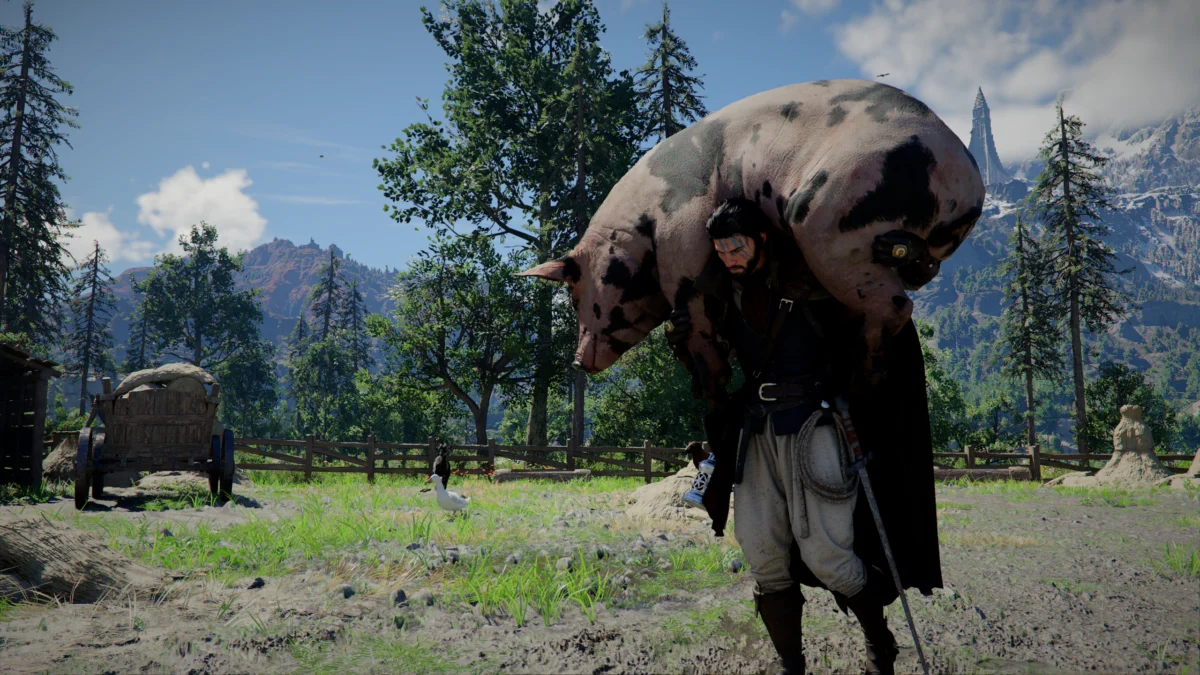
Pearl Abyss’s highly anticipated action RPG, Crimson Desert, emerges onto the gaming landscape as a title of immense ambition, presenting a truly paradoxical experience for players. Our in-depth review reveals a game that stands as a testament to visual spectacle and dynamic combat, yet simultaneously stumbles over deeply incongruous narrative choices and a baffling user interface. Described aptly as a "champion bodybuilder of a video game," Crimson Desert showcases a gigantic world brimming with incredible scale and shining graphical fidelity, underpinned by a muscular combat system offering an impressive wealth of options. However, this formidable exterior conceals significant structural weaknesses: a story that lacks coherence, characterization that veers wildly, and maddening systems that hinder rather than enhance immersion. The core takeaway is a lament for what could have been: a title with the genuine potential to be one of the best of the generation, if only its foundational narrative and user experience were subjected to a radical, near-total overhaul.
Chronology
Anticipation and Development
The journey of Crimson Desert has been watched keenly by the gaming community. Initially conceived as a prequel to Pearl Abyss’s successful MMORPG, Black Desert Online, it gradually evolved into a standalone single-player (with online elements) action RPG. Trailers and gameplay showcases over the years tantalized audiences with glimpses of its stunning open world, intricate combat, and the promise of a rich, character-driven story. This evolution from an MMO-adjacent project to a more focused single-player experience heightened expectations, positioning Crimson Desert as a potential next-generation benchmark for open-world design and combat mechanics. Developers Pearl Abyss, known for their visual prowess and complex systems in Black Desert Online, were poised to deliver a new flagship title that leveraged their expertise in a fresh format.
Initial Impressions
Upon first stepping into the world of Crimson Desert, the game delivers an immediate, breathtaking impact. The initial moments, as the protagonist Kliff trudges along a twilight-dappled ridge, bathed in the hues of a setting sun, are genuinely among the most visually arresting scenes witnessed in recent memory. The sheer scale of the environment is overwhelming in the best possible way, hinting at a vast, unexplored continent ripe for adventure. This initial awe is a powerful testament to Pearl Abyss’s graphical and artistic capabilities, setting a high bar for the journey ahead. The world itself feels alive, dynamic, and meticulously crafted, inviting exploration with every panoramic vista.
Diving into the Narrative
The story of Crimson Desert centers around Kliff, a warrior of the Greymanes, a sect displaced from their homeland of Pailune by the aggressive Black Bears. The narrative thrust involves Kliff’s quest to reclaim influence for their slain king and push back the invaders. Following a defeat where he is thrown into a river, Kliff is mysteriously resurrected by an unknown magic, granting him otherworldly abilities through a connection to The Void. His path then unfolds into a broader continental conflict, requiring him to reunite the scattered Greymanes amidst complex political machinations, rubbing elbows with a diverse cast of counts, coinmasters, courtesans, and a host of less savory characters like blackguards and brigands. The setup strongly evokes a "Game of Thrones-y" atmosphere, complete with gritty dialogue, occasional expletives, and a pastiche of regional British accents among characters supposedly from the same region, adding a peculiar layer to the world-building.
Encountering the Flaws
However, as the initial wonder gives way to deeper engagement, the foundational cracks in Crimson Desert‘s design begin to show. The decision to center the narrative on a fixed protagonist like Kliff becomes doubly perplexing, especially given Pearl Abyss’s renowned character creator from Black Desert Online. This seemingly deliberate choice to sideline one of their signature strengths feels like a missed opportunity, leaving players with a character whose persona is bafflingly inconsistent. Kliff oscillates wildly between a stoic, formidable warrior capable of Terminator-esque feats of strength and a docile, almost purring individual serving soup to strangers who conveniently appear to help build a camp.
The narrative itself is riddled with inconsistencies and jarring pacing. What should be arduous tasks, like reuniting the scattered Greymanes, often occur with surprising, almost comical, ease. Key plot points resolve themselves through sudden appearances, undermining the sense of struggle and achievement. Compounding these issues are instances of tone-deaf storytelling, such as the introduction of the "Goldleaf" guild, a predatory band of money-lending goblin merchants, which unfortunately veers into problematic stereotypes, leaving the reviewer "head in hands." Dialogue, too, suffers from an alarming sparseness, with exchanges like "Are you up to the task?" followed by a simple "Yes" offering little in the way of character development or world-building.
Combat and Exploration Highlights
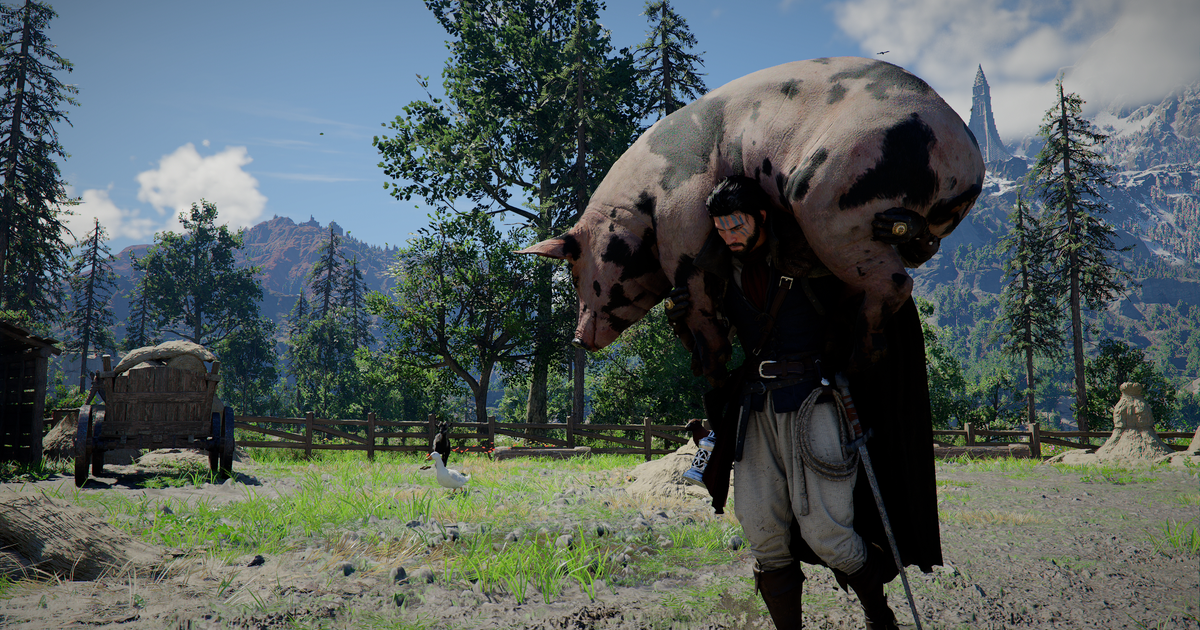
Despite these narrative shortcomings, the core gameplay loop of Crimson Desert shines brightest in its combat and world exploration. Kliff boasts an impressive arsenal of fighting styles, ranging from robust sword-and-board action to a spectacular, almost ludicrous, selection of unarmed grappling combos. These martial arts maneuvers, while perhaps over-the-top in an otherwise grounded fantasy setting, are undeniably fun and satisfying to execute. The combat system proves to be surprisingly deep, rewarding players who master its intricacies. This depth is particularly evident in larger engagements, where players face "Musou-like hordes" of enemies, and in the genuinely tough boss battles that demand strategic thinking and precise execution. Beyond combat, the sheer joy of traversing the world—gliding across vast ravines on magical wings or galloping on horseback across high cliffs and yawning valleys—captures the epic quality of a grand adventure, reinforcing the initial impression of a beautifully crafted environment.
Post-Review Reflection
Ultimately, Crimson Desert stands as a game of profound contrasts. While its world and combat mechanics offer moments of genuine brilliance and exhilaration, the underlying narrative and user experience issues are too significant to ignore. The game, in its current state, buries its best features under layers of absurdity and frustration. The reviewer’s final assessment underscores the tragedy of unfulfilled potential: a technically superb and visually stunning game that, by failing to cohere its disparate elements, falls short of the generational masterpiece it so clearly aspires to be.
Supporting Data
Visual and Technical Prowess
The visual fidelity of Crimson Desert is arguably its strongest, most undeniable asset. Utilizing Pearl Abyss’s proprietary BlackSpace Engine, the game renders a world of astounding detail and scale. From the intricate textures of ancient ruins and bustling cityscapes like Delesyia to the sweeping vistas of snow-capped mountains and sun-baked deserts, every environment feels meticulously crafted. The lighting system, particularly evident in the dynamic day-night cycle and weather effects, paints the landscape with breathtaking realism, enhancing the sense of immersion. Character models, while Kliff himself is fixed, showcase a high level of detail in enemy designs and non-player characters, contributing to the rich tapestry of the world. The seamless transitions between different biomes and the sheer draw distance are technical marvels, solidifying Crimson Desert‘s position at the forefront of graphical achievement in open-world gaming. The sense of a truly living, breathing world, populated by diverse flora and fauna, is consistently maintained, making exploration a continuous feast for the eyes.
The Combat System: A Deep Dive
Crimson Desert‘s combat system is a complex and rewarding beast, offering a "muscular" and "unassumingly deep" experience. Kliff’s versatility on the battlefield is a standout feature. Players can fluidly switch between various combat styles, each offering distinct advantages and satisfying mechanics. The "chunky sword-and-board action" provides a weighty, deliberate feel, emphasizing parries, blocks, and powerful strikes. In stark contrast, the "spectacular selection of unarmed grappling combos" introduces a more acrobatic and visceral approach, allowing Kliff to unleash a flurry of martial arts moves, throws, and devastating finishers. This duality caters to different playstyles and encourages experimentation. The game excels in both its large-scale engagements, where Kliff can carve through "Musou-like hordes" of enemies with satisfying AOE attacks and special abilities, and its "genuinely tough boss battles" that demand pattern recognition, precise dodging, and mastery of Kliff’s diverse toolkit. The ability to chain together various attacks, parries, and dodges creates a dynamic and engaging combat flow that feels responsive and impactful, providing a consistent source of enjoyment even when other aspects of the game falter.
Narrative Disconnects: Specific Examples
The narrative shortcomings are multifaceted and deeply impact player immersion.
-
Kliff’s Identity Crisis: Kliff’s character arc is not merely inconsistent; it’s a narrative whiplash. One moment, he’s a hardened warrior, stoically enduring hardship and dishing out brutal justice, perfectly embodying the "Terminator" comparison. The next, he’s inexplicably transformed into a solicitous figure, "purring like a housecat" while serving soup to newly arrived Greymanes at a makeshift camp. This radical shift in personality, often within short narrative segments, prevents players from forming a coherent understanding or emotional connection with the protagonist. It feels less like character development and more like a collection of disparate scenes stitched together without regard for internal consistency. The absence of a robust character creator, a Pearl Abyss hallmark, further exacerbates this issue by denying players the agency to shape their own hero, leaving them tied to a pre-defined character who frequently defies his own established traits.
-
Plot Convenience and Pacing: Key plot points frequently suffer from an artificial sense of convenience. The central objective of "reuniting the Greymanes," which is explicitly framed as a significant challenge over the initial 20+ hours, is resolved with an anticlimactic ease. Rather than requiring arduous quests, complex negotiations, or heroic efforts, a large contingent of Greymanes simply "turn up" at Kliff’s camp, offering a casual "how do" as if their arrival was never in question. This instantaneous resolution undercuts any tension or sense of accomplishment the narrative attempts to build, rendering earlier struggles feel meaningless. Such instances of narrative shorthand suggest either a lack of development time for these critical plot points or a fundamental misunderstanding of how to build compelling stakes and progression in an RPG.

-
Stereotypes and Tone Deafness: The introduction of the "Goldleaf" guild, a group of "predatory band of money-lending goblin merchants," is particularly egregious. This trope, unfortunately, draws on deeply problematic historical and cultural stereotypes, associating a fictional race with greed and unscrupulous financial practices. In a modern gaming landscape that increasingly values diverse and respectful representation, such a portrayal is not merely clumsy but actively harmful, revealing a concerning lack of awareness in the game’s writing. It actively detracts from the immersive fantasy world, replacing nuanced characterization with a reductive and offensive caricature.
-
Dialogue Deficiency: The dialogue, or lack thereof, is another significant impediment. The example of the NPC asking, "Are you up to the task?" and Kliff’s sole reply being, "Yes," is indicative of a broader issue. These minimalist exchanges strip characters of personality, prevent meaningful interaction, and fail to convey crucial information or emotional depth. Such sparse dialogue leaves players feeling disconnected from the world and its inhabitants, turning what should be engaging conversations into perfunctory checkboxes. It creates a vacuum where character development and narrative progression should be, leaving the player to fill in the blanks or, more likely, lose interest.
The UI/UX Nightmare
Crimson Desert‘s user interface (UI) and user experience (UX) decisions are a source of persistent frustration, actively hindering gameplay rather than facilitating it.
-
Inventory System: The inventory management is particularly baffling, designed seemingly to "simulate the experience of carrying your food home when you don’t want to pay for a carrier bag." Unlike virtually every other contemporary RPG, Crimson Desert does not allow players to view an enemy’s inventory before looting. This means players must blindly pick up everything an enemy drops, requiring sufficient inventory space for every single item, no matter how trivial. Only after an item is added to Kliff’s bag can it be inspected and then, more often than not, immediately discarded. This adds several unnecessary steps to a fundamental gameplay loop, turning what should be a quick and satisfying reward into a tedious chore. It creates constant friction, interrupting the flow of combat and exploration with mundane item management.
-
Currency Collection: The most illustrative example of this flawed UI is the handling of in-game currency. Enemies frequently drop "pouches of change," which, bafflingly, must be manually opened before their contents are added to the player’s cash total. This multi-step process for collecting what often amounts to a "palmful of copper" is an absurd design choice. It’s akin to requiring a billionaire to manually unwrap every single dollar bill to fund a downpayment on a New York apartment – the effort-to-reward ratio is so skewed that it renders the action pointless. Players are incentivized to ignore these minor currency drops, sacrificing potential income simply to avoid the cumbersome UI interaction. This decision directly undermines the reward loop and further reinforces the sense of a system designed to frustrate rather than empower.
-
Overall User Experience: Beyond these specific examples, the general layout and navigation of the UI often feel unintuitive and cluttered. Essential information can be difficult to locate, and menu traversal often requires more clicks than necessary. This accumulation of small, frustrating UI decisions creates an overall user experience that actively detracts from the enjoyment of the game’s otherwise strong points. It’s a constant reminder of the lack of polish in a crucial area that impacts every aspect of gameplay.
Official Responses
Anticipated Developer Stance
Given the critical feedback surrounding Crimson Desert‘s narrative and UI, Pearl Abyss would likely face immense pressure to address these concerns. Historically, developers in similar situations often prioritize technical stability and performance fixes in initial post-launch patches. However, the depth of the narrative and UI issues suggests that a more substantial acknowledgment might be necessary. Pearl Abyss could potentially issue a statement emphasizing their commitment to player feedback, perhaps hinting at future updates focused on improving the overall user experience and refining narrative elements. It is common for developers to express gratitude for player engagement and assure the community that their criticisms are being taken seriously, even if immediate solutions for fundamental story problems are not feasible.

Potential for Post-Launch Support
For a game of Crimson Desert‘s scale and ambition, post-launch support is almost a given. While a "full revamp of 99% of its narrative content" is a monumental task, likely beyond the scope of typical patches, Pearl Abyss could address smaller, yet impactful, aspects. This might include UI overhauls to streamline inventory management and currency collection, dialogue tweaks to improve clarity and consistency, and potentially adding more context or options to existing quests to mitigate abrupt pacing. Furthermore, given the critique regarding Kliff’s fixed character and the developer’s renown for character customization, there might be a strong community push for the eventual inclusion of a robust character creator, even if it’s introduced as a post-launch feature. The success of Black Desert Online has demonstrated Pearl Abyss’s capacity for sustained live-service development, suggesting a potential willingness to continually refine Crimson Desert over time, even if it is a single-player-focused experience.
Implications
Impact on Player Experience
The confluence of Crimson Desert‘s narrative inconsistencies and baffling UI decisions casts a long shadow over an otherwise visually stunning and mechanically robust game. For the average player, this translates into a deeply fragmented experience. The initial awe inspired by the majestic world and thrilling combat is frequently interrupted by moments of profound frustration. It becomes a struggle to connect with Kliff’s story or the wider world when the protagonist’s personality is so volatile, and the plot progression feels arbitrary. The joy of discovery is often dampened by the tediousness of inventory management, and the satisfaction of victory is chipped away by the absurdity of manually opening coin pouches. This constant friction creates a barrier between the player and the game’s undeniable strengths, making it difficult to fully immerse oneself in what should be a grand adventure. Players are left to question whether the stunning visuals and engaging combat are enough to justify enduring the significant narrative and experiential hurdles.
Industry Context and Lessons
Crimson Desert serves as a potent case study in the challenges of balancing ambition with execution in modern game development. The "bodybuilder" analogy holds true: a game can possess impressive "muscles" in the form of cutting-edge graphics and sophisticated combat systems, yet fundamentally lack the "connective sinew" of a cohesive narrative and intuitive user experience to form a truly functional and enjoyable whole. This highlights a critical lesson for the industry: technical prowess and visual grandeur, while important, cannot compensate for a weak narrative foundation or a user-hostile interface.
The game’s reception inevitably draws comparisons to titles like The Witcher 3: Wild Hunt and Dragon’s Dogma. The Witcher 3 exemplifies how a strong, consistent central character and a meticulously crafted narrative can provide players with purpose and a deep connection to the game world, transforming a large open world into a compelling personal journey. Dragon’s Dogma, conversely, demonstrates that even without a deeply personal narrative, a game can thrive on reactive systems, emergent gameplay, and memorable supporting characters (like the Pawns) that generate unique player experiences. Crimson Desert, in its current state, struggles to replicate either of these successes. It misses the mark on providing a compelling central character and fails to offer sufficiently robust reactive systems or supporting characters to fill that void, leaving players adrift in a visually stunning but narratively unanchored world. The implication is clear: even in the era of hyper-realistic graphics, the fundamentals of storytelling and user-centric design remain paramount for critical acclaim and lasting player engagement.
Future Prospects for Crimson Desert
The future of Crimson Desert hinges on Pearl Abyss’s response to this critical feedback. The potential for greatness is undeniably present, but the path to realizing it is steep. A "full revamp of 99% of its narrative content" is a colossal undertaking, one that would require significant resources and potentially a re-evaluation of the game’s core storytelling philosophy. While unlikely for a single-player focused title, smaller, iterative improvements to dialogue, quest flow, and character consistency could incrementally improve the narrative experience. More feasible and arguably more urgent would be a comprehensive overhaul of the UI and UX, particularly addressing the inventory and currency systems, which are direct sources of player frustration. Whether Pearl Abyss chooses to invest in such extensive post-launch refinement will determine if Crimson Desert can transcend its current state as a beautiful but flawed diamond in the rough, or if it will remain a cautionary tale of immense potential marred by fundamental design missteps.











No comments yet. Be the first to join the conversation!