Layla Zulfa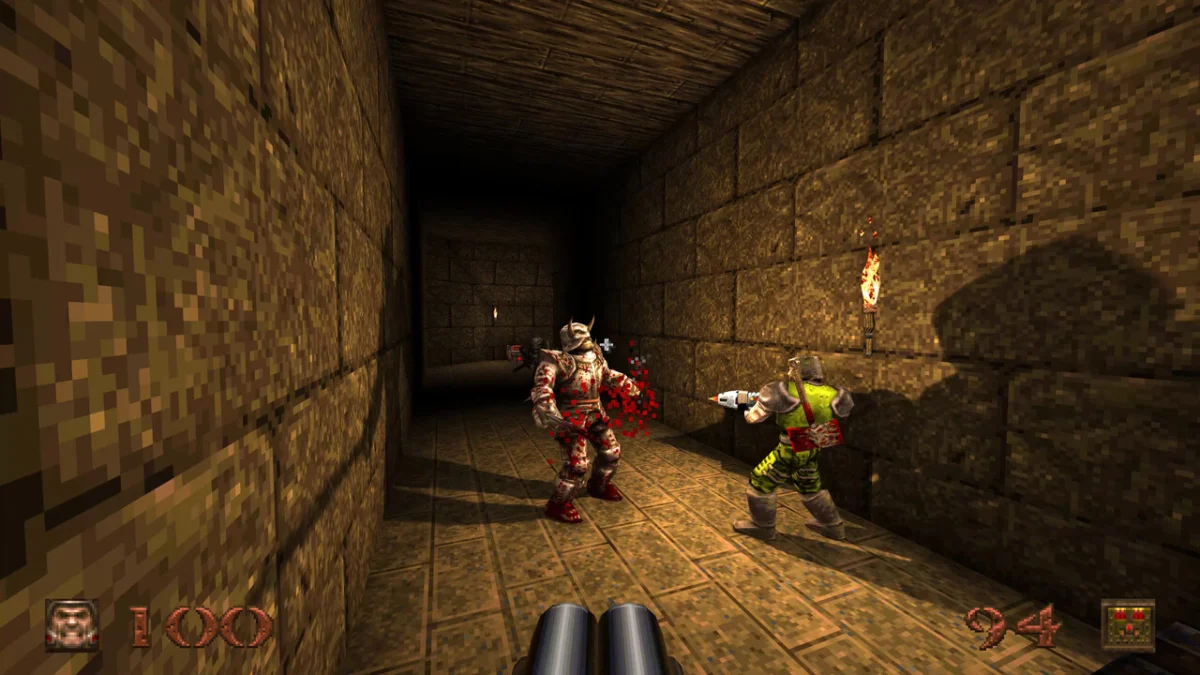
Introduction: A Digital Time Capsule
In an era where modern gaming is defined by cinematic storytelling, ray-tracing, and massive 100GB installations, there remains an enduring fascination with the roots of the first-person shooter (FPS) genre. For many, the year 1996 remains a sacred epoch in gaming history, marked by the release of id Software’s Quake. Today, a remarkable fan project has bridged the gap between 1990s hardware constraints and modern web technology, allowing users to experience the genre-defining shooter directly within their web browsers.
This initiative is not merely a novelty; it is a testament to the preservation of digital heritage. Without the need for downloads, emulator installations, or legacy operating systems, players can jump straight into the gothic, Lovecraftian corridors of Quake. By utilizing the robust FTE QuakeWorld engine, this browser-based version brings the full intensity of the original single-player campaign and the frantic, high-skill ceiling of the QuakeWorld multiplayer mode to any user with a modern browser, a mouse, and a keyboard.
The Technical Backbone: How It Works
The browser-based implementation of Quake is a marvel of modern web optimization. Hosted on pieter.com, the project leverages the FTE QuakeWorld engine, an open-source marvel that has long been the preferred choice for enthusiasts looking to run idTech-based games on contemporary hardware.
Bridging the Gap with FTE
The FTE engine acts as a bridge. While the original Quake was designed for the MS-DOS environment and rudimentary 3D acceleration cards, the FTE engine provides the necessary hooks to translate the game’s binary code into a format that modern web browsers can interpret. Because id Software made the historic decision to open-source the Quake engine in 1999, developers have had decades to refine how this game interacts with modern computing environments.
The Browser Experience
When a user visits the site, the engine loads the necessary assets—primarily the shareware version of the game—directly into the browser’s memory. The rendering pipeline is handled via WebGL, allowing for a smooth 3D experience that mimics the original’s fluid movement. For the user, the barrier to entry is virtually zero. There is no waiting for "installing shaders" or "checking for updates." It is an instantaneous return to 1996.
Chronology: The Evolution of a Legend
To understand the significance of this browser project, one must look at the timeline of Quake and its long, winding road to digital immortality.
- 1996: The 3D Revolution. Quake arrives, fundamentally changing the industry. Unlike its predecessor, DOOM, which relied on 2.5D "fake" 3D, Quake featured true polygonal geometry.
- 1997: The Birth of QuakeWorld. id Software releases an update that introduces client-side prediction, allowing for playable multiplayer matches over the internet despite the agonizingly slow dial-up speeds of the time.
- 1999: The Open-Source Milestone. John Carmack and the team at id Software release the Quake source code. This decision arguably saved the game from obscurity, fostering a massive modding community that would last for decades.
- 2000s–2010s: The Era of Ports. Engines like DarkPlaces, Quakespasm, and FTE QuakeWorld emerge, allowing the game to run at high resolutions with modern lighting and physics.
- 2026: The Browser Frontier. The game achieves ubiquity. By moving to the browser, Quake transcends the need for dedicated gaming hardware, becoming accessible on everything from high-end workstations to school-issued laptops.
Supporting Data: Why ‘Quake’ Remains Relevant
Why go through the effort of porting a 30-year-old game to the web? The answer lies in the data surrounding the game’s mechanics and its influence on the "E-Sports" movement.
The Skill Ceiling
Quake is often cited by professional gamers as having one of the highest skill ceilings in the history of the genre. Techniques such as "bunny hopping" (a movement exploit that allows for high-speed traversal) and "rocket jumping" (using the recoil of a rocket launcher to reach high ledges) were born from the specific physics of the Quake engine. These mechanics are perfectly preserved in the browser version.
Multiplayer Dynamics
The multiplayer mode, specifically the QuakeWorld implementation, supports up to 8 players. In a modern context, 8 players might seem small compared to the 100-player Battle Royales of today, but Quake was designed for "deathmatch" intensity. The maps are small, the movement is lightning-fast, and the time-to-kill is incredibly low. This creates a "flow state" that many modern shooters struggle to replicate.
Official Responses and Industry Context
While this specific browser port is an unofficial, non-commercial fan project, it exists within a gray area that id Software and its parent company, ZeniMax Media (now owned by Microsoft), have generally handled with grace.
Historically, the leadership at id Software—most notably John Carmack—has been incredibly supportive of the community’s efforts to keep their titles alive. By releasing the source code early, they signaled that they viewed their games as living pieces of software rather than static products to be locked away in a vault.
While there has been no official statement regarding this specific website, the gaming community views such projects as "abandonware-adjacent" but ethically sound. Because the project only hosts the shareware version of the game, it avoids the primary legal pitfalls of intellectual property theft. It serves as a promotional tool, effectively introducing a new generation of gamers to the franchise.
The Controls: A Masterclass in Ergonomics
One of the most impressive aspects of this project is how seamlessly the browser handles the controls. As reported by OS X Daily, the transition from keyboard/mouse to web-based inputs is virtually transparent.
Movement and Combat
- WASD Movement: The standard that Quake helped cement. W for forward, S for back, A/D for strafing.
- Muzzle Control: The mouse movement is crisp, allowing for the precise flick-aiming required to hit fast-moving targets.
- Jump Mechanics: The spacebar remains the essential tool for navigation and movement-based combat.
Customization
The inclusion of an options menu within the browser build is a vital feature. Players can rebind keys to suit their preferences, adjust the Field of View (FOV)—a critical setting for modern players who prefer a wider, more immersive view—and tweak mouse sensitivity. These settings are often saved via the browser’s local storage, ensuring that your preferences remain intact for your next session.
Implications: The Future of Gaming Preservation
The success of the Quake browser project raises important questions about the future of digital preservation. As platforms evolve and old file formats become deprecated, the risk of "lost media" increases.
The Death of Installation
The browser model represents a shift away from the traditional "install-and-run" philosophy. By moving games to the web, we remove the friction of hardware compatibility. A game that runs in a browser today will likely run in a browser twenty years from now, provided the web standards (HTML5, WebGL/WebGPU) remain consistent.
Educational Value
For students of computer science and game design, being able to open a browser and inspect the mechanics of Quake is invaluable. It is a "living laboratory." By seeing how early 3D engines managed geometry and sound, the next generation of developers can gain a deeper understanding of the foundations upon which their modern, massive engines are built.
Conclusion: A Testament to Excellence
The browser version of Quake is more than just a trip down memory lane; it is a celebration of enduring design. When a game is built on a foundation of tight, responsive mechanics and intuitive level design, it does not age in the way that graphics-heavy titles do.
While the textures may be low-resolution and the models composed of few polygons, the experience of playing Quake is as exhilarating today as it was in 1996. The project serves as a reminder that the best games are those that respect the player’s agency and offer a level of challenge that demands mastery. As you log on, hit the spacebar, and hear the familiar sound of a shotgun blast echoing through a dimly lit hallway, you aren’t just playing a game—you are participating in a piece of history that, thanks to the dedication of fans, will never truly be lost.
For those who have never felt the rush of a Quake deathmatch, or for the veterans looking to dust off their skills, the browser version is the perfect place to start. It is, quite simply, gaming in its purest form.


 Asep Darmawan
 Ali Ikhwan