

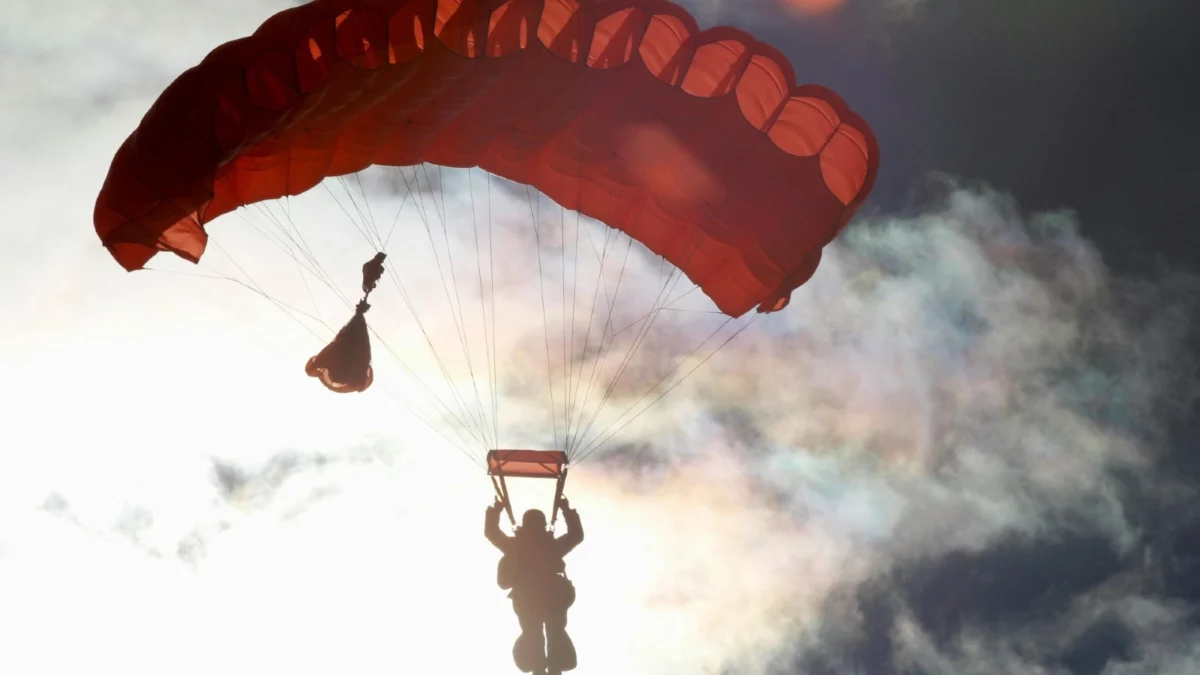
In an extraordinary fusion of extreme athleticism and high-altitude exploration, Dr. Tanaboworn Sirikunakornkun—widely known by his moniker “Super Toom”—has etched his name into the annals of history. The 48-year-old Thai entrepreneur, university professor, and parliamentary executive successfully executed a high-altitude skydive onto the summit region of the Ojos del Salado, the world’s highest active volcano. This feat, performed on the border between Chile and Argentina, secured him the official Guinness World Record for the highest altitude landing of a skydive or parachute jump, clocking in at a staggering 5,442 meters (17,854 feet) above sea level.
The Man Behind the Chute: A Life of Unlikely Extremes
To understand the magnitude of Dr. Sirikunakornkun’s achievement, one must first look at the man himself. In a professional landscape where "daredevil" and "parliamentary executive" rarely occupy the same biography, Super Toom stands as a striking outlier.
Balancing the cerebral demands of a university professorship and the political intricacies of the Thai Parliament with the grueling physical requirements of elite skydiving, Sirikunakornkun has rapidly become a figure of national fascination in Thailand. His entry into the sport was relatively recent, beginning only in 2024. However, what he lacked in years of experience, he compensated for with a singular, high-octane focus. Since his debut in the sport, he has completed over 1,000 jumps, a volume of activity that suggests a level of immersion bordering on obsession.
Chronology: The Road to the Summit
The journey to the summit of Ojos del Salado was not merely a physical challenge but a logistical and strategic undertaking of massive proportions.
The 2025 Genesis
The seeds of this mission were sown in 2025, a landmark year for Sirikunakornkun. He first drew significant international attention during a domestic jump in Thailand where he set a national record for the highest altitude jump by a Thai citizen. More notably, he utilized that platform to fly a massive, 150-square-meter Thai national flag, signaling his intent to blend his extreme sporting career with nationalistic pride.
Planning the Volcanic Descent
The Ojos del Salado project began as an aesthetic pursuit. Sirikunakornkun and his support team were initially drawn to the Andes by photographs of the region’s geological beauty. Upon discovering that the mountain was not only the highest volcano on the planet but also a site of untapped potential for extreme sports records, the mission shifted from a recreational excursion to a full-scale world record attempt.
The Execution
The final jump was the culmination of months of acclimatization and technical preparation. Navigating the treacherous wind currents of the high Andes, Sirikunakornkun ascended via helicopter, reaching the jump altitude before leaping into the thin, freezing air. The landing, conducted on the rugged, mineral-rich terrain of the volcano, required pinpoint precision. At 5,442 meters, the air density is significantly lower than at sea level, requiring a much higher descent velocity and an expert-level understanding of canopy control to avoid injury on the uneven, rocky surface.
Supporting Data: The Physics of the High-Altitude Jump
The record set by Sirikunakornkun is defined by its extreme environmental variables. The Ojos del Salado sits in the Puna de Atacama, a high plateau region where the atmosphere is notoriously volatile.
- Altitude: 5,442 meters (17,854 feet). For context, this is significantly higher than the base camps of many Himalayan peaks.
- Atmospheric Pressure: At this altitude, the air pressure is roughly half of what it is at sea level, which directly impacts the performance of a parachute.
- Thermal Conditions: The volcano is known for extreme temperature fluctuations, ranging from intense UV exposure to freezing winds, all of which pose risks to both the equipment and the jumper.
- The "Rainbow" Terrain: The landing zone is characterized by unique mineral deposits—sulfur, iron oxides, and other volcanic minerals—which create a spectrum of colors. Sirikunakornkun described the landing zone as looking like a "rainbow," a stark contrast to the barren, often monochromatic nature of high-altitude environments.
Official Responses and Certification
The record has been formally ratified by the Guinness World Records, solidifying the legitimacy of the feat. The organization, which oversees thousands of record attempts annually, highlighted the technical complexity of landing at such an extreme altitude.
In a statement following the certification, Sirikunakornkun reflected on the sensory experience of the jump. "The view was incredibly beautiful," he told the organization. "Unlike anything I had ever seen before. It is a truly amazing place, with colors created by various minerals that make the volcano look like a rainbow."
The accomplishment has been met with praise from the Thai government and the sporting community, with many noting that the professor’s ability to balance high-level governance with extreme physical endurance serves as an inspiration for youth to pursue unconventional passions.
Implications: A New Era for High-Altitude Sport
The success of this mission has significant implications for the future of extreme sports and mountain exploration.
The Evolution of Adventure Tourism
Sirikunakornkun’s success pushes the boundaries of where "adventure tourism" ends and "elite athletics" begins. As gear technology improves—specifically in the realms of oxygen supplementation and high-altitude flight suits—we are likely to see an increase in attempts at extreme-altitude landings. However, the Ojos del Salado jump serves as a reminder that these feats remain inherently dangerous. The margin for error at 5,000+ meters is virtually non-existent.
Nationalism and Sport
The role of patriotism in Sirikunakornkun’s career is a recurring theme. By consistently carrying the Thai flag into record-breaking scenarios, he is utilizing extreme sport as a form of soft power. He has explicitly stated that his goal is to make the Thai people proud, and he has confirmed that he is currently scouting locations within Thailand for his next record-breaking attempt. While he has remained tight-lipped regarding the specifics of his next project, the aviation and extreme sports community in Southeast Asia is already rife with speculation.
The Academic-Athletic Synthesis
Finally, the career path of Dr. Sirikunakornkun provides a unique case study in modern achievement. In an era that often demands extreme specialization, he represents the "polymath athlete." By maintaining his position as a professor and a parliamentary executive while simultaneously operating at the absolute limit of human physical performance, he challenges the traditional narrative that one must sacrifice professional stability to achieve sporting greatness.
Conclusion: Looking Toward the Next Horizon
As the dust settles on the slopes of Ojos del Salado, Dr. Tanaboworn Sirikunakornkun’s record stands as a testament to the power of human ambition. Whether he is drafting legislation in the Thai Parliament or navigating the turbulent winds of the Andes, he approaches his tasks with a singular, unwavering focus.
For the world of extreme sports, this record marks a new milestone in the pursuit of high-altitude excellence. As technology continues to bridge the gap between human capability and the world’s most hostile environments, one thing is certain: Super Toom is not done yet. As he prepares to return home, the question remains not just what he will do next, but how he will continue to redefine the boundaries of what a modern academic, politician, and athlete can achieve.












No comments yet. Be the first to join the conversation!