

In the high-stakes world of modern animation, where digital assets often dominate the screen, a surprising piece of analog magic has emerged. For a fleeting moment in the eighth episode of Star Wars: Maul – Shadow Lord, viewers are treated to a visual texture that feels distinctively tangible. When the casino-owner Rheena Sul makes a desperate, explosive stand against the Empire, the cargo ship serving as her getaway vehicle isn’t just a collection of pixels—it is a physical model, meticulously crafted by hand, bridge-building between the legacy of the original trilogy and the future of digital storytelling.
The man behind this craft is Joel Aron, Lucasfilm Animation’s Director of Lighting, Cinematography, and Visual Effects. For Aron, this project was more than just a creative solution to a production bottleneck; it was a defiant statement that the tactile artistry of classic Star Wars filmmaking remains a vital, beating heart within the studio.
The Genesis of a Hybrid Vision
The spark for this project was ignited years prior during a conversation with John Knoll, the legendary ILM Executive Creative Director and Senior Visual Effects Supervisor. Knoll, a champion of practical effects, had invited Aron to witness the motion-control rig setup for the Razor Crest miniature used in The Mandalorian.
"John comes in and says, ‘Come here, real quick,’" Aron recalls. "He rushes me downstairs to show me a motion-control rig and the miniature Razor Crest. ‘I’ve built this rig and John Goodson built the model and we are shooting it for The Mandalorian.’ From that moment on, I felt that we shouldn’t just treat animation like animation."
This philosophy—that animation should draw from the same physical language as live-action filmmaking—has become a cornerstone of Aron’s work. Having spent his early career at Industrial Light & Magic, where he frequently wandered the model shops to observe masters like Bill George and John Goodson at work, Aron developed a deep reverence for the "kit-bashing" culture of the 1970s and 80s. When the production team for Maul – Shadow Lord found themselves facing a looming deadline with a ship design that lacked the necessary time for a full-scale CG build, Aron saw the perfect opportunity to revive those traditions.
Chronology of a Practical Build
The creation of the cargo ship was a process of "controlled chaos," unfolding over a frantic month. The project began during a story-reel meeting where the team realized that a stock Black Sun freighter was too recognizable and lacked the specific narrative weight required for Rheena Sul’s scene.
Phase 1: Conceptualization and "Scratch-Building"
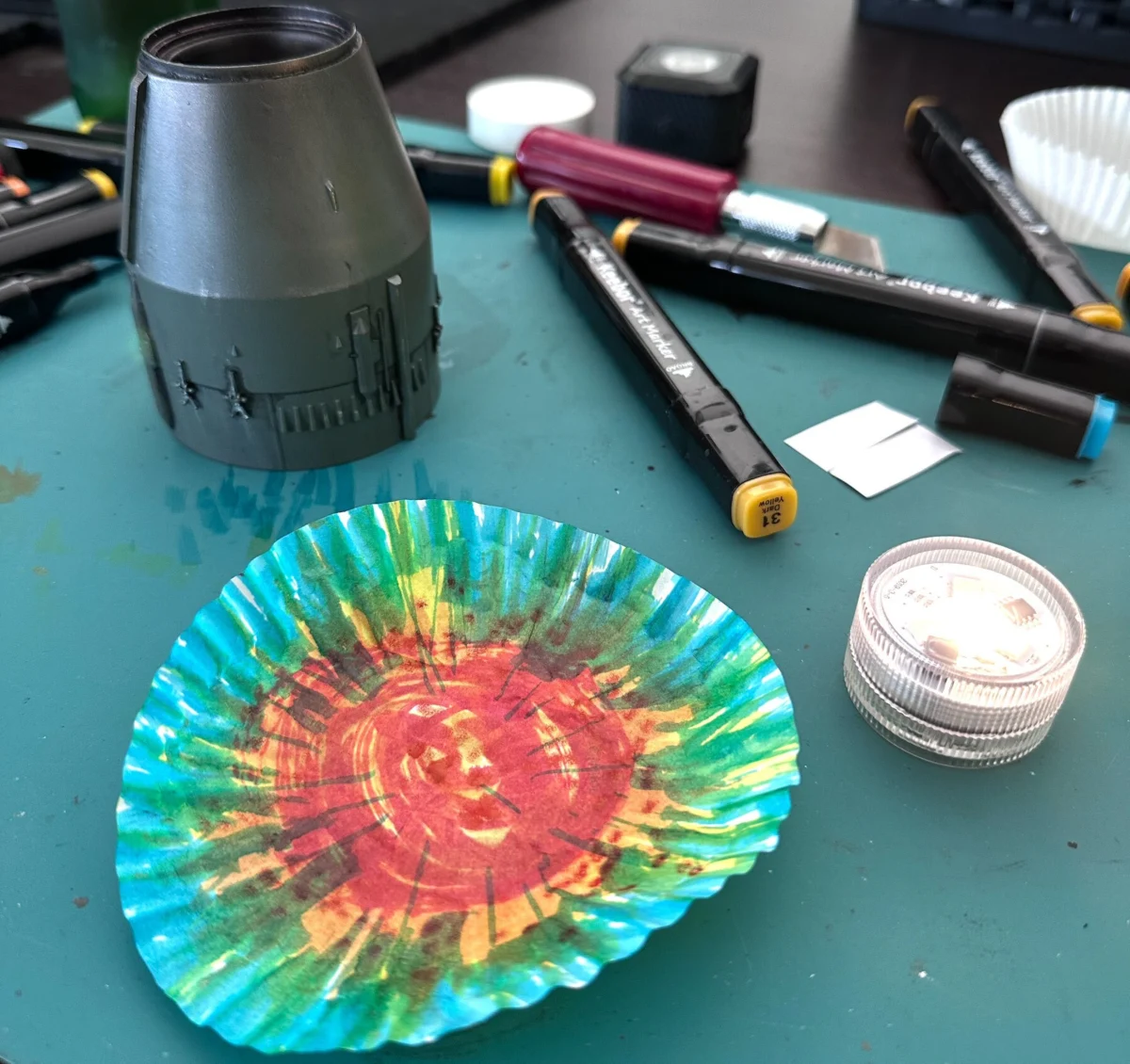
Aron began with rough sketches, aiming for an organic, utilitarian aesthetic—a "pinched" design that signaled a hardworking, commercial freighter. The core of the ship was carved from foam, providing a lightweight yet sturdy skeleton. For the structural components, Aron raided his own archives, utilizing resin-printed parts he had originally designed for a Rebel snowspeeder model years prior. The center section was anchored by the base plate of a Gundam model kit, showcasing the true essence of kit-bashing: repurposing the mundane to create the extraordinary.
Phase 2: Detailing and "Greebling"
The surface of the ship was adorned with "greeblies"—intricate, non-functional details that provide scale and visual complexity. To ensure the model felt authentic to the Star Wars universe, Aron utilized a digital library of 3D-printed components scanned from the original Millennium Falcon and Imperial Star Destroyer models. He even incorporated elements from the Virago, the ship of Prince Xizor from the Shadows of the Empire multimedia project, finding that certain body pieces fit the freighter’s underbelly with uncanny precision.
Phase 3: Texturing and Illumination
The painting process was a masterclass in efficiency. Rather than relying on traditional physical paint, which might not read correctly under macro lenses, Aron primed the model in a neutral grey. Art Director Andre Kirk then stepped in to provide a digital "paintover," adding yellow striping and weathering details. This hybrid approach allowed for rapid iteration. For the final touches, Aron used a graphite block to chip the paint, applied household floor cleaner for a weathered wash, and even used eyeshadow makeup to create heat-scorched marks around the engine rims.
Technical Specifications: The Soundstage on the Table
To capture the ship, Aron transformed his home office into a miniature soundstage. Eschewing complex motion-control rigs, he opted for a static, light-heavy approach.
- Lighting: Utilizing the natural ambient light from west-facing windows during the late afternoon, Aron created a "bounce" effect that provided a natural falloff.
- The Engine Glow: The engine interiors were crafted from colored paper cupcake liners dipped in resin, illuminated by fiber optics. Small LEGO pieces and resin were fashioned into lenses to simulate the windows of the cockpit.
- The Exposure Process: Eschewing modern high-speed cameras, Aron relied on long-exposure photography—ranging from 20 seconds to a full minute. During these exposures, he physically "painted" the model with light, creating depth and shadow that would be nearly impossible to replicate with static digital lighting.
- Compositing: Each shot required up to a dozen individual passes to capture specific highlights, landing gear lights, and engine flares. These were then layered in Photoshop and combined with the digital paint layers to create the final asset.
Official Perspectives: A Collaborative Effort
The success of the cargo ship miniature is attributed by the team to a culture of open collaboration. Art Director Andre Kirk notes that the project was far more than a solo endeavor. "The whole process was faster and more cost-effective than building the entire ship from scratch as a digital asset," Kirk explains. "And Joel was very open to everyone’s input. It was very much a group effort."
For the leadership at Lucasfilm Animation, this experiment serves as a blueprint. It demonstrates that the pressure of production deadlines—often viewed as an enemy of quality—can actually serve as a catalyst for innovation. By stepping away from the render farm and returning to the workshop, the team found a solution that was not only faster but possessed a "soul" that is difficult to manufacture through simulation alone.
Implications: The Future of Hybrid Production
The inclusion of a practical miniature in Maul – Shadow Lord carries significant weight for the future of the Star Wars franchise. It signals a move toward a "best of both worlds" production model. By utilizing 3D-printed heritage parts and combining them with digital rendering, Lucasfilm is creating a workflow that respects the tactile history of the saga while embracing the efficiency of modern technology.
Furthermore, this project reinforces the importance of institutional knowledge. By having veterans like Joel Aron leading these efforts, the studio ensures that the "visual language" of Star Wars—the weathering, the greebling, the specific way light hits a hull—is preserved and passed down to a new generation of digital artists.
As the industry continues to debate the merits of AI-generated content and purely procedural design, the "Maul freighter" stands as a reminder of the human element. It is a testament to the idea that sometimes, the best way to move a story forward is to reach back into the archives, pick up a piece of foam and a graphite block, and build something with your own two hands.
The age of Maul has begun, and if this miniature is any indication, the future of the galaxy remains firmly rooted in the art of the physical. All episodes of Star Wars: Maul – Shadow Lord are now available to stream on Disney+.










No comments yet. Be the first to join the conversation!