Raul Delapena Setiawan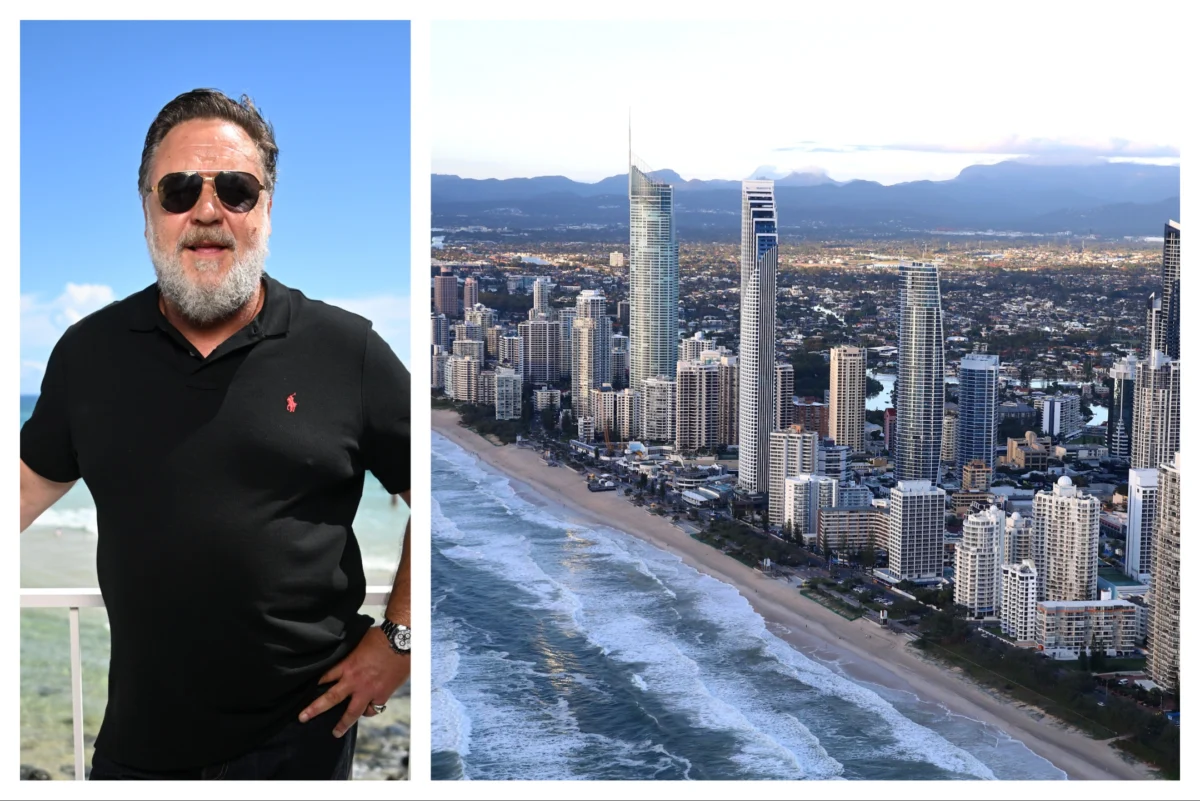
The Global Premiere and the "Runaway Production" Debate
As the sun sets over the historic, 4,500-seat Ancient Greek amphitheater in Taormina, Italy, this evening, the global film community turns its eyes toward the world premiere of Bear Country. The action-thriller, which reunites director Derrick Borte with Oscar-winner Russell Crowe, marks a significant moment in contemporary cinema—not just for its star-studded cast and gritty narrative, but for the fierce debate it ignited regarding the economics of modern filmmaking.
While the film promises to deliver a high-octane experience, the road to the screen has been paved with controversy. When production moved to Australia’s Gold Coast in early 2025, the decision sent a shockwave through Hollywood, drawing sharp criticism from industry observers and sparking public frustration directed at California Governor Gavin Newsom. The accusation? That the project was a quintessential example of "runaway production," a phenomenon where films set in the United States are filmed abroad to circumvent the rising costs of domestic production.
The Narrative: A L.A. Story Born from the Page
Bear Country serves as a cinematic adaptation of Thomas Perry’s 2010 acclaimed novel, Strip. The story is quintessentially Angeleno, weaving a dark, complex web through the neon-lit streets of Hollywood Boulevard and the sprawling, sun-drenched vistas of the San Fernando Valley.
The plot centers on a protagonist played by Russell Crowe—an aging Los Angeles nightclub owner who finds his hopes for a quiet, comfortable retirement violently interrupted. His life is upended when he is targeted by a masked gunman, thrusting him into a dangerous world of crime and retribution. Alongside Crowe, the ensemble cast features Nina Dobrev, Aaron Paul, and Daniel Zovatto, each bringing a layer of intensity to Borte’s taut direction.
For those familiar with the creative partnership between Borte and Crowe, Bear Country is the long-awaited follow-up to their 2020 road-rage thriller, Unhinged. The genesis of this project, however, began with a simple exchange between friends. As Borte recounted at a press conference, it was producers Mark Fasano and Crowe who initially brought the source material to his attention.
"Russell and Mark had the book, and we just knew there was something really great in there with these characters," Borte explained. Crowe added, "Mark had the book. He sent it to me, I read it and he said, ‘Who should I send it to?’ And I said, ‘My mate Derrick.’" This collaborative spirit extended into the writing room, where Borte and co-writer Daniel Forte (known for American Dreamer) refined the screenplay through a rigorous, iterative process of creative testing.
Chronology of a Production Shift
The transition from a domestic setting to an international shoot was not a sudden impulse, but a calculated business maneuver. The timeline of the production serves as a mirror for the current state of the film industry:
- 2010: Thomas Perry publishes Strip, the source material for the film.
- 2020: Derrick Borte and Russell Crowe successfully collaborate on Unhinged, establishing a creative shorthand.
- Late 2024: Pre-production begins as the team scouts locations, looking for a logistical and financial fit.
- January 2025: A formal announcement via Deadline reveals the start of shooting in Queensland, Australia. The news triggers an immediate flurry of debate regarding the decline of L.A.-based productions.
- Mid-2025: Post-production concludes, with the team praising the efficiency and quality of the Australian crew and infrastructure.
- Current Day: The film makes its grand debut at the Taormina Film Festival, marking the start of a promotional tour across Italy.
- August 26, 2025: The film is scheduled for a wide release via 01 Distribution, on behalf of Minerva Pictures and Rai Cinema.
Economic Realities and the "Guilt" Factor
At the Taormina press conference, the elephant in the room was addressed head-on. When asked by reporters if they felt "guilty" for abandoning the Los Angeles production scene during a period of economic hardship for the local workforce, the producers were unapologetic.
Mark Fasano of Nickel City Pictures was emphatic in his defense. "It’s very expensive to shoot films in the United States these days, and so many films are shot abroad because of that," he stated. When pressed on the legislative climate, Fasano criticized the current state of California’s film policy. "The legislation is intrusive, actually. We want them to change the legislation there and make it more film-friendly. We’re going to continue to shoot wherever we need to shoot to get our films made until they make it easier for us to come back."
Jeffrey Greenstein of A Higher Standard echoed these sentiments, framing the decision as a survival tactic rather than a political statement. "The reality is, it’s not our doing. We didn’t create the system; we just work within it," Greenstein noted. "We make the movies in the place that is creatively appropriate and makes financial sense. Until the unions and the tax credits in the U.S. can make it more conducive to shooting, we’re going to continue filming movies abroad."
The Gold Coast Advantage: Creative and Logistical Success
Despite the controversy, director Derrick Borte was effusive in his praise for the Australian production experience. The decision to shoot in Queensland wasn’t just a matter of cost-cutting; it was a search for production value and professional excellence.
"Creatively, it was about finding places that would play as L.A.," Borte explained. "We knew we wanted to set most of this in Koreatown—a specific look that a lot of people haven’t seen. But on camera, people who live in L.A. don’t think it was shot in Australia; they think it was shot in L.A."
Borte noted that the production managed to capture the essence of diverse L.A. neighborhoods, including Manhattan Beach, while leveraging the world-class expertise of local crews. "The crews were amazing in Australia. The day-player actors were great, and outside of a hurricane, the weather was perfect."
Beyond the local talent, the production tapped into Screen Queensland’s competitive incentive package, a critical financial lever that allows international productions to offset the high costs of filmmaking. This combination of location flexibility, financial incentives, and high-caliber technical support made the Gold Coast an ideal substitute for the Southern California landscape.
Implications for the Future of Hollywood
The case of Bear Country is a microcosm of a broader, systemic struggle within the entertainment industry. The tension between the desire to film in the "home" of cinema—Los Angeles—and the reality of globalized production costs creates a precarious landscape for filmmakers.
For California legislators, the discourse surrounding this film serves as a cautionary tale. If the goal is to keep the industry’s heart beating within the state, the pressure to reform tax credits and streamline regulatory processes has never been higher. For independent producers like Fasano and Greenstein, the mandate is clear: they are businesses first, and they will continue to follow the path of least resistance to ensure their projects remain viable.
As the Taormina audience settles in to watch Bear Country tonight, they will be witnessing a film that is, in its own way, a testament to the changing tides of the industry. It is a product of Australian infrastructure, Italian distribution, and a creative team that spans continents. Whether this model of "runaway production" continues to grow or leads to a legislative reckoning in the United States remains to be seen.
For now, the focus shifts to the screen. With Russell Crowe’s powerhouse performance and a narrative that promises to keep audiences on the edge of their seats, Bear Country is poised to be one of the most talked-about films of the year—not just for where it was made, but for the grit and vision it delivers to the screen. As the summer preview tour begins, the film stands as a bold, if controversial, example of modern global filmmaking.

 Nana Wu
 Jia Lissa