Introduction: The Architect of Memory
Indian filmmaker Anuparna Roy, the breakout sensation of last year’s Venice Film Festival, has returned to the Lido with a sophomore feature that promises to further cement her reputation as one of the most vital voices in contemporary independent cinema. Her latest work, Lovers in the Blue Night, premieres in the Horizons (Orizzonti) competition, marking a significant evolution in both her technical ambition and thematic scope.
Roy, who made history last year as the first Indian filmmaker to secure the Best Director prize in the Horizons section for her debut, Songs of Forgotten Trees, is a director who treats memory as a raw, malleable material. Where her debut was a claustrophobic, intimate portrait of two women confined to a single house, Lovers in the Blue Night acts as a panoramic expansion, tracking the lives of four migrants navigating the relentless, shifting geography of Mumbai.
As international sales outfit Parallax prepares to introduce the film to global markets, the industry is watching closely. Roy is no longer the "promising newcomer"; she is a filmmaker defining her own vocabulary of displacement, intimacy, and the quiet, often ignored, revolutions of the marginalized.
Chronology: From the Borderlands to the Lido
The genesis of Lovers in the Blue Night traces back far further than the production schedule of the last two years. The film is rooted in a childhood encounter in Roy’s hometown, where she first observed a woman named Ameena—a bonded laborer whose quiet, devastating observations about her own marriage became an indelible mark on the young Roy’s psyche.
"I have been carrying Ameena’s story since I was a child," Roy notes. What began as a fragmented memory evolved into a script that serves as both a homage and a deconstruction of those early impressions.
- Formative Years: Roy grew up in a coastal region near the Bangladesh border, close to the Bay of Bengal. This landscape, characterized by frequent, destructive floods, became a formative influence on her creative identity. The themes of forced migration and the loss of home that defined Songs of Forgotten Trees are present here, too, though the lens has shifted from the domestic to the urban.
- The Debut: In 2024, Songs of Forgotten Trees took the Venice Film Festival by storm. It was a production born of necessity—limited funding and a constrained setting.
- The Sophomore Shift: With Lovers in the Blue Night, Roy stepped into a professional production environment that demanded adherence to stricter deadlines and financial parameters. She describes this transition as a learning curve, one where she had to reconcile her artistic impulses with the realities of professional filmmaking.
- The Present: Now, with her second premiere in the Horizons section, Roy remains grounded. When asked if she felt slighted by not being placed in the festival’s main competition, she is quick to dismiss such concerns. "I dreamed of it, yes, but I am still a student of my craft," she says. "I am still learning alongside directors I deeply admire."
Supporting Data: The Anatomy of a Narrative
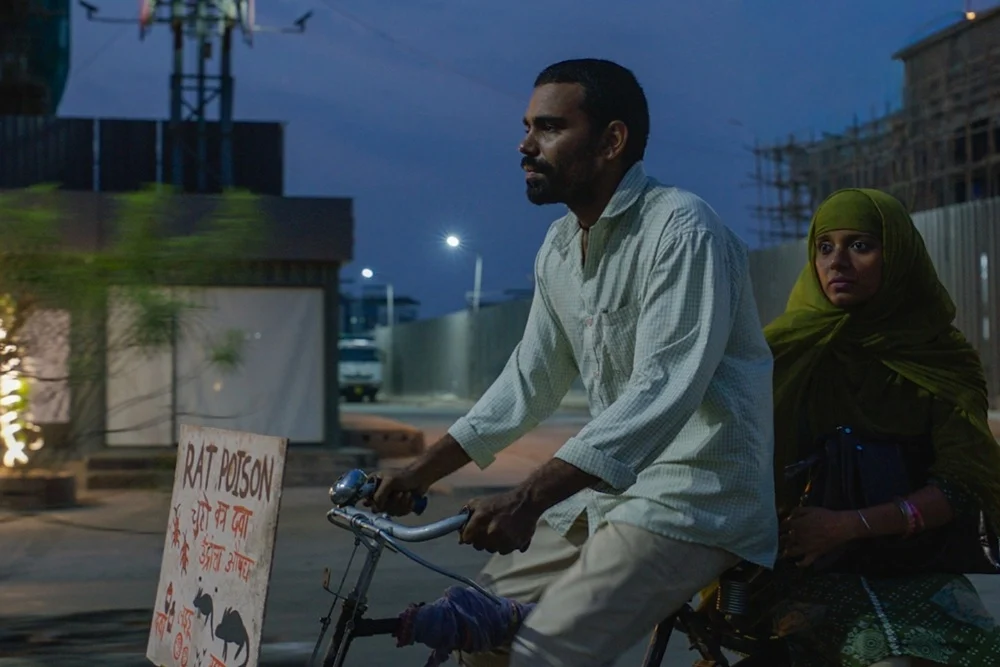
Lovers in the Blue Night centers on four migrants in Mumbai, but the narrative pivot points rely heavily on the character of Karim—a man who works in the grim reality of pest control—and his lover, Sukka, a man navigating the crushing weight of the caste system.
The Geography of Resistance
Roy’s approach to her characters is purposefully non-ideological. She resists the common cinematic trope of "poverty porn," opting instead for a "neutral, empathetic language." In one of the film’s most striking sequences, Karim, having spent his day exterminating rats in the opulent high-rises of Andheri East, returns home to engage in an act of tenderness with his male partner.
"The image of him coming home from that job, smelling of chemicals, to kiss another man—to me, that is nothing less than revolutionary," Roy asserts. By placing the mundane, soul-crushing labor of the working class alongside the radical act of queer intimacy, Roy creates a political tension that feels both organic and deeply urgent.
The Illusion of Love
The film explores what Roy terms the "illusion of love." For characters whose lives are defined by displacement and scarcity, even the smallest gesture of affection carries the weight of a massive life event. She portrays a space where longing, isolation, and fantasy blur into one another. The characters don’t just fall in love with a person; they fall in love with the possibility of a person, a phenomenon she argues is exacerbated by the loneliness of the migrant experience.
Official Perspectives: The Director on Her Craft
In conversation, Roy is reflective about the evolution of her writing process. Originally, she had envisioned an arc for Ameena that was defined by a classic, rebellious escape—finding "true love" and leaving her marriage behind. However, as the script matured, she realized that such a resolution would be dishonest.
"That is also another loop—another loop of patriarchy," Roy explains. She realized that what might look like an escape into a "happy ending" from the outside is often just a different form of entrapment for a woman in such a position. Her refusal to provide easy catharsis for her characters is a hallmark of her growing confidence as an auteur.
Roy also discusses the duality of her characters. Where her previous work focused on the feminine experience of displacement, this film investigates the duality of bisexuality and the complexities of male intimacy in a society that demands total conformity. By framing love as a form of resistance, Roy elevates her characters from mere victims of circumstance to active agents of their own emotional lives.
Implications: The Future of Roy’s Cinema
The success of Lovers in the Blue Night signifies a turning point for Indian independent cinema on the global stage. By moving away from regional stereotypes and toward a more universal, yet deeply specific, exploration of human fragility, Roy is carving out a niche that is both globally accessible and culturally anchored.
Looking Ahead
The roadmap for Roy’s future projects is already taking shape. Her upcoming slate includes:
- "In the Shadow in the Light": A romantic feature that explores the intricacies of a dysfunctional marriage, partially inspired by the relationship of her own parents.
- Untitled Project: A feature-length study of a woman’s sexual transit, promising to further explore themes of bodily autonomy and identity.
Industry Impact
As Parallax navigates the international sales landscape for Lovers in the Blue Night, the film stands as a case study for how independent filmmakers can transition from micro-budget, personal projects to more complex, multi-layered productions without sacrificing their singular vision.
The industry is watching not just for the quality of the film, but for the sustainability of the filmmaker. In a world where the "difficult funding conditions" Roy faced for her debut remain the norm for many in the global south, her success provides a blueprint. It highlights that the most compelling stories are often those that refuse to provide easy answers, choosing instead to sit with the discomfort of human desire in the face of systemic erasure.
Conclusion: A Voice for the Displaced
Anuparna Roy has managed to turn the personal into the political without ever losing the humanity of the individuals at the center of her frame. Lovers in the Blue Night is more than a story about migrants in Mumbai; it is a meditation on the persistence of the heart in a world that asks its inhabitants to be nothing more than labor.
As the lights dim at the Venice Film Festival, the audience is invited to witness not just a story of survival, but a story of the quiet, revolutionary ways in which we reclaim our humanity through the people we choose to love. For Roy, this is only the beginning of a larger project—one that promises to continue mapping the hidden, and often painful, geographies of the human soul.