

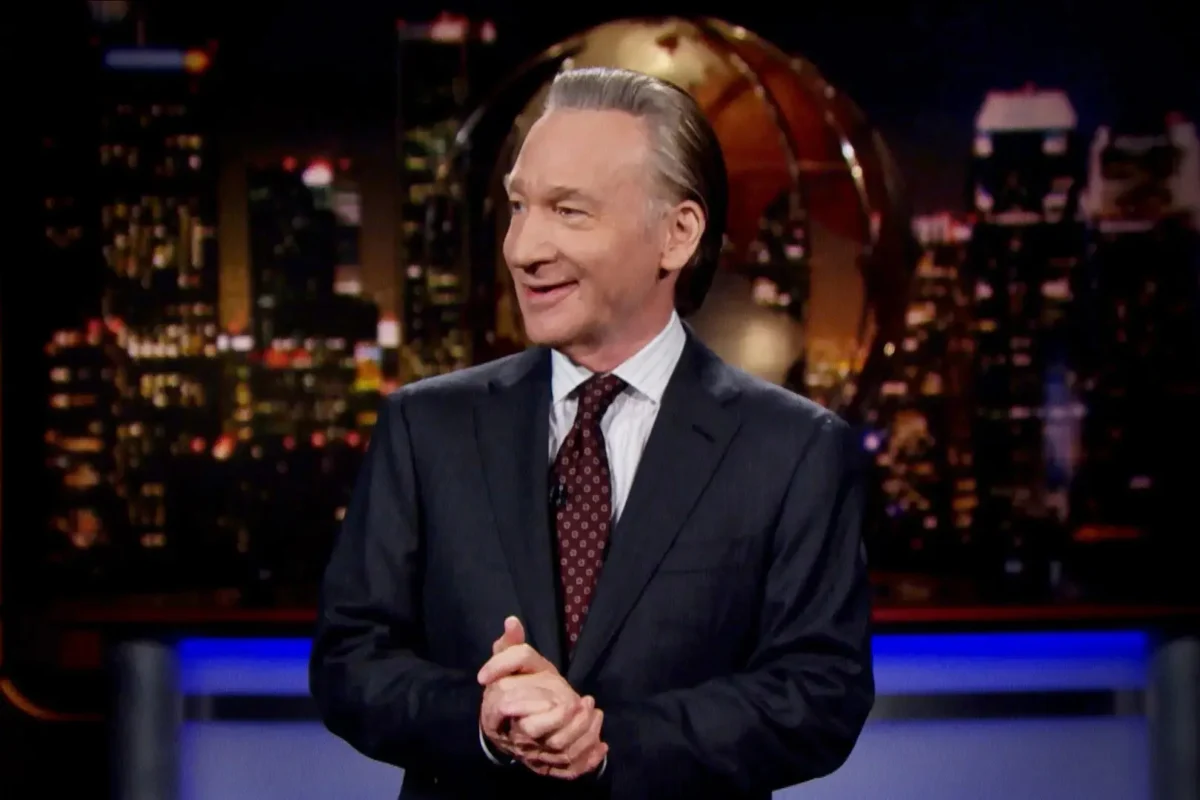
On Friday night, as the echoes of the New York Knicks’ decisive victory over the Philadelphia 76ers in the NBA Playoffs still lingered in the sports media landscape, Bill Maher took to the stage of HBO’s Real Time. With his signature blend of biting satire and observational commentary, the veteran host wasted no time dissecting the week’s most polarizing headlines, bridging the gap between the triviality of celebrity litigation and the darker, more enduring mysteries of American political scandals.
The Lively-Baldoni Settlement: A Hollywood Saga Ends
The most immediate target of Maher’s monologue was the long-simmering conflict between Blake Lively and Justin Baldoni. The duo, who had been locked in a high-profile legal battle regarding the production and promotion of the romantic drama It Ends with Us, recently announced a settlement just as their case was slated to head to trial.
The conflict, which had captured the attention of entertainment journalists for the better part of a year, stemmed from deep-seated creative and professional tensions. Lively had leveled allegations of sexual harassment against Baldoni, while the actor and director countered with claims of defamation. Despite the intensity of the accusations, the resolution was surprisingly anticlimactic: no monetary damages were exchanged between the two parties. However, the legal victory—if it can be called one—remains tilted, as the agreement allows Lively to pursue the recovery of her substantial attorney fees from Baldoni.
“I know why you’re happy,” Maher quipped to his audience. “Great news. Peace at last. We have an agreement. A deal. A peace deal—not the Iran War, Blake Lively and Justin Baldoni. That’s who I’m talking about.”
Maher did not shy away from expressing his disdain for the film at the heart of the litigation. “We’ve been reading about this for like a year,” he remarked. “All this arguing and suing, and it turns out: no settlement money at all. And all over a movie called It Ends with Us that everyone hated? Did you see that movie? It was harder to get through than the Strait of Hormuz.”
Chronology of the Dispute
The public nature of the It Ends with Us feud marked a rare moment where the behind-the-scenes dysfunction of a major studio project overshadowed the film’s box office performance.
- Production Phase: Early rumors of friction began circulating during the promotional tour, as eagle-eyed fans noted that Lively and Baldoni were rarely seen in the same frame during press junkets.
- The Escalation: The situation devolved into a formal legal battle, with allegations of inappropriate behavior and reputational damage mounting on both sides.
- The Impasse: For months, the case appeared destined for a courtroom, raising questions about the future of the franchise and the reputations of the stars involved.
- The Resolution: On the eve of the trial, the parties reached a settlement, effectively putting an end to the public litigation while leaving the door open for continued disputes regarding legal expenditures.
The Epstein Note: A Bizarre Historical Footnote
Transitioning from the glitz of Hollywood to the grim reality of federal incarceration, Maher pivoted to the recent release of a purported suicide note written by Jeffrey Epstein. The document, released by a federal judge, was allegedly penned in July 2019, only weeks before the disgraced financier was discovered dead in his cell at Manhattan’s Metropolitan Correctional Center.
The note is, by all accounts, eccentric. It concludes with a line seemingly pulled from a slapstick comedy: “Whatcha want me to do — Bust out cryin!!” — a reference to the film The Little Rascals.
“Speaking of killing, apparently they found Jeffrey Epstein’s suicide note,” Maher said, addressing the audience. “Apparently, it was from the guy—his cellmate—who Epstein says tried to kill him, but he’s the guy who found the note.”
Implications of the Note’s Contents
The note contains assertions that Epstein was under intense scrutiny, punctuated by the all-caps declaration: “FOUND NOTHING!!!” For many, the phrasing and the defensive tone of the document served as a lightning rod for conspiracy theories, though the authenticity of the note remains unverified by forensic experts.
Maher was quick to draw a parallel between the note’s rhetorical style and the communication patterns of former President Donald Trump. “And it says, ‘They investigated me’—and then in all caps, it says, ‘FOUND NOTHING!!!’ Who does that sound like? I can’t quite place it…”
The implication was clear: Maher was suggesting a rhetorical alignment between the financier’s final written words and the persistent claims of innocence often voiced by Trump regarding his own legal entanglements. Maher punctuated the segment with a dry, comedic barb: “No, I’m not suspicious, but the note does end with, ‘Thank you for your attention to this matter!’”
Analysis: The Intersection of Celebrity and Public Discourse
The juxtaposition of these two topics—a Hollywood lawsuit and the death of a high-profile criminal—highlights the specific brand of cultural critique Maher has championed for decades. By placing the It Ends with Us saga alongside the Epstein revelations, the monologue underscored how the American public consumes "news" in the 21st century.
Supporting Data and Context
- Legal Costs in Hollywood: The Lively-Baldoni case serves as a case study for the escalating costs of celebrity litigation. While the settlement avoided a trial, the attorney fees mentioned in the reports represent a significant portion of the film’s secondary profit margins, illustrating the financial toll of interpersonal conflict in the industry.
- The Epstein Investigation: The release of the note follows years of public speculation regarding the circumstances of Epstein’s death. Despite official rulings of suicide, the public’s skepticism remains high, fueled by the bizarre nature of his incarceration and the high-profile nature of his social circle.
Official Responses and Public Reaction
As of this writing, neither the legal representatives for Justin Baldoni nor Blake Lively have issued further statements regarding the settlement terms beyond confirming the resolution. The legal community has noted that the ability to pursue attorney fees is a significant "win" for Lively, suggesting that while no damages were paid, the financial burden of the trial—or lack thereof—is still a contested element.
Regarding the Epstein note, federal authorities have maintained that the investigation into the financier’s death was exhaustive. However, the release of this document has reignited interest in the case, forcing legal scholars and internet sleuths alike to re-examine the timeline of the summer of 2019.
Conclusion: The "Real Time" Effect
Bill Maher’s ability to weave together the trivial and the profound remains a hallmark of his show. By contrasting the petty grievances of A-list actors with the chilling echoes of a deceased power broker, the monologue served as a mirror for the contemporary news cycle—a relentless feed of information where serious policy questions and celebrity drama compete for equal billing.
Whether the It Ends with Us settlement will truly bring "peace" to the parties involved remains to be seen, just as the mystery surrounding Jeffrey Epstein’s final days will likely continue to spark debate. For now, Maher has ensured that both topics remain firmly in the public consciousness, proving that in the world of media, everything—from a failed movie to a suicide note—is fodder for the late-night spotlight.











No comments yet. Be the first to join the conversation!