Asep Darmawan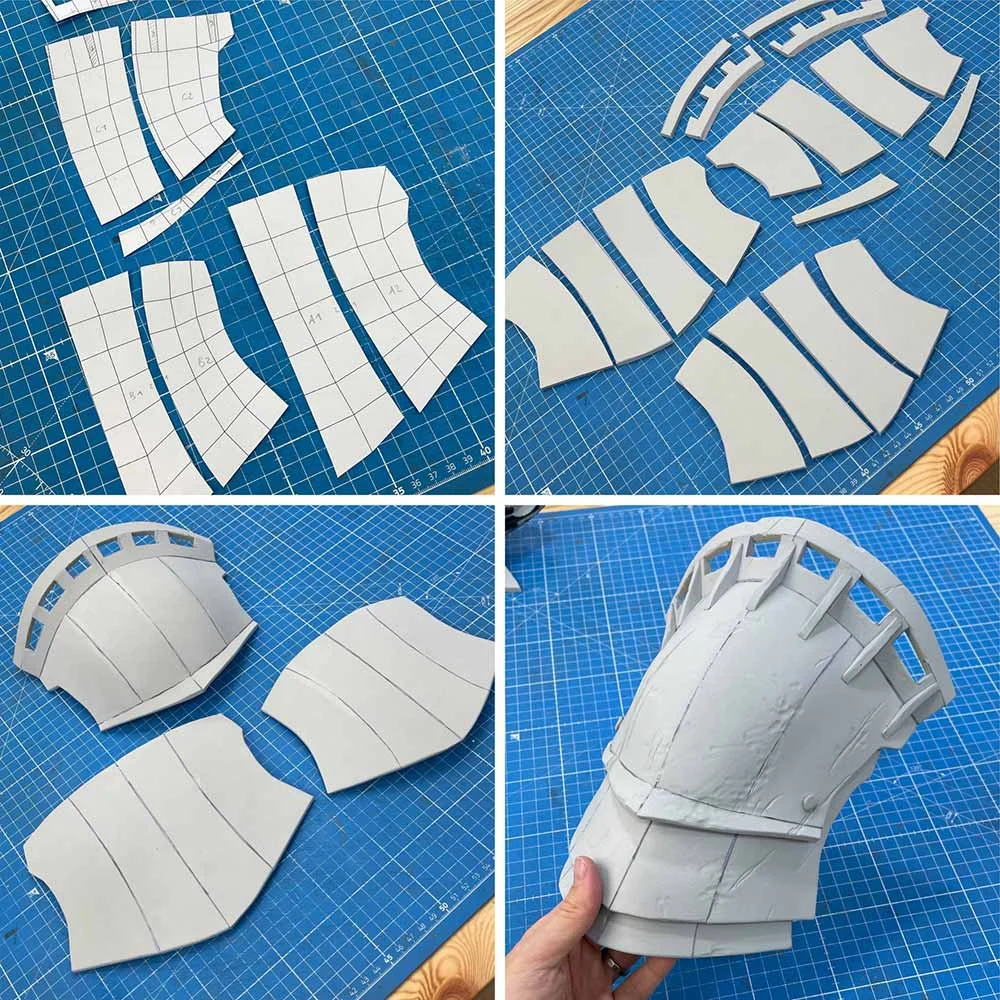
The release of Remnant II, the highly anticipated sequel to Gunfire Games’ sleeper hit Remnant: From the Ashes, ignited a wave of excitement across the gaming community. Beyond the intricate level design and punishing combat, the game’s aesthetic—a gritty, post-apocalyptic blend of Victorian-era remnants and cosmic horror—captured the imaginations of fans worldwide.
Among those captivated was the renowned professional cosplayer Kamui, who partnered with Gearbox and Gunfire Games to bring one of the game’s most iconic archetypes to life: the Gunslinger. This article chronicles the massive undertaking of transforming a DPS-heavy digital cowboy into a tangible, high-fidelity costume, blending traditional tailoring with advanced additive manufacturing and electronic engineering.

The Vision: Defining the Gunslinger
The Gunslinger archetype in Remnant II is defined by its speed, precision, and rugged, weathered appearance. For Kamui, the project was not just about replication; it was about capturing the essence of a world left behind.
"I instantly fell in love with the post-apocalyptic design of the game and its crazy armor and weapon geometry," Kamui notes. To achieve this, she chose a hybrid approach, combining traditional garment modification—repurposing existing clothing to ground the costume in reality—with high-end, custom-fabricated armor and weaponry. The goal was a look that felt lived-in, battle-worn, and authentic to the game’s lore.
Chronology: A Multi-Stage Fabrication Process
Phase I: Engineering the "Merciless Blaster"
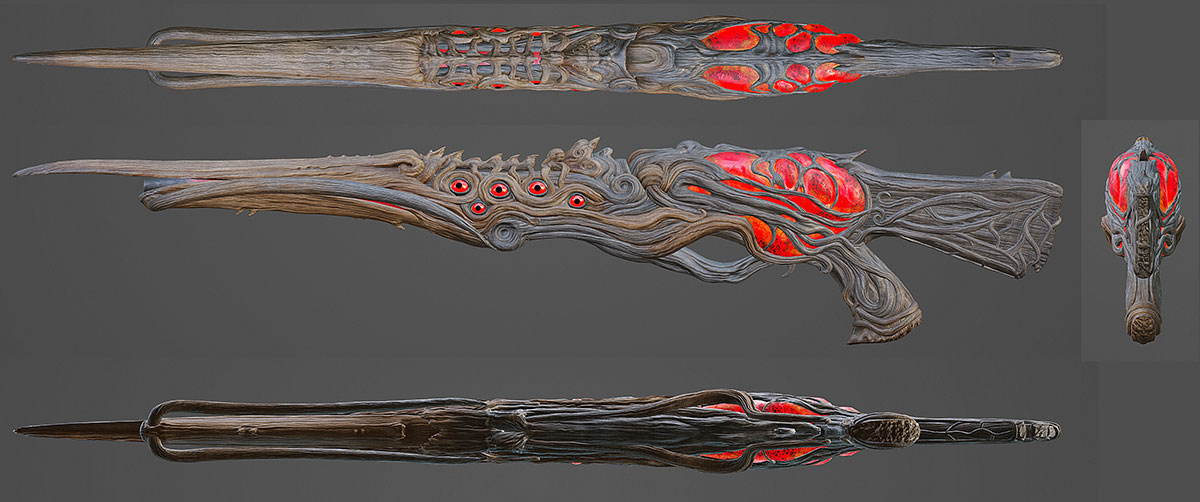
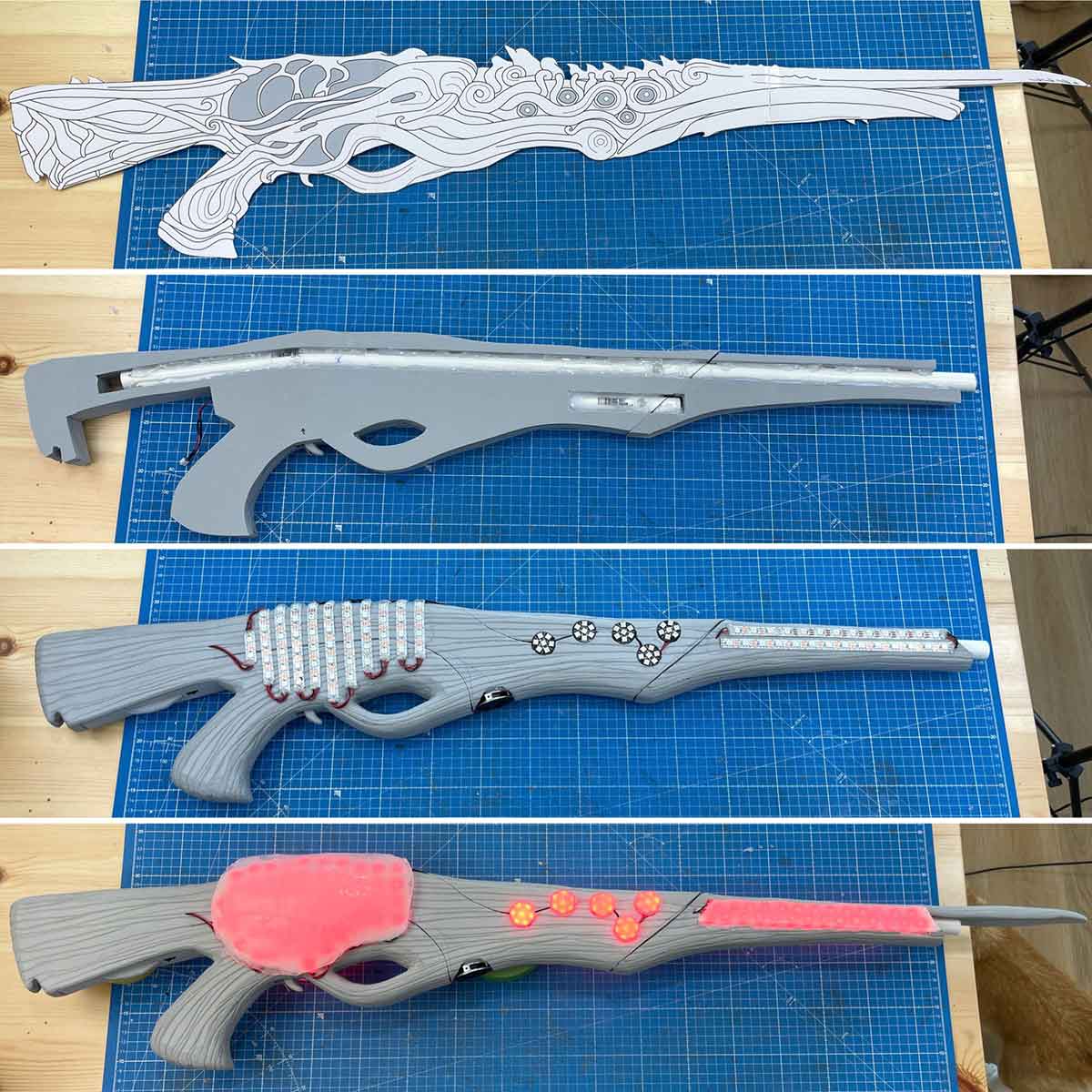
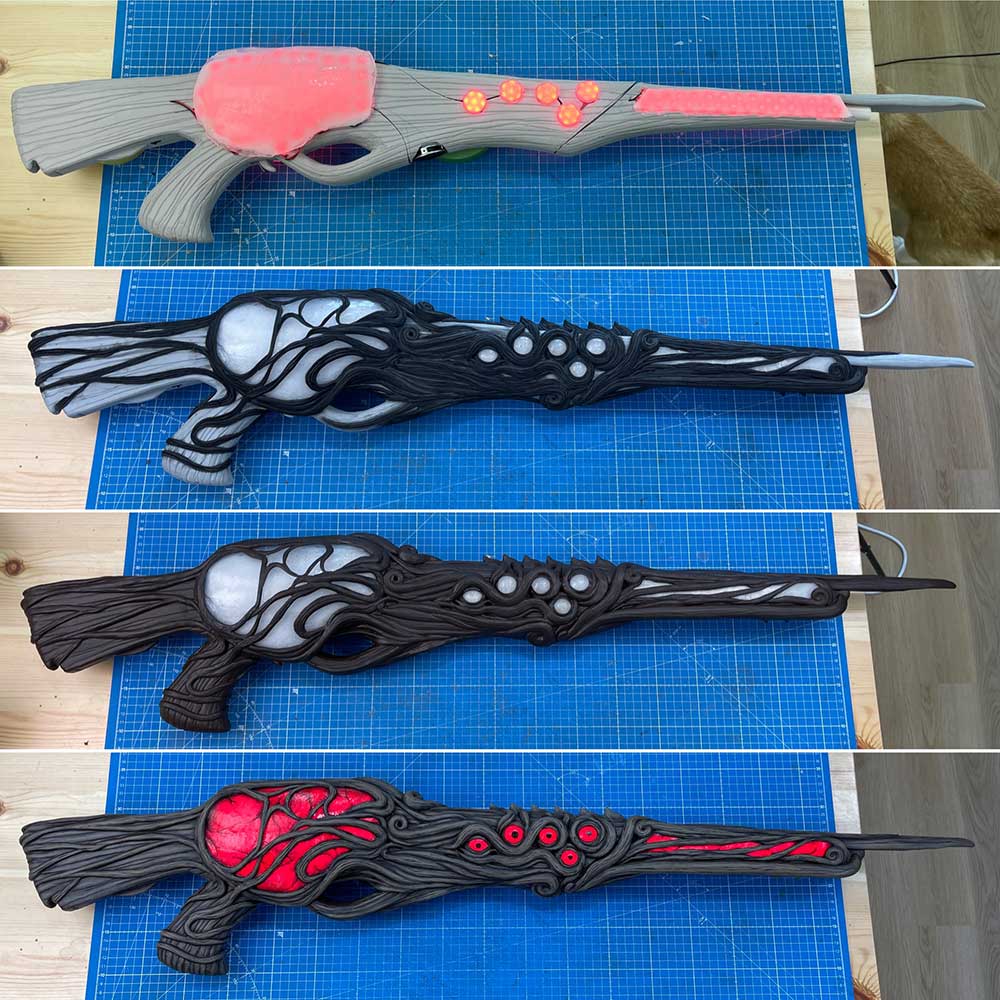
The centerpiece of the build was the "Merciless Blaster." This weapon is visually distinct, featuring organic, vine-like structures, a pulsing heart-core, and glowing demon eyes.
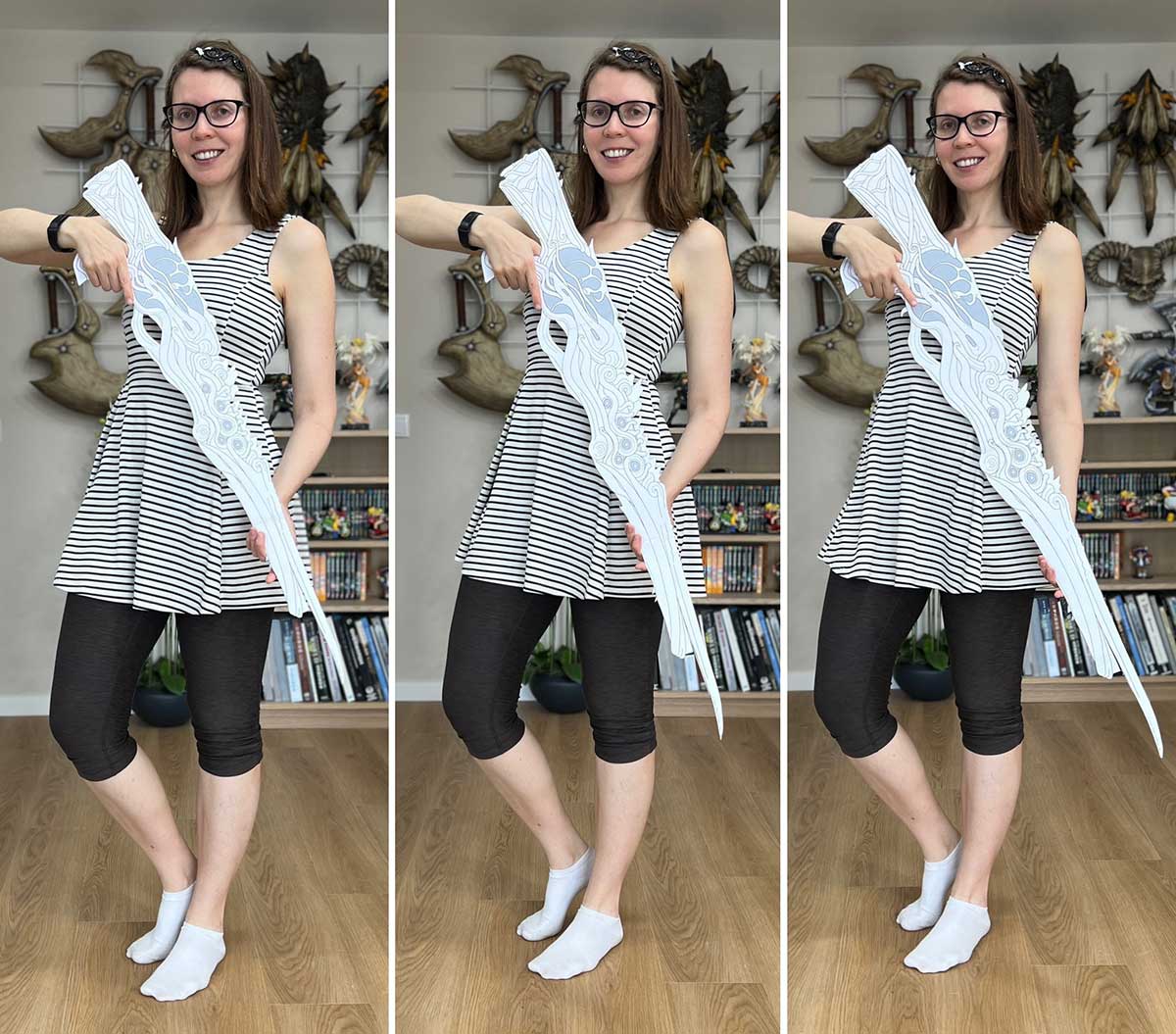
- Scaling and Blueprinting: The process began with digital blueprints created by her husband and creative partner, Benni. Before cutting any material, the team printed three paper "dummies" at varying scales. This technique, while seemingly rudimentary, is essential for ensuring that a fictional weapon translates correctly to the human form.
- Structural Foundation: Using a non-plasticized PVC pipe as a central armature, the team heat-shaped the core to mimic the weapon’s silhouette. This was then enveloped in high-density EVA foam, carved and sanded to match the complex curves of the game model.
- Electronic Integration: A hallmark of the build was the inclusion of functional sound and light effects. Kamui utilized addressable RGB LED strips—specifically the 60-LED-per-meter variety—to animate the "eyes" and the heart core. By using translucent thermoplastic pallets, the LEDs achieved a soft, diffused glow that simulated a biological pulsing effect.
- Sculpting and Detailing: With the structure and electronics in place, the team used foam clay to create the organic, vine-like textures that wrap around the blaster. Foam clay’s ability to be sculpted like traditional clay while maintaining the lightweight properties of EVA foam proved vital for the final weight of the prop.
Phase II: Armor Fabrication and 3D Modeling
For the protective plating, the team moved away from traditional paper templates, opting for a modern 3D workflow.
- 3D Modeling: Benni utilized Blender to model every individual armor piece based on high-resolution screenshots from Remnant II.
- Pattern Projection: Much like the Pepakura technique used in video game asset extraction, the 3D models were flattened into 2D patterns. These were then transferred onto black, high-density EVA foam.
- Assembly and Weathering: After gluing the segments together with industrial-strength contact cement, the team used a Dremel rotary tool to add "battle damage." This step is critical; without the physical texture of deep scratches and scuffs, foam armor often looks too pristine to fit the Remnant aesthetic.
Phase III: The Art of Weathering and Fabric Modification
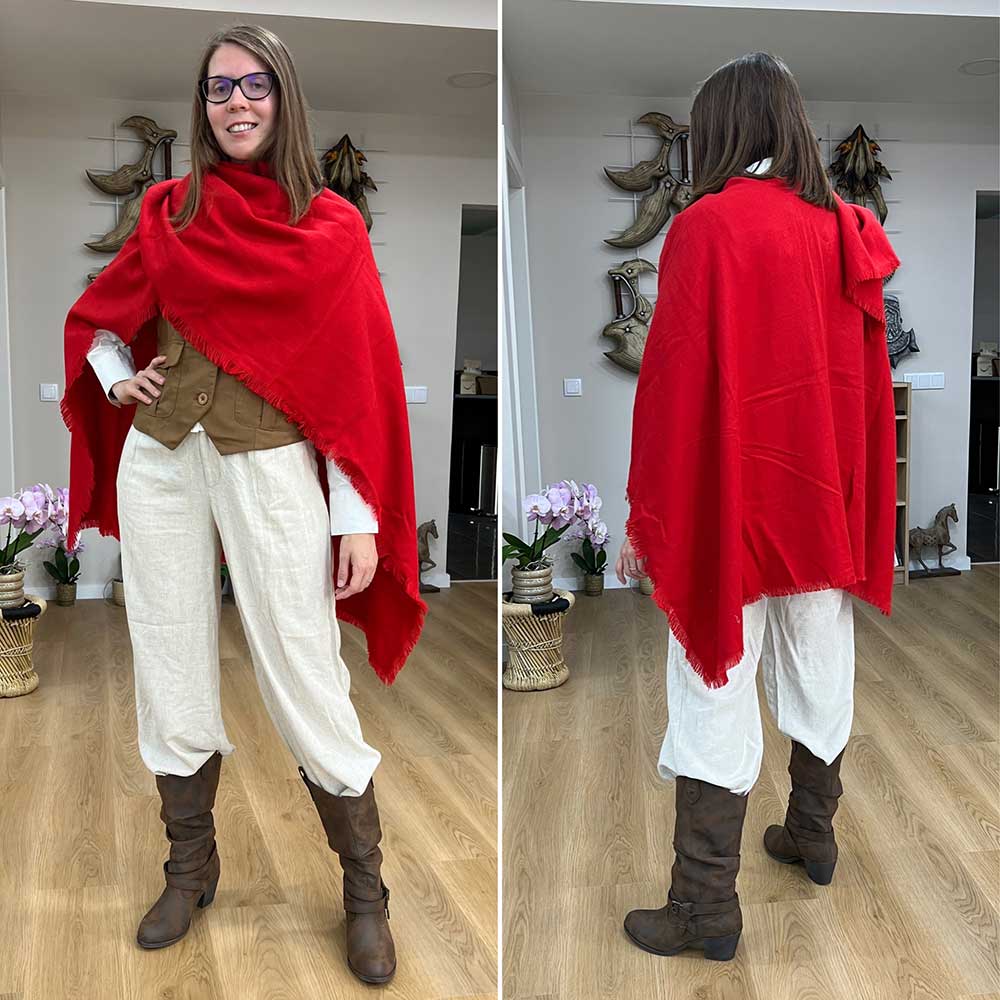
A post-apocalyptic costume lives or dies by its weathering. The team sourced a red poncho, a brown vest, a white blouse, and linen pants from local retailers, effectively "cosplay-bashing" the base layers.
To turn clean fabric into survival gear, they utilized a rigorous process of dyeing, cutting, and applying acrylic washes to simulate dirt, grime, and environmental decay. For the armor, they utilized a "hairspray technique": applying silver paint, followed by a layer of hairspray, and then a top coat of color. By dabbing the surface with warm water and a metal sponge, they could carefully strip the top layer to reveal "chipped" metallic textures beneath.
Supporting Data: Material Breakdown and Tooling
The success of such an ambitious build relies on a specific ecosystem of materials and tools designed for high-performance cosplay.
- Core Materials: High-density EVA foam, foam clay, addressable RGB LED strips, thermoplastic pellets, faux leather, and Flexbond primer.
- Primary Tools: Dremel 4000 series (sanding and detailing), 3D printers, airbrush systems with Vallejo metallic paints, and high-heat glue guns.
- Electronics: Custom programming for LED microcontrollers to facilitate the blinking eye effects and synchronized light sequences.
The project demonstrates that professional-grade cosplay is no longer just "crafting"; it is a branch of industrial design. By utilizing 3D modeling and advanced material science (like texture pastes mixed with pigments), the team achieved a level of realism that stands up to close-up photography.
Official Perspectives: The Role of Community Collaboration
The collaboration between Gearbox/Gunfire Games and professional creators like Kamui highlights a growing trend in the gaming industry: the "Creator-Publisher Partnership."
By providing high-quality reference assets to creators, developers allow for a more accurate translation of their intellectual property into the real world. For the developers, this serves as high-end marketing that engages the most dedicated segment of their fanbase. For the creator, it provides a unique opportunity to push the boundaries of their craft with the backing of the original creative team. The resulting photoshoot—set against the backdrop of an abandoned fish farm on Madeira—serves as a testament to the power of these collaborations. The contrast between the rusted, industrial truck and the high-tech, glowing blaster created a visual narrative that perfectly captured the spirit of Remnant II.
Implications: The Evolution of Cosplay
The Remnant II Gunslinger project offers a glimpse into the future of hobbyist manufacturing. Three key takeaways define this evolution:
- The Death of Guesswork: The shift from physical paper-dummy prototyping to Blender-based 3D modeling ensures that costume builds are not only more accurate but significantly faster to iterate.
- Integration of "Smart" Props: The barrier to entry for electronics is dropping. With resources like dedicated books on LED integration and accessible microcontrollers, the expectation for interactive props is becoming the new industry standard.
- Texture over Material: The project reinforces that the "look" of a costume is secondary to its surface treatment. Through the use of Dremel-ing, acrylic washes, and texture pastes, the creators proved that even inexpensive, mass-produced foam can be transformed into a piece that looks indistinguishable from weathered steel.
Final Assessment
The Gunslinger project stands as a benchmark for what is possible when modern technology meets traditional craftsmanship. By moving beyond simple costume construction and into the realm of custom engineering, the creators have not only honored the source material but have provided a roadmap for future creators looking to tackle complex, post-apocalyptic character designs. As Remnant II continues to expand, it is likely that the bar for community-created content will only continue to rise, further blurring the line between digital assets and real-world art.

 Siti Muinah
 Azzam Bilal Chamdy