

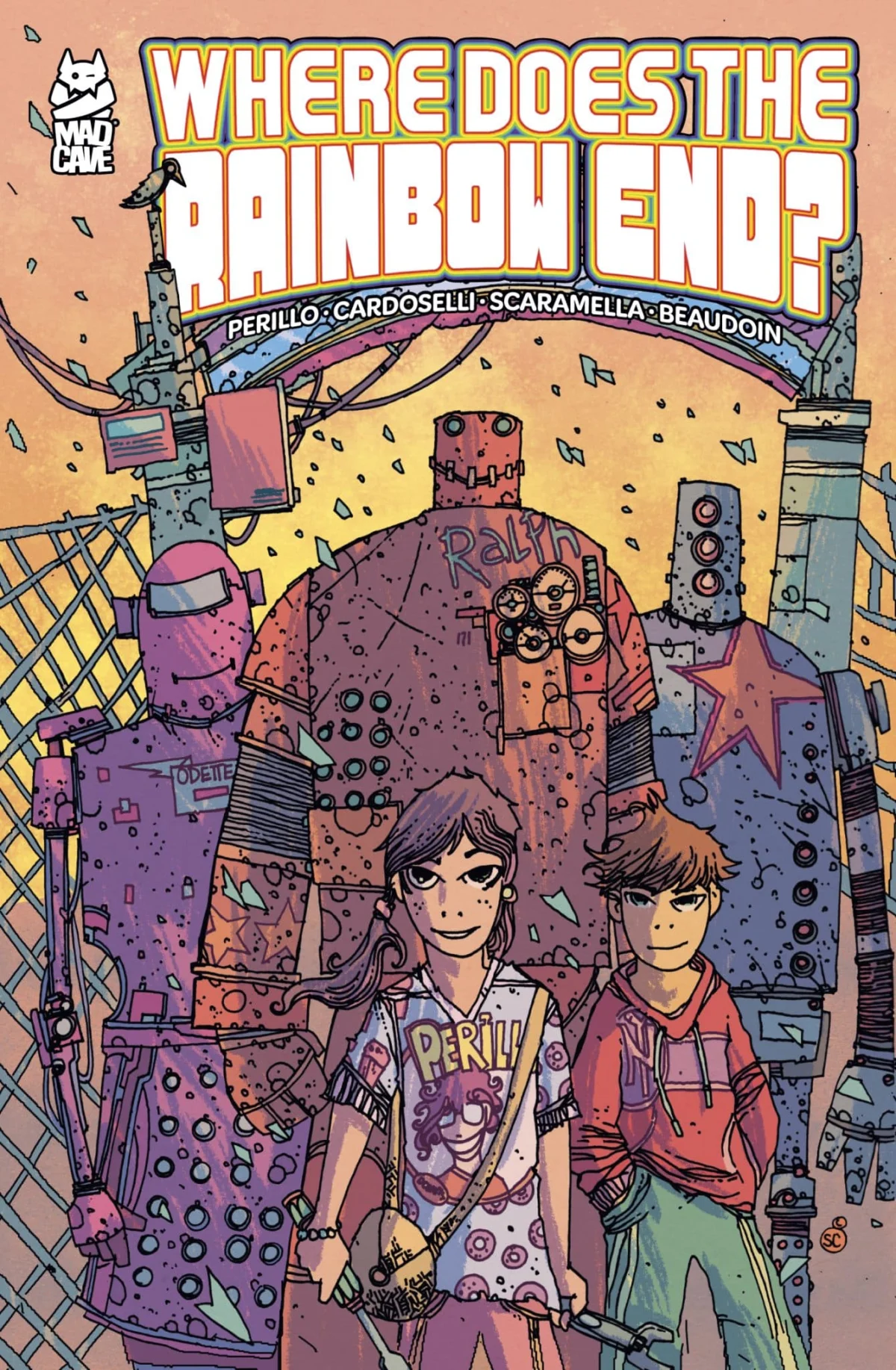
The creative partnership between writer Francesca Perillo and artist Stefano Cardoselli has long been celebrated for its ability to weave poignant human narratives into stark, mechanical landscapes. Following the critical success of their hit graphic novel, Love Me: A Romance Story, the duo is returning to the same universe with a highly anticipated prequel: Where Does the Rainbow End? This new installment promises to deepen the lore of a world defined by its metallic inhabitants, while exploring the foundational themes of identity, abandonment, and the desperate search for belonging in an increasingly cold, artificial environment.
Main Facts: A New Perspective on a Mechanical World
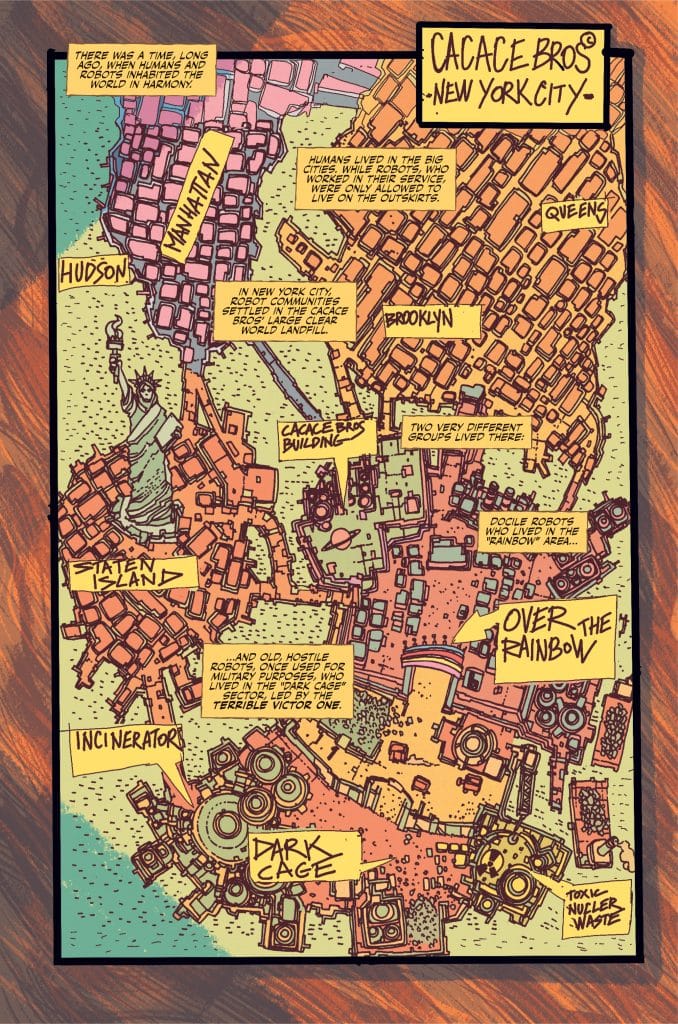
Where Does the Rainbow End? serves as both a standalone narrative and a critical expansion of the Love Me mythos. At the heart of the story is Gilda, a young human girl whose origins are steeped in tragedy and mystery. Abandoned by her biological parents, Gilda is discovered within the confines of the "Cacace Bros. Robot Dump"—a sprawling, industrial graveyard of sentient machinery.
Unlike a typical human survival story, Gilda’s life is defined by her surrogate family: the very robots that salvaged her from the scrap heap. Raised within the sanctuary of the "Rainbow Sector," she has been meticulously shielded from the harsh realities of the world beyond, including the existence of other humans and the looming threat of the "Dark Cage." The Dark Cage is established as the most perilous region of this mechanical civilization, home to the most volatile, damaged, and hostile robots in existence.
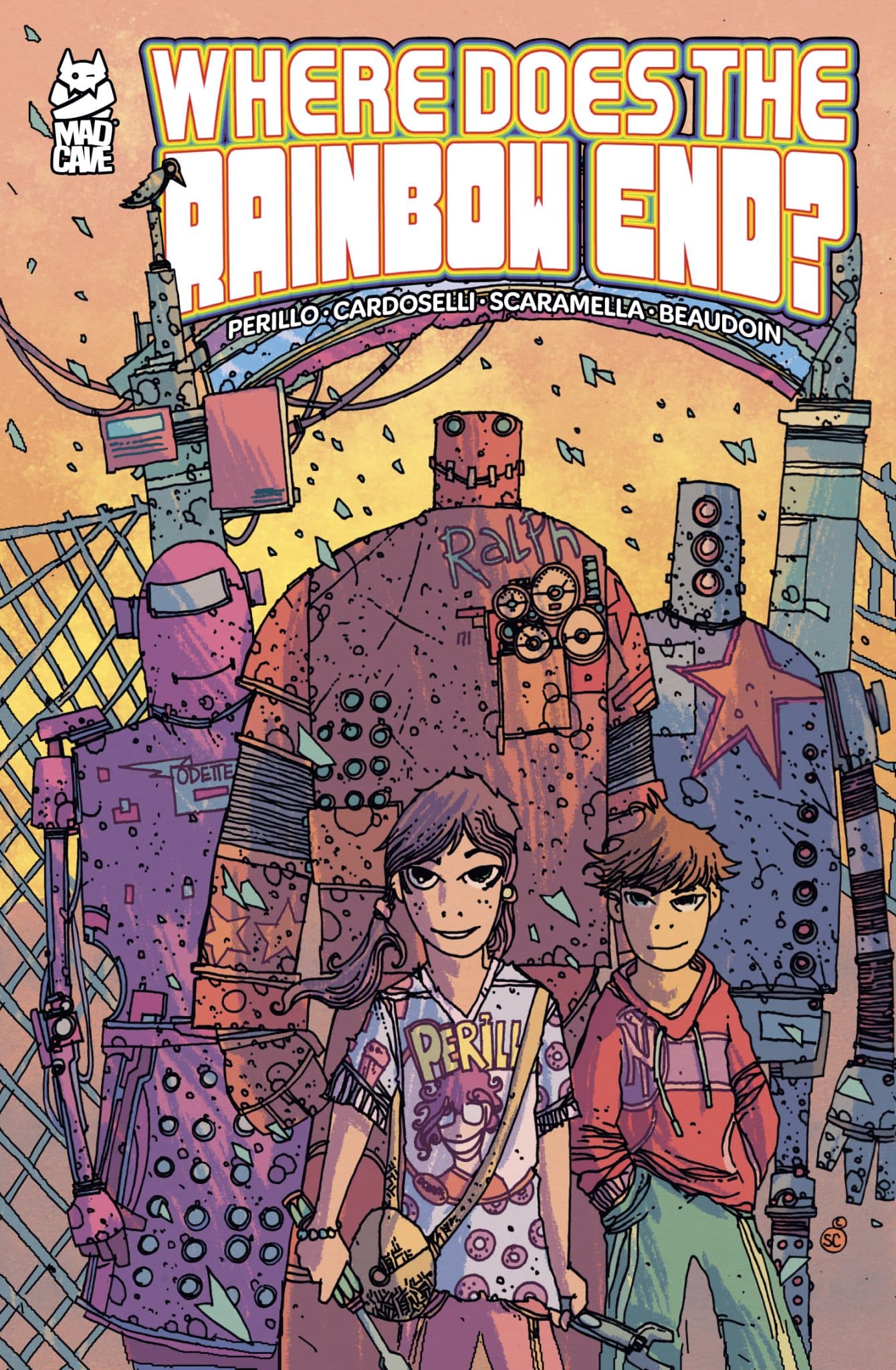
The narrative catalyst occurs when rumors of Gilda’s innate, near-miraculous ability to repair broken robots leak out of the Rainbow Sector. This gift transforms her from a protected ward into a high-value target. A powerful, malevolent entity from the Dark Cage sets his sights on capturing her, intending to use her skills to revitalize a legion of violent machines. The story, therefore, is not merely one of survival; it is a high-stakes thriller centered on agency, exploitation, and the burden of one’s own talents.
Chronology: The Evolution of the Love Me Universe
The release of Where Does the Rainbow End? marks a significant milestone in the career of both Perillo and Cardoselli. To understand the gravity of this prequel, one must look at the timeline of the creators’ collaboration:
- Initial Development: Following the success of individual projects like Don’t Spit In The Wind and Long Cold Winter, Cardoselli and Perillo began laying the groundwork for a shared universe that challenged the traditional "robot apocalypse" trope.
- The Love Me Debut: The original Love Me: A Romance Story introduced audiences to a world where emotional connection is a radical act. It established the baseline for the mechanical society that Perillo and Cardoselli have spent years refining.
- Announcement of the Prequel: In May 2026, the creators officially announced Where Does the Rainbow End?, positioning it as a foundational text that explains the origins of the social structures and tensions seen in the primary story.
- Current Production: With the preview materials released, the creative team has confirmed that the visual style will maintain the gritty, high-contrast aesthetic that has become a hallmark of Cardoselli’s work, while the script delves deeper into the philosophical questions of equality and "truth."
Supporting Data: Examining the Themes and Craft
The collaboration between Perillo and Cardoselli is rarely just about plot; it is a study in visual and narrative contrast. By setting a human child, a symbol of organic fragility and hope, in the center of a mechanical wasteland, the creators force readers to confront the definition of humanity.
Thematic Depth
The central themes of the work include:
- The Nature of Family: Can a child find genuine emotional sustenance in non-biological, mechanical guardians? Gilda’s relationship with her robotic rescuers challenges the traditional definition of parental responsibility.
- The Cost of Talent: Gilda’s ability to "fix" robots is a double-edged sword. It provides her with a role in society, but it also strips her of her anonymity and freedom. The narrative asks whether one is obligated to use their gifts for the benefit of others, even when those others are inherently dangerous.
- Inequality and Segregation: The distinction between the "Rainbow Sector" and the "Dark Cage" functions as a socio-political commentary. The geography of their world is a reflection of its internal biases, where "worthy" robots are protected and "broken" ones are cast aside.
Artistic Direction
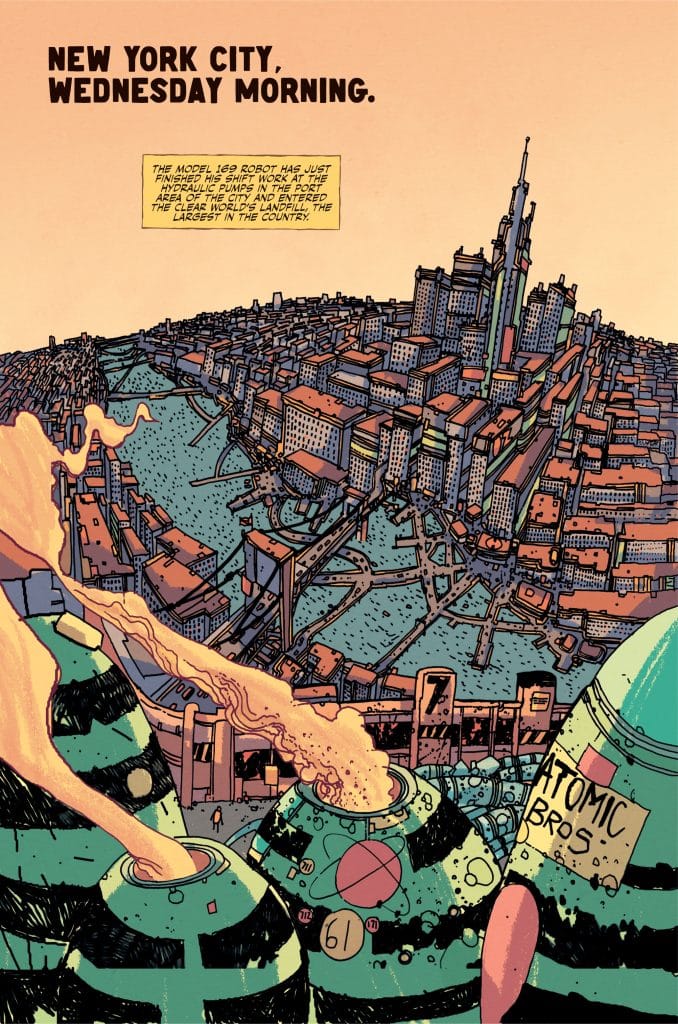
Stefano Cardoselli’s art serves as the backbone of this emotional landscape. His previous work on Long Cold Winter demonstrated an mastery of "clutter-core" environmental storytelling, where every piece of scrap metal in the background tells a story of obsolescence. In Where Does the Rainbow End?, he utilizes this to create a suffocating sense of scale. The robots are designed to look both ancient and functional, emphasizing the contrast between the organic, soft lines of Gilda and the harsh, geometric precision of her surroundings.
Official Responses and Creator Intent
In interviews surrounding the project, both creators have emphasized that this is their most personal work to date. Francesca Perillo has noted that the story is designed to be a "universal mirror," reflecting the ways in which societal labels—such as those assigned to the robots of the Dark Cage—often blind us to the potential for growth and change.

"When we look at the characters in the Dark Cage," Perillo stated in a recent press release, "we aren’t just looking at villains. We are looking at entities that have been defined by their utility or their damage. Gilda is the only one who sees past that. She represents the potential for empathy in a system designed for cold, calculated efficiency."
Stefano Cardoselli added that the visual journey of the book is designed to reflect Gilda’s growth. "The color palettes and the density of the panels shift as she learns more about her world. It starts with the safety of the Rainbow Sector and moves into the claustrophobic, dark geometry of the Cage. The reader should feel as trapped—and as empowered—as Gilda does."
Implications: The Future of the Franchise
The publication of Where Does the Rainbow End? carries several implications for the future of the Love Me series. Firstly, it establishes that the world of these characters is far more expansive than the original graphic novel suggested. By creating a prequel, the creators have opened the door for further exploration of this universe, potentially through spin-offs or additional volumes that chronicle other regions or time periods.
Furthermore, the focus on "finding one’s own truth" suggests that the narrative arc for Gilda will likely become a cornerstone for the entire series. If Gilda succeeds in her struggle against the forces of the Dark Cage, her actions could serve as the inciting incident for the political and social shifts that define the world in Love Me: A Romance Story.
For fans of the genre, this prequel represents a significant investment in world-building. It is rare to see a creative team return to a universe with such a deliberate focus on origins. By stripping away the layers of the main story to find the root of the conflict, Perillo and Cardoselli are ensuring that the stakes in their primary narrative are higher than ever before.
As readers prepare to engage with this new volume, the primary question remains: can the innocence of a child and the kindness of a few "caring" robots survive the industrial malice of a world that views them only as tools? Where Does the Rainbow End? is not just asking where the colors fade, but where the humanity begins when the world is built of metal. With the backing of a dedicated fanbase and the proven track record of its creators, the book is poised to be one of the most significant graphic novel releases of the year, setting a new benchmark for character-driven science fiction.









No comments yet. Be the first to join the conversation!