Ali Ikhwan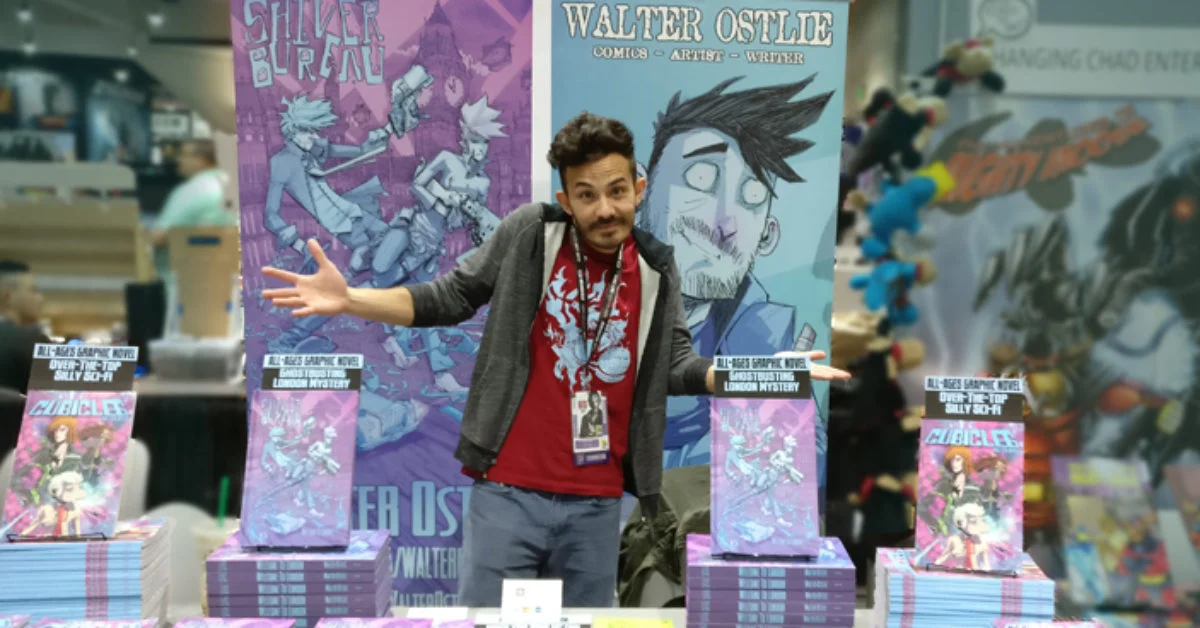
In the ever-evolving landscape of modern graphic storytelling, few creators have managed to bridge the gap between traditional independent publishing and the explosive growth of digital platforms as effectively as Walter Ostlie. A versatile writer, artist, and educator, Ostlie’s career serves as a blueprint for the contemporary "comicpreneur"—a creator who balances creative artistic vision with the rigorous demands of digital distribution and audience engagement.
The Evolution of an Independent Creator
Walter Ostlie’s journey into the comic book industry began in 2008, a time when the barriers to entry for independent creators were significantly higher than they are today. Armed with self-taught skills and a relentless work ethic, Ostlie transitioned from an aspiring creator to a published professional in 2011 with the release of Cubicles, his debut graphic novel published through Red5 Comics.
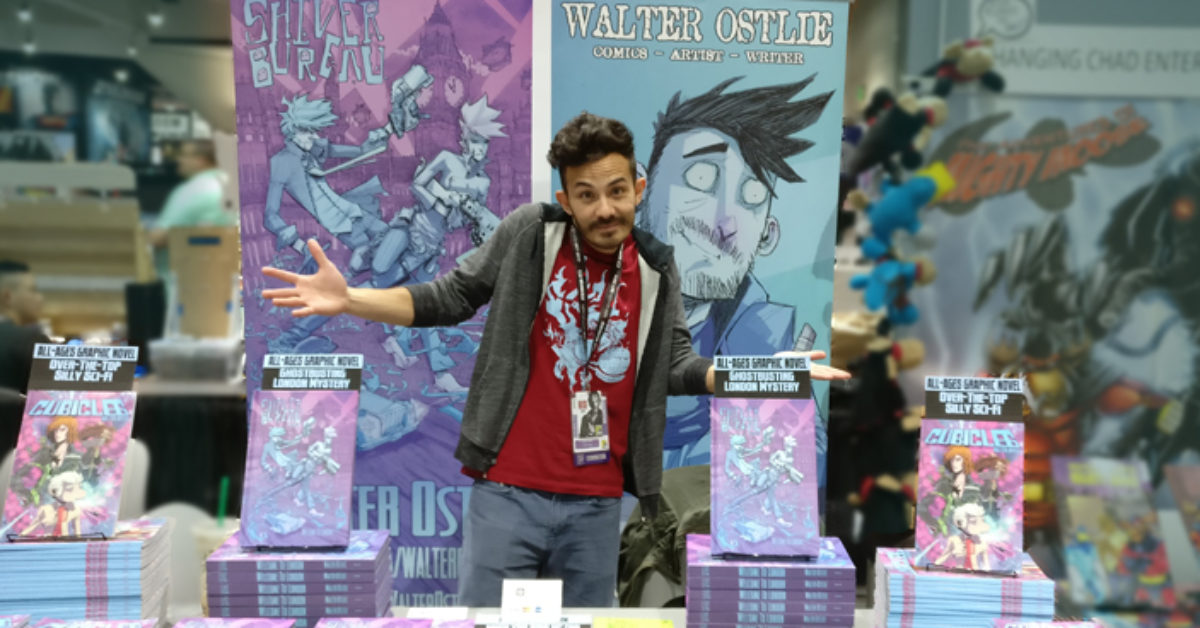
Cubicles established a foundation for his narrative voice, but it was his sophomore project, Shiver Bureau, that truly showcased his potential for community-driven success. By raising over $13,000 on Kickstarter, Shiver Bureau moved from a self-published venture to a distributed title under Scout Comics, proving that niche, creator-owned stories could find a home in the traditional diamond-distribution market.
Chronology of a Prolific Portfolio
Ostlie’s output over the last decade has been nothing short of prolific. His career can be categorized by three distinct phases of growth:
- The Formative Years (2008–2015): The period of skill acquisition, highlighted by the debut of Cubicles and the initial development of his signature art style.
- The Collaborative Expansion (2016–2018): During this time, Ostlie cemented his reputation as a versatile artist, notably providing the interior art for Greg Anderson Elysee’s award-winning Is’nana: The Were-Spider. This era also saw the successful launch of Shiver Bureau.
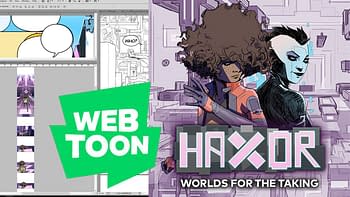
- The Digital Transformation (2019–Present): The current phase, marked by his pivot to full-time freelance work driven by his success on the Webtoon platform with the sci-fi series Haxor and the viral sensation Metalshark Bro.
Webtoon: A Paradigm Shift in Comic Distribution
Perhaps the most significant turning point in Ostlie’s career was his adoption of the Webtoon platform. In an industry often characterized by slow-moving distribution and high financial risk, Webtoon offers a unique hybrid model: the accessibility of a YouTube-like open platform combined with the prestige and financial backing of "Originals."
"Webtoon is webcomics, but to the power of one million," Ostlie explains. "It’s a platform where anyone can post, but they also fund comics as ‘Originals,’ paying creators a fee while allowing them to retain their IP. It’s a total game-changer for the US model."
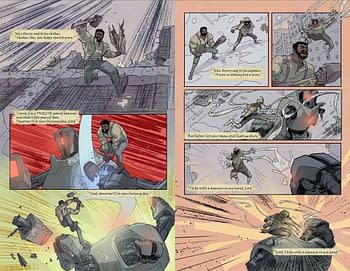
The shift to the vertical-scroll format required a fundamental "reprogramming" of his storytelling instincts. Unlike traditional print comics, which rely on the impact of splash pages and wide-angle establishing shots, the vertical format allows for a more cinematic, granular approach. Ostlie notes that he can dedicate ten panels to a single facial expression, allowing for a depth of character development that would be cost-prohibitive in a traditional 22-page print issue.
Professional Insights: The Economics of Art
Ostlie’s success is not merely a product of talent but of technical discipline. He maintains a rigorous schedule—a "six-day work week" starting at 7:00 AM—which he credits for his sustained output. His transition to full-time self-employment in 2017 was necessitated by the intense weekly output required by Webtoon, which can demand the equivalent of six to eight traditional comic pages every seven days.
The Art of Efficiency
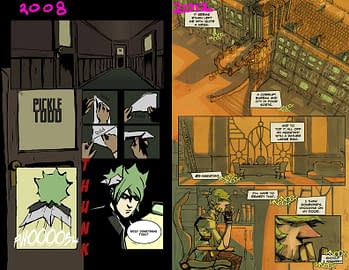
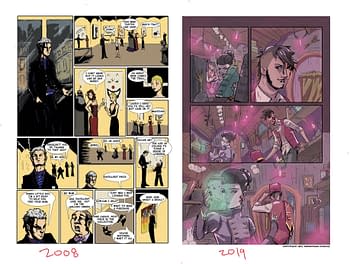
When asked about the development of his artistic style, Ostlie offers a candid perspective that challenges the romanticized notion of the "tortured artist." He views his style as a direct evolution of his need for speed and efficiency. "Stuff that would have taken me a few hours to draw, I can now draw in 30 minutes," he explains. "Making art for a living makes a huge difference."
He views the creation of a comic book as an "obstacle course." By working consistently on long-form projects, he is forced to master everything from anatomy and perspective to architecture and mechanical design. He argues that one cannot finish a 100-page graphic novel without significantly leveling up their technical skills.
The Phenomenon of Metalshark Bro
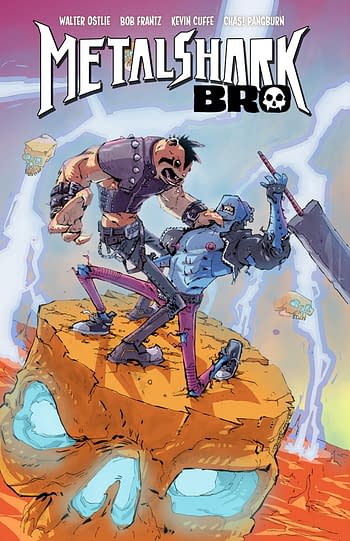
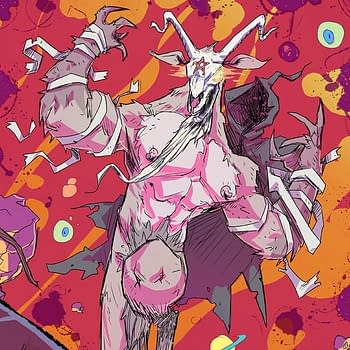
Perhaps the best example of Ostlie’s ability to capture the public imagination is Metalshark Bro. Funded via Kickstarter with over $50,000, the project represents the "weird" side of independent comics—a story about a shark-man battling possessed donuts.
The success of Metalshark Bro highlights a shift in market appetite. Readers are increasingly seeking high-concept, irreverent, and visually unique stories that deviate from the traditional superhero archetypes. The series, written by Bob Frantz and Kevin Cuffe, became a runaway hit, proving that even the most "absurd" ideas can find a massive audience if executed with professional-grade polish and a clear creative vision.
Mentorship and the YouTube Ecosystem
Beyond his own creations, Ostlie has become a prominent voice in the comic education space through his YouTube channel. With over 4,500 subscribers, the channel serves as a resource for creators overwhelmed by the technical hurdles of the industry.
"People are overwhelmed by the technical stuff, so I wanted to simplify that," says Ostlie. While many channels focus on the aesthetics of drawing, Ostlie focuses on the "mundane" technical aspects of the business: lettering, file management, and the practicalities of self-publishing. His goal is to remove the barriers of entry, allowing aspiring creators to focus on their stories rather than the logistics of production.
Implications for the Future of Comics
The career trajectory of Walter Ostlie signals a broader trend within the medium: the decline of the "gatekeeper" model and the rise of the platform-agnostic creator. By leveraging crowdfunding, digital-first publishing, and community engagement via YouTube, Ostlie has constructed a sustainable career that is not reliant on a single publisher or market trend.
His advice to writers and artists looking to collaborate is a testament to the importance of soft skills in a creative industry. He emphasizes that the success of a project often hinges on the ability to have difficult conversations, to be open to critical feedback, and to establish a clear, trusting rapport between the writer’s vision and the artist’s interpretation.
As Ostlie looks toward 2021 and beyond, with new major projects on the horizon, his career remains a compelling study in adaptation. Whether he is drawing a demon-slaying shark or teaching a novice how to letter their first page, Walter Ostlie continues to exemplify the modern, versatile creator who thrives by embracing change rather than fearing it.
For those interested in following his work, his portfolio and storefront remain the central hub for his ongoing contributions to the medium at walterostlie.com.

 Sagoh
Sagoh
 Layla Zulfa