

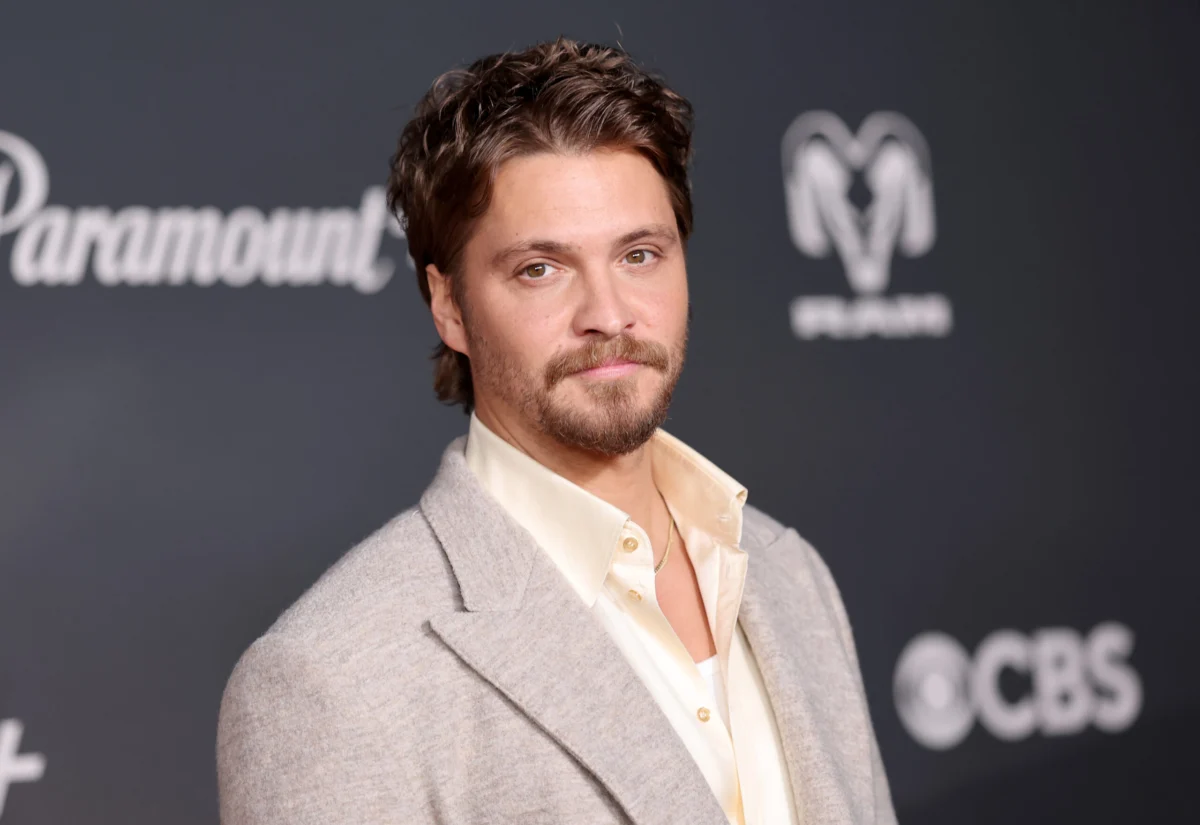
The landscape of modern television is littered with the remnants of ambitious spinoffs, yet few carry the heavy, sun-drenched expectations of Marshals, the latest expansion of Taylor Sheridan’s Yellowstone universe. At the center of this new broadcast procedural is Luke Grimes, reprising his role as the haunted, stoic Kayce Dutton. While the transition from the sprawling, cinematic vistas of Montana to the structured, episodic pacing of a network procedural might seem jarring, it has provided the foundation for a profound exploration of character. By leaning into the archetypal DNA of the Western—specifically the influence of Clint Eastwood—Grimes and his creative team have crafted a series that feels both like a departure and a homecoming.
The Architect of the Image: A Nod to the Master
When CBS began the marketing blitz for Marshals, the key art did not rely on flashy explosions or complex plot teases. Instead, it focused on a single, evocative image: Luke Grimes standing with his back to the camera, a silhouette against the stark, unforgiving horizon. For cinephiles, the homage was immediate. The pose was a direct visual callback to the iconic poster of Clint Eastwood’s 1992 masterpiece, Unforgiven.
"I think Unforgiven is the best Western ever made," Grimes told IndieWire in a recent interview. "I’ve always loved that poster." It was Grimes’ own initiative to pitch this visual tribute to the series’ creator, Spencer Hudnut. For both men, the reference was more than just a stylistic flourish; it was a thematic North Star. Just as Eastwood’s William Munny was a man running from a violent past he could never fully outrun, Kayce Dutton—an ex-Navy SEAL turned rancher turned lawman—finds himself in a similar purgatory.
Hudnut, a self-described disciple of the Eastwood film, recognized the alignment instantly. The visual nod serves as a promise to the audience: Marshals will not shy away from the existential grit that defines the Western genre, even when housed within the episodic constraints of a broadcast schedule.

A Chronology of Redemption: From Dutton Ranch to the Federal Badge
To understand the gravity of Kayce Dutton’s current trajectory, one must look at the timeline of his evolution. In the flagship Yellowstone series, Kayce was often caught between two worlds: the brutal, power-hungry politics of the Dutton ranch and his desire to provide a peaceful, normal life for his wife, Monica (Kelsey Asbille), and his son, Tate (Brecken Merrill).
The "Yellowstone" Legacy
Throughout the six-year run of the original series, Kayce’s journey was defined by "the rock and a hard place." He was a man defined by trauma—a military background that bled into his civilian life. By the end of Yellowstone, the character had achieved a rare, fleeting sense of closure. He had carved out a space of relative tranquility. For a time, it seemed as though the story of Kayce Dutton had reached its natural conclusion.
The Decision to Return
When the opportunity to headline Marshals arose, Grimes was initially hesitant. "I was like, ‘Maybe we should just leave him alone and let him have it,’" he admitted. The actor felt that after so much struggle, the character deserved to simply "ride off into the sunset." However, the realities of the industry—and the realities of life—intervened. Becoming a father for the first time shifted Grimes’ perspective on both his career and his character. The prospect of steady, challenging work was too significant to ignore, and the thematic potential of exploring a father-son relationship in a law enforcement context provided a new creative hunger.
Supporting Data: The "American Sniper" Connection
The threads connecting Luke Grimes to the world of Westerns are woven deeper than just Yellowstone. In a startling revelation, Grimes notes that his entire trajectory might have been derailed if not for a bold gamble taken by Clint Eastwood years prior.

Eastwood cast a young, relatively unknown Grimes in the 2014 film American Sniper. "That part should have gone to a movie star," Grimes noted, "but Clint doesn’t really care about the rules." It was in the theater, while watching that very performance, that Taylor Sheridan identified the specific intensity he needed for Kayce Dutton. The American Sniper role served as the catalyst for the casting that would define the next decade of Grimes’ career. This connection to Eastwood is not merely professional; it is a creative lineage that informs how Grimes approaches the quiet, interior work of acting.
Official Perspectives: The Evolution of the Procedural
The shift from the "prestige cable" model of Yellowstone to the "broadcast procedural" model of Marshals necessitated a change in performance style. Procedurals are often criticized for being rigid, but Grimes sees the format as a distinct opportunity for growth.
"On film, the director is the ringleader," Grimes explained. "He’s the top of the food chain. On TV, you might have a director come in and it’s their first time on the show, but as an actor you’re on the fortieth episode. It gives you more power." This shift in authority has empowered Grimes to take true ownership of Kayce. He describes his process as a collaborative negotiation: he remains open to the vision of guest directors, but he is firm when it comes to the internal logic of his character. If a script demands an action that feels discordant with Kayce’s soul, Grimes is the final arbiter.
The Tragic Catalyst
One of the most debated aspects of the series is the decision to kill off Monica (Kelsey Asbille) to drive the plot forward. While fans of the original series expressed disappointment, Hudnut and the writing team utilized the tragedy to deepen the stakes of the father-son bond between Kayce and Tate. It forced the series away from the domestic drama of the original and into a sharper, more isolated exploration of grief and protection.

Thematic Implications: Grace, Forgiveness, and Fatherhood
Perhaps the most significant development in Marshals is the way it mirrors Grimes’ own life experiences. The season finale features a pivotal moment where young Tate is forced to commit an act of violence to protect his father. The scene, which is described as one of the most "quietly devastating" on television this year, marks the moment of no return for the child.
Grimes notes that his performance in these scenes has been fundamentally altered by his real-life fatherhood. "The whole run of Yellowstone, I was just guessing," he confessed. "I didn’t know what being a father was like."
This newfound perspective has bled into his performance in a way that transcends mere acting. He now approaches the character’s interactions with others through the lens of empathy. "Now I see everyone as a baby that just got big," he remarked. "I give people a lot more grace and forgiveness knowing they started as someone’s child." This philosophy has transformed Kayce Dutton from a man driven by reactive violence into a character seeking a more complicated, moral, and perhaps ultimately unreachable peace.
Conclusion: The Future of the Marshal
As Marshals continues its run on Paramount+, it stands as a testament to the longevity of the Western archetype. By stripping away the massive ensemble of Yellowstone and focusing on the core of a man attempting to navigate his own brokenness while raising a son, the series achieves a intimacy that the original often lacked.

Luke Grimes has moved from the shadow of the ranch to the front lines of the law, bringing with him a decade of experience and a renewed commitment to the craft. Whether the show remains a procedural or evolves into a deeper character study, one thing is certain: the legacy of the "haunted man" popularized by Eastwood is in safe hands. Kayce Dutton is no longer just a rancher; he is a vessel for a modern exploration of the oldest American story: the struggle to remain good in a world that demands you be something else.











No comments yet. Be the first to join the conversation!