

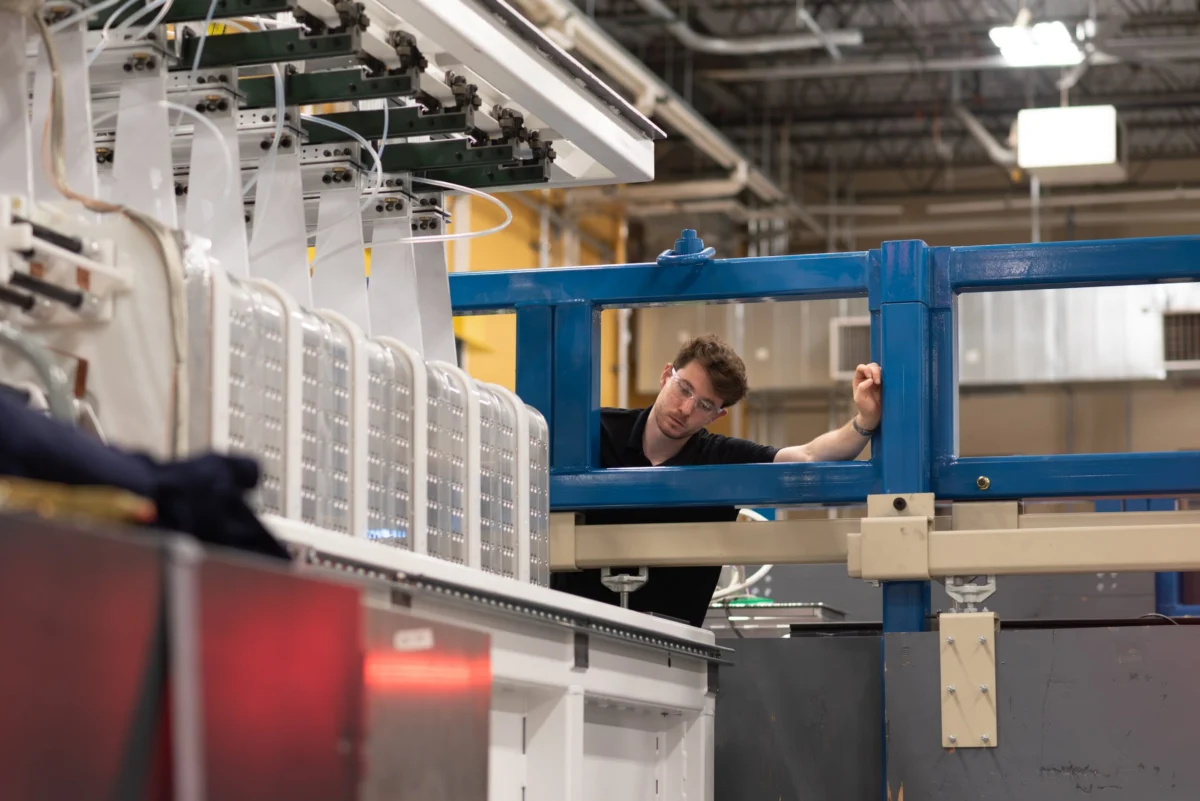
In a significant leap forward for the burgeoning fusion energy sector, California-based startup Xcimer Energy announced on Wednesday that it has successfully activated "Phoenix," a laser system that the company claims is the largest privately owned installation of its kind in the world. The activation represents a pivotal milestone in the race to replicate the sun’s power on Earth—a feat that has long been the "holy grail" of clean energy research.
The Quest for Commercial Fusion
Fusion energy, the process of fusing atomic nuclei to release vast amounts of energy, has long been hampered by the immense technical challenges of containment and efficiency. For decades, the field was dominated by government-funded research. However, the paradigm shifted in December 2022, when the National Ignition Facility (NIF) at the Lawrence Livermore National Laboratory achieved "ignition"—the moment a controlled fusion reaction produced more energy than the laser energy used to spark it.
Xcimer is building upon this breakthrough, aiming to evolve the NIF’s experimental success into a commercially viable power plant. While the NIF proved the physics were sound, the path to a grid-connected power plant requires a drastic reduction in complexity and a significant increase in energy output. Xcimer believes that by rethinking laser architecture, they can bridge this gap.
A Chronology of Progress: From NIF to Phoenix
The journey toward a fusion-ready future has been defined by incremental but essential steps in laser physics.
- The NIF Proof-of-Concept: At the Lawrence Livermore National Laboratory, 192 individual laser beams were trained on a fuel target smaller than a pencil eraser. These lasers bombarded a gold hohlraum (a cylindrical chamber), converting laser energy into X-rays. These X-rays compressed a tiny fuel pellet until the hydrogen isotopes fused, releasing a burst of energy.
- The Shift to Private Innovation: Following the NIF’s success, private startups like Xcimer began to explore how to industrialize the process. The focus shifted from scientific curiosity to engineering scalability.
- The Development of Phoenix: Over the past few years, Xcimer worked to build a laser system capable of meeting the power demands of a commercial reactor. Phoenix, a 38-meter-long behemoth, utilizes excimer amplification technology—a method traditionally used in the high-precision world of semiconductor manufacturing but scaled to an unprecedented industrial degree.
- The Wednesday Activation: The successful "flipping of the switch" on the Phoenix system confirms that the hardware is functional, marking the transition from theoretical design to operational testing.
Supporting Data and Technical Architecture
The core innovation behind Xcimer’s strategy lies in its laser pulse management. To achieve fusion, energy must be delivered with extreme precision and velocity.
The Physics of Compression
Xcimer’s proposed fusion power plant utilizes two distinct laser systems firing in microsecond-long pulses. These pulses are fed through a sophisticated compression system that narrows the delivery time to mere nanoseconds. This rapid-fire compression is critical; the faster the fuel is compressed, the more likely the system is to achieve the high-density conditions necessary for sustainable, usable fusion reactions.
The Power of Phoenix
The Phoenix system is powered by a krypton-fluoride (KrF) excimer laser. At its full operational capacity, the system generates over 1 kilojoule of energy. While this is a massive achievement for a private facility, the company remains grounded in the reality of the scale required for a commercial plant. A functional power plant will eventually require laser energy output exceeding 12 megajoules—a testament to the long road of scaling that remains ahead.
Why Excimer Amplification?
By utilizing excimer technology, Xcimer avoids some of the cost and complexity pitfalls associated with the glass-based lasers used at the NIF. Excimer lasers are inherently more efficient at higher pulse repetition rates, which is a prerequisite for a power plant that must fire multiple times per second to keep a turbine running or heat a thermal reservoir continuously.
Official Perspectives and Industry Implications
The activation of Phoenix has caught the attention of both the clean energy investment community and the broader scientific establishment. By focusing on a more "profitable" architecture, Xcimer is positioning itself to be a leader in the next generation of energy startups.
Scaling the Vision
The company’s roadmap is as aggressive as its technology. Following the activation of Phoenix, Xcimer is focusing its efforts on completing a comprehensive prototype by 2028. This prototype will serve as the final testing ground for the physics of their reactor. Once validated, the team plans to scale the system to a point where the energy output finally exceeds the energy consumed—the final threshold for net-positive energy production.
If these timelines hold, Xcimer anticipates the construction of its first commercial-scale power plant by the mid-2030s.
The Economic Argument
For fusion to move from a government-funded science project to a market-ready commodity, the cost per megajoule must drop precipitously. Xcimer’s strategy focuses on "less complex" hardware. By simplifying the laser delivery system and utilizing more reliable amplification technologies, they hope to bring fusion costs into alignment with current fossil fuel and renewable energy prices.
Implications for the Global Energy Market
The implications of a successful, commercially available fusion power plant cannot be overstated. Unlike fission, which produces radioactive waste, or fossil fuels, which release greenhouse gases, fusion offers a near-limitless supply of carbon-free energy using hydrogen as fuel.
A Path to Decarbonization
The global race to reach "Net Zero" by 2050 requires massive, consistent baseload power that does not fluctuate with the wind or sun. Fusion represents the missing piece of that puzzle. By providing a stable, high-output energy source, Xcimer’s technology could eventually replace coal and natural gas plants, providing a scalable solution that integrates directly into existing power grid infrastructures.
The Competitive Landscape
Xcimer is not alone in this race; companies like Helion, Commonwealth Fusion Systems, and TAE Technologies are also working on various magnetic and inertial confinement approaches. However, Xcimer’s specific focus on perfecting high-energy, high-frequency laser delivery places them in a unique niche. Their success with Phoenix suggests that the "laser-driven" path to fusion remains a highly viable competitor to magnetic confinement approaches like tokamaks.
Conclusion: A Long Road Ahead
While the activation of the Phoenix laser system is an undeniable victory, the team at Xcimer is clear-eyed about the challenges that remain. Building a machine that can survive the extreme environment of a fusion reaction millions of times over is a monumental engineering hurdle. Materials science, heat management, and the integration of these lasers into a coherent reactor vessel are all significant challenges that remain to be solved.
Nevertheless, the "flipping of the switch" on Wednesday is more than just a successful hardware test; it is a signal to the world that the private sector is capable of tackling the most difficult problems in physics. As Xcimer moves toward its 2028 prototype, the global energy industry will be watching closely. If Xcimer can successfully scale its laser technology, the dream of a clean, abundant, and inexhaustible energy source may transition from a long-term goal to an imminent reality.
Note: This report on Xcimer Energy is intended to provide a technical overview of recent industry advancements. Readers should note that fusion energy research remains highly experimental, and commercial timelines are subject to significant technical and regulatory variables.












No comments yet. Be the first to join the conversation!