

For the first time in over half a century, humanity is venturing beyond the comfortable embrace of Low Earth Orbit. As the Artemis II mission makes its historic journey toward the moon, it is doing so with a cultural resonance that its Apollo-era predecessors could never have imagined. While the mission remains a pinnacle of aerospace engineering and scientific inquiry, the crew—Commander Reid Wiseman, Pilot Victor Glover, and Mission Specialists Christina Koch and Jeremy Hansen—is simultaneously transforming the vacuum of space into the ultimate creator studio.
By utilizing everyday consumer technology, such as the iPhone 17 Pro Max, to document their voyage, the Artemis II team is effectively bridging the gap between cold, clinical space exploration and the visceral, intimate world of the social media "feed."
The Main Facts: A New Era of Celestial Content
The Artemis II mission represents a foundational step in NASA’s long-term goal of establishing a sustainable human presence on the lunar surface. However, the mission’s reach is extending far beyond the scientific community. By integrating social media engagement into the heart of the mission profile, NASA has invited the global public to participate in a way that feels distinctly 21st century.
The hardware driving this engagement is as surprising as it is effective. The crew is equipped with four iPhone 17 Pro Max units, acting as high-definition documentation tools alongside traditional, high-end NASA camera equipment. These devices, while disconnected from the internet and Bluetooth for security and operational integrity, are serving as the primary lenses through which the public experiences the mission. From candid "behind-the-scenes" cabin moments to breathtaking, high-resolution imagery of Earth, the astronauts are providing a raw, unfiltered perspective on what it means to be a human floating in the abyss.
A Chronological Shift: From Broadcast to Feed
To understand the significance of this shift, one must look at the evolution of space communication. The Apollo missions of the 1960s and 70s were mediated through the lens of national broadcast television. The visuals were often grainy, the audio delayed, and the framing dictated by ground-based producers. The experience was one of distance—a "we" versus "them" dynamic where the astronauts were icons on a pedestal, unreachable and ethereal.
By contrast, the timeline of the current Artemis II mission is defined by rapid, relatable engagement:

- Pre-Flight Prep: The crew utilized social platforms to demystify the rigorous training process, establishing a rapport with the public long before launch.
- Launch and Insertion: The immediacy of social media allowed for a global, synchronized emotional response, with the crew’s excitement palpable across platforms.
- The "Sitcom" Moment: On April 6, 2026, the crew released an Instagram Reel styled as a 1990s sitcom intro, complete with theme music and quick cuts. The video, which garnered over 13 million views, served as a masterclass in modern digital engagement, humanizing the astronauts by playing into popular internet tropes.
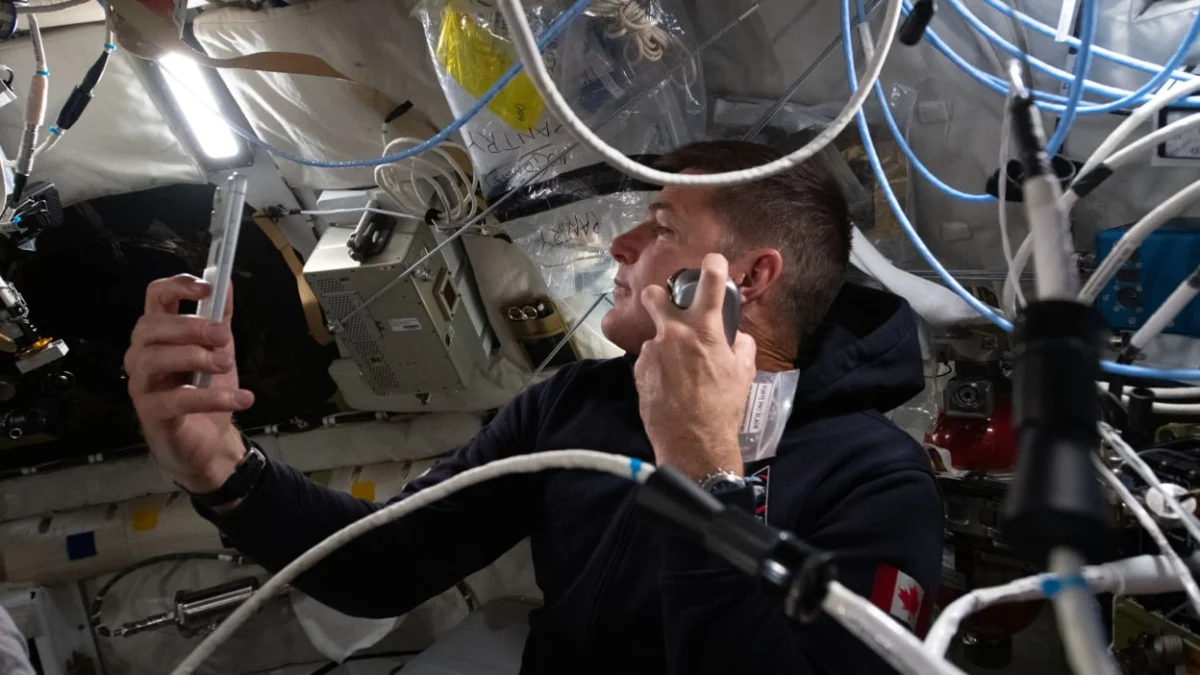
- Deep Space Updates: Throughout the transit to the moon, the crew has been uploading periodic content that showcases the mundane alongside the miraculous—such as Mission Specialist Jeremy Hansen using his iPhone to guide his morning grooming routine in zero-gravity.
Supporting Data: The Power of the "Relatable Astronaut"
The numbers speak for themselves. The viral success of the Artemis II social content suggests that the public is not just interested in the "what" of space exploration, but the "who."
The shift toward personality-driven content is not accidental; it is a calculated effort by NASA to remain relevant in an attention-starved digital landscape. Younger generations, particularly Gen Z and Alpha, prioritize authenticity. By seeing an astronaut deal with the same technical, social, and emotional challenges as a creator on TikTok or Instagram, the barrier between the public and the space program evaporates.
Furthermore, the integration of these platforms into the mission narrative has created a robust secondary economy of information. With the lunar flyby scheduled for real-time streaming on platforms like Netflix, the mission has effectively secured its status as a "must-watch" media event, rather than just a series of technical milestones.
Official Responses and Strategic Intent
NASA’s decision to allow the crew to bring consumer smartphones was not merely a concession to social media—it was a strategic imperative. Agency officials have long acknowledged that the future of space exploration depends on public funding and public support. By allowing the crew to document their journey using the same tools that the public uses to document their daily lives, NASA is effectively "democratizing" the mission.
"The goal," according to internal NASA briefings, "is to ensure that every human on Earth feels like they are on the ride with us." This policy shift reflects an understanding that in the modern era, a mission that isn’t shared is a mission that loses its cultural foothold. By permitting these devices, NASA has successfully ensured that Artemis II is not just a triumph of physics, but a triumph of branding and cultural connection.
Implications: The Future of Space Culture
The implications of this "social-first" approach to space flight are profound. We are witnessing the birth of a new category of content: the "Deep Space Influencer."

1. The Humanization of Exploration
As we look toward future missions to Mars, the standard set by Artemis II will likely become the baseline. Future astronauts will not only be pilots and scientists; they will be the narrators of the human species’ expansion into the solar system. The psychological benefit of this to the crew—being able to share their experiences in a personal format—cannot be overstated.
2. A New Medium for Science Communication
When a viral video of an astronaut floating in a cabin leads to millions of people reading about the physics of the Orion spacecraft or the trajectory of a lunar flyby, science communication becomes exponentially more effective. The "meme-ification" of space travel is a gateway drug to scientific literacy.
3. The End of the "Distanced" Mission
The era of the "distant" astronaut is effectively over. If the Apollo era belonged to the television broadcast, the Artemis era belongs to the feed. This shift changes the expectations of the public. They no longer want a curated, sanitized press conference; they want the candid selfie, the behind-the-scenes blooper, and the personal, human-to-human connection.
4. Technological Synergy
The use of the iPhone 17 Pro Max in space is a testament to how far consumer technology has come. The fact that an off-the-shelf device can capture high-fidelity imagery in the extreme environment of space serves as a powerful marketing tool for the tech industry and a practical reality for the space agency. It proves that space is no longer the exclusive domain of billion-dollar, proprietary hardware—it is a space that can be navigated with the tools of the masses.
Conclusion: A Mission for the Feed
As the Artemis II crew continues their orbit and prepares for their next phase of objectives, the world watches through a screen. The "cheesy" sitcom intros and the candid, zero-gravity selfies have done more than just generate clicks; they have cemented the mission in the collective consciousness of a generation that requires more than just a flag on the moon to be inspired.
Artemis II is proving that the final frontier is not just a place to explore—it is a place to document, share, and connect. In the silence of space, the most important signal being sent back to Earth is the one that says: "We are human, we are here, and you are invited to watch." As the mission unfolds, it becomes increasingly clear that while the spacecraft is designed to traverse the stars, its true power lies in its ability to bring us all a little closer together.












No comments yet. Be the first to join the conversation!