The landscape of psychological thriller comics is set to reach a fever pitch this Wednesday, July 1, 2026, as Dark Horse Comics releases the fifth and final issue of Masterminds. Since its inception, the series—penned by the acclaimed Zack Kaplan and brought to life by the visual storytelling of Stephen Thompson—has served as a chilling allegory for modern societal compliance, the illusion of free will, and the suffocating nature of late-stage technological dependency. As the series reaches its climactic "Final Level," readers are poised to discover whether protagonist Edward can successfully dismantle the clandestine architecture of the society that has held him captive, or if the price of victory is a transformation he cannot undo.
The Narrative Trajectory: A Study in Psychological Entrapment
Masterminds has distinguished itself from the crowded field of dystopian fiction by focusing not on an external apocalypse, but on an internal one. The narrative follows Edward, an Everyman figure who finds himself lured into an elite, shadowy society under the guise of an exclusive initiation. Through four issues, readers have witnessed Edward navigate a series of increasingly dangerous "challenges," each designed to strip away his autonomy, morality, and perception of reality.

The series utilizes a recurring motif of gamification, where Edward’s survival depends on his ability to interpret the rules of a system that is constantly shifting. The "Mastermind," the enigmatic antagonist orchestrating the initiation, serves as the personification of the societal forces that demand conformity from the individual. As the series concludes with issue #5, the central question remains: Is the society a genuine opportunity for power, or is it merely a sophisticated prison designed to harvest the ambitions of its participants?
Chronology of the Initiation: From Curiosity to Confinement
To understand the stakes of the final issue, one must look back at the progression of Edward’s descent. The story began with the promise of "exclusive membership," a classic lure for the disenfranchised.
- Phase 1 (The Hook): Edward accepts the invitation, initially viewing the society as a shortcut to success and social mobility.
- Phase 2 (The Softening): The early challenges begin to isolate Edward from his support systems, replacing personal connections with loyalty to the game’s objectives.
- Phase 3 (The Cracks): Edward experiences the first signs of cognitive dissonance as the tasks become morally ambiguous, pitting his conscience against his desire to progress.
- Phase 4 (The Reveal): In the preceding issue, the true nature of the "game" was unveiled—a structural control system that treats human lives as disposable assets.
- Phase 5 (The Final Level): The upcoming release sees Edward crashing the final round, confronting the architect of his misery, and facing the ultimate ultimatum.
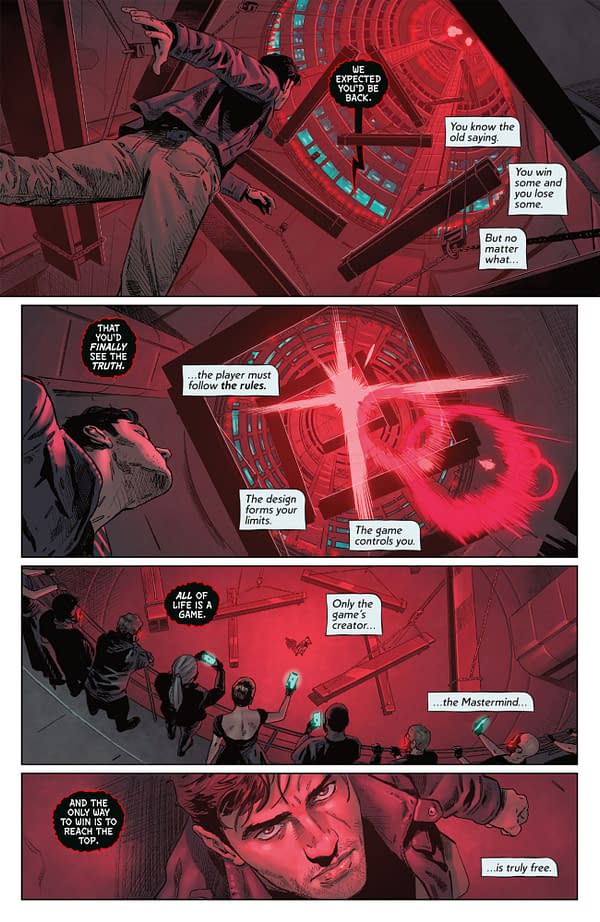
The pacing of Masterminds has been lauded for its deliberate, suffocating tension. Thompson’s art, particularly the use of high-contrast, crimson-hued lighting, has visually reinforced the feeling of being trapped in a digital or neon-drenched cage. The incorporation of subtle, unsettling iconography—such as the glowing symbols seen on the faces of background characters—has led to a fan-driven theory that the society in Masterminds is a meta-commentary on the digital feedback loops of modern social media and corporate culture.
Supporting Data and Production Details
The technical specifications of Masterminds #5 suggest a high-production-value conclusion. Dark Horse Comics has confirmed the following details:

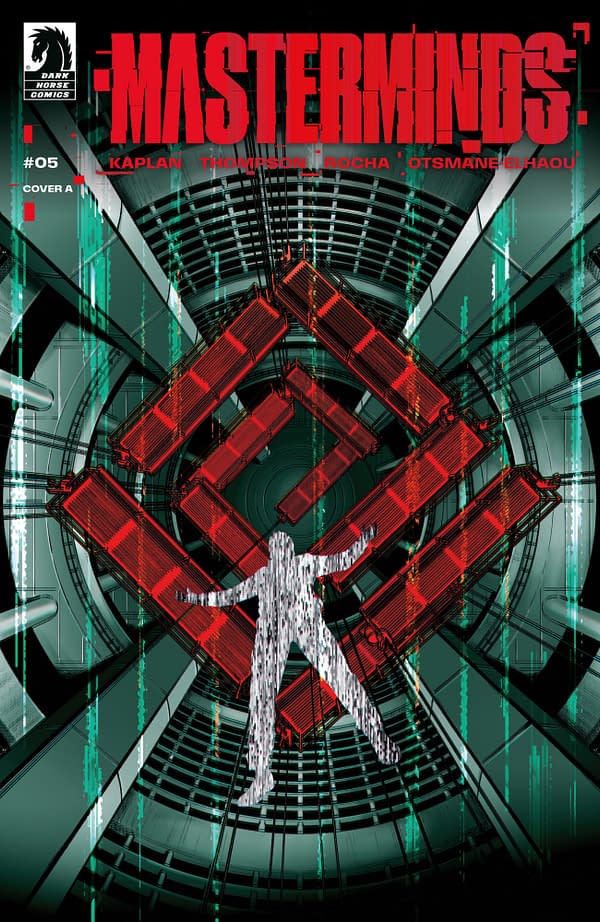
- Creators: Zack Kaplan (Writer), Stephen Thompson (Artist/Cover), Thiago Rocha (Colorist), and Hassan Otsmane-Elhaou (Letterer).
- Publication Date: July 1, 2026.
- Format: Standard 32-page single issue.
- Pricing: $4.99 USD / $6.99 CAD.
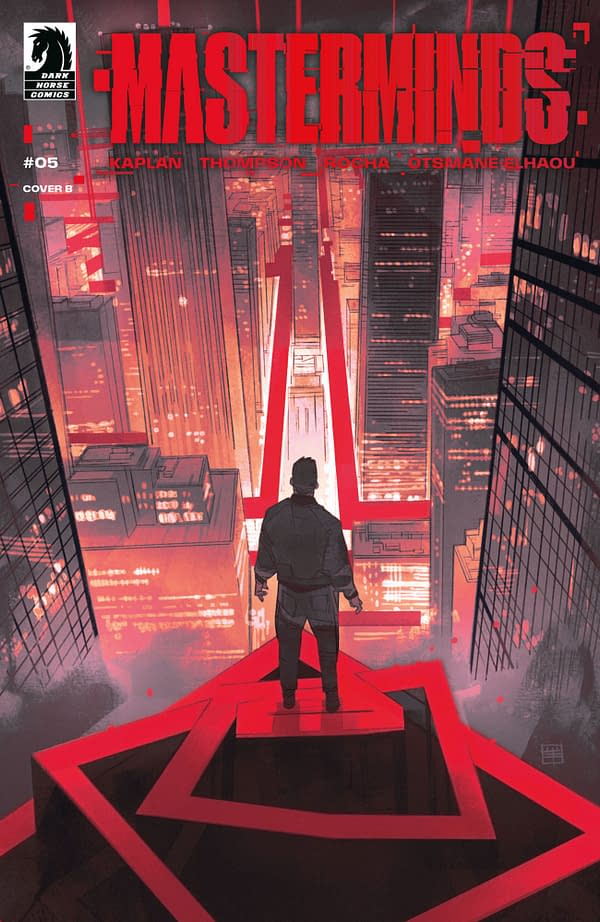
- Variants: A variant cover by Marco Locati (CVR B) is available for collectors, offering an alternative visual perspective on the series’ themes.
- Demographic Targeting: Rated T+, reflecting the series’ mature exploration of psychological manipulation and dark themes.
The physical dimensions (6.61" x 10.18") and the weight (2 oz) are standard for the format, yet the density of the content within those 32 pages remains the primary draw for the series’ loyal following.
Official Perspectives and Industry Reception
In previous interviews, Zack Kaplan has spoken extensively about the inspiration behind Masterminds. He has noted that the story was intended to mirror the "quiet desperation" of the modern workforce. "We live in a world where we are constantly told we are the architects of our own destiny," Kaplan remarked in a 2025 industry panel. "But Masterminds asks what happens when the very tools we use to build that destiny are provided by a system that has already decided our outcome."
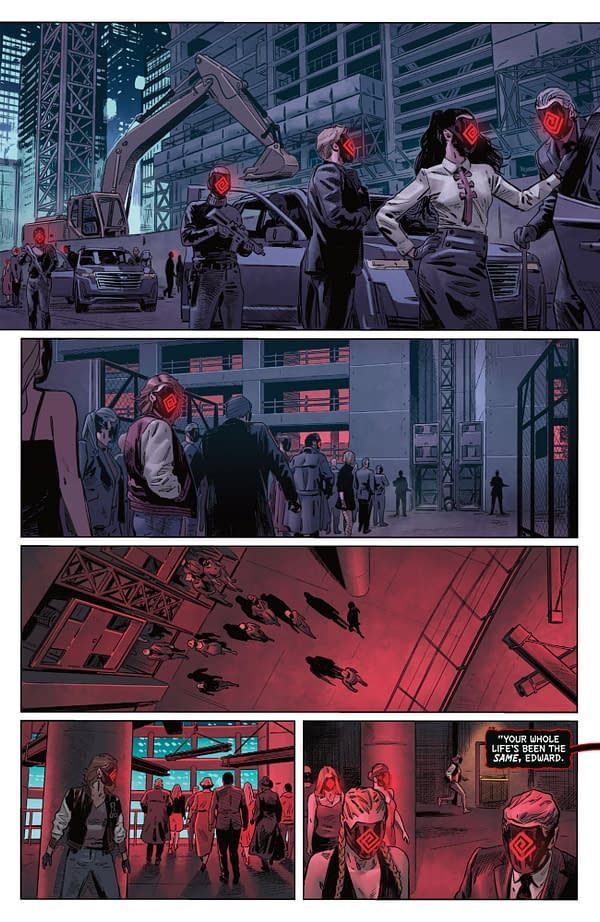
Stephen Thompson’s visual contribution has been equally pivotal. By utilizing a color palette that evokes both high-tech sterile environments and the visceral intensity of a thriller, Thompson has successfully guided readers through the protagonist’s fracturing psyche. Industry critics have praised the collaboration, noting that Masterminds succeeds because it feels uncomfortably plausible. It is not a story about space aliens or magical monsters; it is a story about the structures of power that influence our daily lives in the real world.
The Societal Implications of the "Final Level"
The thematic weight of Masterminds #5 extends beyond the comic book page. In a culture increasingly concerned with data privacy, the influence of algorithms, and the erosion of individual privacy, the "game" Edward is forced to play resonates with contemporary anxiety.
The Illusion of Choice
The most chilling aspect of the series is the way it portrays the "choice" given to its victims. Much like the real-world "gig economy" or the "attention economy," characters in the comic are given the illusion of autonomy while their paths are strictly predetermined by the system. The phrase "the game controls you" acts as a refrain throughout the series, serving as a reminder that participation in the system is rarely voluntary, even when it feels like a personal ambition.
The Mirror of Modernity
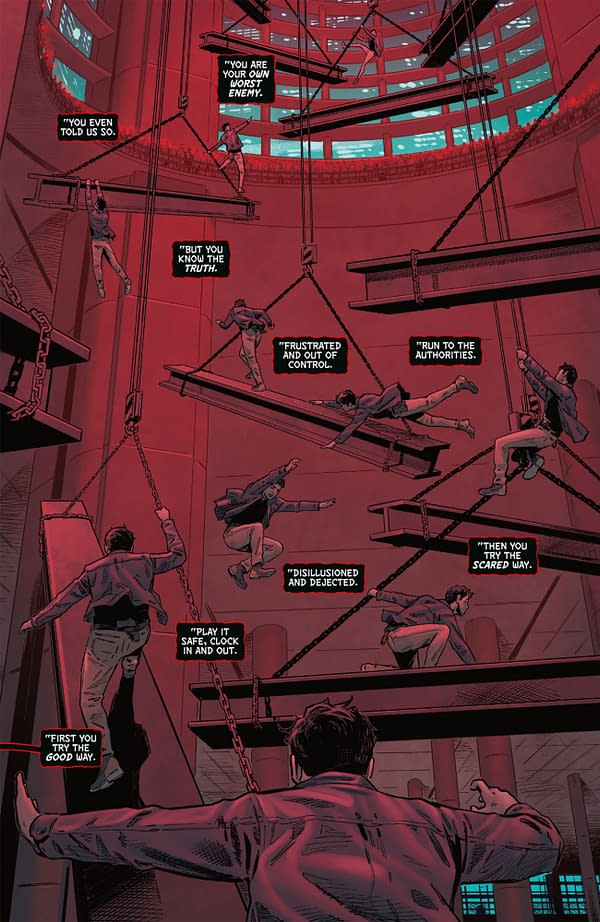
The preview pages released by Dark Horse highlight a particularly disturbing sequence: people suspended on platforms, told they are their own "worst enemy." This visual metaphor is a direct critique of self-optimization culture, where individuals are encouraged to police their own behavior to fit into corporate or societal structures. By presenting this in a high-stakes thriller format, Kaplan and Thompson force the reader to confront their own role in the systems they inhabit.
The Finality of the Ending
As we approach the July 1st release, the industry is buzzing with speculation about the ending. Will the series conclude on a note of nihilism, or will Edward find a way to break the cycle? The "Final Level" promise suggests a confrontation that will leave no room for ambiguity. For readers who have invested time in the previous four installments, this issue represents the culmination of a long-form argument about the nature of freedom in the 21st century.
Conclusion: Why Masterminds Matters
Masterminds #5 is more than just a comic book release; it is the capstone of a significant piece of contemporary social commentary. By wrapping its message in the trappings of a gripping, mind-bending thriller, Dark Horse Comics has managed to create a series that is both highly entertaining and deeply unsettling.
As Edward faces his final boss battle, he is doing so on behalf of all those who have ever felt the weight of a system that promises rewards for compliance while delivering nothing but control. Whether or not he succeeds, his journey has provided a necessary mirror to our own reality. On Wednesday, July 1st, we will finally see if the game can be beaten, or if the "Mastermind" remains the only one truly free. Readers are encouraged to visit their local comic book retailers or digital platforms to secure their copy of this definitive conclusion. In an era of constant, repetitive content, Masterminds stands as a reminder of the power of serialized storytelling to challenge our perceptions and sharpen our understanding of the world around us.