Evan Lee Salim
The Japanese writing system is a triad of complexity and elegance, consisting of Hiragana, Kanji, and the angular, sharp-edged characters known as Katakana. While many students of the language begin their journey with the flowing strokes of Hiragana, seasoned linguists and educators consistently emphasize that Katakana is not merely an optional addition—it is an absolute pillar of Japanese literacy. To truly navigate the nuances of modern Japanese, learners must treat Katakana as a fundamental requirement.

Learning Katakana immediately following the mastery of Hiragana is the most strategic pedagogical approach for the average student. Because both systems share phonetic similarities, the cognitive load is reduced by leveraging the momentum gained from Hiragana. While the shapes differ, the underlying logic of the sounds remains consistent, allowing for a seamless transition into the second half of the Japanese phonetic alphabet.
The Architectural Logic of Katakana
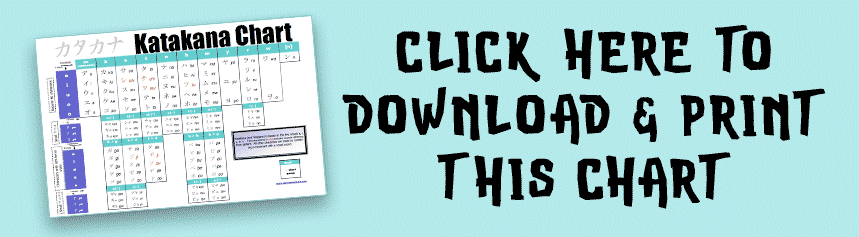
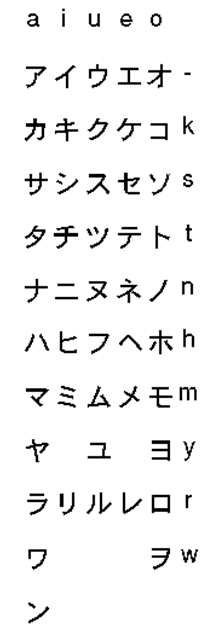
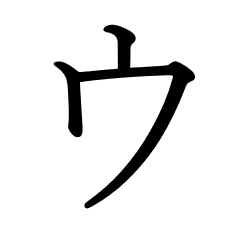
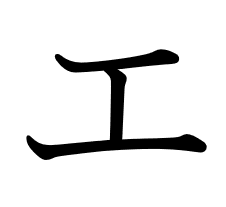
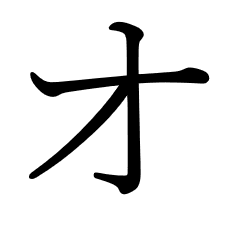
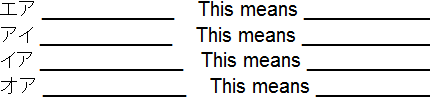
To the uninitiated, the Katakana chart may appear to be a dense, intimidating collection of unfamiliar symbols. However, when analyzed through a structural lens, it reveals a remarkably logical pattern. The system is organized into columns representing vowel sounds—A, I, U, E, and O—and rows representing consonant clusters.

The first row is entirely comprised of pure vowel sounds. Subsequent rows follow the consonant-vowel structure (e.g., K, S, T, N, H, M, Y, R, W). By observing this grid-like structure, students can quickly discern the pattern, making memorization an act of pattern recognition rather than rote repetition. While there are inherent exceptions—such as the unique pronunciation of the "shi" or "tsu" characters—these are few and far between.
A Chronological Guide to Mastery
The process of learning these characters is best approached in manageable chapters.
Phase 1: The Foundation (A, I, U, E, O)
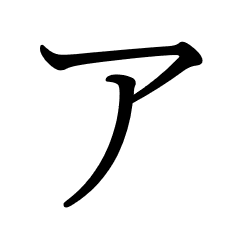
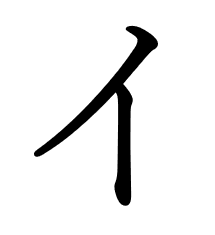
The journey begins with the basic vowels. These are the building blocks of the language. Each character, such as "A" (ア) or "I" (イ), requires precise stroke order. Beginners are often tempted to skip the stroke order, but linguistic experts argue that learning the correct movement of the pen is essential for developing the muscle memory required for higher-level Kanji writing later on.

Phase 2: The Consonant Rows (K, S, T)
As students move into the "K" and "S" rows, the importance of visual mnemonics becomes clear. For instance, distinguishing between the Katakana "so" (ソ) and the "n" (ン) can be a significant hurdle. A helpful trick is to observe the stroke direction: in "so," the longer stroke typically starts from the top, whereas in "n," the stroke begins from the bottom.
Phase 3: Complex Sounds and Modifiers
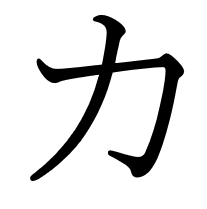
As the student progresses, they encounter the "Ten-Ten" (") and "Maru" (°) modifiers. The "ten-ten" acts as a voicing mark, turning a soft sound into a hard one (e.g., "Ka" becomes "Ga"). The "Maru" is exclusive to the "H" row, transforming it into a "P" sound. Understanding these modifiers is what elevates a student from being able to read simple words to being able to decipher complex, real-world Japanese signage and literature.

The Significance of Small-Form Characters
A critical, often overlooked component of Katakana is the use of small-form "Ya," "Yu," and "Yo." These characters are not used to create new syllables on their own but are instead used as modifiers to change the sound of the preceding character.
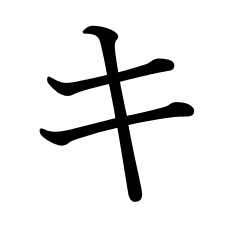
For example, when the character "Ki" is followed by a small "Ya," it creates the sound "Kya." This is not a combination of "Ki" and "Ya" as two distinct syllables, but rather a single, fused sound. Mastery of these combinations is the final hurdle in achieving fluency in Katakana reading and writing. Without this skill, a student will struggle to pronounce many modern loanwords, which make up a vast portion of daily Japanese conversation.

Supporting Data: Why Katakana Matters
Why go through the effort of learning these characters? The data is clear: Katakana is the primary script used for "Gairaigo," or foreign loanwords. In a globalized world, Japanese is constantly adopting terms from English, French, and other languages. From technology (コンピューター – computer) to food (コーヒー – coffee), Katakana is the bridge that allows a non-native speaker to immediately recognize and pronounce thousands of words that have been absorbed into the Japanese lexicon.
Furthermore, Katakana is used for emphasis, onomatopoeia, and to denote the names of foreign countries and people. If you travel to Japan, you will see Katakana on menus, in advertisements, and on street signs. It is the most visible part of the language for the tourist and the professional alike.

Official Pedagogical Perspectives
Language institutions worldwide, including those affiliated with the Japan Foundation, underscore the "Hiragana-first, Katakana-second" approach. The consensus is that once a student understands the concept of a mora-based language (where each character has a specific time value), Katakana is significantly easier to acquire.
Professional educators also emphasize the "Chapter Test" method. By isolating characters into rows and testing them through practical application—such as trying to read a list of English words transliterated into Japanese—students gain confidence. When a student successfully identifies "Coffee" written as "コーヒー," it reinforces the connection between the script and the real world, which is a powerful psychological motivator.

Practical Implications for the Modern Student
The implications of mastering Katakana are profound. It transforms the student from a passive observer of the Japanese language into an active participant. It allows for:
- Enhanced Vocabulary: Access to the thousands of loanwords that are already part of the student’s native English vocabulary.
- Improved Pronunciation: Because Katakana forces the learner to adhere to the Japanese phonetic structure, it trains the ear to recognize the specific rhythm of the language.
- Cultural Literacy: Understanding how words are adapted into Japanese—a process often referred to as "Japlish"—provides fascinating insights into how the Japanese culture views foreign concepts.
Avoiding Common Pitfalls
One of the most frequent mistakes students make is confusing the "Tsu" (ツ) and "Shi" (シ) characters. They are visually similar, yet they represent entirely different phonetic values. Experts suggest focusing on the angle of the strokes. The "Shi" strokes generally point upward, while the "Tsu" strokes point downward. Recognizing this subtle difference early on saves the student from hours of frustration later in their studies.
Similarly, the "small tsu" (ッ) is a common point of confusion. This is a silent character that denotes a "glottal stop," effectively doubling the consonant that follows it. While it may seem like a minor detail, it is essential for correct pronunciation. Ignoring the small "tsu" is the quickest way to sound unnatural to a native speaker.

Conclusion: The Path Forward
Learning Katakana is an investment in one’s future as a Japanese speaker. It is a logical, structured, and highly rewarding process. By breaking the system down into its constituent parts, utilizing mnemonics, and engaging in frequent, targeted practice, any student can move from a state of confusion to one of complete literacy.
Whether you are using resources like the Beri-Beri-Shoshinsha bundles or participating in online quizzes, the key is consistency. Immerse yourself in the characters, use them to label your environment, and challenge yourself to read every sign you encounter. Once the patterns of Katakana take hold in your mind, you will find that the Japanese language opens up in ways you never thought possible.

You are now standing at the threshold of fluency. By dedicating the time to memorize these characters, you are not just learning a writing system; you are gaining the keys to a culture, a history, and a modern society that thrives on the very script you are currently mastering. Stay focused, remain curious, and keep writing. The rewards of your labor will be evident in every word you read.


 Neng Nana
 Asro
Asro