

By Investigative Desk
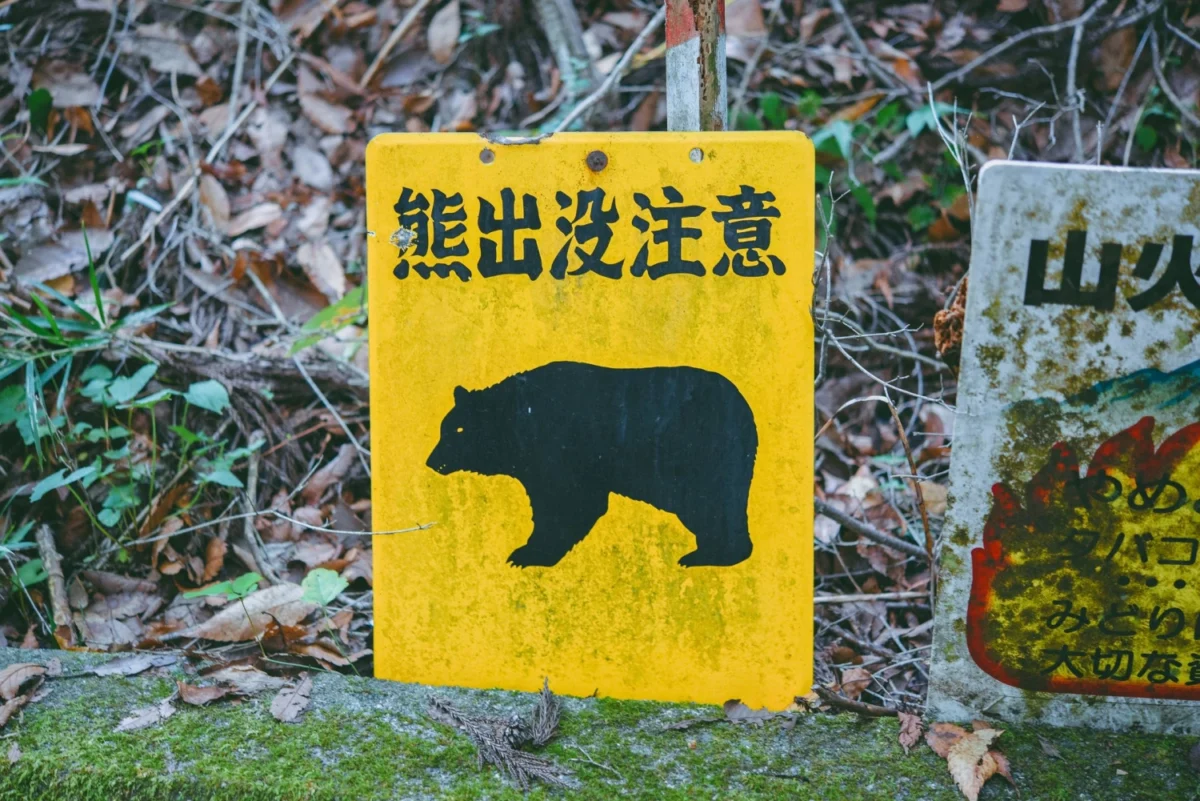
The Japanese Ministry of the Environment has announced a landmark initiative to overhaul how the nation monitors its wild bear populations. Facing an unprecedented surge in bear-human encounters and a changing ecological landscape, the government will launch comprehensive, large-scale field surveys beginning in late June. This initiative, designed to standardize data collection across prefectural borders, aims to mitigate safety risks and inform future wildlife management policies.
The survey will initially focus on the Tohoku region—comprising Aomori, Akita, Iwate, Miyagi, Yamagata, and Fukushima prefectures—along with the northern reaches of Niigata Prefecture. By deploying a unified technological framework, the government hopes to transition from fragmented local reporting to a cohesive, national understanding of bear behavior and population dynamics.
Main Facts: A Unified Approach to Wildlife Management
The core of this initiative lies in the deployment of approximately 800 automated camera traps. These devices will be strategically placed across both deep mountainous wilderness and satoyama—the vital interface zones where managed forests meet human settlements.
For decades, Japan’s approach to bear management has been hindered by a decentralized system. Individual prefectures historically conducted their own surveys using varying methodologies, disparate timelines, and inconsistent metrics. This "patchwork" data collection made it nearly impossible for wildlife biologists to track bears as they migrated across administrative boundaries.
By centralizing the survey, the Ministry of the Environment intends to achieve three primary objectives:
- Accurate Density Estimation: Determining the true population density in areas where bears are increasingly encroaching on residential zones.
- Behavioral Mapping: Understanding the seasonal migration patterns that lead bears into populated areas.
- Unified Methodology: Eliminating the discrepancies in data that have previously stalled effective policy implementation.
The project is slated for a multi-year timeline, with the initial findings from the Tohoku-Niigata block expected to be fully compiled and analyzed by the end of fiscal year 2026.
Chronology: The Escalation of the Bear Crisis
The impetus for this national survey did not emerge in a vacuum. It is the result of years of escalating tension between Japan’s growing bear population and its aging, shrinking rural communities.
- Pre-2020: Bear sightings were largely contained within high-altitude forests. Wildlife management was treated as a localized issue, handled by municipal hunters and forestry departments.
- 2020–2022: A series of poor mast years (the production of nuts such as acorns and beech seeds) forced bears to descend from the mountains in search of food. Reports of bears entering urban centers increased significantly, leading to a spike in livestock attacks and human injuries.
- 2023: Japan recorded an all-time high in bear-related incidents. The severity of these encounters prompted the Ministry of the Environment to reclassify bears as a "specified wildlife species" requiring urgent national oversight.
- Tuesday (Announcement): The Ministry officially declared the launch of the large-scale survey, marking the first time the central government has taken direct control of population monitoring on this scale.
- Late June 2024: The commencement of field deployment for camera traps.
- 2025–2028: The planned nationwide expansion of the surveillance network.
Supporting Data: Why the Survey is Necessary
The necessity of this project is underpinned by sobering statistics. In recent years, local government surveys have indicated that the distribution range of the Asian black bear (Ursus thibetanus) and the Ussuri brown bear (Ursus arctos lasiotinus) has been expanding.
The Problem with Disparate Data
In the past, one prefecture might estimate its bear population based on track counts, while a neighbor might rely on hunting permit statistics. This creates a "data vacuum" at the borders. Because bears do not recognize prefectural lines, their movements are often misrepresented.
The Satoyama Factor
The satoyama regions are the most critical concern for the Ministry. As rural populations decline, the traditional maintenance of these secondary forests—which served as a buffer between wilderness and humanity—has been abandoned. Without active human management, these forests have become overgrown, providing bears with high-quality cover and food sources right on the doorsteps of human villages.
Nationwide Scope
The Ministry’s roadmap includes expanding these surveys to almost every prefecture in Japan over the next three to four years. The only exceptions are the Shikoku and Kyushu regions. This exclusion is largely due to the critically endangered status of the bear populations in those areas, which are subject to entirely different conservation strategies and require more specialized, localized protection measures rather than the wide-scale population density monitoring planned for the north.
Official Responses: A Shift in Governance
The Ministry of the Environment has framed this initiative as a move toward "evidence-based wildlife governance."
"We are moving past the era of guesswork," said a ministry spokesperson during Tuesday’s press briefing. "To protect our citizens and manage our wildlife sustainably, we need to speak a common language of data. By standardizing our approach, we can move from reactive culling to proactive coexistence."
Ecologists and conservation groups have cautiously welcomed the news. Many have long argued that the lack of reliable data has led to "knee-jerk" reactions, where mass culling is implemented following a high-profile attack without regard for the long-term ecological impact on the bear population.
Local municipal leaders, who have been struggling to manage the costs and logistical nightmares of bear incursions, have expressed relief. For a town mayor in Akita, the surveillance data represents a potential tool for "precision management"—the ability to know exactly when and where to deploy deterrents, such as electric fencing or noise cannons, before a bear becomes habituated to human presence.
Implications: The Future of Coexistence
The implications of this project extend far beyond simple wildlife tracking. If successful, this data will define how Japan approaches conservation for the next quarter-century.
1. Informed Policy Making
The collected data will serve as the foundation for the Ministry’s future "Bear Management Plans." These plans will likely dictate hunting quotas, the placement of buffer zones, and the allocation of government funds for local wildlife protection squads.
2. Technological Integration
The use of 800 automated cameras is just the beginning. The Ministry is exploring the use of Artificial Intelligence (AI) to analyze the footage, which will allow for near-real-time identification of bear movement patterns. This could eventually lead to an early-warning system for rural residents.
3. Societal Shifts
The survey also highlights the changing nature of rural Japan. As the human population ages, the ability of rural communities to participate in traditional bear deterrent methods (such as forest thinning or guarding crops) is fading. This survey acknowledges that the government must now assume a greater share of the burden of maintaining the human-wildlife barrier.
4. Conservation and Conflict
The overarching challenge remains the balancing act between conservation and public safety. Japan’s bears are an essential part of the forest ecosystem—they play a crucial role in seed dispersal and the health of the mountain forests. By gaining a precise understanding of their population, the government aims to prevent the bears from being perceived merely as pests, instead positioning them as a part of the landscape that must be managed with scientific rigor.
Conclusion
As the cameras begin to flicker to life in the forests of Tohoku this June, they will capture more than just images of animals; they will capture the data necessary to redefine the relationship between Japan’s modern society and its wild inhabitants. The Ministry’s initiative represents a pivotal moment in Japanese environmental history—a shift toward a future where the preservation of nature and the safety of human communities are no longer seen as mutually exclusive, but as dual priorities supported by the power of data and technology.
The road ahead is long, with the nationwide expansion scheduled to take years to complete. However, by establishing a uniform, rigorous scientific baseline, the Ministry of the Environment has finally laid the groundwork for a more sustainable, informed, and peaceful coexistence with one of Japan’s most iconic and powerful species.












No comments yet. Be the first to join the conversation!