

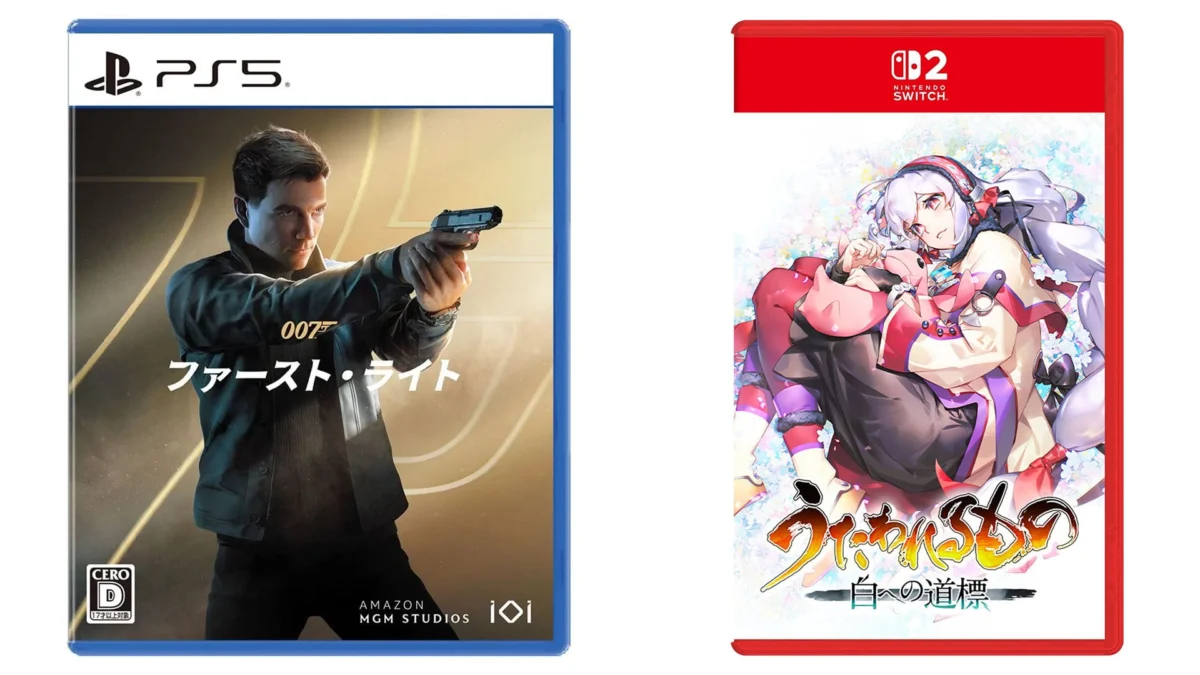
TOKYO, Japan – The Japanese video game market is buzzing with anticipation as a diverse lineup of titles prepares for release this week, signaling a vibrant period for both established franchises and promising new entries. Leading the charge are two highly awaited games: 007 First Light, set to launch on PlayStation 5, Xbox Series, and PC, and Utawarerumono: Past and Present Rediscovered, arriving for PlayStation 5, the rumored next-generation Nintendo console (referred to as Switch 2), and PC. These releases underscore a growing trend of cross-platform development and a strategic focus on next-generation hardware, even as the Nintendo Switch continues its formidable reign.
Beyond these marquee titles, the week promises a rich tapestry of gaming experiences. Fans can look forward to Mina the Hollower, an indie darling from the acclaimed developers of Shovel Knight, which will cast its retro-inspired spell across PlayStation 5, Xbox Series, Switch 2, Switch, and PC. Also making its debut is the enigmatic Schrodinger’s Call for Switch and PC, alongside the eagerly anticipated PlayStation 5 and Xbox Series iterations of the beloved farming simulation, Story of Seasons: Grand Bazaar. This confluence of genres, platforms, and developmental philosophies paints a compelling picture of the dynamic and ever-evolving Japanese gaming landscape.
A Week of Anticipated Debuts in Japan’s Gaming Landscape
This week’s release schedule is a testament to the diverse tastes of Japanese gamers and the strategic approaches of developers and publishers worldwide. The simultaneous launch of such varied titles across multiple platforms reflects a mature market that caters to both console loyalists and the rapidly expanding PC gaming demographic. The inclusion of the "Switch 2" in the release roster, while still a subject of much speculation regarding its official name and precise specifications, highlights the industry’s forward-thinking posture and its readiness to embrace future hardware iterations. This anticipation for next-generation Nintendo hardware, even in its unconfirmed state, speaks volumes about the brand’s enduring influence in the region.
The spotlight on 007 First Light is particularly significant. A new James Bond game, especially one targeting the most powerful current-generation consoles and PC, carries the weight of a legendary entertainment franchise. It suggests an ambitious project aiming to redefine the gaming experience for the iconic secret agent, moving beyond previous iterations that have seen mixed reception. Similarly, Utawarerumono: Past and Present Rediscovered represents a significant moment for fans of Japanese role-playing games and visual novels. The Utawarerumono series, known for its deep narratives, strategic combat, and distinctive art style, has cultivated a dedicated following. Its re-release on modern platforms, including the speculative Switch 2, indicates a commitment to preserving and revitalizing beloved intellectual properties for new audiences and enhanced technological capabilities.
The week’s supporting lineup is equally compelling. Mina the Hollower, with its distinct pixel-art aesthetic and challenging gameplay, is poised to capture the hearts of retro gaming enthusiasts and those who appreciate meticulously crafted indie titles. The game’s multi-platform release ensures maximum accessibility, a smart move for an indie title seeking broad appeal. Schrodinger’s Call remains shrouded in a certain degree of mystery, its evocative title hinting at a narrative-driven experience potentially steeped in scientific or philosophical themes, a niche that often finds a strong audience on Switch and PC. Finally, the next-gen versions of Story of Seasons: Grand Bazaar cater to the enduring popularity of life simulation games, offering enhanced visuals and performance for a title that has already proven its charm. These diverse offerings collectively ensure that Japanese gamers have an exciting array of choices, spanning action, strategy, narrative, and simulation genres, all while navigating the current and future technological frontiers of the industry.
Breaking Down the Release Schedule: Key Titles and Their Significance
The chronological breakdown of this week’s releases reveals a carefully orchestrated strategy by publishers to capture various segments of the market, from high-octane action to contemplative simulations.
007 First Light (PlayStation 5, Xbox Series, PC)
This title emerges as arguably the most high-profile release of the week. While specific details about its developer and precise gameplay mechanics remain under wraps, the mere mention of a new James Bond game instantly generates buzz. Historically, James Bond games have spanned genres from first-person shooters (like the seminal GoldenEye 007) to third-person action-adventure titles. First Light suggests an origin story or an early mission for the iconic spy, potentially delving into his formative years or the initial stages of his career as a Double-0 agent. The choice of next-generation consoles and PC as its primary platforms indicates a commitment to delivering a visually stunning and technologically advanced experience, leveraging the power of these systems for intricate stealth mechanics, dynamic combat, and perhaps expansive environments characteristic of the espionage genre. A new Bond game also carries significant cultural weight, tapping into decades of cinematic history and a global fanbase, aiming to translate that appeal into a compelling interactive narrative. Its success could herald a new era for the Bond gaming franchise, potentially establishing a blueprint for future installments.
Utawarerumono: Past and Present Rediscovered (PlayStation 5, Switch 2, PC)
For aficionados of Japanese narrative and strategic gameplay, this title is a significant event. The Utawarerumono series, developed by Aquaplus, is renowned for its unique blend of visual novel storytelling, tactical turn-based combat, and intricate world-building inspired by Ainu mythology and ancient Japanese culture. "Past and Present Rediscovered" strongly implies a compilation, remake, or remaster of earlier titles in the series, offering a chance for both long-time fans to revisit beloved stories with enhanced fidelity and for newcomers to experience the saga from its roots. The series often features compelling characters, political intrigue, and philosophical undertones, set against a backdrop of fantasy and warfare. Its release on PS5 and PC allows for modern graphical capabilities and performance, while the inclusion of the "Switch 2" speaks to the enduring popularity of the series on Nintendo platforms and the strategic foresight of targeting the next iteration of the incredibly popular hybrid console. This title aims to solidify the Utawarerumono legacy and expand its reach to a broader, more technologically advanced audience.
Mina the Hollower (PlayStation 5, Xbox Series, Switch 2, Switch, PC)
From Yacht Club Games, the celebrated indie studio behind the critically acclaimed Shovel Knight, Mina the Hollower arrives with considerable indie fanfare. This game promises a retro-inspired action-adventure experience, drawing heavily from the aesthetics and challenging gameplay of classic 8-bit and 16-bit titles, reminiscent of The Legend of Zelda: Link’s Awakening or early Castlevania entries. Players control Mina, a whip-wielding protagonist with unique burrowing abilities, exploring a gothic world filled with intricate dungeons, formidable bosses, and secrets. The game was successfully crowdfunded via Kickstarter, a testament to the trust and anticipation gamers place in Yacht Club Games’ ability to deliver polished, nostalgic experiences. Its wide multi-platform release – spanning current-gen, next-gen, and PC – ensures that Mina the Hollower will be accessible to nearly every type of gamer, allowing its unique charm and challenging mechanics to reach the broadest possible audience. This strategy is vital for indie developers looking to maximize their impact in a crowded market.
Schrodinger’s Call (Switch, PC)
The intriguing title Schrodinger’s Call immediately suggests a game steeped in mystery, choice, and perhaps quantum physics concepts. While specific genre details are sparse, titles with such philosophical leanings often manifest as visual novels, puzzle games, or psychological thrillers. These genres thrive on platforms like the Nintendo Switch, known for its strong library of narrative-driven experiences, and PC, which offers a robust platform for indie development and a receptive audience for experimental titles. The game could explore themes of parallel realities, ambiguous outcomes, and the impact of player decisions, echoing the famous thought experiment it’s named after. Its appeal lies in intellectual engagement and a potentially unique narrative structure, catering to players seeking more than just action-packed gameplay.
Story of Seasons: Grand Bazaar (PlayStation 5, Xbox Series versions)
The Story of Seasons franchise, a spiritual successor to the beloved Harvest Moon series, has carved out a significant niche in the life simulation genre. Grand Bazaar, originally a Nintendo DS title, is being re-released with dedicated versions for PlayStation 5 and Xbox Series. This move is indicative of the enduring popularity of farming and life-sim games, particularly in Japan, and the desire to bring classic entries to modern hardware with updated graphics, improved performance, and potentially quality-of-life enhancements. Grand Bazaar was notable for its unique "Bazaar" mechanic, where players actively participated in a weekly market to sell their goods, fostering a sense of community and economic engagement within the game world. These new-gen ports will allow a new generation of players, as well as nostalgic fans, to experience its charm with contemporary visual fidelity, further solidifying the franchise’s presence across all major platforms.
Triangle Strategy for PlayStation 5 (Physical Edition in Asia)
Beyond the digital storefronts, the physical release of Triangle Strategy for PlayStation 5 in Asia is also noteworthy. Developed by Square Enix and utilizing their stunning "HD-2D" graphical style (seen in Octopath Traveler), Triangle Strategy is a tactical role-playing game renowned for its branching narrative, moral dilemmas, and challenging strategic combat. Originally released on Nintendo Switch and PC, its arrival as a physical PS5 edition in Asia speaks to regional market preferences, where physical media often retains strong appeal for collectors and those with slower internet infrastructure. It also signals a continued strategy by Square Enix to expand the reach of its popular titles to more platforms, ensuring that more players can experience its critically acclaimed storytelling and gameplay.
The emphasis on digital-only releases for many titles, coupled with the prominence of direct top-ups for gacha games, further illustrates the dual nature of the modern Japanese gaming market. While traditional physical releases hold their ground, especially for high-profile or collector-focused titles, digital distribution and free-to-play models with in-app purchases (like gacha mechanics) represent a significant and growing revenue stream, deeply integrated into the daily gaming habits of millions.
The Evolving Japanese Gaming Market: Trends and Consumer Behavior
The slate of releases this week offers a microcosm of the broader trends shaping the Japanese gaming market, a unique ecosystem often seen as a bellwether for certain global gaming phenomena.
Platform Dominance and Shifting Sands: The Nintendo Switch maintains an undeniable stronghold in Japan, consistently topping sales charts and boasting an immense installed base. This enduring popularity is why even titles launching on next-gen consoles often include a Switch version, as seen with Mina the Hollower. However, the PlayStation 5 is steadily gaining traction, offering a robust platform for graphically intensive games and attracting a dedicated segment of core gamers. Microsoft’s Xbox Series, traditionally a niche player in Japan, is also making incremental gains, particularly among those seeking high-performance Western titles. The increasing presence of PC versions for Japanese releases, historically less common, underscores the rapid growth of PC gaming in the region, driven by esports, streaming culture, and the accessibility of digital storefronts. The mention of "Switch 2" in a release schedule, even if unconfirmed, is a powerful indicator of the industry’s readiness for Nintendo’s next hardware cycle, suggesting that developers are already planning for its capabilities and potential market impact.
Genre Preferences and Indie Resurgence: Japanese gamers have historically shown a strong preference for RPGs, visual novels, and life simulation games, categories well-represented this week by Utawarerumono and Story of Seasons. However, the success of titles like Mina the Hollower points to a vibrant and expanding indie scene, where innovative gameplay and unique artistic visions are finding receptive audiences. This indie boom, often facilitated by digital distribution, allows for greater creative freedom and provides diverse experiences beyond mainstream blockbusters. Gacha games, a uniquely Japanese mobile gaming phenomenon, continue to dominate a significant portion of the market, generating billions in revenue through their addictive gameplay loops and monetization strategies, as evidenced by the persistent demand for direct top-ups.
Digital vs. Physical: A Hybrid Market: While digital distribution is undeniably on the rise globally, Japan still holds a strong affinity for physical media. Collectors, in particular, value the tangible aspect of owning game cartridges and discs. The physical release of Triangle Strategy for PS5 in Asia highlights this preference in certain regions and for specific types of games. However, the prevalence of digital-only releases and the focus on digital storefronts for indie titles and gacha game top-ups illustrate a clear shift towards convenience and instant access. Publishers are increasingly adopting a hybrid strategy, offering both physical and digital options to cater to varying consumer preferences and market demands.
Cross-Platform Development as a Necessity: The multi-platform strategy employed by almost all developers this week is no longer a luxury but a necessity. Developing for PS5, Xbox Series, Switch, and PC simultaneously maximizes reach, diversifies revenue streams, and mitigates risks associated with single-platform dependency. This approach, however, comes with its own challenges, including optimizing performance across wildly different hardware specifications and navigating complex certification processes. Yet, the benefits of reaching a global audience across all major gaming ecosystems often outweigh these hurdles.
The Global Lens: Japanese releases are no longer insular. The increasing speed of localization and the simultaneous worldwide release strategies for many titles mean that the Japanese market is more integrated than ever into the global gaming calendar. Western developers are actively seeking to penetrate the Japanese market, while Japanese developers are more keenly aware of international tastes. This week’s lineup, with a Western-developed franchise like James Bond alongside deeply Japanese IPs, perfectly encapsulates this global interplay.
Developer Insights and Publisher Strategies
While direct "official responses" in the traditional sense are not part of the provided snippet, we can infer common strategies and sentiments from developers and publishers based on the types of releases and their distribution.
The Multi-Platform Imperative: Developers like Yacht Club Games (for Mina the Hollower) and publishers of Utawarerumono and 007 First Light clearly understand that maximizing audience reach is paramount. By launching across PS5, Xbox Series, Switch (and Switch 2), and PC, they are casting the widest possible net. This strategy isn’t just about sales volume; it’s about building communities around their games across different platforms, ensuring longevity through diverse player bases. The decision to bring Story of Seasons: Grand Bazaar to next-gen consoles further illustrates the desire to keep beloved IPs relevant and accessible to new audiences on modern hardware. This often involves significant investment in porting and optimization teams, ensuring a consistent and high-quality experience regardless of the chosen platform.
Embracing Next-Gen and Future-Proofing: The inclusion of "Switch 2" alongside current-gen consoles is a forward-looking strategy. Even without an official announcement from Nintendo, developers are anticipating and planning for the next wave of hardware. This "future-proofing" ensures that their titles will be ready for the new console generation from day one, potentially gaining an early mover advantage. For PlayStation 5 and Xbox Series titles, the focus is on leveraging advanced graphical capabilities, faster loading times (thanks to SSDs), and enhanced gameplay mechanics made possible by the increased processing power. Developers are keen to showcase what these powerful machines can do, pushing the boundaries of visual fidelity and interactive experiences.
Targeting Niche Markets and Leveraging Digital Distribution: The existence of titles like Schrodinger’s Call for Switch and PC, or the focus on gacha game top-ups, highlights a sophisticated understanding of niche markets. Not every game needs to be a global blockbuster; many thrive by catering to specific tastes. Digital-only releases minimize distribution costs and allow smaller studios or experimental titles to find their audience without the logistical hurdles of physical retail. The robust digital infrastructure of PlayStation Network, Nintendo eShop, and PC platforms makes this feasible. For gacha games, the direct top-up mechanism is a finely tuned monetization strategy, catering to a highly engaged user base that values convenience and immediate access to in-game currency.
Marketing Through Partnerships and Incentives: The mention of Gematsu’s affiliate partnership with Play-Asia and the "GEMATSU2025" coupon code illustrates common marketing and distribution strategies in the gaming media landscape. Affiliate links provide a revenue stream for news outlets, incentivizing them to cover specific products, while coupon codes offer a direct benefit to consumers, encouraging purchases. This symbiotic relationship between gaming journalism, digital retailers, and consumers is a well-established model, allowing for targeted promotion and sales generation, especially important for import-focused markets like Japan. It’s a subtle but effective way for publishers to extend their reach through trusted media partners.
Implications: Shaping the Future of the Japanese Gaming Landscape
This week’s diverse array of releases carries significant implications for the future trajectory of the Japanese gaming industry, impacting consumers, developers, and the broader economic and cultural landscape.
Enhanced Consumer Choice and Accessibility: For gamers, the immediate implication is an unparalleled breadth of choice. From high-stakes espionage in 007 First Light to the charming pastoral life of Story of Seasons: Grand Bazaar, and the retro-infused adventure of Mina the Hollower, there is something for almost every palate. The multi-platform approach ensures that these experiences are accessible to a wider audience, regardless of their preferred gaming hardware. This trend empowers consumers, fostering a dynamic market where developers must constantly innovate to capture attention. The continued availability of titles across multiple generations (e.g., Switch and Switch 2) also offers flexibility, allowing players to transition to new hardware at their own pace.
Increased Competition and the Drive for Innovation: For developers and publishers, this week’s releases signal an increasingly competitive market. With a plethora of titles vying for attention across multiple platforms, innovation becomes paramount. Studios must not only deliver technically proficient games but also offer unique gameplay hooks, compelling narratives, or fresh takes on established genres. This pressure can lead to greater creativity and a higher standard of quality across the industry. The success of indie darlings like Mina the Hollower encourages smaller studios to take risks, knowing that there’s a hungry audience for well-crafted, original experiences.
Economic Impact and Revenue Diversification: The sheer volume and variety of releases contribute significantly to the economic vitality of the gaming sector. Revenue streams are diversified across traditional game sales (physical and digital), in-game purchases (gacha top-ups), and platform royalties. The affiliate marketing model, as seen with Gematsu and Play-Asia, also contributes to a broader ecosystem of content creators and retailers, generating revenue beyond direct game sales. The anticipated launch of a "Switch 2" will likely trigger a new hardware cycle, boosting sales for console manufacturers, accessory makers, and software developers alike.
Technological Advancement and Industry Benchmarks: The release of games targeting PlayStation 5, Xbox Series, and the prospective "Switch 2" serves as a benchmark for technological advancement. These titles will push the boundaries of graphics, processing power, and user experience, demonstrating what next-generation hardware is capable of. Developers will learn from these early next-gen releases, refining their tools and techniques for future projects. The demand for higher fidelity and more immersive experiences will continue to drive innovation in game engines, rendering technologies, and interactive design.
Cultural Significance and Global Integration: Japanese video games hold immense cultural significance, both domestically and internationally. Titles like Utawarerumono not only entertain but also subtly weave in elements of Japanese culture, folklore, and storytelling traditions. The increasing global reach of these titles means that Japanese cultural exports continue to influence and shape global popular culture. Conversely, the strong presence of Western IPs like 007 First Light in the Japanese market signifies a growing integration of global gaming trends, creating a more homogenous, yet still distinctly nuanced, international gaming culture.
Future Outlook: Looking ahead, this week’s releases suggest several trends will continue to define the Japanese gaming landscape. Multi-platform development will remain the norm, with an emphasis on seamless experiences across different hardware. The indie scene will likely flourish further, fueled by digital distribution and community support. The balance between digital and physical sales will continue to evolve, with digital gaining ground but physical retaining its niche. And finally, the anticipation for Nintendo’s next-generation console, whatever its official name, will loom large, promising a new era of innovation and competition in the fiercely dynamic Japanese video game market. This week’s launches are not just individual events; they are interconnected threads in the rich tapestry of an industry constantly reinventing itself.











No comments yet. Be the first to join the conversation!