For the dedicated comic book aficionado, the weekly pilgrimage to the local comic shop is often a mission of precision. Pull lists are checked, pre-orders are secured, and the agenda is set. However, there remains an undeniable, childlike thrill in wandering the aisles, letting one’s gaze drift across the racks to discover a title that demands attention purely through the strength of its visual presentation. A striking cover acts as a silent ambassador for the story within; it is the difference between a "must-read" and a "maybe next time."
In this installment of Judging by the Cover, we highlight the most evocative, technically proficient, and narratively intriguing covers released this week. Comics editor Chris Coplan breaks down these artistic statements, analyzing how they set the tone for their respective series and why they are currently commanding our attention.
Absolute Martian Manhunter #12: A Starlit Farewell
Variant cover by Sebastián Fiumara
As we reach the conclusion of Absolute Martian Manhunter, there is a palpable sense of melancholy. While the creative team of Deniz Camp and Javier Rodríguez have earned the right to bring their vision to a close on their own terms, one cannot help but compare this run to other "Absolute" titles that have stretched well into their twenties.

Sebastián Fiumara’s variant cover serves as a masterful, gritty bookend to this surreal buddy-cop saga. Where Rodríguez’s interiors lean into a vibrant, experimental aesthetic, Fiumara opts for a stark, somber reality. The focus here is on the "Psychedelic Alien Powers," rendered with an intensity that suggests either a triumphant release or a tragic exhaustion. The inclusion of the necktie—a small, humanizing detail—anchors the cosmic spectacle in the mundane, asking the reader to consider whether our hero is ascending or falling apart. It is a poignant, thoughtful, and earnest final salute.
Punisher #6: The Renaissance of Violence
Cover by David Marquez and Guru-eFX
The imagery of a bloodied Frank Castle has become a trope so common it borders on a cliché. Yet, David Marquez and colorist Guru-eFX manage to elevate this familiar sight into something approaching high art.
Frank’s face, usually contorted in rage, is here rendered with a serene, almost beatific quality. He looks less like a vigilante in the throes of battle and more like a subject of a Renaissance portrait. The blood, far from being mere gratuitous gore, is applied with the deliberate precision of a master painter, creating a visual narrative of sacrifice and finality. If this truly is the end of the line for the Punisher, this cover provides a haunting, beautiful tombstone. It challenges the reader to look past the violence and find the humanity—or at least the tragedy—at the center of the character.

Power Rangers Unlimited #1: The Rush of Nostalgia
Variant cover by Alessio Zonno
For those who grew up in the mid-90s, the Power Rangers franchise is etched into the collective consciousness as a whirlwind of bright spandex and rubber-suit monster brawls. Alessio Zonno’s cover for Power Rangers Unlimited #1 acts as a sensory trigger for that specific era of pop culture.
Even for a reader uninitiated in the expanded lore of the current Power Rangers comics, the cover communicates the core appeal with absolute clarity: organized chaos, giant monsters, and high-stakes heroism. The intricate detail on the updated helmet designs suggests a modern maturity, yet the energy remains as infectious as it was in 1994. It is a masterclass in visual communication—promising an action-packed experience that rewards the loyalist while inviting the newcomer into the fray.
Nights #19: A Study in Uncanny Transformation
Cover by Luigi Formisano

After an eighteen-month absence from the present-day timeline, Nights #19 returns to the central conflict between Gray and Vince. Luigi Formisano’s cover perfectly captures the tension of this reunion.
Vince, now navigating the harrowing realities of vampirism, displays an expression that is deeply unnerving—balanced between fear and a forced, gentle familiarity. Gray, by contrast, exudes a raw, world-breaking power. The composition highlights the irreparable shift in their relationship. Can love truly survive such a drastic biological and existential metamorphosis? Formisano’s work forces the reader to confront this question immediately, suggesting that while the love remains, the ground upon which these characters stand has been permanently altered.
Killer Influences #1: The Norman Rockwell of Crime
Variant cover by David Lapham
The premise of Killer Influences—a journalist embedding with a serial killer to boost his own career—is already ripe for dark satire. Writer Joey Esposito has cited influences ranging from hardboiled novelist Lawrence Block to the chaotic world of Grand Theft Auto VI.

David Lapham’s variant cover realizes this vision with terrifying charm. It is essentially a blood-spattered Norman Rockwell painting. The visual tension between the "down-home" Americana aesthetic and the visceral reality of crime creates a jarring, disarming effect. By blending the quaint with the depraved, Lapham captures the exact frequency of this book: a story that is humorous, deadly serious, and deeply uncomfortable all at once.
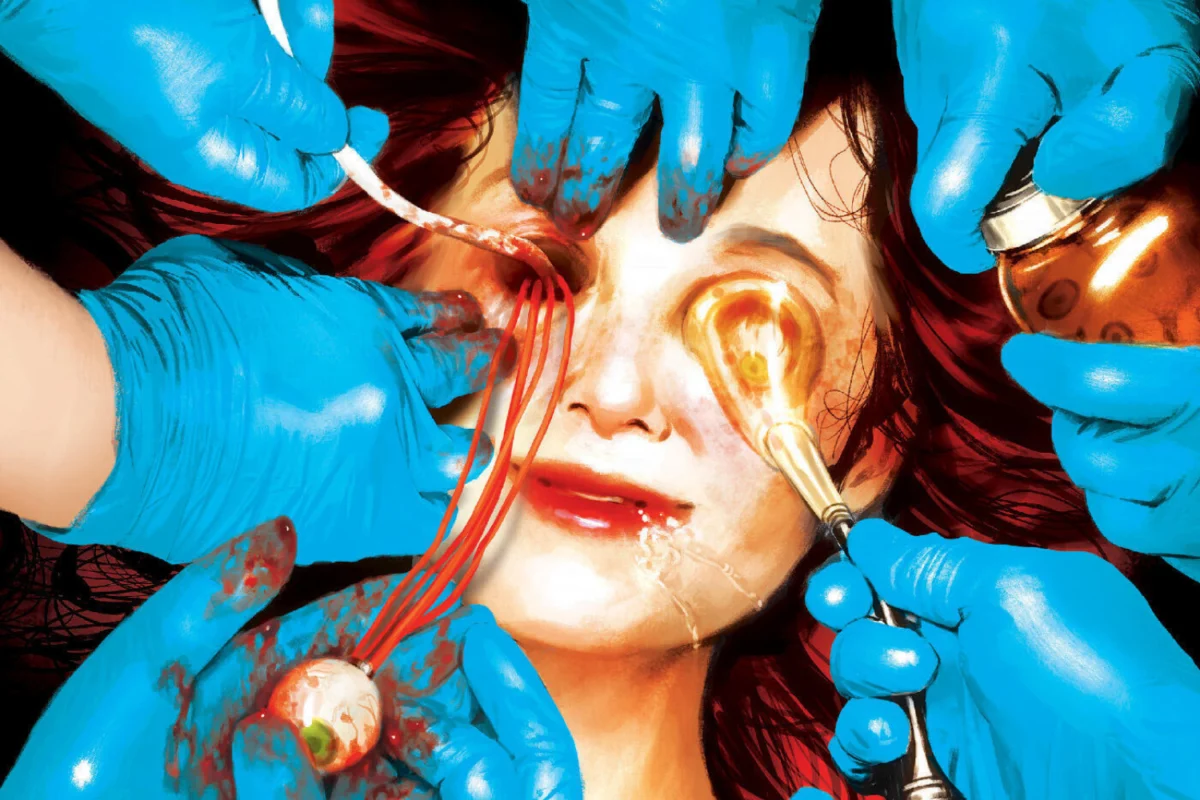
Cruel Universe #12: The Anatomy of Body Horror
Cover by Miguel Mercado
Body horror is a delicate tightrope walk, and Miguel Mercado’s cover for Cruel Universe #12 manages to stay balanced while leaning over the abyss. The imagery—featuring the removal of an eye—is undeniably repulsive, yet it commands a morbid curiosity.
Beyond the shock value, the piece is a triumph of technical skill. The rendering of the latex gloves, the nuanced coloring of the biological structures, and the deliberate framing all point to a high-level understanding of the medium’s capacity for visceral impact. In comics, body horror acts as a bridge between the clinical and the existential. Mercado’s work is a reminder that the genre is most effective when it forces us to question the fragility of our own physical forms.

Batgirl #21: The Memory Plunge
Cover by David Talaski
Cassandra Cain has long been a character defined by the silence of her mind and the violence of her past. David Talaski’s cover for Batgirl #21 utilizes the "Memory Plunge" trope to devastating effect.
The visual of Cass climbing out of her own eyes is surreal, yet emotionally resonant. It symbolizes the internal struggle of a character who has lived entirely within her own consciousness, desperate to find a way to communicate with the world. The inclusion of forget-me-nots adds a layer of botanical symbolism that elevates the piece from a mere genre exercise to a poignant character study. It is a harrowing, beautiful invitation to look inside the head of a hero who has always been a mystery.
The Mortal Thor #12: Unsettling Realism
Cover by Alex Ross

In a rare and welcome departure from his usual heroic iconography, Alex Ross delivers a cover that is physically and existentially unsettling. Following the theme of "eye-based" imagery seen in other titles this week, Ross provides a grounding, realistic counterpart to Talaski’s dreamier approach.
Where others might use abstraction, Ross uses his signature technical prowess to render the grit, wrinkles, and raw textures of a face in distress. This is not a "superhero" cover; it is a confrontation. By stripping away the mythological sheen often associated with the character, Ross forces the reader to focus on the messy, human, and deeply flawed dynamics of the cast. It is a stark reminder that even in a world of gods, the most painful wounds are the ones we carry inside.
The Beast of Borikén #1: Nature and Malice
Variant cover by Naomi Franq
The Beast of Borikén is a significant cultural touchstone, blending Puerto Rican history with the visceral thrill of the supernatural. Naomi Franq’s variant cover perfectly encapsulates the dual nature of the Chupacabra as presented by writer Julio Anta: a creature that is simultaneously a monster of carnage and a being of profound empathy.

The detail in the creature’s hair, the unsettling "Kubrick stare," and the slight, unnatural tilt of the head all serve to make the character feel disturbingly sentient. The color palette, dominated by an unnatural, sickly green, disrupts the reader’s sense of balance, mirroring the creature’s own liminal existence between man and beast. It is a compelling piece that captures the essence of a series that seeks to redefine a legendary monster.
Conclusion: The Lasting Power of the Cover
Whether it is the gritty realism of Fiumara’s Martian Manhunter or the unsettling psychological depth of Talaski’s Batgirl, this week’s selection of covers proves that the front page is more than just marketing—it is the soul of the issue. These artists serve as the gatekeepers of our reading experience, offering a glimpse into the creative labor, the thematic weight, and the pure, unadulterated excitement that awaits within the pages. As we continue to navigate the landscape of modern comics, one thing remains clear: the art of the cover is alive, well, and more provocative than ever.