

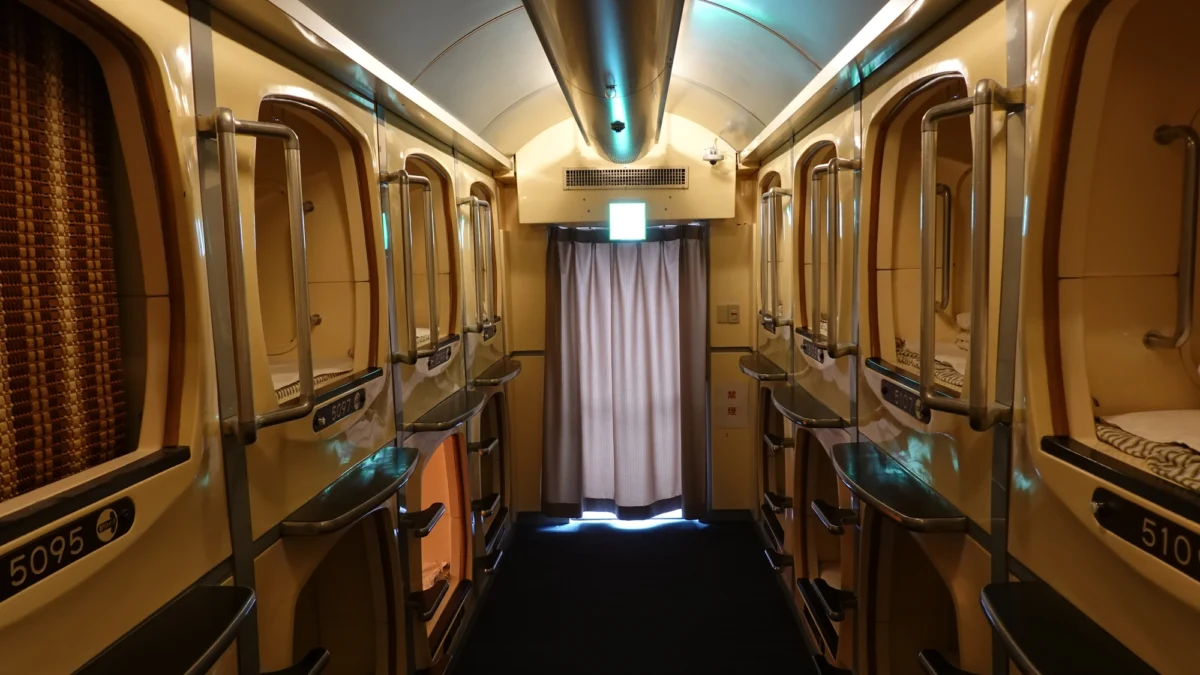
For decades, the Japanese capsule hotel has served as a cultural shorthand for the country’s high-tech, space-starved urban efficiency. To the uninitiated, these stacked, fiber-reinforced plastic (FRP) shells—often compared to morgue drawers—represent a dystopian future or a quirky travel curiosity.
For the average adult professional, the concept has long been a "hard pass." They are perceived as the domain of the twenty-something backpacker or the salaryman who has missed the last train home and is too exhausted to care about the lack of soundproofing. Yet, as global tourism to Japan surges and traditional hotel prices skyrocket, these compact accommodations are undergoing a significant evolution. My recent stay at a First Cabin property in Kyoto proved that while the "capsule" label still carries baggage, the reality of budget lodging in Japan is far more nuanced—and, in some cases, surprisingly comfortable—than the stereotypes suggest.
The Origins: From Expo Innovation to Transit Necessity
The history of the capsule hotel is inextricably linked to the rapid modernization of post-war Japan. The concept was pioneered by legendary architect Kurokawa Kishō, one of the leading figures of the Metabolist movement. Kishō, who viewed buildings as organic, evolving structures, premiered the "capsule housing" concept at the 1970 Osaka Expo. His vision was to create modular living spaces that could be swapped or updated like components in a machine.
The transition from architectural theory to a hospitality industry staple occurred on February 1, 1979, when operator Nakano Yukio opened the Capsule Inn Osaka. Originally, these units served as a convenient solution for customers of his saunas and cabaret clubs—a place to crash without the hassle of a commute. However, the concept hit its stride during the transit crises of the late 1970s and 1980s. With a culture centered around rigid work hours and a train system that shut down before midnight, the capsule hotel became a lifeline for the weary salaryman.
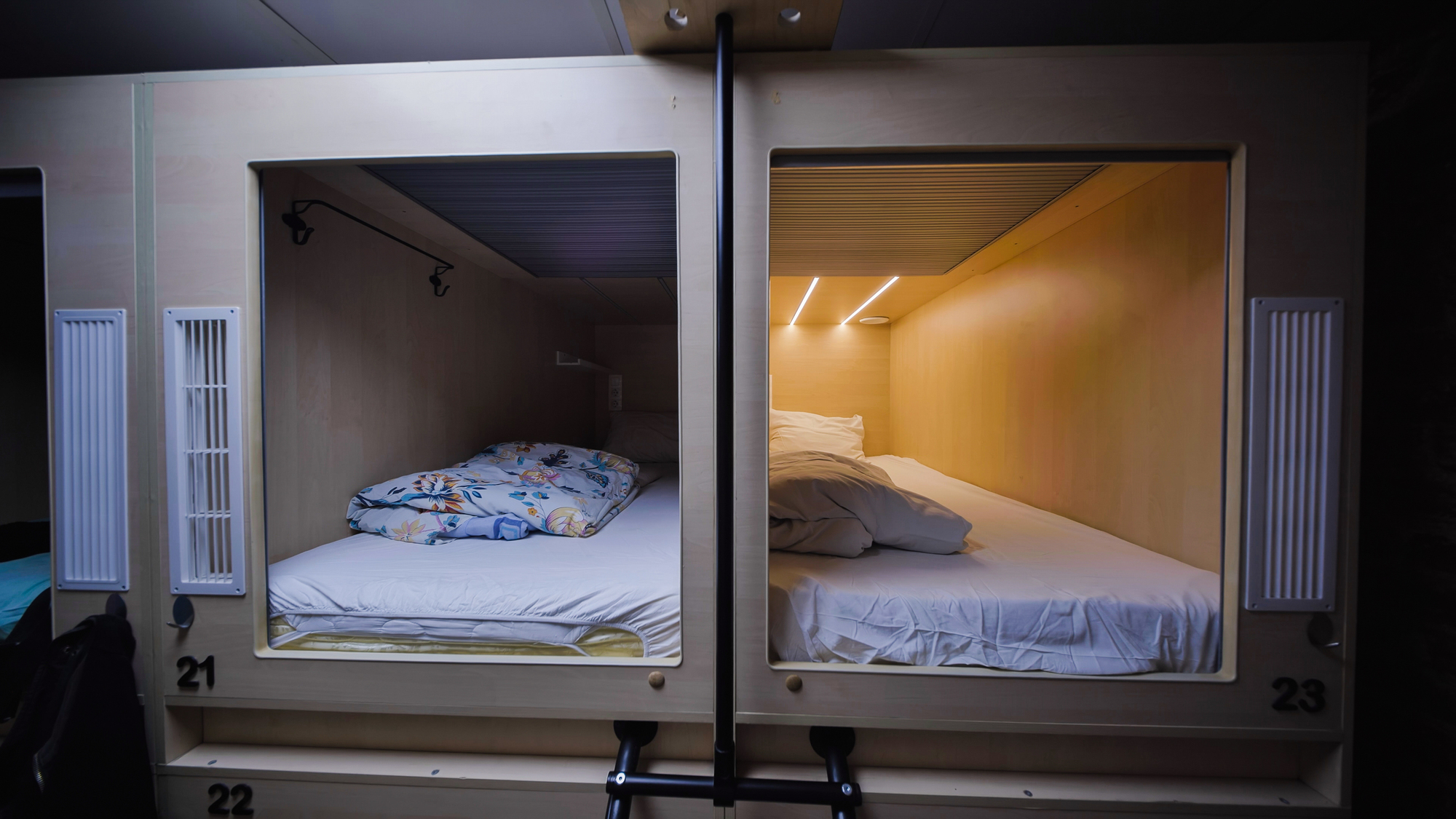
For decades, these hotels remained almost exclusively male-only, reflecting the patriarchal structures of the Japanese workplace. It was not until the 2010s, driven by an influx of female solo travelers and a shift in domestic demographics, that women-only facilities and gender-segregated floors became the industry standard.
First Cabin: A Modular Evolution
During a recent business trip to Kyoto, I found myself navigating the increasingly expensive landscape of Japanese hospitality. With standard hotel prices in major hubs like Kyoto and Tokyo reaching record highs, I turned to First Cabin, a chain that seeks to bridge the gap between the utilitarian capsule and the comfort of a standard hotel room.
Unlike traditional capsule hotels, which offer a monolithic, one-size-fits-all pod, First Cabin borrows the nomenclature of the airline industry. They offer "Premium Economy" (the classic, double-stacked capsule), "Business Class," and "First Class" cabins. The distinction is not merely cosmetic; it is a fundamental shift in the definition of personal space.
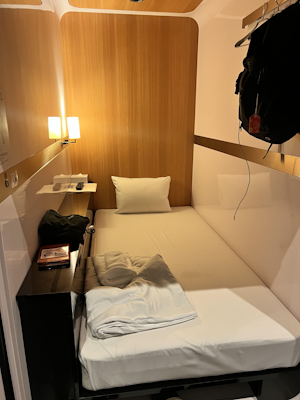
My experiment began in a Business Class cabin. Measuring 1.2m x 2.1m x 2.1m, these units allow a guest to stand upright—a luxury in the world of pod-hotels. However, even with the verticality, the footprint felt stifling. Simple tasks, like organizing a suitcase or changing clothes, required a "Tetris-like" coordination of limbs. After one night of feeling claustrophobic, I opted for a 1,000 yen (roughly $6) upgrade to a First Class cabin.
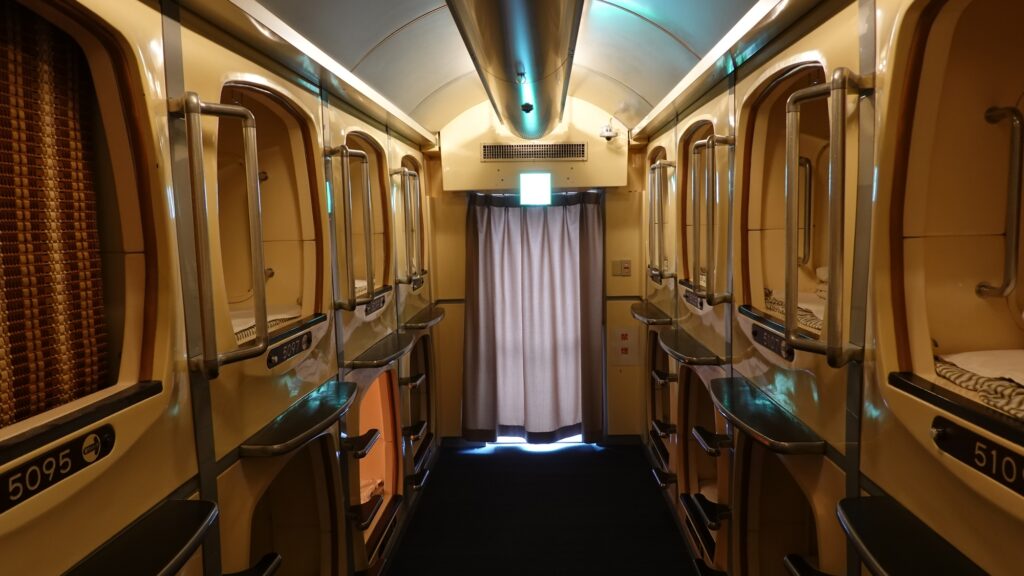
The First Class upgrade provided a 2.1m x 2.1m x 2.1m space. While the additional meter seems negligible in a vacuum, the impact on quality of life was profound. I could set up a laptop on a dedicated side table, stand, and stretch without fear of collision. For $31 a night, the experience felt less like a "crash pad" and more like a minimalist, efficient boutique room.
The Reality of the Shared Facility
The success of a capsule stay, however, depends entirely on the surrounding infrastructure. First Cabin Kyoto Nijōjō excelled in its communal offerings. The facility provided a high-end lounge with complimentary coffee and tea, and—perhaps most importantly—an artificial onsen. By piping in water from a nearby hot spring, the hotel offered a spa-like experience that served as a necessary psychological escape from the confines of the room.
Location is the primary lever of value for these hotels. Being situated near the historic Nijō Castle, with easy transit access to the vibrant Shijō-kawaramachi shopping district, meant that the "room" was merely a base of operations rather than a destination.
The Inherent Downsides: The "Hostel" Reality
Despite the innovations in room size, the core limitation of the capsule model remains: the Japanese Hotel Business Act. Under this legislation, these facilities are categorized as kan-i shukusho (simple lodging). To comply with stringent fire safety regulations, these rooms cannot have traditional, solid, locking doors.
Instead, guests are separated from the hallway by screens or accordion-style partitions. The acoustic implications are significant. If a fellow guest snores, talks on their phone, or even rustles their plastic bags, you will hear it. During my stay, a neighboring guest’s snoring was audible through the thin walls, acting as a reminder that privacy is a luxury not afforded by the price point.
Furthermore, there is a pervasive "dormitory" culture that is difficult to police. Despite rules requesting silence in the sleeping quarters, travelers often ignore these boundaries. As a guest, you must be prepared to act as a self-appointed peacekeeper, or, more realistically, invest in high-quality earplugs and an eye mask. These items are often provided by the front desk, acknowledging that the hotel’s "walls" are more suggestion than sound barrier.
Implications for the Future of Travel
The rise of the "premium" capsule hotel is a direct response to the current state of Japanese tourism. As the yen remains attractive to foreign investors and tourists, and domestic labor costs rise, traditional business hotels—which once offered compact but private rooms for around 6,000 yen—are now frequently exceeding 10,000 yen ($61).
This price floor is forcing a bifurcation in the market:
- The Rise of Internet Cafes: For the truly budget-conscious or the displaced worker, the "Kaikatsu Club" model is becoming the new baseline. These net cafes provide lockable, private booths, showers, and unlimited manga, often for less than $25 a night.
- The "Flashpacker" Market: Brands like First Cabin are successfully capturing the traveler who wants to save money but refuses to sleep in a literal box. By offering tiers of space, they are redefining the capsule hotel from a "last resort" into a viable, mid-range lodging strategy.
Conclusion
Is the capsule hotel experience for everyone? Certainly not. If you value absolute privacy, soundproofing, or the ability to lounge in a bathrobe for an entire afternoon, the limitations of a "simple lodging" facility will drive you to madness. However, for the solo traveler or the business person who needs a clean, safe, and centrally located place to sleep, the evolution of the capsule is an undeniable win.
The capsule hotel is no longer just a relic of the 1979 transit crisis. It has matured into a sophisticated, albeit flawed, solution to the challenges of modern urban density. If you choose your chain carefully and manage your expectations regarding noise, it remains one of the most efficient ways to experience Japan on a budget without feeling like you are trapped in a morgue.
Summary of Lodging Alternatives in Japan
| Lodging Type | Average Cost (USD) | Privacy Level | Best For |
|---|---|---|---|
| Traditional Capsule | $15–$25 | Low | Short-term, solo travelers |
| First Cabin / Premium | $25–$45 | Medium | Budget business/solo travelers |
| Business Hotel | $60–$120 | High | Professionals, couples |
| Internet Cafes | $15–$25 | Medium-Low | Emergency, ultra-budget |
| Ryokan | $150+ | High | Cultural experience seekers |
Sources: Capsule Architecture Project; LIFULL HOME’S PRESS; First Cabin HD Corporate Reports; Tokyo Metropolitan Government Welfare Bureau.











