The landscape of high-performance system memory has shifted once again with the retail debut of G.Skill’s new Trident Z5 NeoX series. Representing the pinnacle of the AMD EXPO (Extended Profiles for Overclocking) ecosystem, these Ultra Low Latency (ULL) kits were marketed by industry stakeholders as a revolutionary step forward for enthusiasts seeking to extract every possible cycle of performance from their AM5 platforms. However, as these modules hit the shelves, a stark reality has emerged: the “effectively the same price” narrative promised by earlier industry discourse has been replaced by a significant, and often staggering, retail premium.
Main Facts: The Arrival of Trident Z5 NeoX
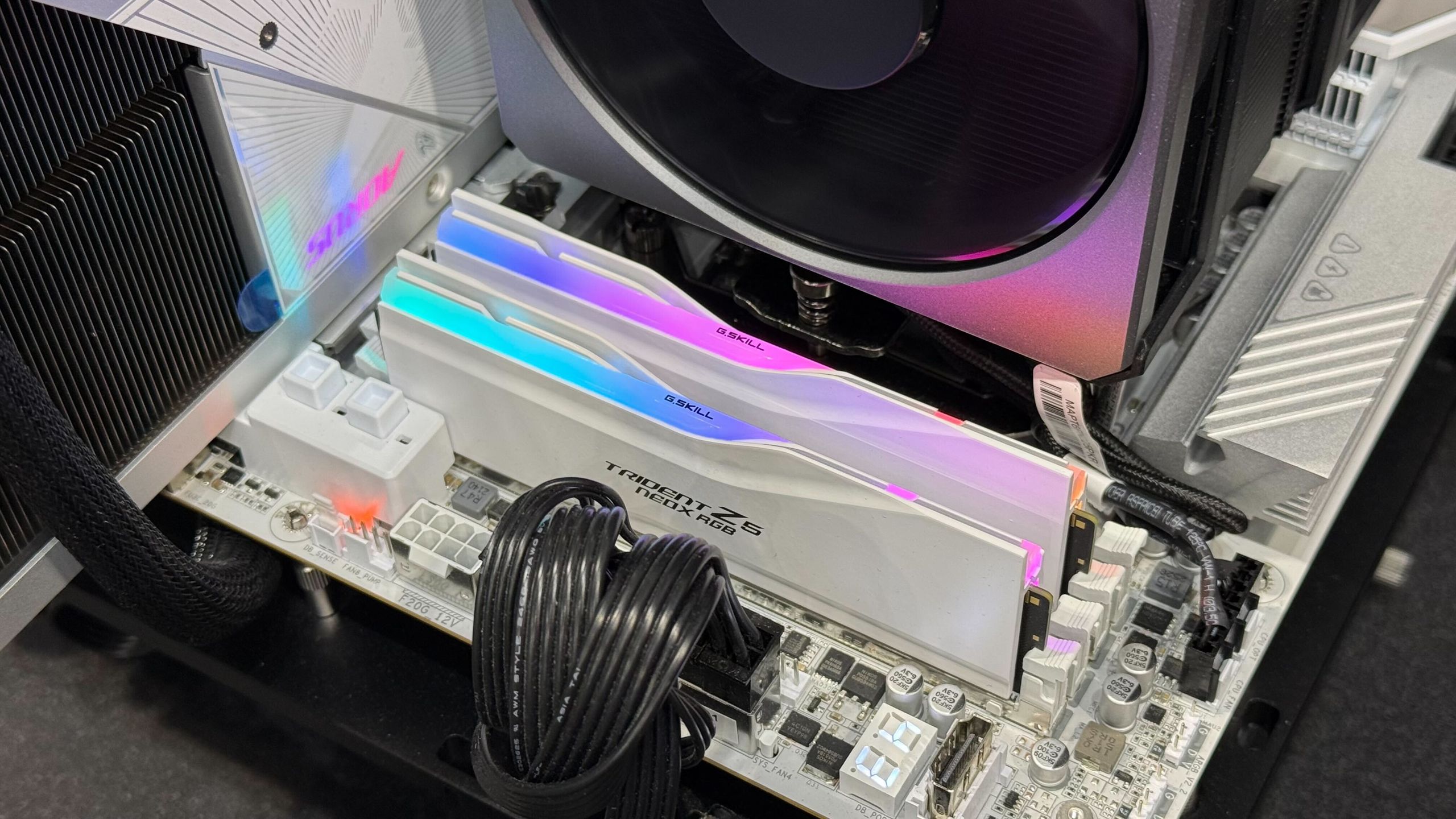
G.Skill has officially introduced the Trident Z5 NeoX series, a lineup specifically engineered to take advantage of the new ULL (Ultra Low Latency) specifications enabled by AMD. These kits, designed primarily for the latest Ryzen processors, aim to solve the persistent latency issues that have characterized DDR5 adoption compared to its DDR4 predecessor.
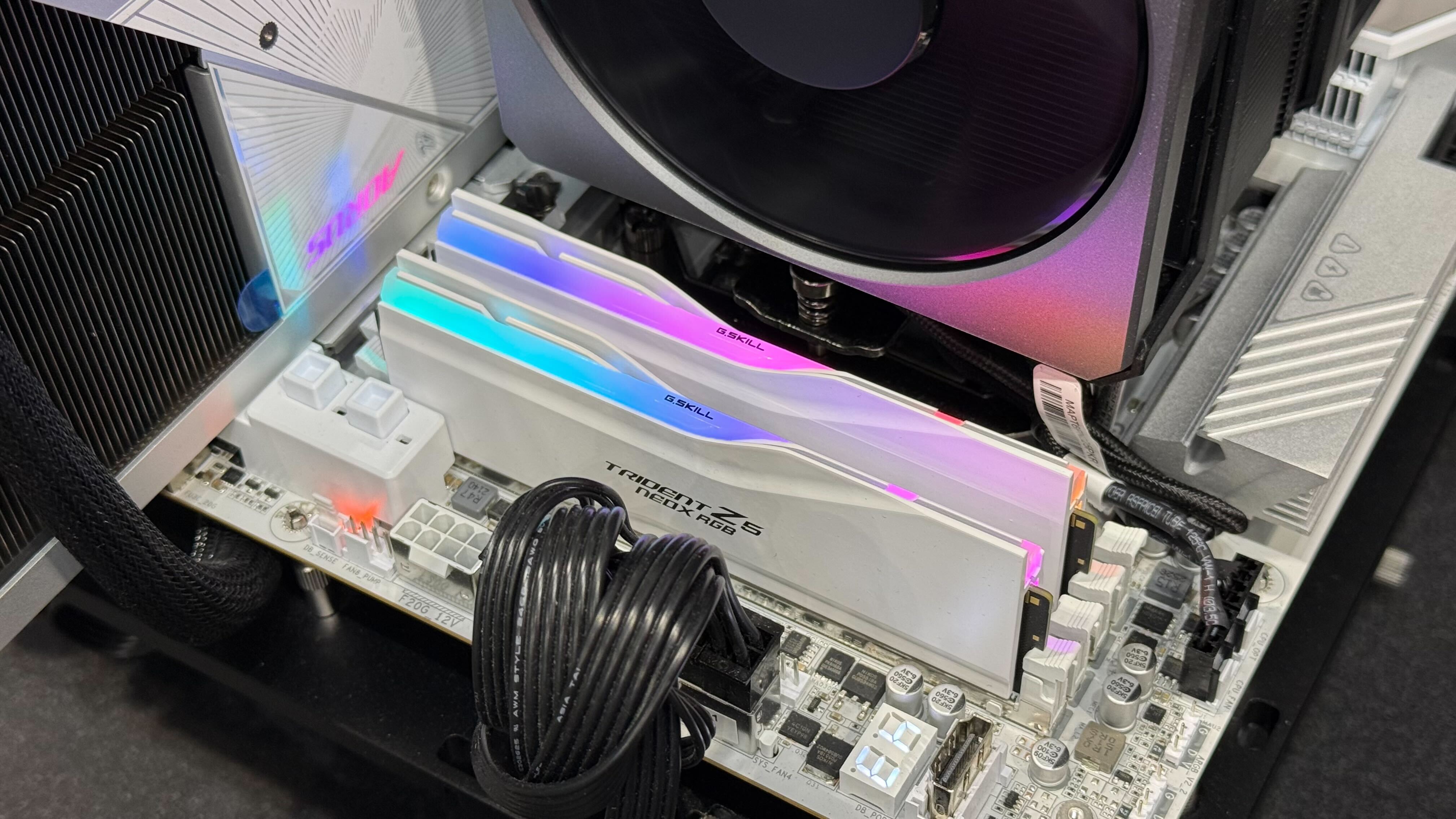
The Trident Z5 NeoX series is available in three distinct aesthetic finishes: standard black, a sleek glossy black, and a clean white, ensuring that the modules can be integrated into a wide variety of high-end build themes. While official global product pages from G.Skill remain sparse, the kits have already appeared on major retail platforms like Newegg, primarily in 32GB (2x16GB) dual-channel configurations running at a base speed of DDR5-6000.
The primary differentiator here is not merely the frequency, but the sub-timing optimizations—specifically the reduced tRAS—that allow these sticks to perform with significantly lower latency than standard kits. However, this level of engineering comes at a cost that far exceeds standard market pricing.
Chronology of the EXPO ULL Development
To understand the significance of these modules, one must look back at the trajectory of DDR5 development. When DDR5 first launched, it faced criticism for having higher latency than the mature DDR4 modules that preceded it. While DDR5 offered vastly superior bandwidth, the latency penalty felt by gamers and power users was a consistent point of contention.
AMD’s introduction of the EXPO technology was a major step in simplifying the overclocking process for Ryzen users. Building on this, the industry began discussing "Expanded Profiles." These profiles were designed to allow memory makers to move beyond the four primary timings (CL, tRCD, tRP, and tRAS) that have traditionally defined RAM performance. By including granular control over secondary and tertiary sub-timings, manufacturers could finally squeeze more efficiency out of the memory controller.
The "ULL" moniker was born from this initiative. In the months leading up to the release, AMD and its partners suggested that this technology would be accessible to the mainstream market, with early reports indicating that these kits would be priced competitively against existing, high-performance DDR5 options. As of late 2024, the kits have officially transitioned from the prototype and announcement phase to the retail phase, though the pricing structure has diverged sharply from the initial expectations of parity.
Supporting Data: A Comparison of Costs and Timings
When analyzing the market impact of the Trident Z5 NeoX, the numbers reveal a dramatic departure from standard pricing models. A direct comparison between the NeoX (ULL) series and the standard Trident Z5 Neo series highlights the "enthusiast tax" being levied on these low-latency chips.
Comparative Price/Performance Analysis (32GB Kits)
| Memory Kit | MSRP | Primary Timings | Voltage | Premium vs. Standard |
|---|---|---|---|---|
| Trident Z5 NeoX | $1,099.99 | 26-36-36-32 | 1.35V | 57% |
| Trident Z5 Neo | $699.99 | 26-36-36-96 | 1.45V | Base |
| Trident Z5 NeoX | $999.99 | 28-36-36-32 | 1.35V | 79% |
| Trident Z5 Neo | $559.99 | 28-36-36-96 | 1.40V | Base |
| Trident Z5 NeoX | $619.99 | 30-38-38-32 | 1.35V | 14% |
| Trident Z5 Neo | $544.44 | 30-38-38-96 | 1.35V | Base |
| Trident Z5 NeoX | $549.99 | 36-36-36-76 | 1.35V | 9% |
| Trident Z5 Neo | $499.99 | 36-36-36-96 | 1.35V | Base |
The data shows that at the extreme end of the spectrum—specifically the CL28 variant—consumers are looking at an 80% price increase compared to the standard Trident Z5 Neo. Even at more moderate latency settings, the premium remains double-digit, signaling that the ULL branding carries a significant financial weight.
The Architecture of Optimization
Why are these kits so expensive? The answer lies in the technical constraints of DDR5. Unlike DDR4, which utilized a single 64-bit channel, DDR5 employs two independent 32-bit subchannels. This architecture, combined with a doubling of the burst length (from BL8 to BL16), means that memory rows must stay open for longer periods to complete data transfers. This results in the notoriously high tRAS values seen in many DDR5 modules.
G.Skill’s Trident Z5 NeoX kits effectively "cheat" these architectural limitations through meticulous binning. By isolating memory chips that are capable of stable, high-speed operation at lower voltages and much tighter timings, G.Skill is providing a product that behaves more like the high-performance DDR4 of the past. The tRAS values in these NeoX kits are up to 67% lower than standard counterparts.
However, binning is a laborious process. It requires extensive testing of individual DRAM dies to ensure they can handle the tighter secondary timings (such as tREFI, tRRDS, and tWR) that are not even listed on the box. The consumer is essentially paying for the thousands of hours of R&D and the rigorous sorting process that guarantees these specific performance metrics out of the box.
Official Responses and Market Positioning
While G.Skill has not issued a formal press release explaining the discrepancy between initial pricing rumors and current retail reality, industry analysts suggest that this is a classic case of supply-side constraints meeting high-end enthusiast demand. The manufacturing yield for chips capable of maintaining such tight timings at 1.35V is significantly lower than that of standard-spec chips.
AMD has positioned the EXPO ULL feature as a way for motherboard manufacturers and memory vendors to differentiate their premium product stacks. By allowing for deeper sub-timing tweaks, they have created a "halo" product segment. For the average user, these kits are largely unnecessary; for the competitive overclocker or the extreme enthusiast, they represent a "guaranteed" performance ceiling that saves the user the headache of manual sub-timing configuration.
Implications for the Future of Memory
The arrival of these kits has several long-term implications for the PC hardware industry:
- Normalization of Sub-timing Profiles: As EXPO ULL gains traction, we may see more "performance-first" memory kits that prioritize low latency over raw, high-frequency marketing numbers.
- Increased Market Segmentation: The extreme price gaps identified in our data suggest that memory vendors are successfully creating a "luxury" tier for RAM, similar to how GPUs are segmented between entry-level and flagship "Ultra" cards.
- Pressure on Silicon Manufacturers: The success or failure of these high-binning kits will dictate how much effort DRAM manufacturers like Samsung, Micron, and SK Hynix put into creating "low latency" native dies in future generations.
Conclusion: Is the Premium Justified?
For the vast majority of users, the Trident Z5 NeoX series represents a diminishing return on investment. The performance gains achieved through lower tRAS and optimized sub-timings, while measurable in specific synthetic benchmarks and frame-time consistency in gaming, are rarely worth a 50% to 80% price hike.
However, the existence of these kits is a testament to the ongoing evolution of the DDR5 standard. They prove that the platform is maturing and that the latency limitations that plagued its early days are being systematically addressed. If you are a user who demands the absolute best, who values the "plug-and-play" nature of pre-binned, tight-timing memory, and who has a budget that can absorb the current "ULL tax," these kits are the current gold standard. For everyone else, the standard Trident Z5 Neo series remains a far more rational purchase, offering nearly identical real-world experiences for a fraction of the cost.