

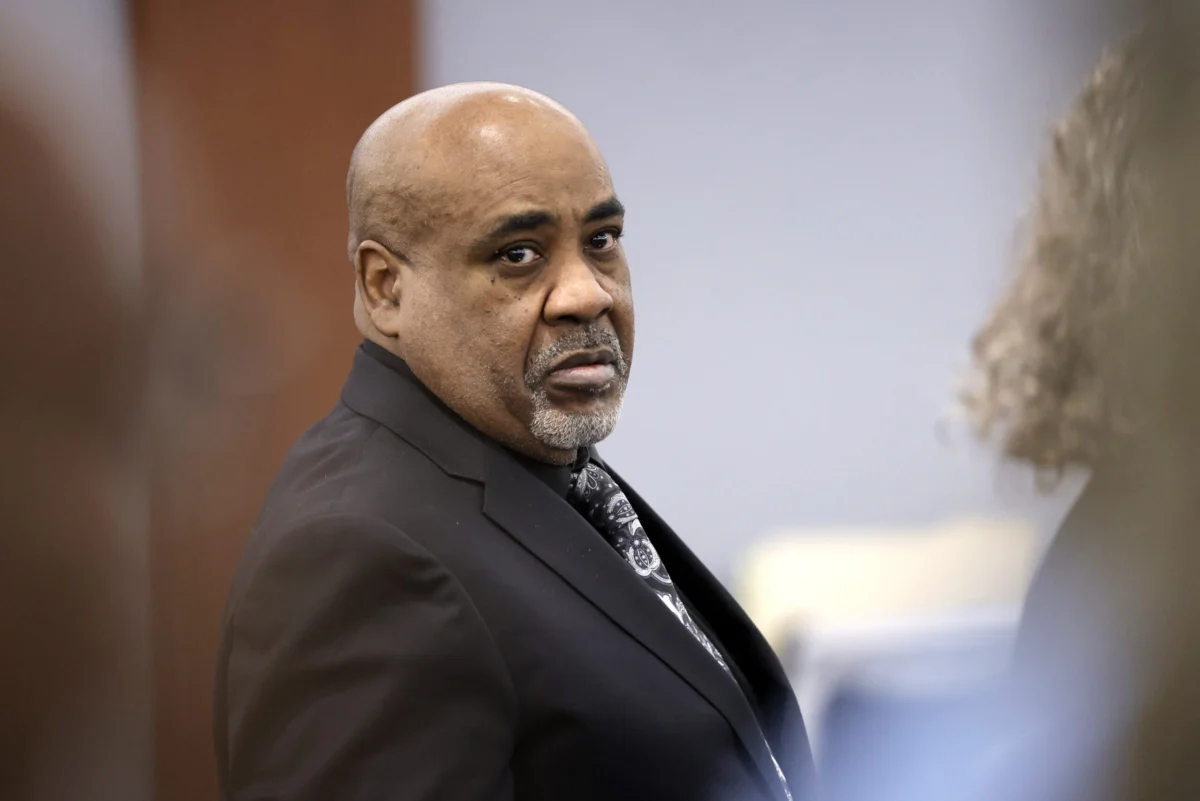
In a landmark conclusion to one of the most enduring mysteries in music history, a Las Vegas jury has found Duane “Keffe D” Davis guilty of orchestrating the 1996 murder of hip-hop icon Tupac Shakur. The verdict, delivered after a weeks-long trial, marks the first time a legal body has formally held a living individual accountable for the drive-by shooting that silenced one of the most influential voices of the 20th century.
Davis, 63, was found guilty of murder with the use of a deadly weapon with the intent to promote, further, or assist a criminal gang. Having faced the weight of nearly three decades of speculation and investigation, the former gang leader now faces a maximum sentence of life in prison.
The Verdict and Legal Ramifications
The jury’s deliberation process was notably swift, lasting only three hours before returning the guilty verdict. This brevity signaled the impact of the prosecution’s narrative, which rested on a blend of historical documentation, witness testimony, and the defendant’s own repeated public admissions.
The legal charges against Davis were specific: he was not accused of pulling the trigger, but of orchestrating the logistical elements of the hit. Prosecutors argued that Davis provided the murder weapon and coordinated the movements of the vehicle used in the attack. Under Nevada law, the “intent to promote, further or assist a criminal gang” acted as a sentence enhancer, solidifying the prosecution’s argument that the murder was not merely a spontaneous act of violence, but a calculated execution rooted in gang affiliation.
Chronology: A Three-Decade Search for Truth
The road to this conviction spans twenty-eight years, characterized by a complex web of street politics, police investigations, and shifting public narratives.
- September 7, 1996: Tupac Shakur is shot four times in a drive-by shooting at the intersection of Flamingo Road and Koval Lane in Las Vegas following a Mike Tyson boxing match at the MGM Grand.
- September 13, 1996: After six days in critical condition, Shakur succumbs to his injuries at the University Medical Center of Southern Nevada.
- The Post-Investigation Era: For years, the case remained cold. The Las Vegas Metropolitan Police Department struggled with a “code of silence” within the gang culture, making it difficult to secure reliable testimony.
- 2009–2019: During this period, Davis began speaking openly about his role. In police interviews, television documentaries, and his 2019 memoir, Compton Street Legend, Davis detailed his involvement in the events of that night.
- September 2023: Law enforcement executed a search warrant at a home in Henderson, Nevada, linked to Davis. Shortly thereafter, he was arrested and charged with murder.
- 2024 Trial: After months of pre-trial maneuvering, the case finally reached a jury, concluding in the historic guilty verdict.
Supporting Data: The Prosecution’s Case
The trial was, as prosecutor Binu Palal aptly described it, “drenched in circumstantial evidence.” While the lack of a smoking gun—or even the original weapon—made the case difficult, the prosecution built a formidable wall of corroboration.
Central to the prosecution’s strategy was the concept of “judicial notice” regarding Davis’s own words. Palal highlighted the sheer volume of confessions Davis had volunteered over the years. By presenting these statements—made in YouTube interviews, books, and private police briefings—the prosecution painted a portrait of a man who had grown comfortable in his notoriety.
“For nearly 18 years, Duane Davis has told the police, television, books, YouTube interviewers—anybody that will listen—he is responsible for the murder of Tupac Shakur,” Palal stated during closing arguments. “Tell him you hear him—find him guilty.”
The prosecution further contended that the actual gunman was likely Orlando “Baby Lane” Anderson, Davis’s nephew, or another individual who was present in the backseat of the white Cadillac used in the shooting. Anderson, who was long considered the primary suspect by investigators, was killed in an unrelated gang-related shooting in 1998, leaving Davis as the sole living link to the conspiracy.
Defense Arguments: The Question of Credibility
The defense, led by attorney Michael Sanft, sought to dismantle the prosecution’s reliance on Davis’s past statements. Sanft argued that Davis’s claims were largely performative, aimed at building his “street cred” or generating profit through media appearances.
“We have to ask ourselves the question really at this particular point: Why are we here 30 years later if Duane Davis had actually confessed—truly confessed?” Sanft asked the jury. The defense maintained that the lack of hard, physical forensic evidence tying Davis directly to the scene of the crime on that specific night left a “reasonable doubt” that should have precluded a guilty verdict.
However, the jury was evidently unmoved by the argument that the confessions were merely hyperbole. The legal threshold for the “gang enhancement” charge, which requires proof of the defendant’s role in facilitating criminal activity, appeared to be satisfied by the testimony regarding Davis’s leadership position within the South Side Compton Crips.
Official Responses and Public Reaction
The conviction has been met with a mixture of relief and somber reflection by those who followed the case for years. For the Las Vegas Metropolitan Police Department, the verdict represents the closure of one of the most high-profile cases in their history.
“This is a victory for the justice system,” said a spokesperson for the District Attorney’s office following the trial. “It sends a clear message that time does not diminish the obligation to seek justice for the victims of violent crime, no matter who they are or how long ago the incident occurred.”
In the hip-hop community, the reaction has been profound. For decades, Shakur’s death had been a source of conspiracy theories and pain. While some fans expressed that the verdict brings a sense of closure, others noted that the justice is bittersweet, coming nearly thirty years after the rapper was silenced at the age of 25.
Implications: A New Precedent for Cold Cases
The outcome of the State of Nevada v. Duane Davis trial carries significant implications for future investigations into decades-old crimes. The success of this prosecution demonstrates that modern law enforcement is increasingly willing to leverage non-traditional evidence—such as social media content, self-published memoirs, and archival media interviews—to build a case.
Furthermore, the use of gang-related sentence enhancements in a cold case context sets a legal precedent. It suggests that if prosecutors can establish a clear, documented history of gang coordination, they can pursue charges against those who enabled the violence, even if those individuals were not the ones to pull the trigger.
As Davis awaits sentencing, the legal system has finally drawn a line under the Tupac Shakur case. The trial has clarified the events of September 1996, transforming the legend of the murder into a documented legal fact. While the music and the legacy of Tupac Shakur remain as vibrant as ever, the mystery surrounding his final moments has been replaced by the finality of a courtroom verdict.
For a generation that grew up in the shadow of this tragedy, the conviction of Keffe D serves as a stark reminder that while the truth may be buried by years of silence and bravado, it is rarely lost forever. The gavel has fallen, and with it, a long, turbulent chapter in American cultural history is brought to a close.










