

By Science & Aerospace Desk
May 18, 2026
On Saturday, May 16, 2026, the hallowed halls of the Kennedy Space Center Visitor Complex in Florida welcomed two of the most accomplished extravehicular activity (EVA) specialists in history. Tom Akers and Joe Tanner, veterans of some of the most complex and daring missions in NASA’s storied timeline, were formally inducted into the U.S. Astronaut Hall of Fame.
The ceremony, a poignant reminder of the grit required to push the boundaries of human presence in space, served as a celebration of two careers defined by physical endurance, surgical precision, and the evolution of the American space program from the shuttle era to the assembly of the International Space Station (ISS).
The Inductees: Architects of the Orbital Frontier
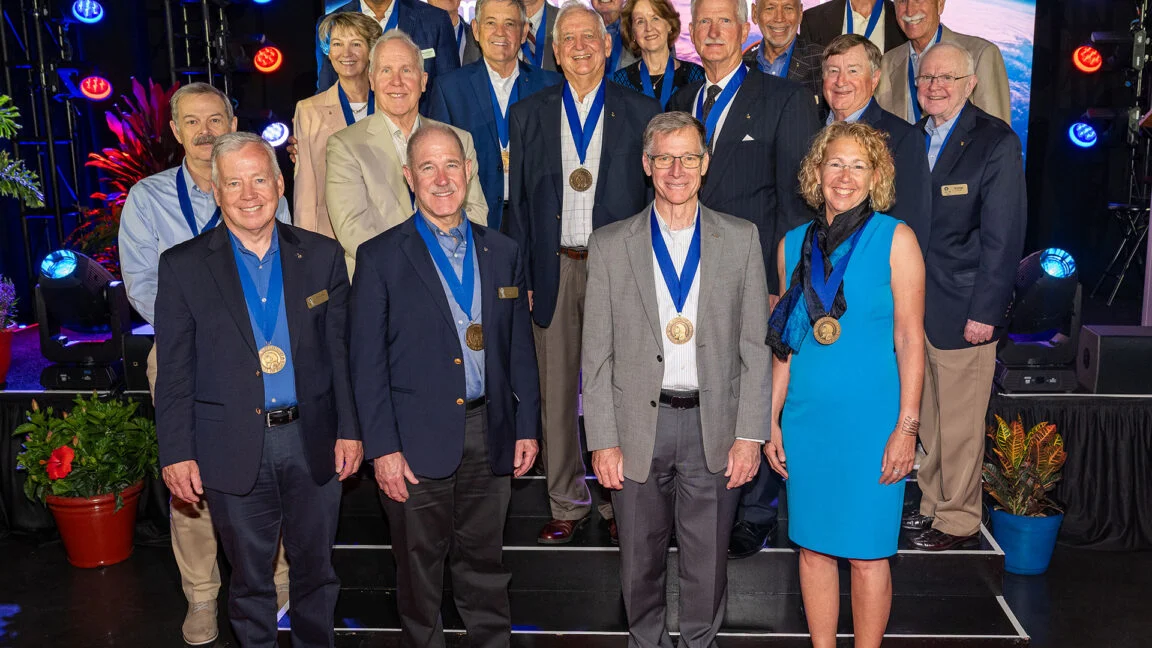
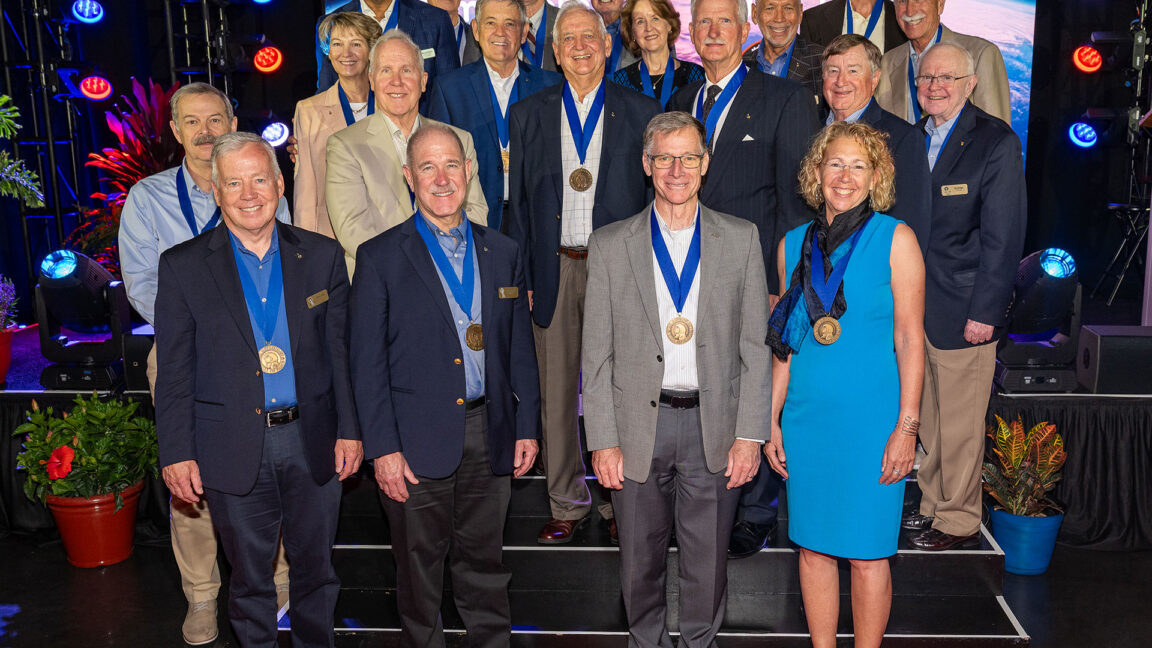
The induction ceremony was a star-studded affair, attended by some 20 veteran NASA astronauts, including 15 previous Hall of Fame honorees. The event was led by news correspondent John Zarella, with formal remarks provided by NASA and scholarship officials.
Curt Brown, board chairman of the Astronaut Scholarship Foundation, set the tone for the event. "Today’s induction of Tom Akers and Joe Tanner honors two astronauts whose careers embody excellence, leadership, and service," Brown remarked. "Their lasting contributions to NASA, and their ongoing work as educators and mentors, reflect the very best of the U.S. space program."
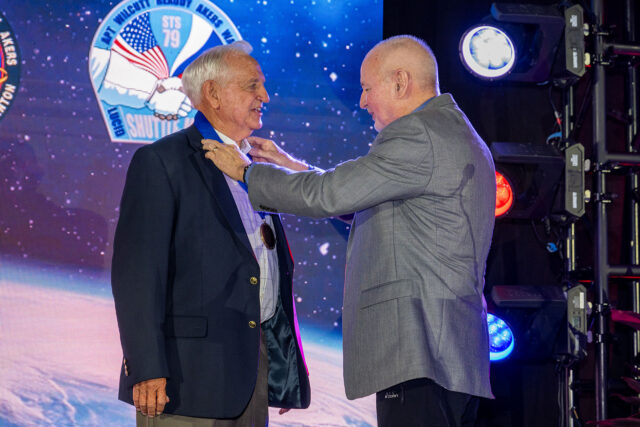
Brian Duffy, a 2016 inductee, presided over the presentation of the Hall of Fame medal to Akers, while Chris Ferguson, the pilot of Tanner’s final mission, STS-115, and a 2022 inductee, did the same for his former crewmate.
Chronology of Service: From Hubble to the ISS
To understand the weight of this induction, one must look at the specific missions that defined the careers of Akers and Tanner. Both men were masters of the "spacewalk," an endeavor that represents the highest physical and technical challenge for any astronaut.
The Hubble Legacy
Tom Akers became a legend for his role in the servicing missions of the Hubble Space Telescope (HST). These missions were not merely routine maintenance; they were high-stakes surgical operations performed in orbit. The telescope, initially hampered by a flawed primary mirror, required delicate intervention. Akers and his peers had to manipulate sensitive optical instruments while suspended in the vacuum of space, often in confined environments where one wrong move could jeopardize a multi-billion-dollar scientific asset.
The ISS Assembly
Joe Tanner’s career spanned the transition from the Shuttle’s work on Hubble to the massive undertaking of building the International Space Station. Tanner was instrumental in the assembly of the station’s massive backbone truss and the installation of its sprawling solar array wings. While Hubble work required the dexterity of a watchmaker, ISS assembly required the strength and coordination of an ironworker.
Supporting Data: The Statistics of Endurance
The numbers behind these men are staggering. In total, Tom Akers spent nearly 34 days in space, with nearly 30 of those hours dedicated to EVAs. Joe Tanner logged a total of 43 days in space, with a massive 46.5 hours spent performing spacewalks.
These figures represent more than just time; they represent the accumulation of human experience in the most hostile environment known to man. The physical toll of wearing a pressurized spacesuit for hours at a time—fighting the suit’s internal pressure to move fingers, arms, and legs—cannot be overstated.
When asked about the difference between these two types of missions, Tanner provided a rare, granular look at the demands of the work:
"I have often been asked what is the difference between ISS and an HST EVA, and I think it’s hands and overall physical effort. Manual dexterity in your hands was more important for HST, and for ISS, you’re hauling around some pretty big, heavy objects and maneuvering a long way. That’s the biggest difference."
Official Responses: Lessons in Innovation
Perhaps the most gripping moment of the reflection came from Tom Akers, who discussed the improvisation required during his missions. He recalled a specific instance involving the Intelsat VI satellite, where the standard operating procedures proved insufficient.
"All of our spacewalks are designed really for two people; the system really isn’t made where it’s easy for three people," Akers told collectSPACE. "That was a unique situation where we couldn’t get the capture bar on the Intelsat VI, and the ground controllers and our crew came up with the idea of three people going out. With the teamwork and great ground team support, it worked slick."
This anecdote serves as a cornerstone of the NASA philosophy: the ability to adapt when the original plan fails. It underscores that space exploration is a collaborative effort between the astronauts on the edge and the mission controllers on the ground.
Implications: The Lasting Impact on Space Exploration
The induction of Akers and Tanner into the Hall of Fame is not just a backward-looking gesture; it is a recognition of the methodologies they helped pioneer. The lessons learned during the Hubble servicing missions—how to operate delicate tools in a vacuum—directly informed how we maintain current satellites. Similarly, the techniques developed by Tanner and his colleagues for assembling the ISS have become the foundational "best practices" for modern orbital construction.
The Role of Mentorship
Beyond their technical achievements, both men have transitioned into roles as educators and mentors. This, according to Curt Brown, is the true mark of their legacy. By fostering the next generation of engineers and astronauts, they ensure that the knowledge gained through their 76+ hours of combined EVA time is not lost, but rather refined and passed on.
A Permanent Place in History
The ceremony concluded with the unveiling of the etched-glass portraits and mission patch displays. These artifacts will now hang alongside the 111 other plaques representing the giants of American aerospace history. Since 1990, the U.S. Astronaut Hall of Fame has stood as a beacon for those interested in the history of flight, and since 2016, it has been a centerpiece of the "Heroes & Legends" exhibit at the Kennedy Space Center.
As the ceremony ended, the gravity of the occasion was clear. We are living in a time where commercial spaceflight and deep-space exploration are becoming realities, yet the foundation remains the same: human courage, the ability to solve problems in real-time, and the willingness to go where no one has gone before.
Tom Akers and Joe Tanner are more than just names on a plaque; they are the architects of the modern space age. Their induction serves as a reminder that while the technology may evolve, the human spirit required to operate it remains the most critical component of the mission. As the next generation of astronauts prepares for lunar landings and beyond, they do so standing on the shoulders of these two giants.
The "Heroes & Legends" exhibit is now open to the public, featuring the new tributes to Akers and Tanner, inviting a new generation to learn about the men and women who truly reached for the stars.












No comments yet. Be the first to join the conversation!