

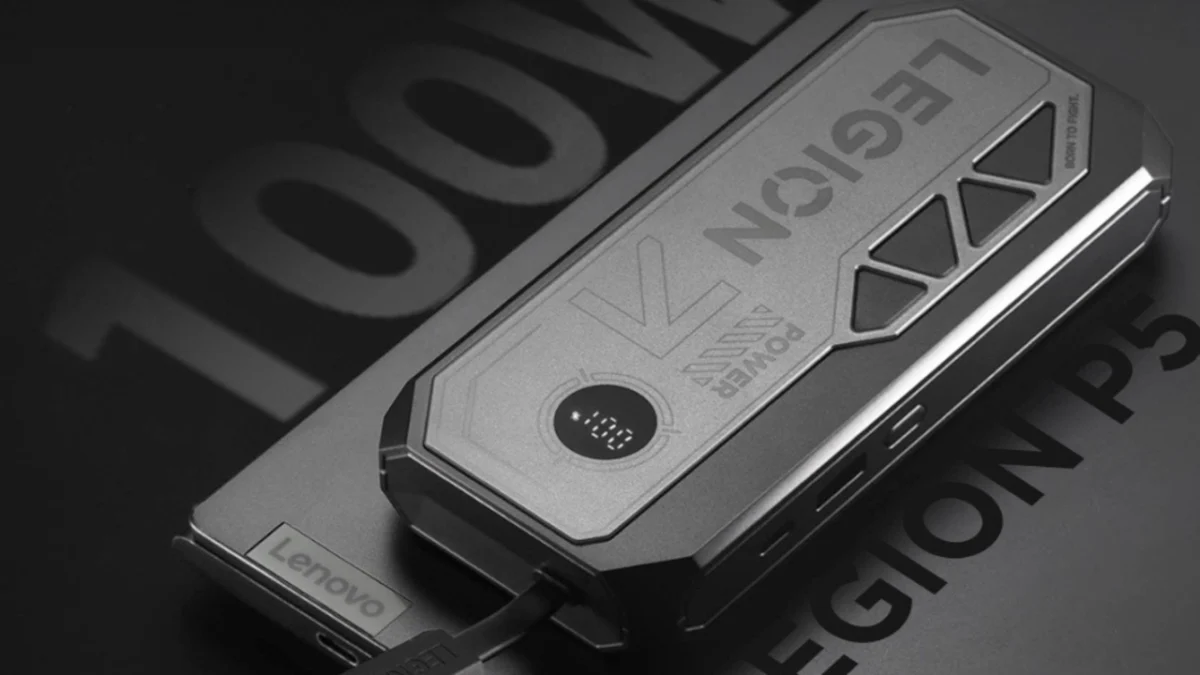
Lenovo has officially expanded its gaming-focused hardware ecosystem with the introduction of the Legion P5 10000, a compact yet high-powered portable charging solution. Designed to complement the aggressive, aesthetic-forward design language of the company’s Legion gaming brand, the P5 10000 promises significant power output in a small form factor. However, for many international fans and power users, the announcement comes with a caveat: the device is currently restricted to the Chinese market, leaving global consumers searching for alternatives.
The Core Specifications: Power in a Pocket-Sized Package
The Lenovo Legion P5 10000 is a 10,000 mAh portable charger that distinguishes itself from standard power banks through its impressive 100W high-power output. This capability is facilitated by smart dynamic power distribution, allowing the device to intelligently manage the charging and discharging process depending on the connected hardware.
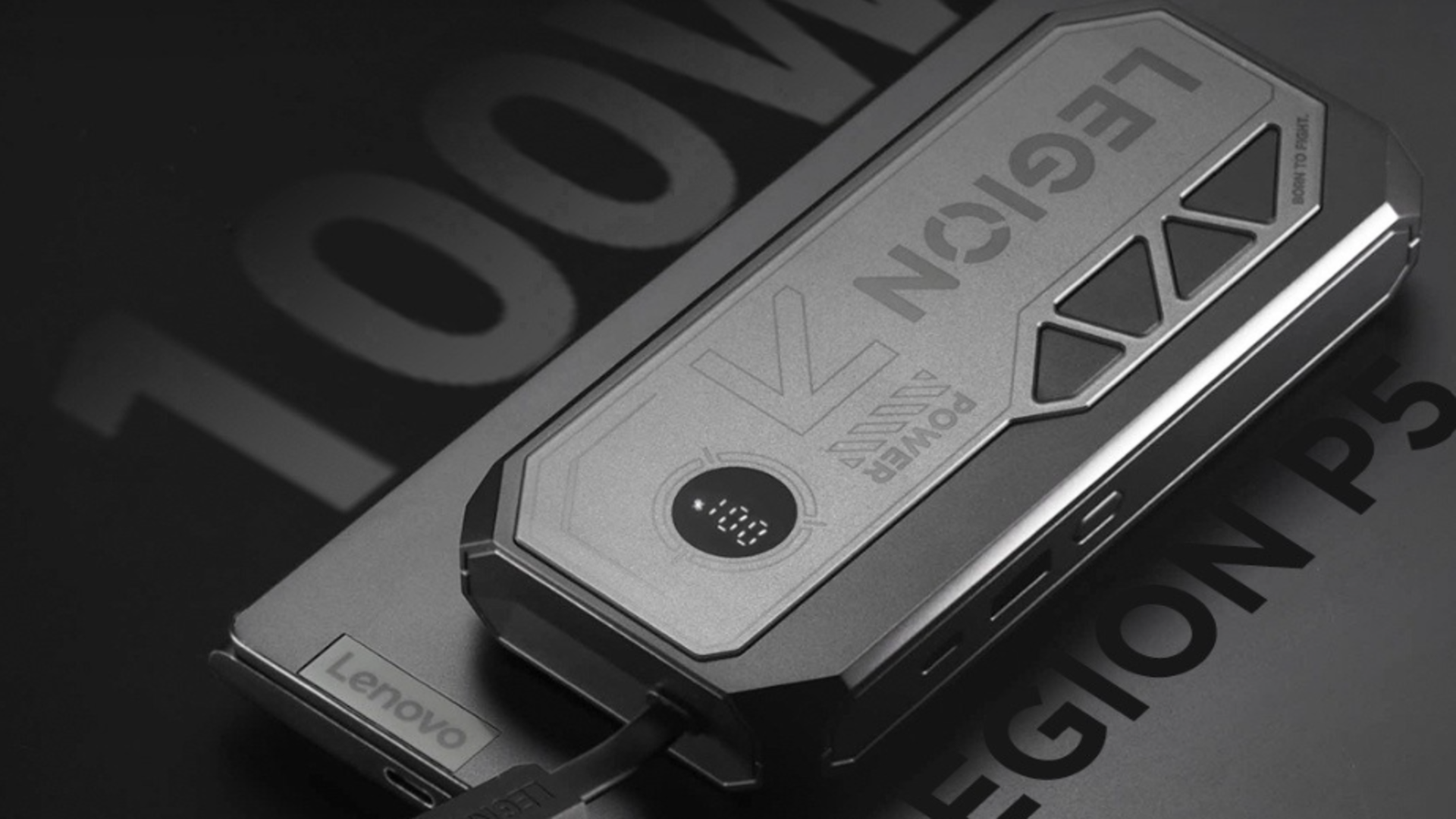
The unit features a versatile I/O setup, including a pre-integrated Type-C cable, a standalone USB-C port, and a USB-A port for legacy accessory support. A unique, small circular display adorns the front panel, serving as a status indicator, though specific functional details regarding this interface remain sparse. With its "mech-style" aesthetic—a hallmark of the Legion brand—the device is built to be both visually striking and portable, catering specifically to users who prioritize a lightweight, mobile setup.
A Chronology of the Announcement
The journey of the Legion P5 10000 began with a quiet reveal on Chinese social media platform Weibo, where Lenovo showcased the device’s capabilities alongside its upcoming availability.
- Initial Reveal: Lenovo teased the device’s design and core specs, emphasizing its suitability for both high-current gaming hardware and low-current accessories.
- Technical Validation: The device achieved 3C certification, a crucial milestone confirming that the battery meets rigorous safety standards for air and rail travel.
- Retail Listing: The device was officially listed on the Chinese e-commerce giant JD.com, with a set release date of May 19.
- Market Reception: Following the listing, tech enthusiasts and industry analysts noted the absence of a global launch strategy, fueling speculation about whether Lenovo intends to keep the product as an exclusive regional offering.
Technical Deep-Dive: Built for High and Low Current Devices
One of the most notable features of the P5 10000 is its versatility in handling disparate power demands. In an era where users carry everything from high-drain gaming handhelds and laptops to low-wattage wearables like earbuds and smartwatches, the Legion P5 attempts to bridge the gap.
The Low-Current Mode
Most high-wattage power banks struggle to charge delicate devices like wireless earbuds, often cutting off power because the draw is too low. Lenovo has addressed this by implementing a dedicated low-current mode. Users can activate this feature by pressing and holding the power button for three seconds, ensuring that smaller devices receive a steady, safe charge without the risk of overcurrent damage.
Fast Charging Protocols
Beyond Lenovo’s proprietary fast-charging standards, the P5 10000 offers cross-compatibility with major industry protocols, including those from Huawei and Apple. This interoperability is designed to ensure that regardless of the device—be it an iPhone, a MacBook, or a high-end Android smartphone—the power bank can negotiate the optimal power delivery profile to minimize charge time.
Implications for the Mobile Gaming Market
The release of the P5 10000 carries significant weight for the mobile gaming community. As devices like the Steam Deck, ROG Ally, and Lenovo’s own Legion Go continue to gain popularity, the demand for portable, high-wattage power solutions has never been higher.
While a 10,000 mAh capacity is technically modest for a laptop, the P5 10000’s 100W output allows it to sustain these high-drain gaming handhelds, potentially extending play sessions significantly. However, there is a trade-off: a 10,000 mAh battery will likely provide less than a full charge for most modern gaming handhelds. It is designed less for "all-day" endurance and more for providing a necessary boost to get through a commute or a flight.
Addressing the "Availability Gap"
The most significant friction point for this product is its limited availability. As of mid-2024, the Legion P5 10000 is exclusive to China, retailing for approximately CNY 169 (roughly $25 or €21). For Western consumers, the lack of an official product page or international distribution channel presents a significant hurdle.
This creates an "availability gap" that forces consumers toward more expensive, though perhaps more capable, alternatives. For instance, the Lenovo Go USB-C Laptop Power Bank is readily available in Western markets. While it carries a higher price tag of approximately $140, it boasts a 20,000 mAh capacity and supports 65W fast charging. It is arguably a more robust solution for those requiring sustained power for a full day of work or travel. The comparison highlights a strategic choice for Lenovo: segmenting its market by offering a budget-friendly, high-wattage device in Asia while maintaining a premium, high-capacity product line in the West.
Safety and Reliability Concerns
The 3C certification is a critical component of the product’s marketing. For frequent travelers, the safety of lithium-ion batteries is a paramount concern. By highlighting this certification, Lenovo is positioning the P5 10000 as a travel-friendly companion.
However, until the product is subjected to third-party testing and global safety audits, consumers should approach the "100W" claim with professional skepticism. High-wattage output requires sophisticated thermal management; if the internal components are not properly shielded, the compact, mech-style design could potentially lead to thermal throttling during extended use.
Strategic Outlook: Why Lenovo’s Approach Matters
Lenovo’s strategy with the Legion P5 10000 reflects a broader trend in the tech industry: the "ecosystem play." By producing a power bank that matches the visual identity of their gaming laptops, the company is attempting to create a "total solution" for the gamer on the go.
However, the decision to limit such an attractive, entry-level accessory to the Chinese market may be a missed opportunity. In the competitive landscape of mobile accessories, brand loyalty is often built on the availability of these smaller, high-frequency touchpoints. If a user enjoys their Legion laptop, they are likely to want matching accessories. If those accessories are unavailable, they will turn to third-party manufacturers like Anker or Ugreen, weakening Lenovo’s overall grip on the user’s hardware ecosystem.
Conclusion
The Lenovo Legion P5 10000 is a fascinating case study in product segmentation. It offers an impressive suite of features—100W charging, a low-current mode, and a unique aesthetic—at an incredibly aggressive price point. Yet, its regional exclusivity serves as a reminder of the complexities of global supply chains and regional product strategies.
For those in China, the P5 10000 is a compelling, affordable, and stylish accessory. For those in the West, it serves as an aspirational device that highlights the need for more accessible, high-performance charging solutions from major manufacturers. As the mobile gaming market continues to mature, we expect the demand for such "all-in-one" charging solutions to grow, potentially forcing Lenovo to reconsider its distribution strategy for future iterations of the Legion power line. Until then, international consumers may need to look toward higher-capacity, global-market alternatives, even if it means paying a premium for the privilege of a reliable charge.












No comments yet. Be the first to join the conversation!