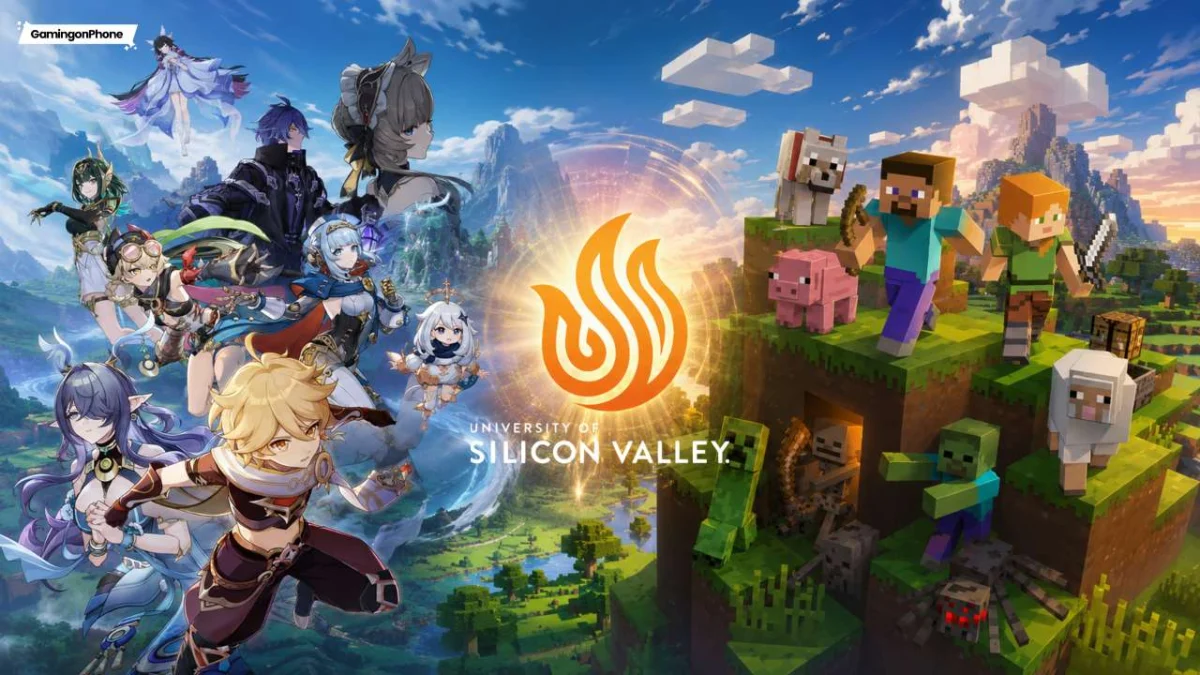
SAN JOSE, CA – In a groundbreaking move that redefines the traditional parameters of academic merit, the University of Silicon Valley (USV) has unveiled its "Max Achievement Scholarship," a pioneering initiative designed to reward prospective students for their verifiable accomplishments across a diverse spectrum of video games. This scholarship program marks a significant departure from conventional academic and athletic scholarships, signaling a progressive recognition of the complex skills cultivated through dedicated gaming. For countless hours spent navigating virtual worlds, mastering intricate systems, and forging digital legacies, students now have a tangible pathway to financial assistance for their higher education, potentially earning up to $15,000 annually.
This isn’t merely a nod to professional esports athletes, whose competitive prowess has increasingly found a place in collegiate programs. Instead, USV’s scholarship delves deeper into the rich tapestry of gaming, acknowledging the dedication, strategic thinking, and persistence demonstrated in everything from epic MMORPGs and dynamic live-service titles to challenging roguelikes, intricate strategy games, immersive survival adventures, and even the meticulous pursuit of platform-wide trophy hunting. The message is clear: the skills honed in virtual realms possess real-world value, and the University of Silicon Valley is at the forefront of legitimizing them within the academic sphere.
The Max Achievement Scholarship: A New Frontier in Educational Recognition
The core of USV’s innovative program, the Max Achievement Scholarship, directly links a student’s in-game accomplishments to financial aid. Unlike scholarships solely focused on competitive gaming, which often prioritize twitch reflexes and team coordination in specific titles, this initiative casts a wide net, recognizing individual mastery and long-term dedication across a broader gaming landscape. The university explicitly seeks to identify and reward traits such as comprehensive systems mastery, persistent problem-solving, strategic foresight, and meticulous completionism—qualities that are highly transferable to academic and professional success.
This bold step by USV reflects a growing understanding within educational institutions that the digital fluency and complex problem-solving abilities developed through gaming are not merely recreational pursuits but legitimate intellectual exercises. By offering financial incentives for these achievements, USV positions itself as an forward-thinking institution attuned to the evolving skill sets of the 21st-century student.
Beyond Esports: Valuing Diverse Gaming Prowess
One of the most compelling aspects of the Max Achievement Scholarship is its expansive definition of "gaming achievement." While esports scholarships have paved the way for recognizing gaming as a skill, they typically focus on a narrow band of competitive titles and professional-level performance. USV’s program, however, embraces the vast cultural and skill-development potential of gaming in its entirety.
The scholarship specifically highlights categories such as:
- MMORPGs (Massively Multiplayer Online Role-Playing Games): Requiring long-term commitment, community engagement, resource management, and often intricate strategic planning.
- Live-Service Games: Demanding adaptability, continuous engagement with evolving content, and often collaborative play.
- Roguelikes: Cultivating resilience, adaptive problem-solving, and strategic improvisation under pressure.
- Strategy Titles: Honing critical thinking, tactical planning, resource allocation, and foresight.
- Survival Games: Fostering resourcefulness, environmental adaptation, and long-term planning.
- Platform-wide Trophy Hunting: Demonstrating meticulousness, goal-setting, and a deep understanding of game mechanics across multiple titles.
This broad scope ensures that students who have dedicated themselves to mastering complex game worlds, even outside of the competitive spotlight, can find their efforts recognized and rewarded. It’s a testament to the idea that skill development occurs in myriad forms, and academia must evolve to acknowledge them.
Deep Dive: Exemplary Achievements in Genshin Impact and Minecraft
To illustrate the specific types of achievements that qualify, USV has provided clear examples for popular titles, showcasing the rigorous standards applicants must meet.
For instance, in the globally acclaimed open-world action RPG, Genshin Impact, players can achieve the Mastery Tier. To qualify, applicants must demonstrate:
- Completion of all Archon Quests: This signifies a deep engagement with the game’s core narrative and a substantial time investment in its evolving storyline. It requires persistent progression through challenging content and understanding complex lore.
- Friendship Level 10 with eight characters: This achievement speaks to a player’s dedication to character development, resource management (to acquire necessary materials), and consistent engagement with various game systems. It reflects a commitment to exploring the full breadth of the game’s offerings.
Verification for Genshin Impact achievements can be done through official platforms like HoYoLAB or authenticated screenshots, ensuring the legitimacy of the claims.
Similarly, the iconic sandbox game Minecraft offers a pathway to the prestigious Legendary Tier. Players must complete all 115+ advancements within the game. This extraordinary feat is viewed by the university as a profound demonstration of "comprehensive systems mastery." Minecraft advancements range from basic survival tasks to highly complex achievements involving intricate redstone contraptions, exploration of all biomes, defeating powerful bosses, and mastering various crafting and enchanting systems. Such an accomplishment speaks volumes about a player’s creativity, problem-solving abilities, persistence, and ability to understand and manipulate complex digital environments.

These examples underscore that the scholarship is not for casual players, but for those who have genuinely dedicated themselves to mastering the intricacies of their chosen games.
The Mechanics of Merit: Tiers and Verification
The financial incentives offered by the Max Achievement Scholarship are structured into a tiered system, reflecting the depth and difficulty of the accomplishments.
- Mastery Tier: Eligible students can receive up to $2,500 per academic term.
- Legendary Tier: Reserved for the most significant and demanding achievements, this tier can award up to $5,000 per academic term.
Given that the University of Silicon Valley operates on a three-term academic year, a student achieving the Legendary Tier in a qualifying game could potentially receive a total scholarship award of up to $15,000 annually. It’s important to note that the final scholarship amount is not solely based on the gaming tier; it also considers an evaluation of the student’s submitted essay and their overall academic readiness, ensuring a holistic assessment of their potential.
The scholarship is open to a broad range of applicants, including incoming first-year, transfer, and graduate students who have secured admission to USV. A critical component of the application process is the stringent verification requirement. Every submitted achievement must be personally earned by the applicant and be verifiable through official means. This includes official game profiles, platform accounts (like Xbox Gamertag, PlayStation Network ID, Steam profile), direct API access where available, or authenticated screenshots. This rigorous verification process is essential to maintain the integrity and credibility of the scholarship program.
The list of recognized games extends far beyond Genshin Impact and Minecraft, encompassing a diverse array of beloved titles that foster deep engagement and skill development. These include, but are not limited to:
- MMORPGs/Live Service: Warframe, Destiny 2, RuneScape, Final Fantasy XIV, World of Warcraft, Lost Ark.
- Action RPGs: Elden Ring.
- Simulation/Life Sim: Stardew Valley.
- Roguelikes: Hades, Dead Cells.
- Strategy: Civilization VI.
- Survival/Sandbox: Terraria, No Man’s Sky.
While the scholarship page does not explicitly mention mobile-exclusive platforms, the emphasis on player accounts, official profiles, and screenshots suggests that cross-platform progress earned on mobile devices could potentially count. However, prospective applicants are strongly advised to confirm the eligibility of their specific mobile-earned achievements directly with the University of Silicon Valley to avoid any ambiguity.
Chronology: The Evolving Role of Gaming in Academia
The University of Silicon Valley’s Max Achievement Scholarship represents a significant milestone in the evolving relationship between video gaming and higher education. For decades, gaming was largely dismissed as a frivolous pastime, often seen as a distraction from academic pursuits. However, the sheer scale and complexity of the modern gaming industry, coupled with mounting research on the cognitive benefits of gaming, have gradually shifted this perception.
The initial foray of gaming into academia primarily came through esports programs. Starting in the mid-2010s, universities began establishing varsity esports teams, offering scholarships to elite players who could represent their institutions in competitive titles like League of Legends, Overwatch, and Valorant. These programs recognized the athletic and strategic demands of professional gaming, treating it akin to traditional sports.
Simultaneously, the growth of the game development industry led to the proliferation of university degrees in game design, programming, and art. Institutions recognized the need to train a new generation of professionals for this booming sector, integrating gaming into their computer science, arts, and media departments.
What USV’s Max Achievement Scholarship introduces is a third, distinct dimension: the recognition of player-side achievement and mastery across a broad spectrum of non-competitive games. It bridges the gap between the competitive esports arena and the creative game development studio, acknowledging the intellectual and practical skills cultivated by dedicated players in a much wider context. This move suggests a maturation in how educational institutions view gaming, moving beyond mere vocational training or athletic competition to embrace the intrinsic value of sustained engagement with complex interactive systems.

Official Responses: USV’s Vision and Rationale
While specific direct quotes from USV officials regarding the scholarship’s philosophical underpinnings were not provided in the original announcement, the program itself speaks volumes about the university’s forward-thinking vision. USV’s decision to launch the Max Achievement Scholarship can be interpreted as a strategic move driven by several key rationales:
- Recognizing Evolving Skill Sets: In an increasingly digital world, skills like complex problem-solving, strategic planning, resource management, adaptability, persistence, and critical thinking are paramount. Modern video games are sophisticated platforms for developing these very attributes. USV appears to be acknowledging that these skills, regardless of how they are acquired, are highly valuable for academic success and future careers, particularly in a region like Silicon Valley that thrives on innovation and unconventional talent.
- Attracting Diverse Talent: By broadening the definition of merit, USV can attract a more diverse pool of applicants—students who might excel outside of traditional academic metrics or athletic fields but possess exceptional capabilities honed through gaming. This could include individuals with neurodivergent profiles who thrive in structured digital environments, or those from backgrounds where traditional extracurriculars might be less accessible.
- Innovation and Brand Identity: As an institution situated in Silicon Valley, USV is naturally aligned with innovation and embracing technological advancements. This scholarship reinforces its image as a cutting-edge university willing to challenge conventional norms and adapt to the realities of contemporary youth culture and digital literacy.
- Connecting with Student Interests: Gaming is a pervasive and powerful cultural force among younger generations. By acknowledging and rewarding this passion, USV demonstrates a genuine understanding and respect for its prospective student body, fostering a more engaging and relevant educational environment.
- Promoting Transferable Skills: The university likely believes that the discipline and analytical thinking required to achieve "Mastery" or "Legendary" status in a complex game are directly transferable to academic rigor, research, project management, and collaborative work in various fields, from technology to arts and sciences.
In essence, USV is making a strong statement: true intelligence and valuable skills manifest in many forms, and higher education must be flexible enough to recognize and nurture them all.
Implications: Reshaping Perceptions and Pathways
The University of Silicon Valley’s Max Achievement Scholarship carries profound implications for students, other educational institutions, and the broader societal perception of video gaming.
For Students:
- Validation and Motivation: This scholarship offers immense validation for students who have dedicated significant time and effort to gaming. It transforms a hobby often dismissed by adults into a legitimate avenue for financial aid, potentially motivating students to apply their dedication and strategic thinking to academic pursuits.
- Democratizing Access: For some students, exceptional gaming skills might provide a unique pathway to higher education that traditional academic or athletic scholarships might not offer. This could be particularly impactful for students who excel in specific cognitive areas nurtured by gaming but might not fit neatly into conventional academic molds.
- Financial Relief: The potential to earn up to $15,000 annually can significantly alleviate the financial burden of college, making higher education more accessible.
For Other Universities:
- Setting a Precedent: USV’s initiative could serve as a powerful precedent, prompting other universities to re-evaluate their own scholarship criteria and consider incorporating similar recognitions for diverse forms of achievement.
- Competitive Landscape: As universities increasingly compete for top talent, offering scholarships for gaming achievements could become a differentiating factor, forcing institutions to innovate their recruitment strategies.
- Rethinking Merit: This scholarship challenges the ingrained notion of what constitutes "merit" in academia, encouraging a broader conversation about the value of unconventional skills and extracurriculars.
For Society and the Perception of Gaming:
- Legitimization of Gaming: By linking gaming achievements to academic scholarships, USV significantly elevates the perceived legitimacy and intellectual value of video games. It helps dismantle outdated stereotypes of gamers as disengaged or unproductive individuals.
- Bridging the Gap: The scholarship helps bridge the perceived divide between "play" and "learning," demonstrating how seemingly recreational activities can cultivate highly valuable cognitive and practical skills.
- Future of Education: This move hints at a future where educational institutions are more adaptive, personalized, and attuned to the diverse talents and interests of students in a rapidly evolving digital world. It opens discussions about how skills gained in virtual environments translate to real-world competencies and career readiness.
However, the initiative is not without its potential challenges. Ensuring fairness and consistency in achievement verification, particularly across a vast array of games, will require robust systems. Additionally, the balance between gaming prowess and overall academic readiness will be crucial to ensure that scholarship recipients are well-prepared for the rigors of university life. There could also be discussions around the potential for "pay-to-win" elements in some games, though USV’s focus on skill-based, verifiable achievements largely mitigates this.
Conclusion: The Future is Playable
The University of Silicon Valley’s Max Achievement Scholarship stands as a landmark initiative, signaling a profound shift in the academic landscape. By boldly recognizing the skills, dedication, and intellectual curiosity fostered through video gaming, USV is not merely offering financial aid; it is validating a generation’s passion and redefining what it means to be an accomplished student. This program champions the idea that valuable talents emerge in diverse forms, and that the modern university must be agile enough to identify and cultivate them.
In an era where digital literacy and complex problem-solving are paramount, USV’s embrace of gaming achievements is more than a novelty; it is a forward-thinking investment in the future of education and the potential of its students. The next time someone questions the value of countless hours spent in virtual worlds, the answer might just be: "It’s helping me pay for college." The future of academic merit, it seems, is increasingly playable.