

The landscape of 1992 was a golden era for the Sega Genesis and Mega Drive. While console wars raged, titles like Phantasy Star and Shining Force were defining the role-playing genre for a generation. Yet, in the shadow of these titans sat Traysia, a title so obscure that it effectively vanished from the collective cultural consciousness of the gaming community. Recently resurrected via a modern port from Ratalaika Games, Traysia has been thrust back into the spotlight—only to prove that some relics of the 16-bit era were perhaps better left undisturbed.
Main Facts: A Forgotten Artifact Re-examined
Traysia is a five-chapter RPG that, on the surface, promises a grand adventure: a protagonist named Roy, a mysterious Master, and a quest to save the realm. However, for the modern player, the reality is a stark departure from the romanticized memory of "hidden gems." The game is plagued by fundamental design flaws, ranging from unintuitive UI to a combat system that feels more like a chore than a challenge.
The game’s primary "draw"—if one can call it that—is its 16-bit aesthetic and its status as a piece of obscure gaming history. However, beneath the surface of this curiosity lies a product that suffers from poor pacing, sparse narrative exposition, and a lack of quality-of-life features that were already becoming industry standards by 1992. Without the inclusion of modern quality-of-life tools—specifically the save states and cheat exploits provided by the Ratalaika port—Traysia would be an insurmountable wall for the average player.
Chronology: The Disjointed Saga of Roy
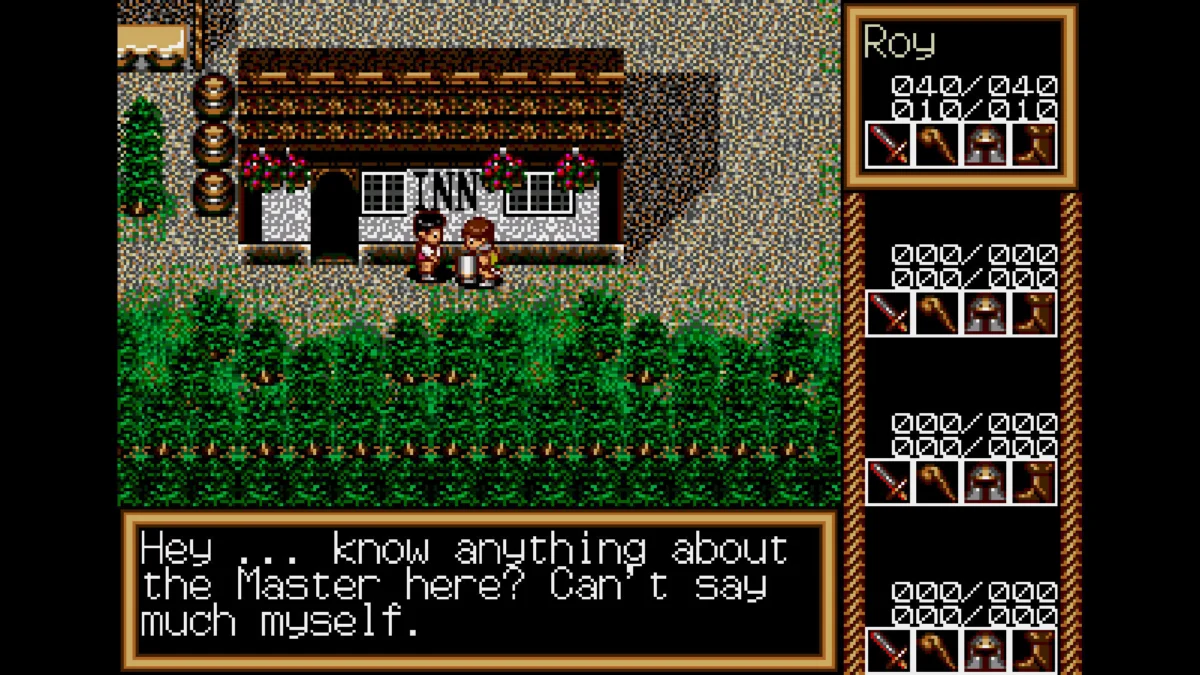
The narrative of Traysia is, to put it charitably, fragmented. The game opens with a cinematic cutscene depicting Roy bidding his girlfriend, Traysia, farewell to accompany his merchant uncle on a journey. In a move that defines the game’s erratic storytelling, the narrative then jumps to Roy standing alone in a forest village, having been unceremoniously abandoned by his uncle.
This is the first of many "time skips" that plague the five-chapter saga. Each chapter begins with zero context regarding the events that transpired during the interim. There is no connective tissue between chapters, and the dialogue remains so barebones that the player is often left drifting through the game world without a clear sense of purpose or motivation.
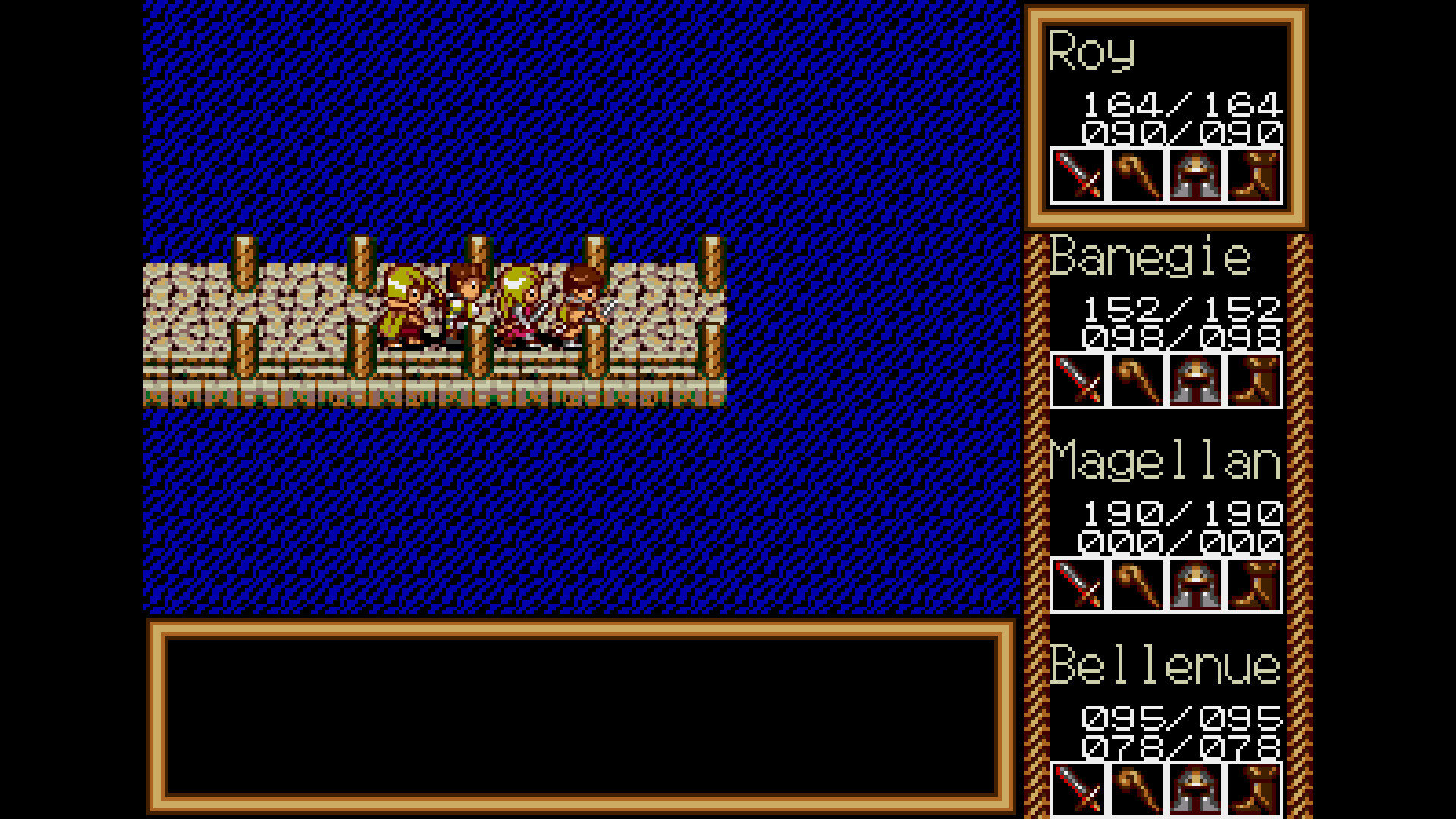
The plot eventually settles into a standard fantasy trope: Roy joins a group of mercenaries to hunt monsters, only to be betrayed by a wizard named Floyd, who serves a shadowy antagonist. While the endgame offers a few minor plot twists, they are rarely earned, as the player is forced to navigate vast, empty, and repetitive dungeon layouts to reach them. These environments are not only devoid of visual landmarks but are also unnecessarily sprawling, serving to pad out a runtime that lacks the substance to justify its length.
Supporting Data: Technical Limitations and Mechanical Flaws
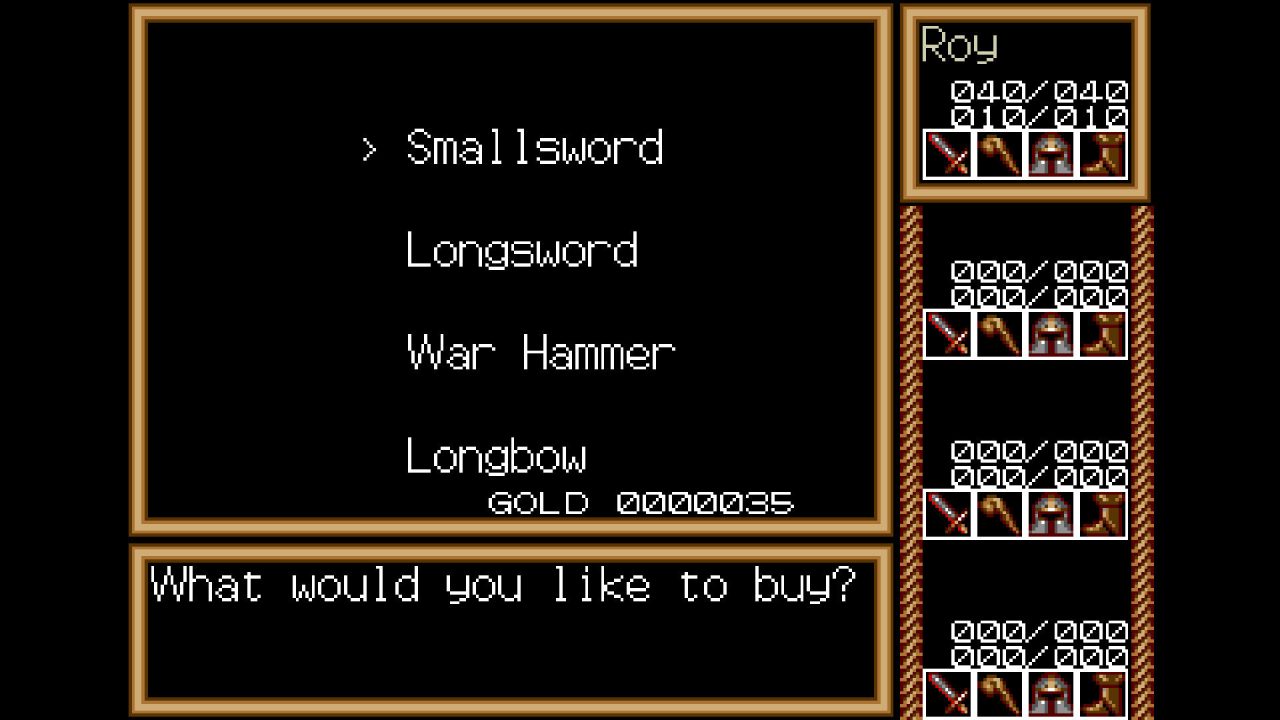
The failure of Traysia is not merely narrative; it is technical. The game’s interface is a masterclass in obfuscation. The menu system is icon-based but provides no tooltips or explanatory text. Players are left to guess the function of equipment, the restorative properties of food, or the utility of various gemstones. In an era where documentation was crucial, the included scan of the original instruction manual is effectively useless—the images are too blurry and the text too small to be of any service to the player.
The Combat Dilemma
The battle system represents a bizarre hybrid of traditional turn-based combat and a pseudo-strategy RPG. While it attempts to mimic the tactical depth of games like Rhapsody: A Musical Adventure, it fails due to its own mechanical clumsiness. Characters frequently block one another on the battlefield, rendering them unable to act against enemies.
Furthermore, the game hides its controls behind confusing iconography. The player is forced to deduce that the "helmet" icon is for movement and the "foot" icon is for escape—a distinction that is never clearly communicated. This leads to combat encounters that are drawn-out, repetitive, and frustrating, turning simple skirmishes into long-winded wars of attrition.
Audiovisual Presentation
While the soundtrack offers three genuinely stirring pieces—the title theme, the end credits, and the chapter five field theme—the rest of the score is forgettable, tinny 16-bit chiptune music. When compared to the lush, full-bodied compositions found on the rival Super Nintendo, Traysia feels sonically thin.
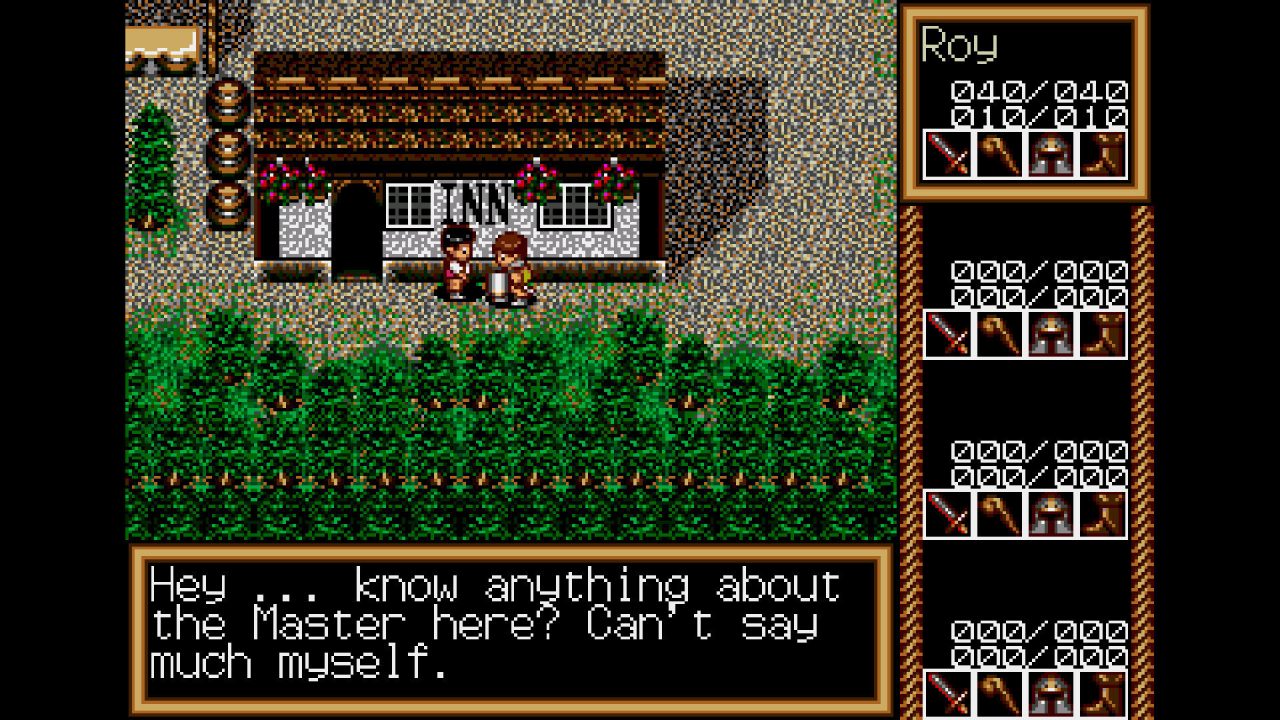
Visually, the game is equally uninspired. It suffers from a grainy, washed-out color palette that is common in less-refined Genesis titles. The dungeon textures are repetitive and busy, to the point of inducing actual eye strain. The lack of visual variety makes navigating the labyrinthine maps a monotonous experience, one that almost necessitates the use of speed-up cheats just to move through the game’s tedious overworld.
Official Responses and Accessibility
The current accessibility of Traysia is entirely dependent on the efforts of Ratalaika Games. Their decision to port this title is a double-edged sword. On one hand, they have provided the tools—save states, fast-forward functions, and cheat codes—that make the game technically "beatable." On the other hand, the game is so fundamentally broken that these aids feel like a concession to the player’s frustration rather than an enhancement of the gameplay experience.
There have been no official comments from the original developers regarding the game’s reception in 2026, which is perhaps for the best. Traysia was a product of a different time, and it remains a testament to the fact that not every title from the 16-bit era warrants a resurrection.
Implications: The Ethics of Preservation vs. Playability
The revival of Traysia raises a critical question for the industry: what is the value of preserving "bad" games? While archival interest is a valid reason to keep a title in circulation, there is a clear distinction between a "hidden gem" and a "buried mistake."
The implications for developers and publishers are clear: when re-releasing legacy content, transparency is key. Players, particularly those who have no nostalgic attachment to the game, deserve to know what they are purchasing. The inclusion of modern crutches—while helpful—cannot fix a game that was built on a foundation of poor design, confusing UI, and a lack of narrative cohesion.
Final Verdict
For those with a deep, morbid curiosity about the absolute bottom of the 16-bit barrel, Traysia might offer a few hours of historical amusement. However, for anyone looking for a compelling, well-designed RPG, this title is a cautionary tale. It is an "absolute slog," and despite the best efforts of the porting team to make it functional, it remains a relic that serves better as a footnote in history than as a modern gaming experience.
In the final analysis, there are simply too many masterful RPGs from the 1990s—even those on the Sega Genesis—that deserve your time and money more than Traysia. Let the dragon on the cover art remain a memory of a time when the shelves of video rental stores were filled with mystery; some mysteries are better left unsolved.











No comments yet. Be the first to join the conversation!