

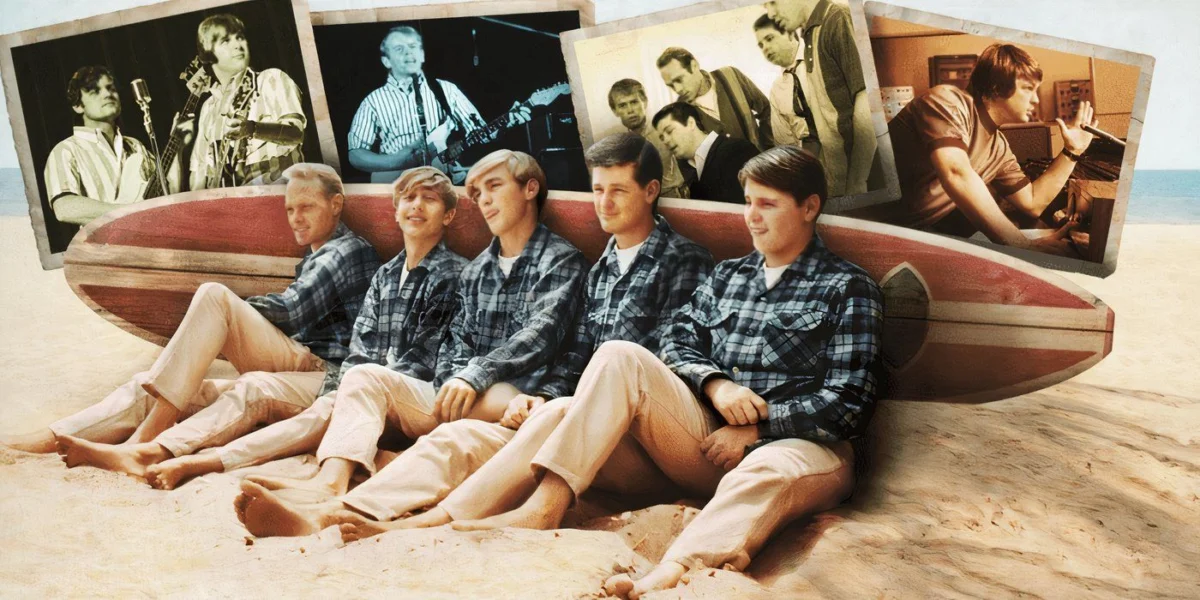
For decades, the cultural shorthand for The Beach Boys was etched in sun-bleached imagery: striped shirts, woodie wagons, and the relentless, infectious energy of California surf rock. Brothers Brian, Dennis, and Carl Wilson, alongside their cousin Mike Love and friend Al Jardine, dominated the airwaves throughout the 1960s and 70s, crafting a soundtrack for an idealized American youth. Yet, buried within their discography is a song that serves as a profound paradox—a career-defining masterpiece that the band members themselves initially viewed with trepidation.
"God Only Knows," the shimmering, baroque-pop centerpiece of their 1966 magnum opus Pet Sounds, remains a titan of music history. Ranked consistently among the "Greatest Songs of All Time" by publications like Rolling Stone and enshrined in the Rock and Roll Hall of Fame’s "500 Songs That Shaped Rock and Roll," the track represents a radical departure from the band’s roots. It is not merely a love song; it is a musical manifesto that transitioned The Beach Boys from a popular surf-rock act into visionary composers, forever altering the trajectory of popular music.
The Genesis of a Masterpiece: A Sonic Departure
To understand the significance of "God Only Knows," one must first understand the climate of 1966. Brian Wilson, the band’s creative engine, was suffering from a self-imposed pressure to compete with the evolving soundscapes of his contemporaries—most notably The Beatles and their groundbreaking album Rubber Soul. Wilson felt a pull toward something more sophisticated, something that could marry the emotional depth of classical composition with the immediacy of pop.
The recording process for Pet Sounds was, by all accounts, an act of artistic restlessness. Wilson, working with lyricist Tony Asher, famously composed "God Only Knows" in a rapid, feverish 45-minute burst. The resulting track was an orchestral feat, utilizing an unconventional array of instrumentation—including French horns, accordions, and harpsichords—that was lightyears away from the standard guitar-bass-drums setup that had propelled "Surfin’ U.S.A." to the top of the charts.
A Chronology of Artistic Evolution
The history of the song is one of risk and defiance. At the time of its release, the inclusion of the word "God" in the title was considered a major liability. No mainstream pop song had dared to invoke divinity in its title without it being a religious hymn. The label feared an immediate backlash from radio stations across the American Bible Belt.
Furthermore, the song’s lyrical content—an unabashed, vulnerable admission of dependency—pushed the boundaries of mid-60s masculinity. It did not celebrate the bravado of teenage romance; instead, it explored the existential terror of losing a partner. "God only knows what I’d be without you," the lyrics confess, a line that exposed a raw, internal landscape rarely seen in the pop music of the era.
Despite these risks, the song was released as a single, and while it didn’t immediately shatter the charts in the way their earlier hits did, it achieved something far more lasting: it gained the respect of the industry’s most influential peers. Paul McCartney would later famously cite it as his favorite song of all time, noting that it was one of the few pieces of music that moved him to tears.

Musicality and Technical Brilliance
What makes "God Only Knows" a subject of perpetual study for musicologists? The answer lies in its structural perfection. The song utilizes a complex harmonic progression that defies the typical three-chord simplicity of the era. It begins in the key of A Major but undergoes a series of modulations that create a sense of floating, ethereal unease before resolving into moments of sublime beauty.
The vocal arrangements, performed primarily by Carl Wilson, are layered with a precision that mimics a cathedral choir. Brian Wilson’s production technique, which involved "stacking" voices to create a wall of sound, turned the human voice into a textural instrument. The instrumentation is sparse yet dense, with the baroque elements weaving around the melody like vines. It was this level of detail that signaled the arrival of pop music as "high art"—a genre that could be as intellectually demanding as it was emotionally accessible.
The Legacy of Interpretation: Why It Endures
The mark of a truly great composition is its ability to transcend its original creator, and "God Only Knows" has become perhaps the most covered classic in the Beach Boys’ catalog. Its universality—the way it captures the ache of love without being saccharine—has attracted artists from every corner of the musical spectrum.
From the folk-tinged sensibilities of Neil Diamond and Olivia Newton-John to the avant-garde leanings of David Bowie, the song has been interpreted through countless lenses. Mandy Moore, Michael Stipe, Rivers Cuomo, and even Taylor Swift have lent their voices to the melody, each finding a new shade of meaning within its chords.
However, the most notable endorsement remains that of the primary architect himself. Brian Wilson has frequently cited Lyle Lovett’s 2007 rendition, performed during Wilson’s Kennedy Center Honors tribute, as the definitive version of the track. Wilson’s admission—that he considers Lovett’s interpretation superior to even his own band’s original—speaks to the song’s status as a living, breathing entity that continues to grow and evolve.
Implications for Modern Music
The success of "God Only Knows" fundamentally reformatted the music industry. It proved that pop stars were not merely entertainers; they were auteurs. The song paved the way for the "album era" of the late 60s and 70s, where artists like Pink Floyd, David Bowie, and even the later iterations of The Beatles could focus on cohesive, high-concept musical statements rather than just assembling a collection of radio-friendly singles.
Furthermore, the song’s influence on the "wedding industry" and film soundtrack culture cannot be overstated. It has become a standard for cinematic moments that require an immediate, shorthand connection to the concept of eternal, fragile love. Its placement in everything from Love Actually to various television dramas has ensured that each new generation is introduced to its haunting refrain.

Official Responses and Historical Context
In the decades since its 1966 debut, The Beach Boys have often reflected on the song’s place in their history. While the internal feuds between Brian Wilson and Mike Love are well-documented and often contentious, "God Only Knows" serves as a rare point of consensus. It is the moment the band stepped out of the shadow of the surf and into the light of legend.
Historians often point to the song as the primary reason why Pet Sounds remains the most critically acclaimed album in the history of rock music. By prioritizing emotional honesty over commercial trends, Wilson inadvertently created the blueprint for what we now recognize as the singer-songwriter movement.
Conclusion: The Timeless Anthem
"God Only Knows" stands as a testament to the idea that true creative success often lies in the willingness to abandon the comfort zone. It was a song that wasn’t supposed to work—too religious, too complex, too vulnerable—and yet, it became the defining moment of a legendary career.
As we look back at the history of The Beach Boys, we see the surfboards and the sand, but we also see the studio perfectionist, the orchestral arranger, and the sensitive poet. "God Only Knows" is the intersection of these identities. It remains a masterclass in songwriting, a blueprint for harmonic innovation, and an enduring reminder that the most profound expressions of the human experience are often found in the simplest, most sincere melodies.
For the listener today, the song offers more than just a trip down memory lane; it offers a glimpse into a moment when the boundaries of what was "pop" were shattered, replaced by something much more permanent. The Beach Boys may have started their journey in the California surf, but with "God Only Knows," they sailed into the infinite.











No comments yet. Be the first to join the conversation!