

In the modern digital landscape, the difference between a high-performing marketing campaign and wasted ad spend lies almost entirely in one factor: targeting. As Meta’s ecosystem continues to evolve, the ability to put the right message in front of the right person at the exact moment of intent has become the ultimate competitive advantage for brands.
With average ad prices rising by approximately 9% in 2025, the "spray and pray" approach is no longer financially viable for enterprise teams. To achieve a lower cost per conversion, marketers must move beyond basic demographics and embrace a sophisticated, multi-layered approach to audience strategy.

The Core Pillars of Meta Targeting
Facebook ad targeting is the technical framework within Meta Ads Manager that allows advertisers to define their ideal audience. Instead of casting a wide net, marketers can filter users based on age, location, interests, purchasing behavior, and even their past interactions with a brand.
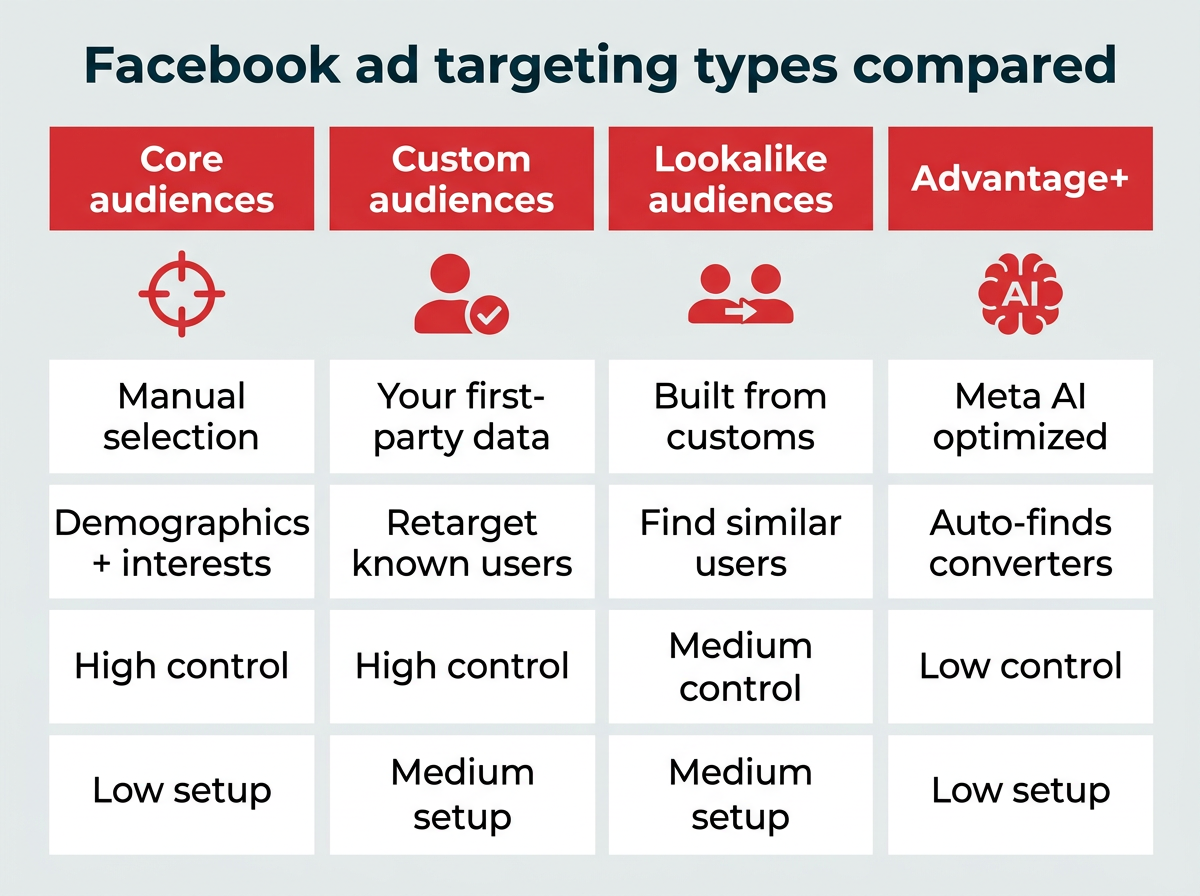
Meta currently categorizes its targeting options into four primary buckets:

- Core (Detailed) Audiences: The traditional method of manual selection based on demographics, interests, and behaviors.
- Custom Audiences: A powerful way to re-engage warm leads who have already interacted with your website, app, or CRM.
- Lookalike Audiences: AI-generated segments that mirror the characteristics of your existing, high-value customers.
- Advantage+ Audiences: Meta’s automated, AI-driven targeting that uses machine learning to identify the most likely converters in real-time.
Chronology of Change: From Manual Control to AI Optimization
The trajectory of Meta’s advertising platform has shifted dramatically over the past five years. Historically, marketers relied heavily on "manual" targeting—meticulously selecting interests like "fitness" or "luxury travel."
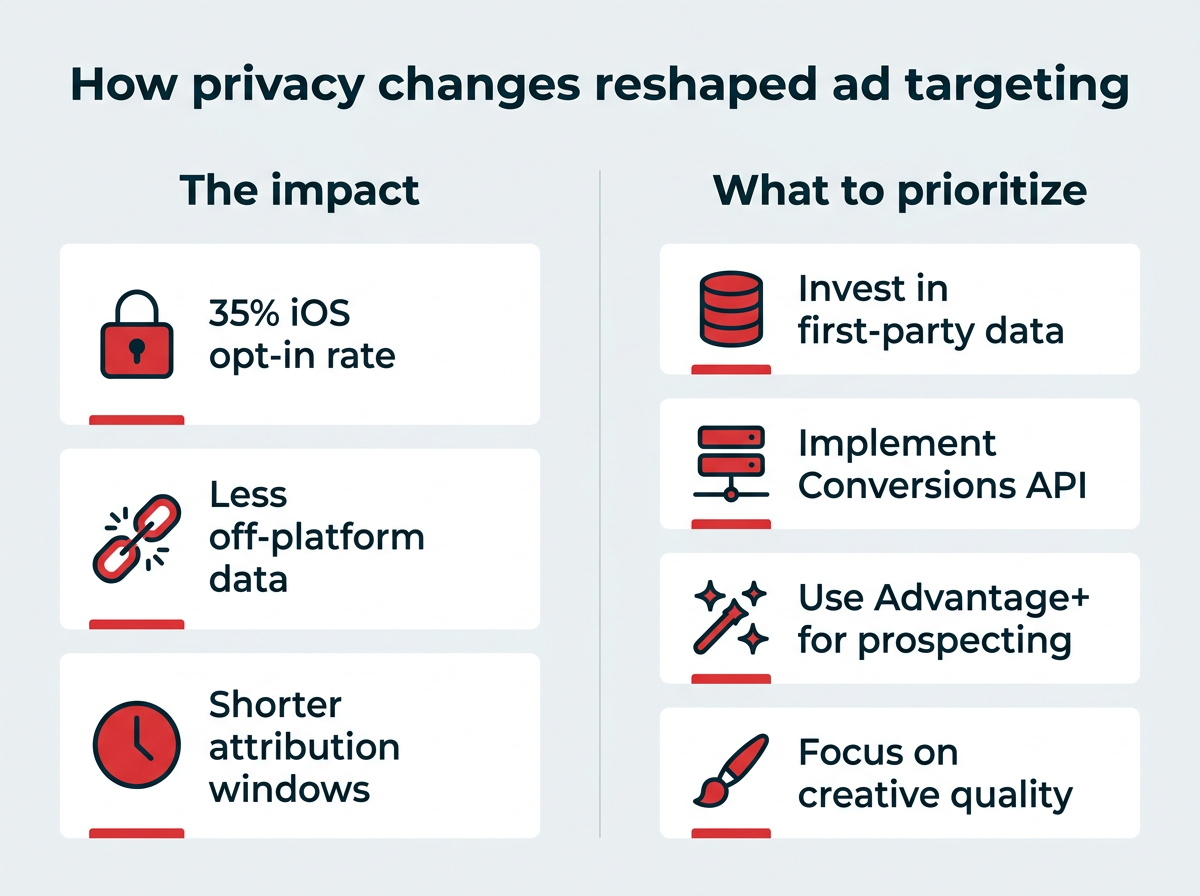
However, the industry landscape shifted permanently with Apple’s iOS 14.5 update. By introducing App Tracking Transparency (ATT), Apple forced a decline in off-platform tracking. Today, the industry-wide opt-in rate for tracking sits at just 35%.
This forced Meta to pivot away from third-party data reliance. The result was the birth of Advantage+, which prioritizes first-party data and on-platform signals (such as video watch time, lead form interactions, and direct shopping behaviors). The platform has effectively moved from a "tell the computer who to target" model to a "show the computer who bought" model.
Supporting Data: Why Strategy Matters
The impact of moving toward AI-driven targeting is backed by significant performance data. Meta’s internal benchmarks indicate that campaigns utilizing Advantage+ automation tools see:
- 13% lower median cost per product catalog sale.
- 7% lower median cost per website conversion.
- 28% lower average cost per click, lead, or landing page view.
These figures underscore a vital truth: while human intuition is necessary for creative development, the algorithm is often more efficient at identifying the specific "needle in a haystack" within a global user base.
Implementation: A Step-by-Step Guide to Targeting
Setting up an effective audience strategy in Meta Ads Manager requires a disciplined approach. Follow these steps to ensure your setup is optimized for success:

1. The Setup Phase
Always configure targeting at the ad set level. Whether you are creating a Core, Custom, or Lookalike audience, the ad set is where the budget and placement parameters meet the audience definition.
2. Utilizing "Narrow Audience" for Precision
For brands with specific niche offerings, the "Narrow Audience" feature is indispensable. Rather than simply targeting "Parents," you can "Narrow" the audience to ensure they must also be interested in "Early Childhood Education." This layer-cake approach prevents your budget from being diluted by uninterested users.
3. The "Engaged Shoppers" Hack
One of the most effective, yet underutilized, behaviors is the "Engaged Shoppers" filter. By selecting this, you specifically target users who have clicked the "Shop Now" call-to-action button on a Facebook ad within the last seven days. This identifies individuals who have demonstrated a clear propensity for social commerce.
Implications of Privacy-First Marketing
The privacy shifts of the mid-2020s have created a new set of rules for enterprise marketing teams. With third-party tracking diminished, the focus has shifted toward owned data.

The Rise of the Conversions API (CAPI)
To combat the loss of pixel data, companies must implement the Conversions API. Unlike browser-based pixels, CAPI sends conversion events directly from your server to Meta. This provides a more accurate picture of the customer journey and feeds the algorithm higher-quality data, which in turn leads to better targeting.
The Death of Sensitive Targeting
Meta has removed many targeting options related to health, race, religion, and political affiliation to ensure compliance and ethical advertising. Marketers who previously relied on these segments must now focus on contextual targeting—aligning their ad creative with the interests and lifestyles that naturally correlate with their customer base.

Advanced Strategies for 2026
The "Competitor Fan" Strategy
Use the Audience Insights tool to uncover the pages your target demographic follows. By identifying which competitors have the most engagement, you can test those brands as "Interests" in your targeting. This allows you to place your ads in front of users who have already signaled a preference for your industry’s ecosystem.
Value-Based Lookalikes
Instead of creating a Lookalike audience based on everyone who visited your site, create a Value-Based Lookalike. By uploading a customer list that includes "Lifetime Value" (LTV) data, you instruct Meta to find new users who mirror your highest-spending customers, not just your casual browsers. This is the most effective way to improve ROAS (Return on Ad Spend) for scaling businesses.

The "Broad + Creative" Approach
For high-budget campaigns, the most modern strategy is to embrace "Broad" targeting (minimal interest/demographic filtering) and allow your ad creative to do the heavy lifting. By crafting visuals and copy that resonate deeply with your ideal customer, you "qualify" the audience through the ad itself. The algorithm identifies who stops to watch, who clicks, and who buys, essentially building your audience for you based on performance signals.
Frequently Asked Questions
What is the most effective strategy?
There is no "silver bullet." The most successful teams use a Full-Funnel Strategy:

- Prospecting: Use Advantage+ for broad reach.
- Retargeting: Use Custom Audiences for those who abandoned carts.
- Loyalty: Use CRM lists to cross-sell to existing customers.
How do I know if my audience is too small?
Meta provides an audience definition meter. If your audience is too narrow, the system will warn you. Generally, you want a broad enough audience to allow the algorithm to test different segments, but narrow enough that you aren’t wasting impressions on irrelevant traffic.
Should I still use manual targeting?
Manual targeting remains highly effective for B2B companies with very specific job title requirements or for local businesses with strict geographic constraints. However, for e-commerce and lead-gen, AI-driven options like Advantage+ are rapidly becoming the industry standard.

Conclusion
Facebook ad targeting in 2026 is less about manual "tricks" and more about feeding the machine high-quality data. By combining robust first-party data (via CAPI and CRM integrations) with the raw processing power of Meta’s AI, modern advertisers can reach their goals more efficiently than ever before.
The successful marketer of today acts as a curator of data and a master of creative strategy, trusting the algorithm to handle the complexity of the audience while they focus on the content that moves the needle. As you plan your next campaign, remember: the data you provide to Meta is only as good as the creative you show to the user. Keep your messaging clear, your data clean, and your strategy flexible.












No comments yet. Be the first to join the conversation!