

In the competitive world of high-end professional cosplay, few names carry as much weight as Kamui Cosplay. Known for their technical prowess and commitment to craftsmanship, the duo—comprising Svetlana and Benni—recently tackled one of their most ambitious projects to date: the intricate, mysterious Yelan from Genshin Impact. Commissioned by HoYoverse for the 2023 Gamescom convention, this project was not merely a costume build; it was an exercise in engineering, material science, and artistic dedication that pushed the boundaries of what is possible in fan-made apparel.
The Genesis of an Icon
The decision to embody Yelan was driven by a deep appreciation for the character’s complex aesthetic. Beyond her sleek, enigmatic silhouette and commanding presence in Teyvat, it was her signature weapon, the Aqua Simulacra bow, that caught the eye of the creative team.

At a surface level, Yelan’s design appears deceptively simple—a testament to the clean, modern lines of the character’s in-game model. However, as the Kamui team began their deep dive into the technical references, the reality of the build set in. Creating a costume that balanced the high-fashion aesthetic of the character with the structural requirements of a convention-ready outfit required a massive shift in methodology. With sewing serving as a notoriously challenging aspect of their workflow, the project quickly evolved into a trial by fire.
Chronology of the Build: A Five-Week Marathon
The construction of the Yelan ensemble was a high-stakes, five-week sprint against the clock. The team broke the project down into modular, manageable components to prevent the overwhelming scale of the work from hindering their progress.

Phase 1: Patterning and The "Duct Tape" Method
The foundation of the costume—the dress—presented the most significant hurdle. To achieve the precise, body-hugging silhouette required for Yelan, the team employed the classic "duct tape dummy" technique. By wrapping the torso in tape and drafting the cut lines directly onto the form, they were able to create a custom pattern template. This manual approach ensured the dress would mirror the character’s specific proportions, though it required multiple rounds of refinement with Benni’s assistance to perfect the fit.
Phase 2: Material Selection and Sewing Challenges
The choice of materials was pivotal. For the dress, the team selected a heavy royal blue satin. While visually striking, the fabric proved temperamental—prone to fraying and devoid of natural stretch. The open-back design posed a significant structural dilemma, requiring a custom-integrated support system. By utilizing a combination of black faux leather and brown satin, paired with a hidden, reinforced bra structure, the team successfully maintained the character’s aesthetic without sacrificing stability.

Phase 3: The Jacket and Architectural Details
The white jacket was perhaps the most complex structural element. In-game, the jacket appears to "float" effortlessly. Translating this magical effect into reality required a meticulous layering process. The team moved from a cheap muslin mock-up to a final version crafted from white brocade, accented with subtle floral patterns to add a tactile, believable quality.
The weight of the garment increased significantly as they added laser-cut pleather, faux fur, and 3D-printed resin accents. By utilizing a Flux Beambox Pro laser cutter and an Anycubic Photon Mono M5s, they were able to manufacture the intricate hardware that defines Yelan’s look. To mimic the "floating" appearance, the team hand-sewed discrete press-on buttons that provided the necessary structural tension to keep the jacket in place during long hours on the convention floor.

Phase 4: Leggings, Gloves, and Asymmetry
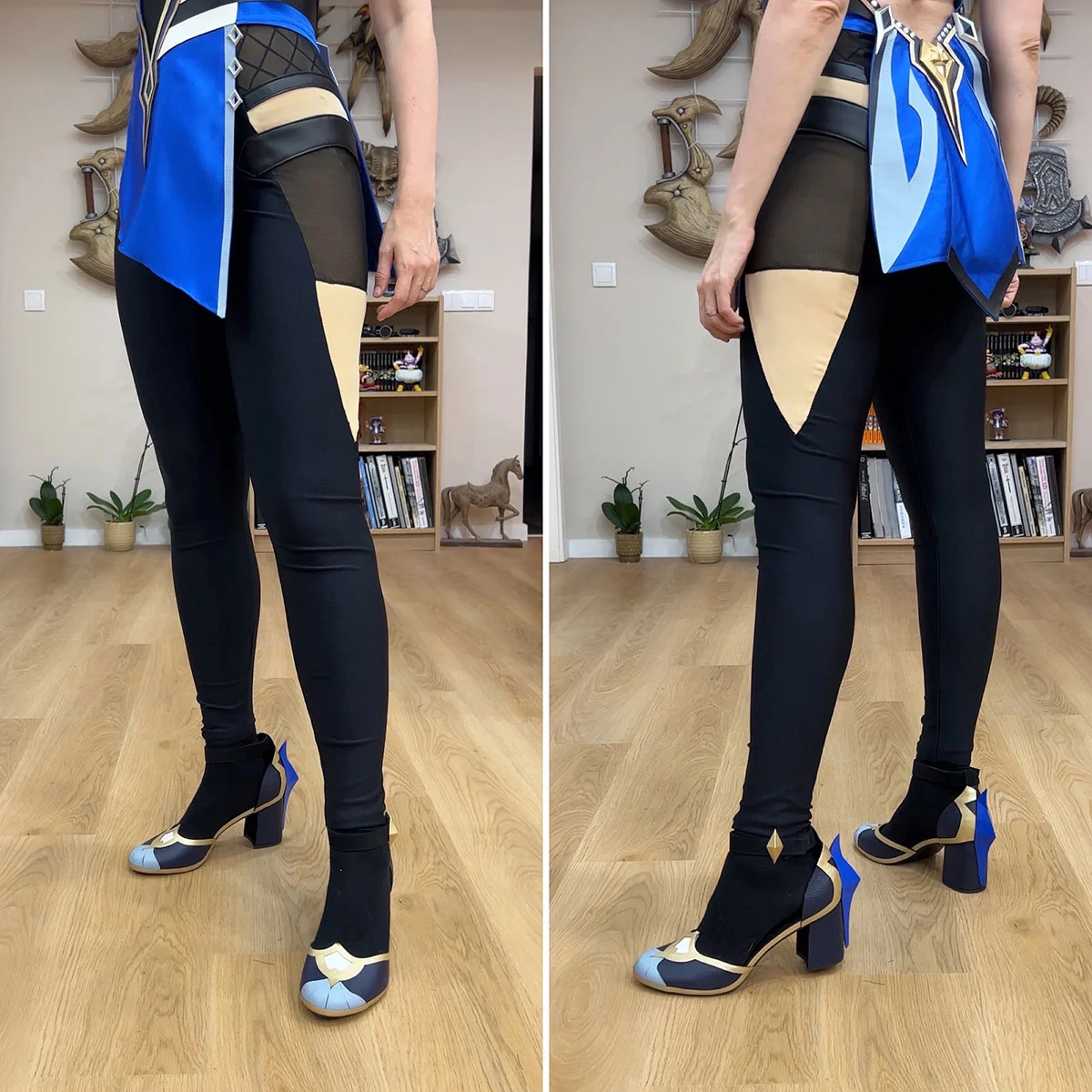
One of the most arduous tasks was the creation of the leggings and gloves. Because Yelan’s design is highly asymmetrical, each limb required a unique pattern. The leggings alone incorporated five different fabrics, ranging from delicate netting to heavy-duty faux leather. This process required a high degree of precision, as there was zero room for error given the looming deadline for Gamescom.
The Weaponry: Engineering the Aqua Simulacra
While the wardrobe was being finalized, the focus shifted to the Aqua Simulacra. The bow was a masterclass in 3D modeling and structural engineering. Jakob, Benni’s brother, spearheaded the project by sculpting the entire bow in Blender from scratch.

The production cycle for the prop spanned two weeks. To ensure the weapon was both durable and portable, the team utilized an Elegoo Saturn 2 8K resin printer, reinforcing the internal structure with a PVC pipe. This allowed the bow to be dismantled for travel. The final paint job, achieved through an airbrushing process using multiple layers of metallic blue, white, and gold, successfully captured the ethereal, glowing aesthetic of the in-game weapon.
Professional Collaboration and Community Impact
The Yelan project highlights the growing trend of synergy between game developers and the creator community. HoYoverse’s decision to provide official 3D models via platforms like aplaybox.com—a resource often used by professional cosplayers to ensure accuracy—represents a shift in how game studios view fan art.

By making these assets accessible, HoYoverse has lowered the barrier to entry for high-fidelity cosplay. The Kamui team emphasized that this support is vital; having access to the official 3D files for characters from Genshin Impact, Honkai: Star Rail, and Zenless Zone Zero allows creators to focus on material interpretation rather than guesswork. This collaborative environment fosters a higher standard of craftsmanship across the entire community.
The Implications of Professional Cosplay
The Yelan build is a poignant reminder of the dedication required to operate at the professional level of the cosplay industry. Beyond the technical skill, the project underscores the importance of:

- Iterative Problem Solving: The transition from digital model to physical garment involves constant pivots. The "I have no idea how I’ll do this next" mentality is not a sign of lack of preparation, but rather a realistic approach to the unpredictable nature of bespoke tailoring.
- Resource Management: For creators based in remote locations—such as the team’s workshop in Madeira—supply chain issues are a reality. Learning to utilize what is available in the workshop is a critical skill for any professional builder.
- Collaborative Ecosystems: The inclusion of specialists, such as wig stylist Krystl Cosplay, illustrates that top-tier results are rarely the product of a single individual. The professionalization of cosplay relies on a network of artisans.
Conclusion: A Labor of Love
The final result—showcased at the Monte Palace Garden in Madeira and later at the Gamescom 2023 convention floor—stands as a testament to the intersection of digital art and physical craftsmanship. For the Kamui team, the project was exhausting, demanding, and technically daunting. Yet, the reward of seeing the character come to life, interacting with fellow fans, and pushing their own creative boundaries made the five-week struggle worthwhile.
As the cosplay community continues to evolve, the Yelan build serves as a gold standard for what can be achieved through a combination of passion, advanced technology, and professional-grade persistence. For those aspiring to reach this level, the message is clear: the process is rarely perfect, but with enough patience and a step-by-step approach, even the most complex designs from Teyvat can be brought into our world.










No comments yet. Be the first to join the conversation!